

If you are reading this, you are probably making a decision that will follow your product for years: whether to use die cast aluminum for your component, which alloy to pick, and which supplier can actually deliver consistent quality. In 20 years of building casting and finishing equipment, I have watched thousands of aluminum die casting parts pass through our lines — and the difference between a good casting and a great product is almost always in the details you cannot see at the quotation stage.
This guide covers everything a product engineer, purchasing manager, or factory owner needs to know about aluminum die casting: how the process works, how the main alloys compare, where castings fail, and why surface finishing decides whether your parts ship on time.
What Is Die Cast Aluminum?
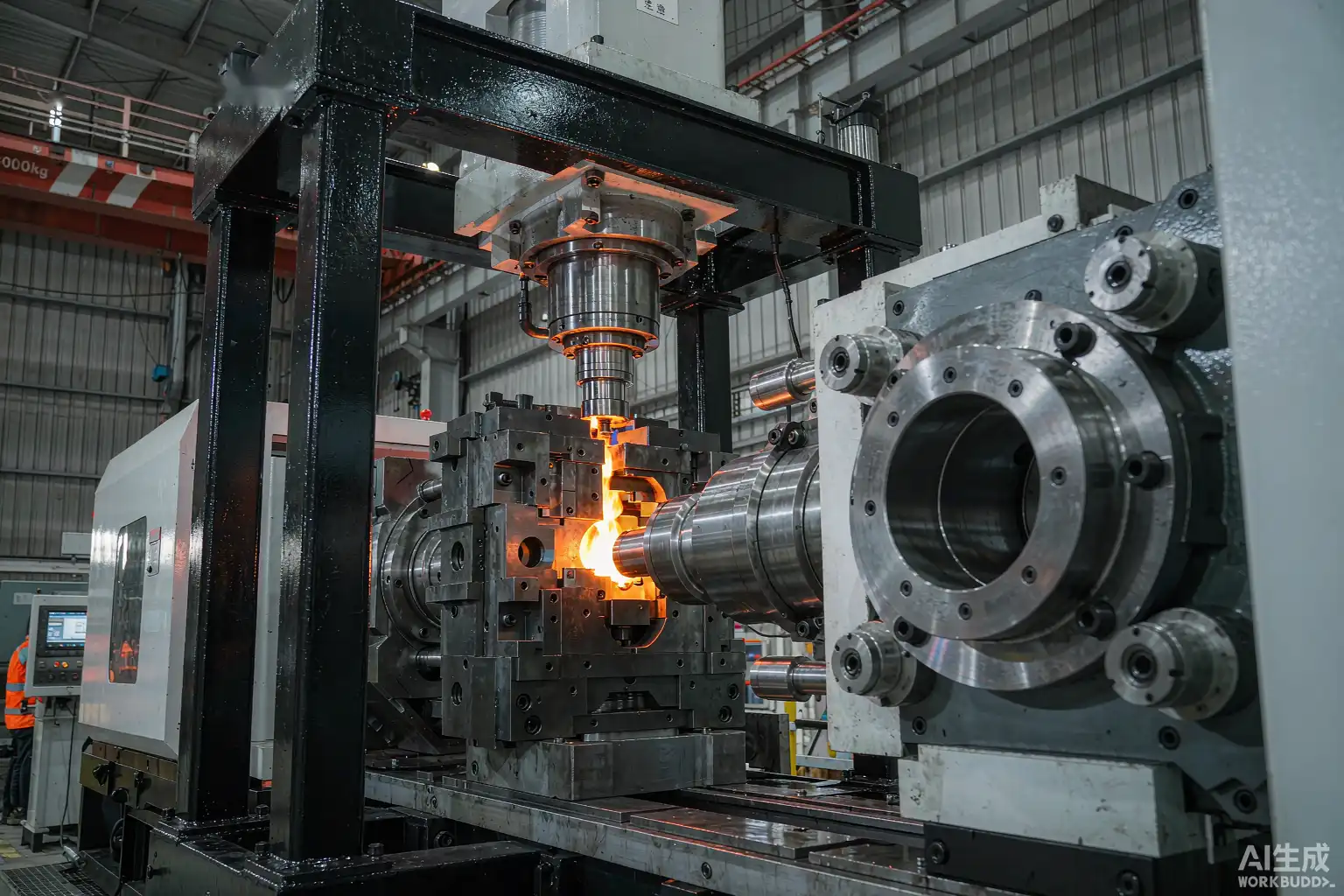
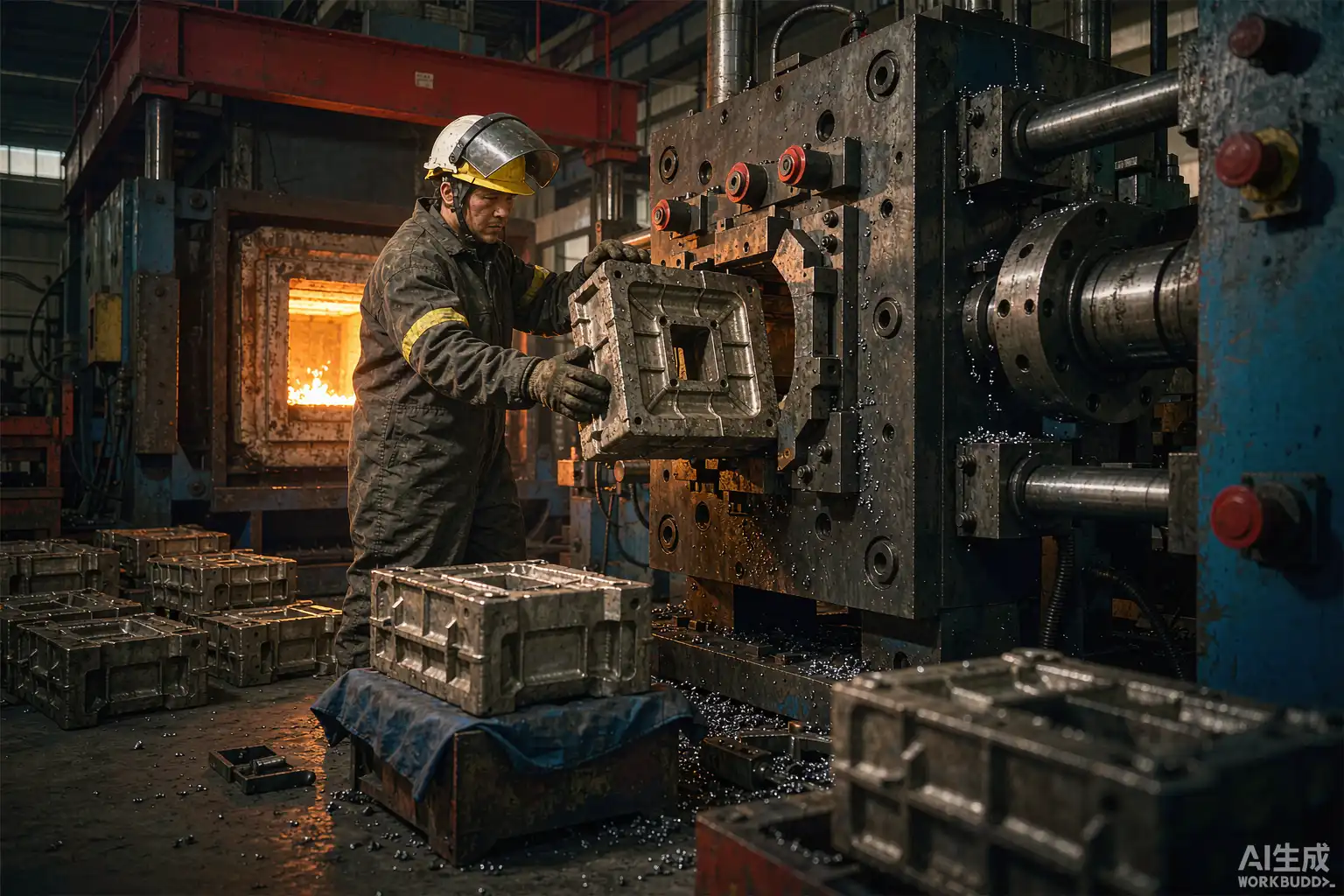
Die cast aluminum is aluminum alloy formed by forcing molten metal into a steel mold (die) under pressure. Unlike forging, which shapes solid metal, or sand casting, which uses a disposable mold, die casting delivers near-net-shape parts with tight tolerances and a smooth surface — at production speeds measured in seconds, not hours.
The trade-off? Die casting requires an upfront investment in tooling. But when your annual volume reaches thousands of parts, die casting aluminum is usually the lowest cost-per-part process in metal manufacturing.
Die Casting vs. Sand Casting vs. Forging
| Process | Tolerance | Surface Finish | Wall Thickness | Cost Per Part (High Volume) |
|---|---|---|---|---|
| Die casting | ±0.1 mm typical | Excellent | 0.8–3 mm | Lowest |
| Sand casting | ±1–2 mm | Rough | 4 mm+ | High (labor intensive) |
| Forging | ±0.5 mm | Good | 2 mm+ | High |
Key Design Considerations for Die Cast Aluminum Parts
Designing for die casting is different from designing for machining or fabrication. The mold adds constraints — and understanding them before you send the drawing to a manufacturer saves weeks of iteration.
Draft angles. Because the die opens to eject the part, every vertical wall needs a slight taper — typically 1–3° for exterior walls and 2–5° for interior walls. Zero-draft designs are impossible in die casting. If your design has tight dimensional requirements on a draft surface, discuss it with the manufacturer early: they can often compensate in the die, but only if they know in advance.
Wall thickness. Uniform walls are the single most important quality factor. Sudden thick-to-thin transitions create shrink porosity and sink marks. The ideal range for aluminum is 1.5–3.0 mm, with ribs and bosses added for stiffness instead of thicker walls. As a rule, keep the thickest section no more than 2× the thinnest adjacent section.
Ribs, bosses, and holes. Ribs add stiffness without adding weight, but they must be designed with the correct draft and radius at the root to avoid stress concentrations. Bosses for screws need a diameter of roughly 2× the screw diameter, and blind holes are best cast with a core pin rather than drilled afterward. Where possible, combine multiple features into one casting — every separate component you eliminate is one less assembly step and one less supplier.
Corner radii. Sharp internal corners are stress raisers that promote cracking in service and make metal flow difficult in the die. Specify minimum radii of 0.5–1.0 mm at internal corners. This is a free improvement: it costs nothing at the drawing stage and improves both die life and part strength.
These five rules — draft, uniform walls, ribs, boss sizing, and corner radii — are the difference between a design that casts first time and one that needs three mold revisions. A good die casting manufacturer will point them out in a DFM review, but arriving with a castable design puts you in a much stronger negotiating position.
Common Applications of Die Cast Aluminum
Die cast aluminum is everywhere once you start looking. The largest application family is transportation: transmission housings, engine brackets, steering knuckles, and structural components that combine strength with light weight. The second is electrical and electronics: motor housings, heat sinks, and enclosure frames that leverage aluminum’s thermal conductivity and EMI shielding. The third is consumer products: power tool gearboxes, appliance frames, lighting housings, and furniture components.
For sanitary and hardware products specifically, aluminum die casting appears in shower bodies, valve housings, door handles, and faucet components — usually combined with zinc die casting for the decorative parts. In every one of these applications, the finishing stage determines whether the product looks premium or looks like a raw casting. That is why we see more and more manufacturers investing in automated deburring, grinding, and polishing capacity alongside their casting machines: they have learned that finishing capacity, not casting capacity, is what limits their shipments.
The Three Main Aluminum Die Casting Processes
Not all aluminum die casting is the same. The process you choose changes the cost, the achievable geometry, and the finishing your parts will need.
High-Pressure Die Casting (HPDC)
Molten aluminum is injected into the die at high speed and high pressure. This is the workhorse of the industry: it produces thin-walled, complex, high-volume parts such as housings, brackets, and components for automotive, sanitary, and hardware products. Over 50% of all light-metal castings worldwide are produced this way.
Gravity Die Casting (GDC)
Metal fills the permanent steel mold by gravity alone. Slower cycle times and thicker walls, but lower porosity and better mechanical properties — which is why gravity die casting remains the standard for faucet bodies and pressure-tested components.
Low-Pressure Die Casting (LPDC)
Metal rises into the die from below under low air pressure. It delivers a clean, controlled fill with excellent density, commonly used for wheels and structural automotive parts where internal soundness matters.
The Most Common Die Cast Aluminum Alloys
Alloy selection drives both the properties of your part and how easily it can be finished. These are the grades you will meet in almost every RFQ.
| Alloy | Key Properties | Typical Applications |
| A380 | Best all-round; excellent castability, strength, and corrosion resistance | Housings, brackets, power tools, automotive |
| ADC12 (A383) | Similar to A380, slightly better fluidity; the Asian standard | Enclosures, lighting parts, electronics |
| A356 | Heat-treatable, high ductility, weldable | Structural and aerospace components |
| AlMg5Si2 (A413) | Pressure-tight, corrosion resistant | Hydraulic and pneumatic components |
Where Die Cast Aluminum Parts Fail: The Surface Problem
Here is the part most guides skip. A freshly ejected aluminum die casting is not a finished product. Every casting carries:
- Flash and parting-line burrs — thin fins of metal left where the die halves meet.
- Gate and runner remnants — the visible stubs where molten metal entered the cavity.
- Ejector pin marks — small raised or recessed dots from the pins that push the part out.
- Surface oxides and flow lines — discoloration and texture irregularities on the casting skin.
If these defects are not removed before plating, anodizing, or painting — see our deburring solutions for aluminum die castings for the full playbook — they become visible rejects — and in customer-facing products like faucets, door handles, and automotive trim, a single visible burr is grounds for a rejected shipment. This is why the surface finishing stage decides whether your die cast aluminum investment pays off.
Surface Finishing: Deburring, Grinding, and Polishing
Traditionally, this work was done by hand with belts, wheels, and files. That approach worked when labor was cheap and volumes were low. Today, in every market we serve — from India to Turkey to Brazil — casting plants are discovering the same three problems:
- Labor shortage: skilled grinding and polishing operators are increasingly hard to find and expensive to keep.
- Inconsistent quality: two operators, two shifts, two different part finishes. Manual finishing makes uniform quality almost impossible to sustain.
- Scrap and rework: damaged plating, over-ground edges, and missed burrs all translate directly into lost margin.
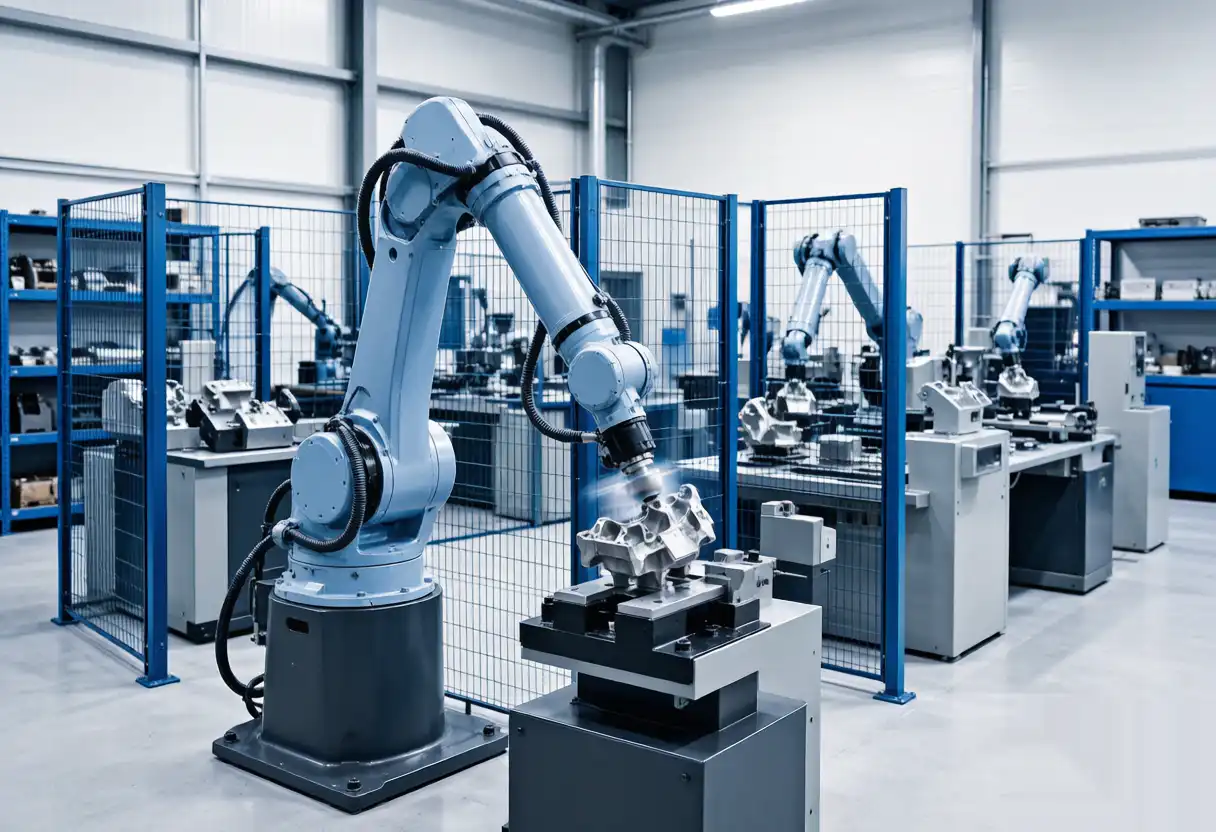
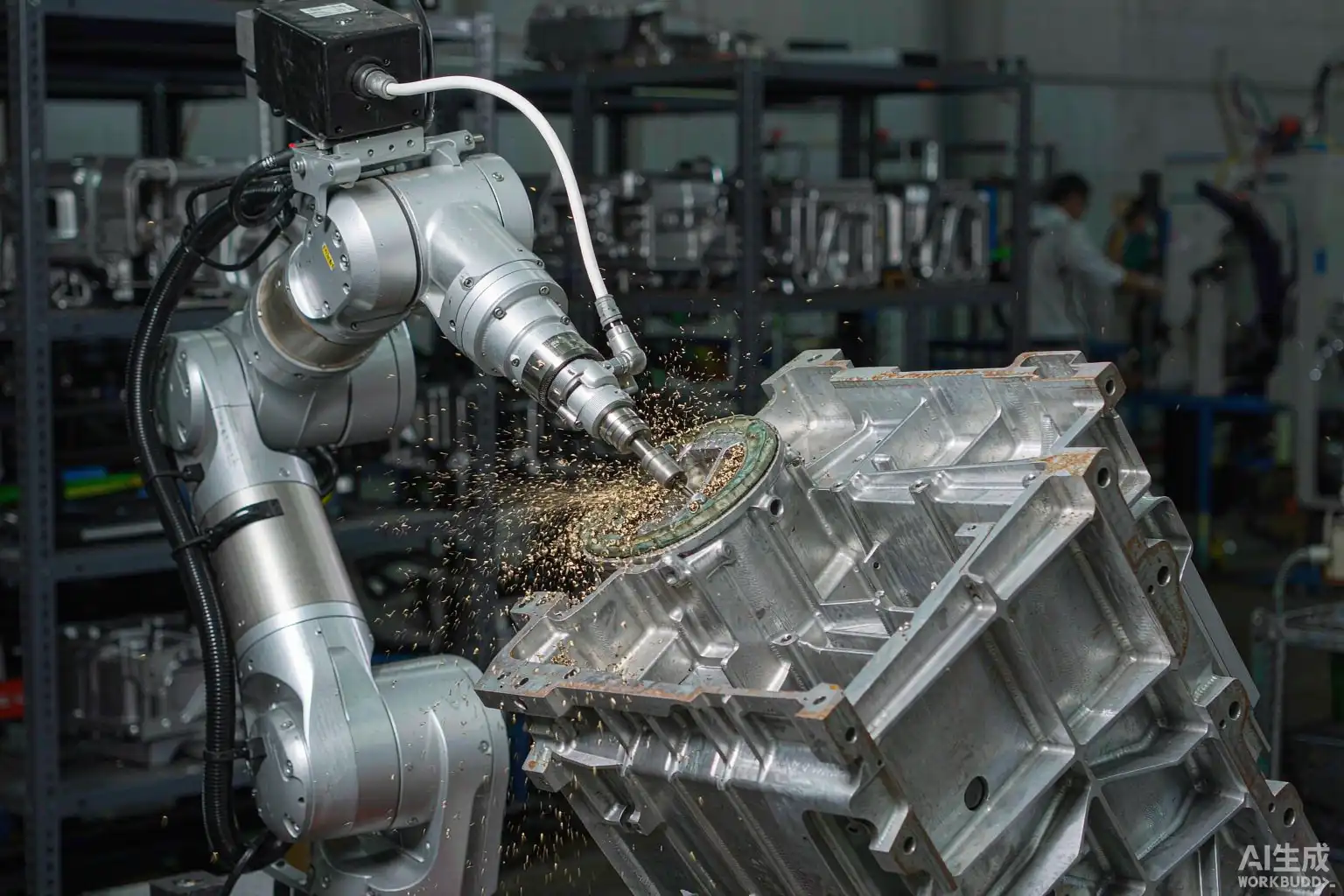
Automated deburring, grinding, and polishing cells solve all three. A robotic cell repeats the same path to the same tolerance, on every part, every shift. From my own experience equipping over a hundred plants, manufacturers who switch from manual to robotic finishing typically cut finishing labor by 60–80% and reduce finish-related rejects to near zero.
If you are evaluating die cast aluminum parts right now, ask your supplier one question most buyers forget: “How do you deburr and finish your castings — manually or automatically?” The answer tells you more about delivery consistency than any ISO certificate.
FAQ About Die Cast Aluminum
What is the minimum wall thickness for die cast aluminum?
Typically 0.8–1.0 mm for small parts under high pressure, and 2–3 mm for gravity die casting. Design below these limits risks incomplete fill.
Is die cast aluminum strong?
Yes — A380 castings offer tensile strength around 320 MPa, comparable to many wrought alloys, with the advantage of near-net shape at low cost per part.
Can die cast aluminum be anodized or painted?
Yes, but the casting skin must be clean and defect-free. Burrs and oxide layers must be removed first — which is exactly why automated grinding and polishing matters before anodizing.
What is the difference between die cast aluminum and extruded aluminum?
Extrusion produces constant cross-sections (profiles); die casting produces complex 3D shapes. For housings, brackets, and bodies with intricate geometry, die casting is the standard choice.
How much does die casting tooling cost?
A production aluminum die casting mold typically ranges from $10,000 to $100,000 depending on part size and complexity. The cost is amortized over your part volume — which is why die casting only makes economic sense at higher volumes.
How do I get the surface finish I need?
Specify the finish in your drawing (for example, Ra 0.8 µm for polished surfaces before plating). Expect a deburring and polishing process between casting and coating — automated cells give the most consistent results on high volumes.
What causes porosity in die cast aluminum?
Trapped air and gas in the molten metal. It is controlled with die design, vacuum assistance, and process parameters — and it is the main reason pressure-tight parts are often moved from HPDC to gravity or low-pressure casting.
Conclusion
Die cast aluminum remains the most economical way to produce strong, complex, high-volume metal parts — but the process is only half the story. Alloy choice, process selection, and above all, surface finishing quality decide whether your product meets customer expectations.
At Xiamen Dingzhu, we have spent 20 years automating the deburring, grinding, and polishing of zinc and aluminum alloy die castings for faucet, hardware, automotive, and sanitary manufacturers worldwide. If you want a consistent, labor-light finishing process for your die cast aluminum parts, send us your drawing and sample — we will show you the automated solution.