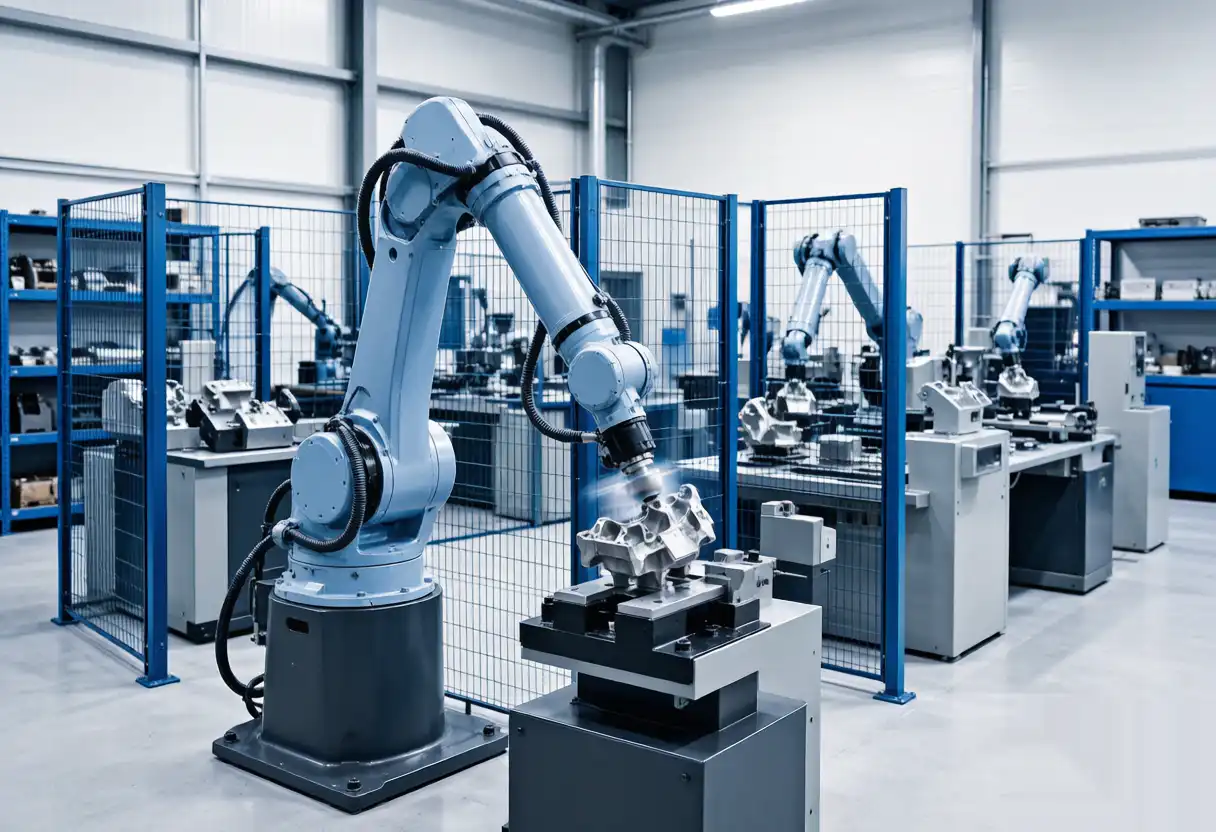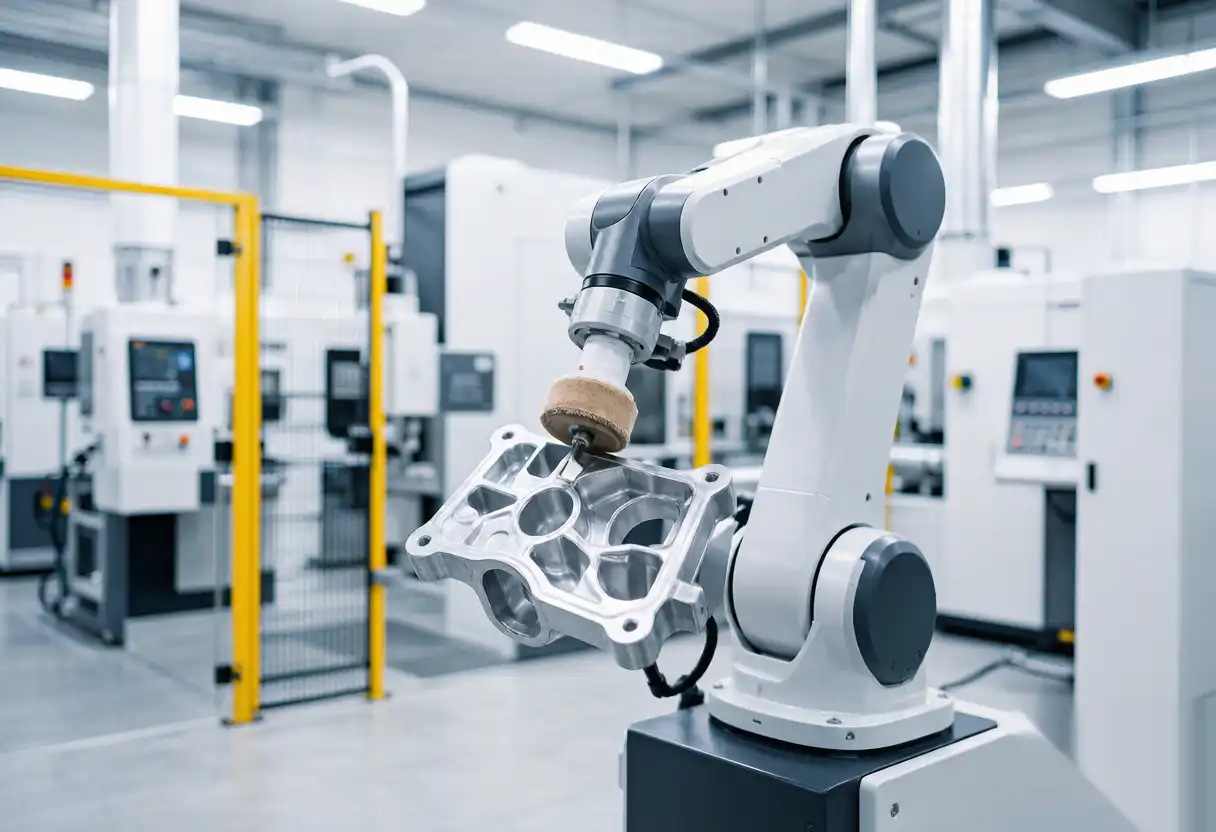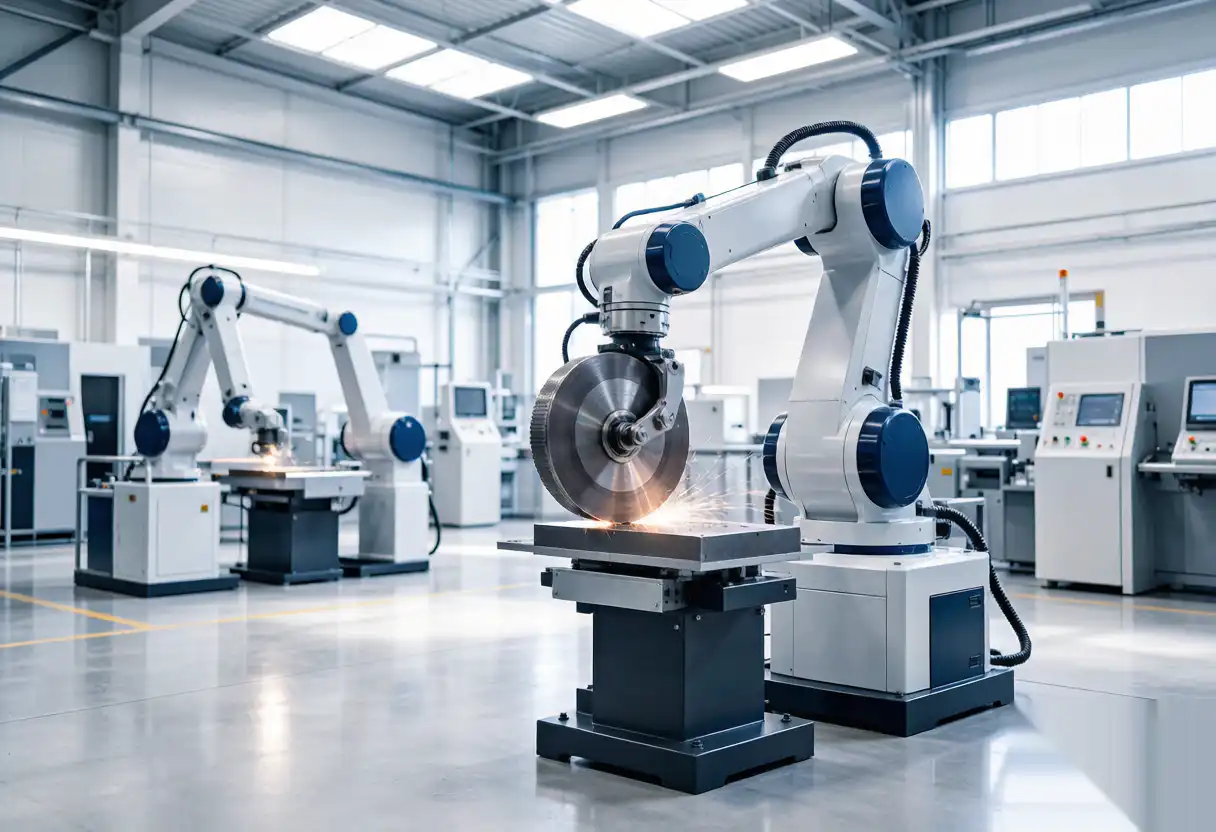



A finishing robot cell is not a standalone machine. It joins a line that already has loaders, conveyors, inspection, and a control system. Integration is the work of making all of those speak to each other. Done well, the cell runs as part of the flow. Done badly, it becomes an expensive island.
This guide is written for the people who own that work. If you are the engineer or the project owner signing the integration scope, this is your map. It covers the four interface domains, the timeline, and the acceptance criteria you should put in the contract.
The Integration Scope at a Glance
Integration splits into four domains. Each one has its own supplier, its own risks, and its own acceptance test. Scope all four before anyone quotes.
| Domain | What it covers | Typical owner |
|---|---|---|
| Mechanical | Load/unload, conveyors, fixtures, guarding frame | Integrator or plant |
| Electrical & safety | Interlocks, light curtains, e-stops, power distribution | Integrator |
| Utilities | Air, vacuum, coolant, extraction | Plant |
| Data & control | PLC link, MES, recipes, reports | Integrator + plant IT |
Therefore, the scope document is the first deliverable. If a domain is missing from it, that domain will cost extra later.
Mechanical Integration
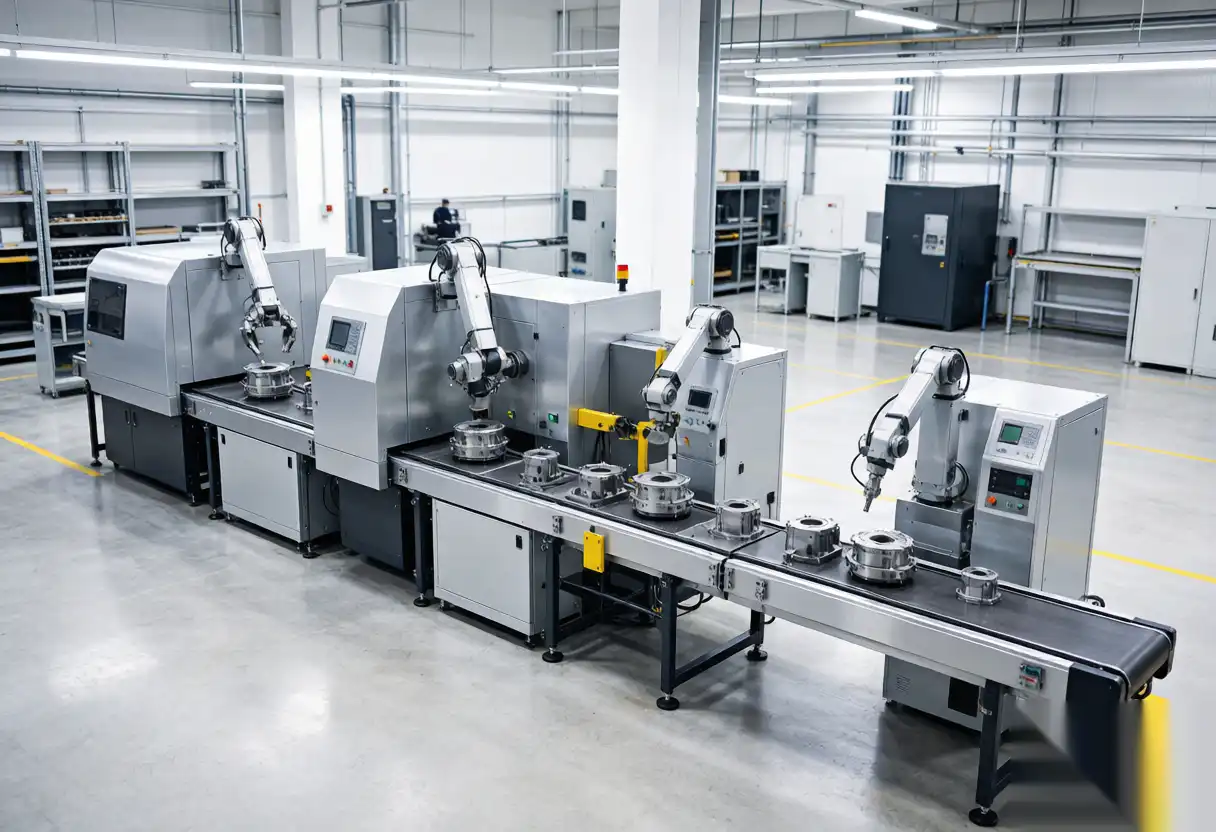
Mechanical integration connects the cell to the physical flow. The part must arrive at the cell, load into the fixture, and leave toward the next station. Each move is a handoff, and each handoff is a risk.
For example, a conveyor that delivers parts at a fixed height needs a buffer at the cell. The robot picks from the buffer, not from the moving belt. The buffer absorbs timing differences between the line and the cell.
In addition, the fixture interface matters. Robotic polishing cell setup shows the value of a datum-based fixture. When the cell shares the line’s locating standard, handoffs are clean and re-fixturing disappears.
Therefore, design the mechanical handoffs on paper first. Mock them with the integrator. Mechanical integration is the cheapest to fix before steel is cut.
Electrical and Safety Integration
Safety is electrical integration with teeth. The cell must stop the instant a person enters. Interlocked fencing, light curtains, and e-stops are wired into the robot controller and the line’s safety circuit.
For example, a light curtain at the load station lets the operator load parts while the robot works behind it. The curtain and the gate share one safety chain. The whole line stops together on a fault.
In addition, power distribution needs planning. A cell draws three-phase power, compressed air, and sometimes coolant. The plant’s existing supply may need an upgrade. Check capacity before the robot arrives.
Consequently, the safety circuit is not an add-on. It is part of the line’s electrical design from the first drawing.
Utility Integration
The cell needs utilities the way a worker needs tools. Compressed air drives clamps and tooling. Vacuum holds lightweight parts. Extraction removes abrasive dust at the source.
For example, a zinc finishing cell without source extraction coats everything in dust within a week. The dust damages the finish and the machinery. Extraction must be sized to the cell, not to the building.
In addition, air quality matters. A dry, filtered supply protects the force sensors and the tool changers. Moisture in the line ruins both. Put a dryer and a filter at the cell inlet.
Therefore, list the utility loads in the scope. Air volume, vacuum flow, coolant, and extraction all have numbers. If a number is missing, the utility work will be estimated, not quoted.
Data and Control Integration
Data integration is where modern cells win. The cell’s PLC talks to the line’s PLC. Recipes load from a central store. Cycle time and yield flow to the MES. The cell becomes a data source, not a black box.
For example, a line that schedules by recipe sends the next part number to the cell. The cell loads the recipe, confirms the fixture, and starts. The operator never touches the screen for a planned changeover.
In addition, designing an automated finishing line depends on this loop. The data that balances the line comes from the cells themselves. Without the interface, the line runs blind.
Consequently, agree on the data protocol early. Most integrators work with standard industrial protocols and database exports. Ask for the interface document before you sign.
Integration With Upstream and Downstream
The cell sits between two worlds. Upstream, castings arrive from machining or casting. Downstream, finished parts move to assembly or plating. The cell must match the pace of both.
For example, a robotic deburring cell upstream feeds parts to this cell. The two cells share a buffer and a schedule. The integration work is a handshake, not a one-way feed.
In addition, downstream inspection matters. If the next station expects a specific orientation, the cell must place the part that way. That requirement lives in the mechanical and data scope both.
Therefore, map the full flow, not just the cell. The integration succeeds when the part moves smoothly from the first station to the last.
Roles and Timeline
Integration needs clear ownership. The integrator handles the robot, the tooling, and the cell controls. The plant handles the utilities, the building work, and the line interfaces. One person on each side owns the schedule.
- Week 1–2: Scope review, utility check, and interface agreement.
- Week 3–6: Cell build, fixture manufacture, and safety design.
- Week 7–8: Installation, wiring, and utility hookup.
- Week 9–10: Commissioning, safety validation, and first articles.
- Week 11–12: Ramp-up, training, and acceptance.
Therefore, plan twelve weeks for a typical cell. The fixture and the integration are the long poles. Start them first.
Budgeting the Integration Work
Integration costs hide in the same four domains. Ask for a line-item quote per domain, and compare them. A quote that lists only the robot and the guarding is missing the utilities and the data work.
For example, a typical cell price splits roughly into the robot and tooling, the fixtures, the guarding and safety, the utilities, and the integration and training. The last three together often match the robot itself. Plan for that split.
In addition, budget a contingency of ten to fifteen percent. Every integration project meets surprises in the utilities or the line interfaces. The contingency keeps the project moving instead of stopping it.
Therefore, the integration budget should be signed alongside the cell budget. They are one project, not two.
Commissioning: The First Week
The first week on site sets the tone. The integrator installs, wires, and connects the utilities. Then the safety circuit is tested before the robot moves at full speed. Nothing runs until the gates and curtains are proven.
For example, day one is mechanical. Day two is electrical and utility hookup. Day three is the safety test. Only after that does the robot jog. A commissioning plan with this order protects people and avoids rework.
In addition, your team should be present all week. They learn the machine as it comes alive. The integrator teaches; your technician absorbs. By the end of the week, the handover is already halfway done.
Consequently, book your team’s time into the commissioning week. The best training is the one that happens during installation.
Common Integration Mistakes
- Missing utility capacity. Air and power run short on day one. Check them before the order.
- No buffer. The line and the cell fall out of sync. Add buffer racks early.
- Undefined data protocol. The MES link becomes a project of its own. Agree it in the quote.
- Safety done last. Retrofitting interlocks is slow and costly. Design them in.
- No single owner. Integration drifts when nobody owns the schedule. Name one owner per side.
Handover Documentation
Integration ends with documents, not with a running cell. The handover package includes the recipe list, the fixture drawings, the safety wiring diagram, the spare parts list, and the maintenance checklists. Without them, the knowledge leaves with the integrator.
For example, a missing wiring diagram costs a day of downtime the first time a fault appears. A spare parts list without part numbers costs a week of waiting. The documents are part of the machine.
Therefore, list the handover documents in the contract. Review them at acceptance, and hold the final payment until the package is complete.
Acceptance Checklist
Put the acceptance criteria in the contract. These are the checks that decide when the project is done and the payment is released.
- Cycle time. The cell meets the target cycle on your parts, measured over a full shift.
- First-pass yield. The finish passes your spec on a validation batch of 50 parts.
- Safety sign-off. All interlocks, curtains, and e-stops pass a documented test.
- Data flow. Cycle time and yield reach the MES or the agreed report format.
- Training. Your operators and technician run the cell without the integrator present.
- Documentation. Recipes, drawings, and maintenance checklists are handed over.
Therefore, agree these six checks in writing. A cell that passes them is integrated. A cell that fails one is not finished, no matter how good it looks.