

AT A GLANCE · Finishing used to be a volume game. A cell earned its keep by running one part family for months. That era is ending. Customers order smaller batches, change parts faster, and expect the same quality every time. The flexible finishing cell is the answer to that shift.
However, flexibility is not one feature. It is a design philosophy. This article explains how a flexible cell works, why it costs less over time, and who benefits most.
Why Flexibility Is the New Standard
Markets move faster than production plans. A part that sold for years can shrink to a quarterly order overnight. A cell built for one part becomes scrap. A flexible cell absorbs the change.
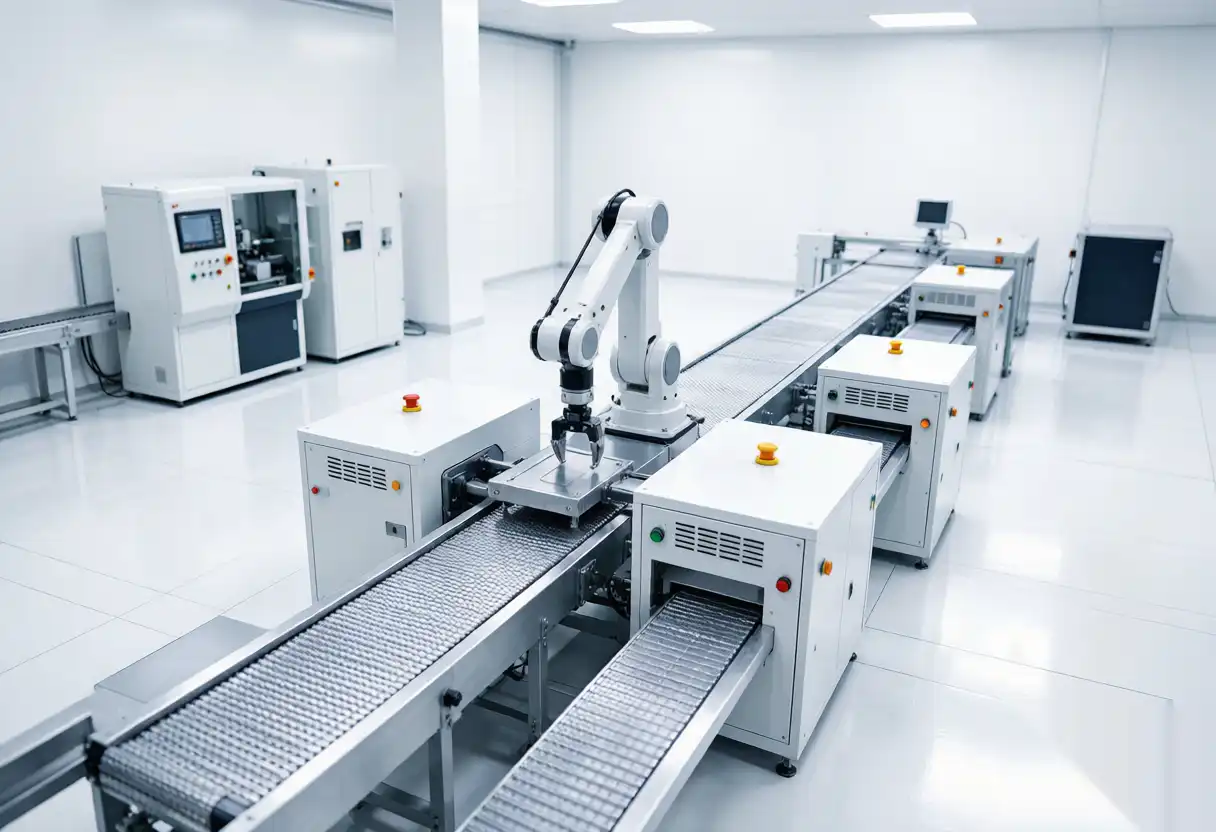
In addition, high-mix low-volume production is now normal in casting and machining. The plants that handle it win the orders. The rest wait for volume that never comes.
Therefore, flexibility is not a premium feature. It is the baseline for survival.
What a Flexible Cell Looks Like
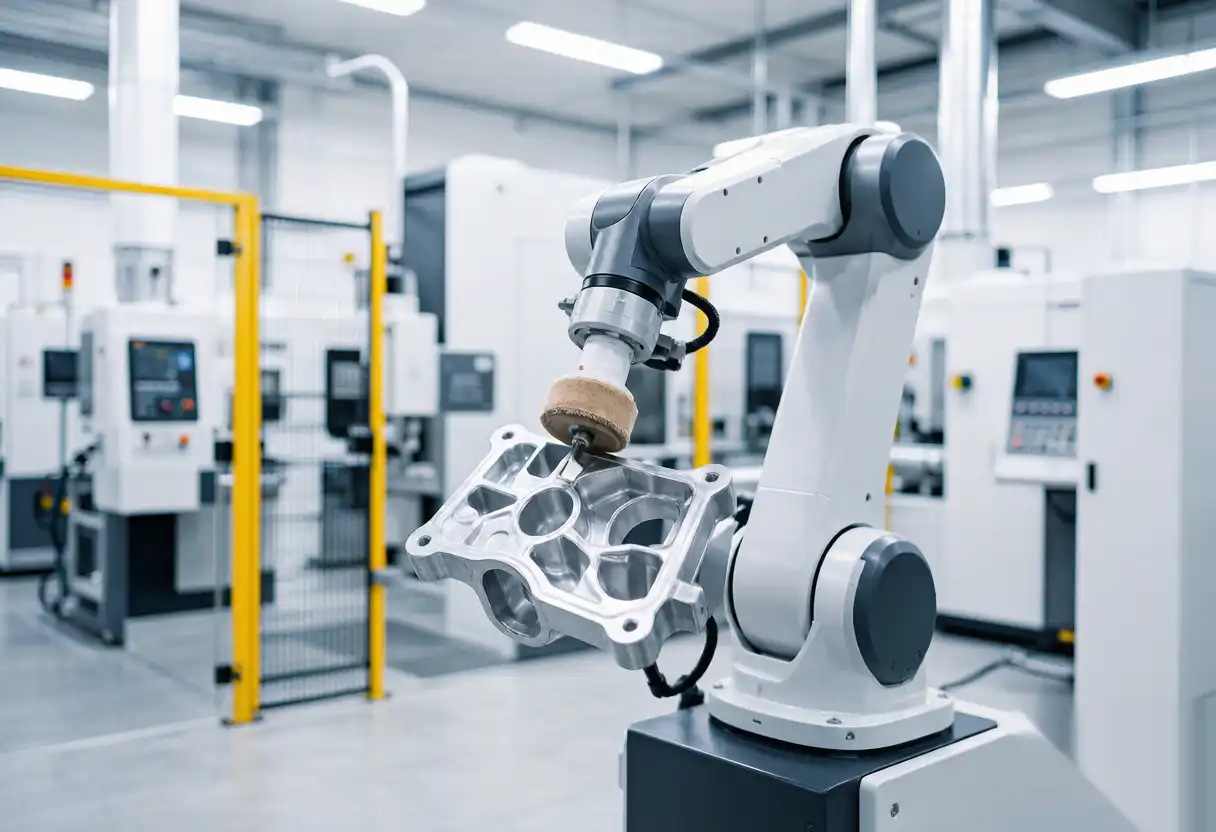
A flexible cell combines a robot, a force-controlled tool, quick-change fixtures, and a recipe library. The robot is shared. The fixtures and recipes define the job. Switching parts is a changeover, not a re-commissioning.
For example, the same cell deburrs a faucet body in the morning and polishes a housing in the afternoon. The operator swaps the fixture and loads the recipe. The robot does the rest.
As a result, one cell serves many part families. The utilization stays high even when no single part has big volume.
Quick-Change Fixtures
The fixture is the heart of changeover. Quick-change fixtures mount on a standard base plate with locating pins and clamps. The swap takes minutes, not hours. Each family keeps its own fixture ready on a rack.
In addition, fixtures are designed once and reused. The locating logic carries across families. Robotic polishing cell setup teaches this pattern. Datum-based locating makes every new fixture predictable.
Consequently, the fixture rack is the cell’s real catalog. Add a family by adding a fixture and a recipe.
Recipe Libraries
A recipe stores every setting. Tool path, force, speed, compound, passes, and media. The library grows with every family. New parts start from the closest existing recipe, not from zero.
For example, a housing recipe copies the layout of a similar housing. The engineer adjusts force and overlap, runs a sample, and saves the new recipe. That takes hours, not weeks.
Therefore, the recipe library is the accumulated knowledge of the shop. It survives staff changes and improves with every part.
Multi-Tool End Effectors
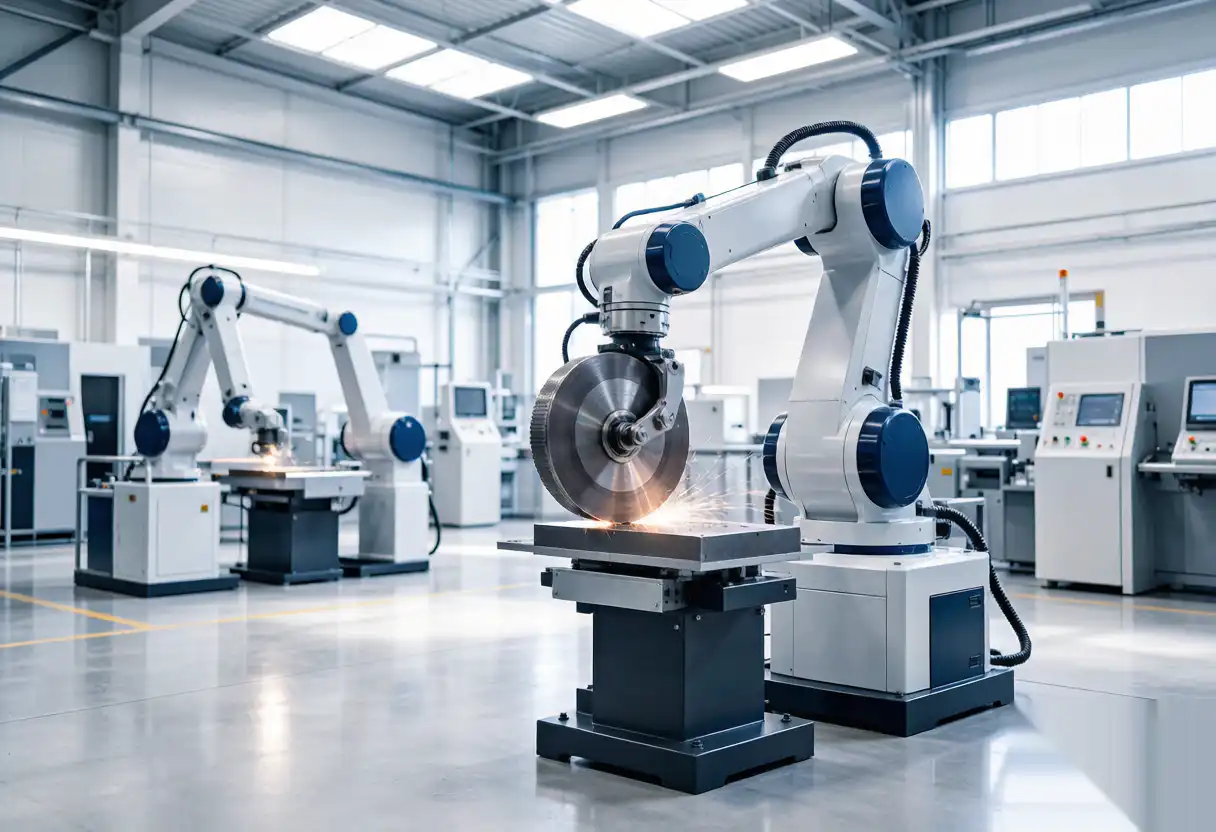
One robot can carry several tools through a tool changer. A deburr brush, a grinding head, and a buffing spindle on the same arm. The cell switches tools between passes without human help.
In addition, a compliant tool base lets the robot change pressure per tool. The heavy tool cuts, the light tool finishes. The range widens without adding robots.
As a result, a single flexible cell covers the full deburr-to-polish range. The footprint stays small.
Vision-Assisted Changeover
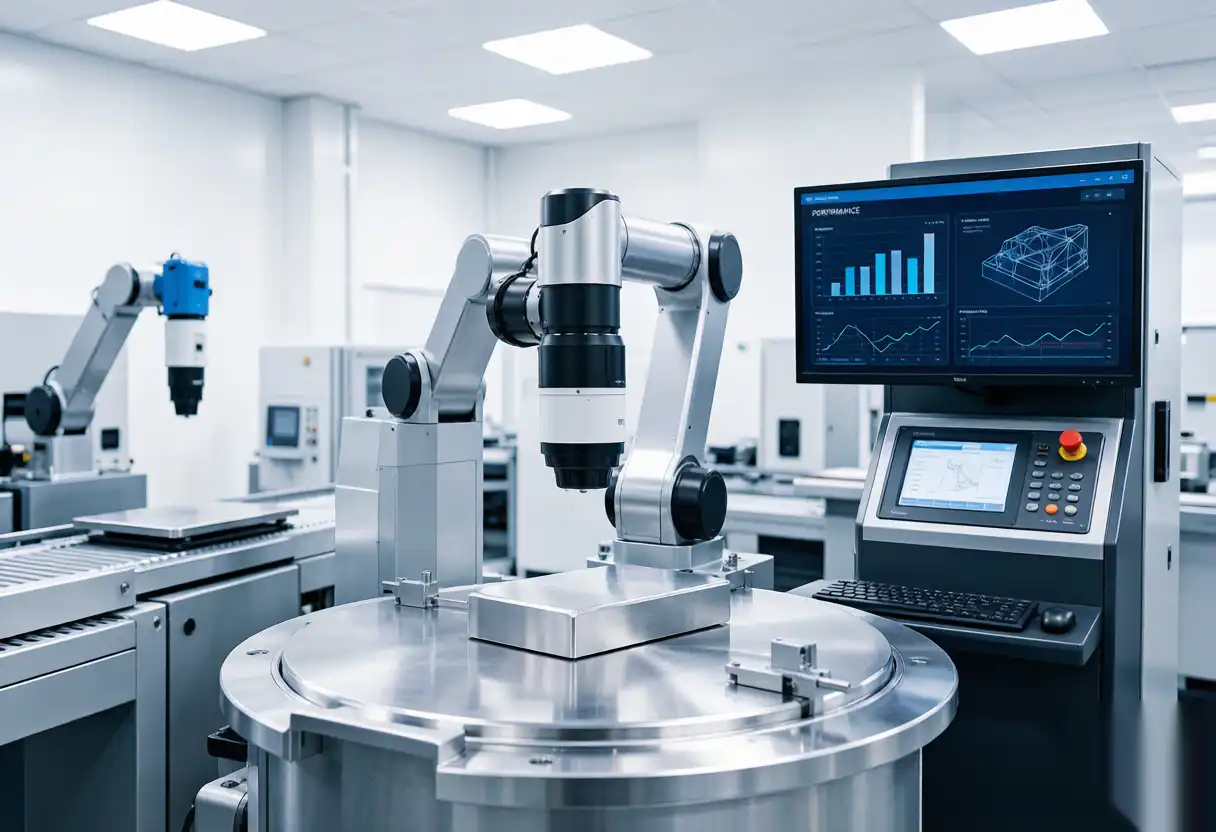
Vision makes changeover foolproof. A camera checks the fixture and the part before the cycle starts. If the wrong fixture is loaded, the cell refuses. If the part shifted, the path adjusts.
For example, a cell with vision can handle castings that vary slightly. The robot finds the actual part and works from that. The tolerance for variation widens.
In addition, vision verifies the result. The cell catches a missed zone and reworks it before shipping. The loop closes automatically.
The Economics of Flexibility
Flexibility changes the payback math. A dedicated cell needs one part family with volume. A flexible cell spreads its cost across many families. Utilization stays high, so the payback shortens.
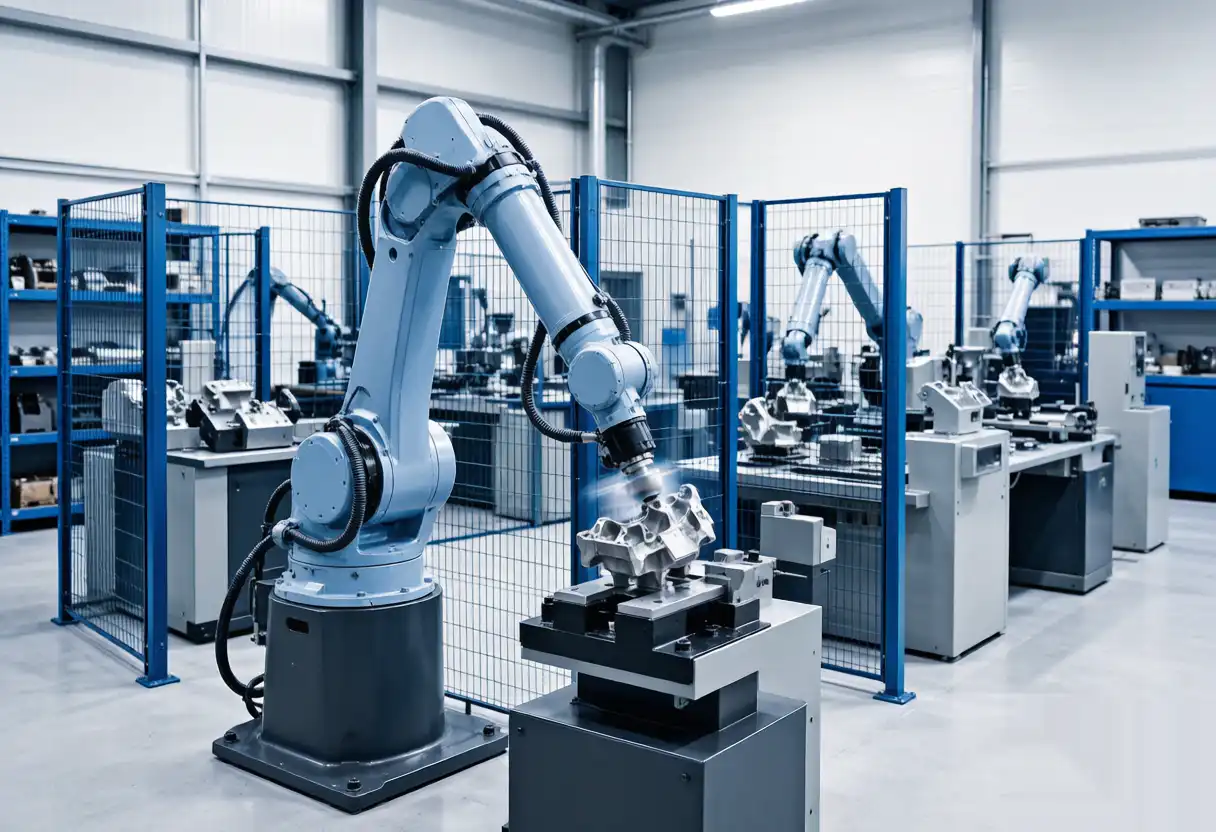
For example, a robotic deburring cell shared by five families runs more hours than a dedicated cell starved for work. The shared cell earns its keep.
In addition, flexibility reduces risk. If one product ends, the cell switches to another. The investment is protected.
Who Benefits Most
Three groups benefit most. Job shops with mixed catalogs gain the most utilization. Casting plants with many small runs keep quality without dedicated lines. OEM suppliers facing frequent design changes adapt without new capital.
Meanwhile, high-volume single-part plants still prefer dedicated cells. Flexibility costs a little throughput. Know your mix before you choose.
Therefore, match the flexibility level to the order book. Too little, and you chase every part. Too much, and you pay for capacity you do not use.
Designing the Changeover Workflow
Changeover is a process, and it deserves a process design. Standardize the steps: stop, swap the fixture, load the recipe, run a first article, verify, and release. Write the sequence down.
For example, a five-minute changeover only happens when everything is prepared. The fixture is staged, the recipe is saved, and the first article is measured. The checklist makes it repeatable.
In addition, time the changeovers. A cell that averages eight minutes instead of fifteen gains an hour a day of production. That hour is free capacity.
Training for Flexibility
A flexible cell needs flexible people. The operator should understand fixtures, recipes, and basic troubleshooting. That depth of skill is what keeps the cell moving when the parts change.
For example, an operator who can tune a force table saves a service call. They adjust the recipe, run the sample, and confirm the finish. The supplier stays on the phone, not on the road.
Therefore, invest in training beyond the basics. A week of advanced training pays back on the first unexpected part.
Measuring Flexibility
Flexibility is a metric, not a feeling. Track changeover time, the number of families run per week, and the utilization of the cell. Together, they show how flexible the cell really is.
For example, a cell that runs five families a week at 85 percent utilization is earning its keep. One that runs two families at 50 percent is a dedicated cell wearing a flexible label.
Consequently, review these numbers monthly. They decide whether the next investment is another flexible cell or a dedicated one.
Flexibility vs Throughput Trade-Off
Flexibility costs a little peak speed. A dedicated cell runs one part faster than a flexible cell that must change over. The trade-off only matters if you never change parts.
For example, a flexible cell at 90 percent of a dedicated cell’s speed, running three families, beats the dedicated cell on total output. Utilization wins over peak rate.
Therefore, decide with data. Track how often the product mix changes. If it changes weekly, buy flexibility. If it changes yearly, buy speed.
Building the Fixture Rack
The fixture rack is the cell’s library. Start with the top five families and build their fixtures first. Design each one on the same base plate, so the changeover is always the same motion.
For example, a rack with five fixtures and five labeled recipes makes changeover a five-minute routine. The operator stages the next fixture while the cell runs. The cell never waits.
In addition, add fixtures as orders appear. The rack grows with the business, and each new fixture is cheaper than the last because the pattern is set.
Frequently Asked Questions
How long does a changeover take? Five to fifteen minutes for most families. Fixture swap plus recipe load. The target is under ten minutes.
Can I add tools later? Yes. Tool changers accept new tools as needs grow. The robot and controller already support them.
Is a flexible cell more expensive? Slightly more hardware, but it replaces several dedicated machines. The total investment is usually lower.
Does flexibility hurt quality? No. The recipe controls quality, and every family has its own. The cell is as precise on part one as on part one thousand.
How many families can one cell handle? Most flexible cells manage five to twenty families comfortably. The limit is the fixture rack and the recipe library, not the robot.
What if a new part is completely different? The robot, the tools, and the software stay. The new part needs a fixture, a recipe, and a validation run. That is days of work, not a new project.
Is flexibility worth the extra cost? For mixed production, yes. The cell runs more hours, serves more customers, and survives product changes. The payback math improves with every family added.
How do I organize the recipe library? Name recipes by part family and finish class, and keep a version log. A clear library makes changeover a lookup, not a search.
Can two cells share a fixture design? Yes, if the base plate standard is the same. Fixtures move between cells, and operators learn one system. That standard saves money across the plant.