

If you run a casting plant or buy cast parts in volume, high pressure aluminum die casting (HPDC) is likely already the core of your business — more than half of all light-metal castings in the world are made this way. It is fast, precise, and cost-effective. But ask any plant manager what the real bottleneck is, and the answer is rarely the casting machine itself. It is everything that happens after the part comes out of the die.
In this guide, I will walk through how HPDC works, which alloys to use for what, the defects you will fight, and why automated surface finishing is the hidden key to profitable HPDC production.
How High Pressure Aluminum Die Casting Works
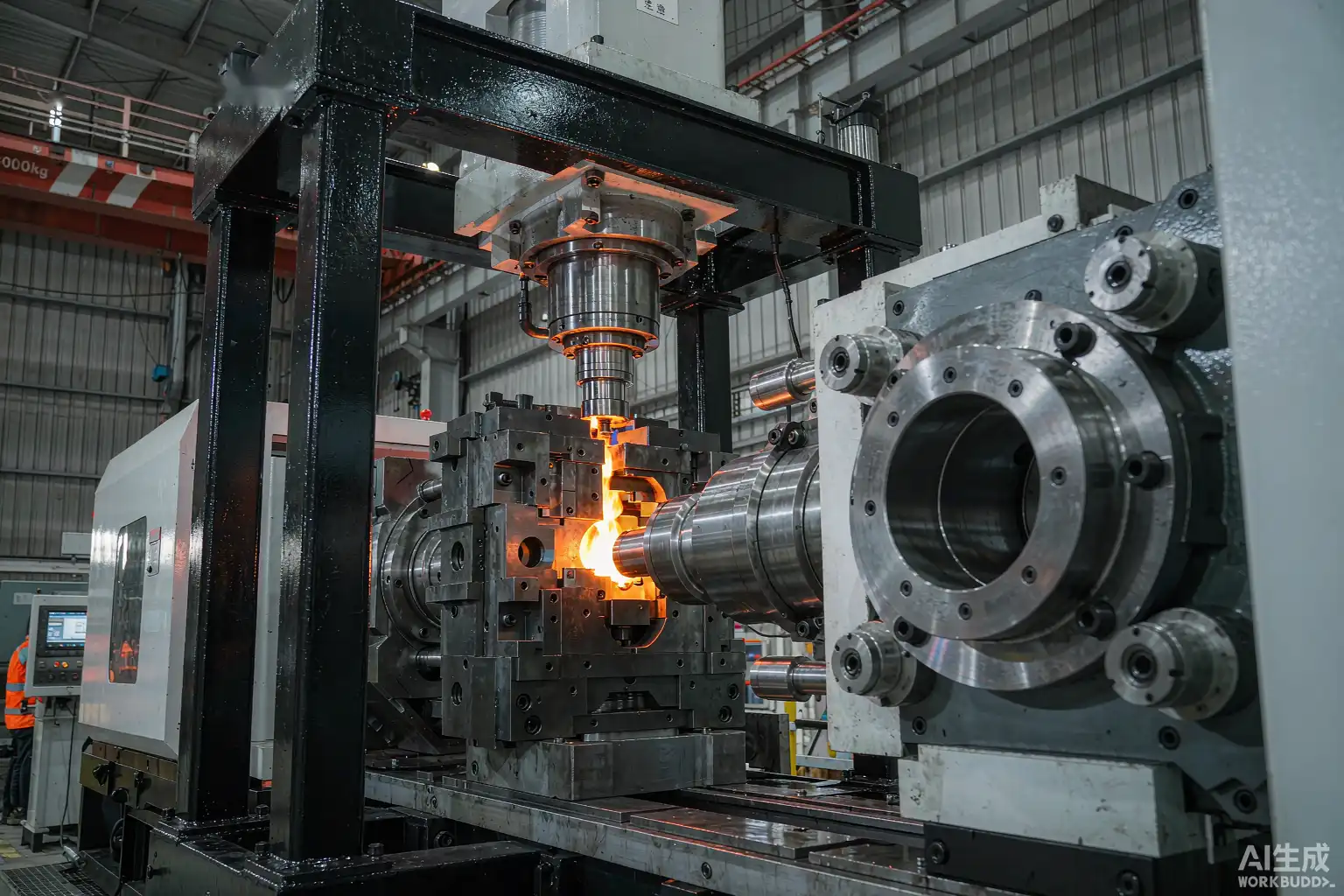
HPDC injects molten aluminum into a hardened steel die at pressures of 300–1,000 bar and fill speeds of up to several meters per second. The metal solidifies in seconds; the machine opens the die and ejects a near-net-shape part. Cycle times of 30 seconds to a few minutes make HPDC the fastest of all casting processes.
The Key Machine Components
- Die casting machine: provides clamping force (tonnage) and injection pressure. Tonnage must match projected part area to prevent the die from opening under pressure.
- The die (mold): typically two halves, water-cooled, made of H13 tool steel. Die design determines part quality more than any other factor.
- Shot system: ladle or automatic dosing system feeding molten metal to the shot sleeve.
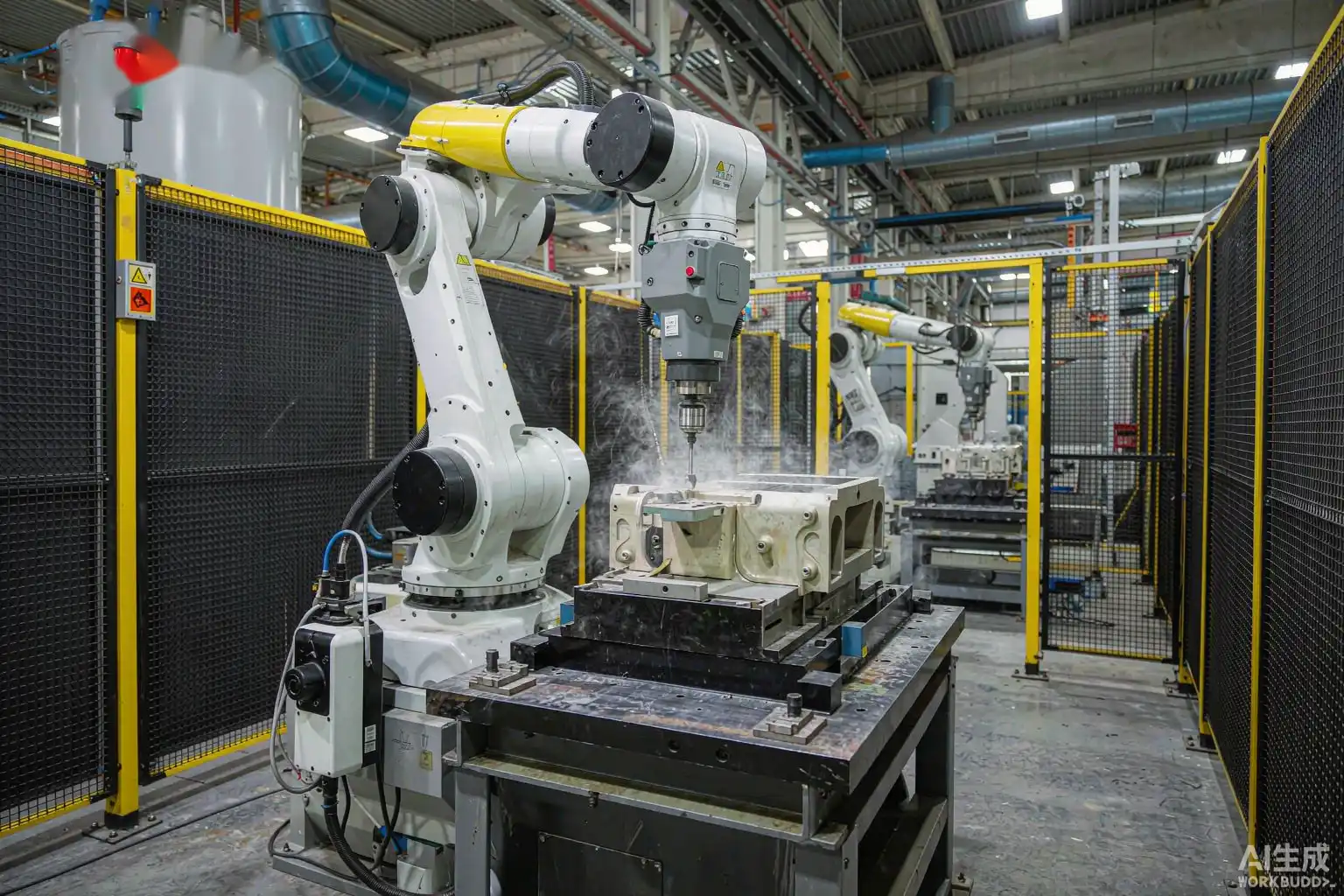
- Peripheral equipment: furnace, sprayer (die lubricant), extractor/robot, and the trimming press that removes the runner and flash.
Alloys for High Pressure Aluminum Die Casting
The most common HPDC alloys are the 380/383 family because they balance castability, strength, and corrosion resistance. Here is how to choose:
| Alloy | Best For | Watch Out For |
|---|---|---|
| A380 | General-purpose housings, brackets, automotive components | Limited ductility — not for high-stress structural parts |
| ADC12 | Enclosures, lighting, electronics (Asian standard) | Similar properties to A380; verify against your spec |
| A383 (ADC12-type) | Thin-wall, complex geometry parts | Higher cost per kg than A380 |
| A356 / A357 | Heat-treated structural parts | Requires low-pressure or gravity process for best properties |
Where HPDC Parts Are Used
If a product needs strength, light weight, and high volume, it is probably HPDC:
- Automotive: transmission housings, brackets, steering components, structural frames
- Sanitary & faucet: valve bodies, handle parts, shower components
- Hardware & locks: door handles, lock housings, fittings
- Power tools & appliances: gearboxes, motor housings, frames
- Electronics: heat sinks, enclosure frames
Common Defects in High Pressure Die Castings
Every HPDC plant lives with these five enemies:
- Porosity — trapped gas forms voids, especially in thick sections. Fatal for pressure-tight parts.
- Flash — thin metal fins along the parting line; removed by deburring.
- Cold shuts — where two metal flows meet without fusing; a cosmetic and strength defect.
- Sink marks — surface depressions over thick sections during solidification.
- Surface oxides / flow lines — skin defects that must be ground before coating.
Defects one and two are fixed by process control and die design. Defects three to five are removed — or exposed — in the finishing department. And that is where most plants lose money; start with the best practices for finishing aluminum castings.
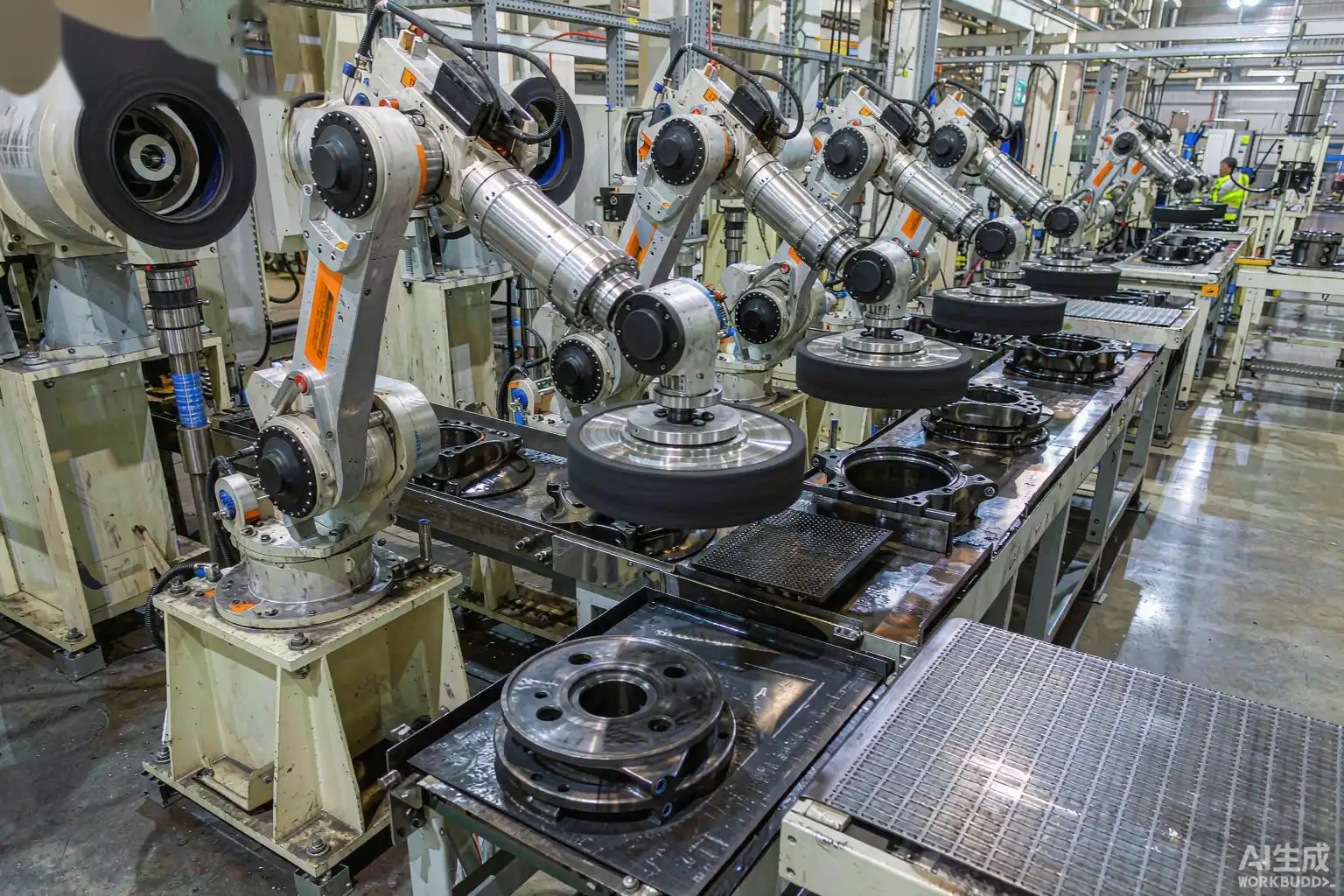
The Post-Casting Bottleneck: Deburring, Grinding, and Polishing
After ejection, every HPDC part needs the flash and gate removed, the surface cleaned, and — for visible or plated products — a smooth finish. The numbers are brutal: finishing typically accounts for 20–30% of total die casting cost, and manual finishing labor is the largest single variable cost in the plant.
Why Manual Finishing Is No Longer Sustainable
- Labor: skilled finishers are retiring faster than they are being replaced; in emerging markets the wage curve is rising sharply.
- Consistency: a manual finisher’s output drifts within a single shift. Rejects at plating or anodizing cost 3–5× the finishing labor saved.
- Throughput: hand deburring a complex casting takes minutes per part; a robotic cell does it in seconds with no fatigue breaks.
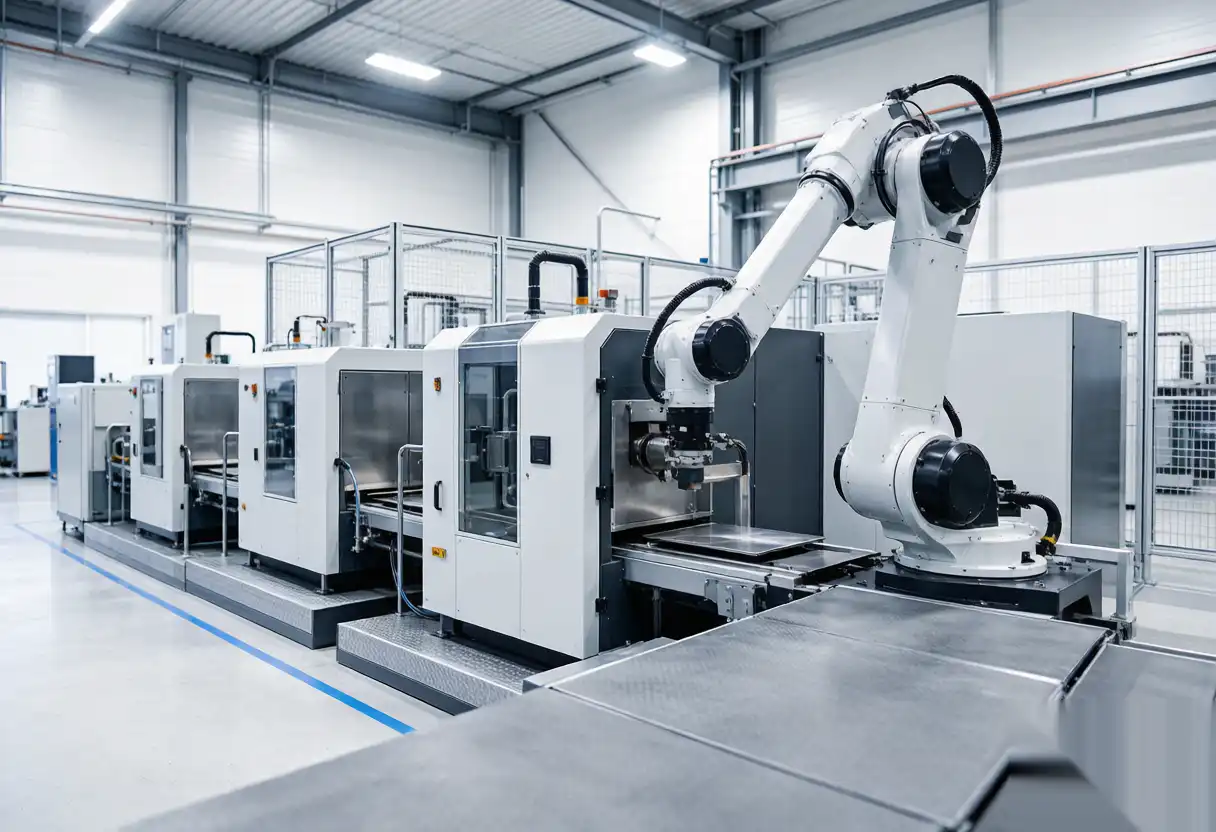
Automated Finishing Solutions for HPDC Lines
Modern plants choose between two approaches:
| Solution | Best For | Typical Payback |
| Flexible robotic deburring/grinding/polishing cell | Mixed production, many SKUs, frequent changeovers | 12–24 months |
| Dedicated automatic finishing line | High-volume, stable products (faucets, automotive) | 8–18 months |
From 20 years of building these systems — for faucet lines, lock hardware, motorcycle parts, and automotive components — the pattern is always the same: the plant that automates finishing first gains a durable cost and quality advantage over competitors still finishing by hand — see how automatic faucet production runs from casting to polishing in one line.
HPDC Process Parameters That Matter
The casting machine is only as good as the parameters you run. Four settings dominate part quality, and they interact with each other:
Injection speed. The plunger must move fast enough to fill the cavity before the metal starts freezing, but not so fast that it traps air and creates porosity. Modern machines use a slow-fast-slow shot profile: slow first stage to push air out of the sleeve, a fast second stage to fill the cavity, and a final slow stage to avoid jetting.
Metal temperature. Aluminum is typically held at 640–700 °C in the holding furnace. Too cold, and the metal freezes before filling thin sections; too hot, and it oxidizes faster and shortens die life. Die temperature is equally critical — water cooling lines keep the die surface at 180–260 °C so the metal flows fully before solidifying.
Pressure and intensification. After the cavity is filled, the machine applies a high-pressure intensification phase that compacts the solidifying metal and feeds shrinkage. Inadequate intensification is a leading cause of internal porosity in thick sections.
Cycle time. Faster cycles mean more output, but every second shaved increases the risk of soldering, porosity, and die fatigue. The best plants set cycle time by process capability, not by the stopwatch alone.
These parameters belong in a written process specification for every part. When the specification exists, quality is reproducible from shift to shift; when it lives only in the operator’s head, quality leaves when the operator does.
Case Example: Automating Finishing in a Faucet HPDC Plant
To make this concrete, here is a pattern we see repeatedly when equipping faucet manufacturers. A plant runs gravity and HPDC lines producing brass and aluminum valve bodies and handles. Casting capacity is fine — the plant can produce 40,000 parts a month. But the finishing department, working with manual grinding and polishing, can only finish 25,000 parts a month. The gap means overtime, missed deliveries, and a growing pile of work-in-progress.
The solution is not a bigger casting machine; it is an automated finishing cell. A single robotic deburring and polishing cell, running two shifts with one operator, typically finishes 2–3× the volume of five manual finishers — the same principle covered in our automated deburring systems guide, with rejects at plating dropping from 6% to under 1%. The plant clears the bottleneck within weeks of commissioning, and the payback period lands between 8 and 18 months depending on labor rates.
The lesson applies across HPDC production, not just faucets: before you buy more casting capacity, measure your finishing bottleneck. Automating finishing is almost always cheaper than expanding casting — and it directly improves the quality metric your customers actually see.
FAQ About High Pressure Aluminum Die Casting
What is the maximum part size for HPDC?
Practical limits depend on machine tonnage — common machines range from 160 to 3,500 tons, with larger parts requiring larger machines. Your die design projected area and alloy determine the required clamping force.
Can HPDC parts be welded?
Standard HPDC parts have porosity near the surface and weld poorly. Use gravity/low-pressure casting or special processes (e.g., vacuum HPDC) for weldable structural parts.
Why does my supplier’s finishing quality vary between batches?
Because manual finishing varies. Ask for their finishing process automation level — robotic finishing removes the operator variance that causes batch-to-batch drift.
What is vacuum high-pressure die casting?
A variant that evacuates air from the die cavity before injection, reducing porosity and enabling heat treatment and welding for more demanding applications.
How much does an HPDC machine cost?
Entry-level machines start around $150,000 and large-tonnage machines reach $1 million or more. Total line cost depends on peripherals — furnace, sprayer, extractor robot, and finishing equipment typically add 30–60% on top of the machine itself.
Why are my HPDC parts rejected at the plating line?
Plating reveals every surface defect: porosity near the surface, cold shuts, and grinding marks all become visible under chrome. Most rejects trace back to the finishing process, not the casting — inconsistent manual polishing is the usual culprit. Automated finishing removes the variation.
What is the typical scrap rate in high pressure die casting?
A well-controlled HPDC operation runs 3–6% total scrap including runners and flash recycled internally. Surface-finish rejects on top of that are the variable cost most plants fail to track — and the easiest to reduce with automation.
Conclusion
High pressure aluminum die casting is the fastest, most economical way to produce complex aluminum parts in volume — provided you control the process and, just as importantly, automate what happens after the casting machine: deburring, grinding, and polishing. In a competitive market, the plant with consistent surface finishing wins the long-term contracts.
Xiamen Dingzhu builds flexible robotic cells and turnkey automatic finishing lines for HPDC producers worldwide, from single-robot deburring cells to complete faucet production lines. Tell us your part, your volume, and your current finishing cost — we will show you the automated solution and the payback.