



QUICK FACTS
| Cell footprint | 2.5–6 m² |
| Changeover | <15 min between SKUs |
| Media life | 60–180 parts/belt |
Aluminum castings finish differently from steel or zinc. The metal is soft, the oxide layer is hard, and the alloy smears when the tool runs hot. What works on iron will mark aluminum. That is why aluminum finishing has its own set of best practices.
This article walks through the common defects and their fixes. It covers tooling, process, and automation, so you can finish aluminum the first time, every time.
Why Aluminum Is Different
Aluminum combines a soft base with a tough surface oxide. The oxide resists cutting, so the tool skids. Then the soft base underneath smears under the heat. The result is a surface that marks easily and burns quickly.
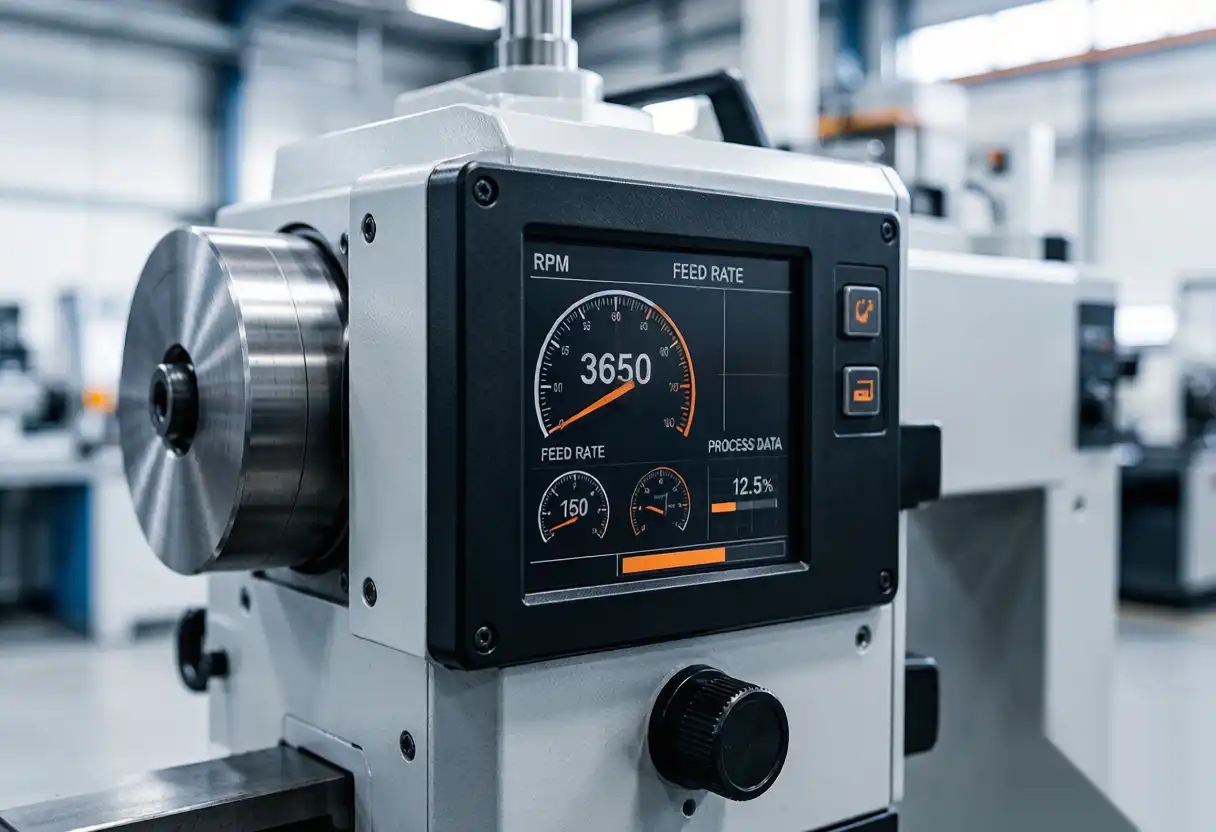
Therefore, the answer is control. Lower force, steady compound, and the right grit sequence. Everything else follows from those.
Common Defect 1 — Smearing
Smearing looks like a dull, dragged patch on the surface. It happens when the tool presses too hard or runs too hot. The aluminum deforms instead of cutting cleanly.
For example, a wheel spinning fast with heavy pressure will smear an aluminum face in seconds. The fix is lighter force, a sharper grit, and more compound.
Therefore, monitor the surface while the first parts run. Smearing appears early and fixes easily if you catch it.
Common Defect 2 — Embedded Grit
Embedded grit looks like tiny dark specks in the finish. It happens when coarse abrasive particles get pressed into the soft metal. They stay there and ruin the cosmetic surface.
In addition, grit embeds more on aluminum than on steel because the metal is soft. The tool loads, and the particles get pushed in instead of washed away.
The fix is a clean tool and fresh compound. Automated deburring for zinc alloy die castings follows the same rule. Remove the debris, and the surface stays clean.
Common Defect 3 — Uneven Finish
An uneven finish comes from inconsistent pressure or speed. One zone gets more cut than another. On a manual bench, the operator’s arm drifts. On a cell, the recipe holds the path.
For example, robotic grinding for metal castings keeps the pass overlap and force constant. The finish matches from zone to zone and part to part.
Therefore, uneven finish is a consistency problem. Automation is the most reliable cure.
Common Defect 4 — Heat Damage
Heat damage shows as a discolored or burned patch. Aluminum conducts heat well, but the thin section under the tool can still overheat. The alloy structure changes, and the color shifts.
For example, a thin rib on a housing can burn during a long polish pass. The fix is a shorter pass, a lighter force, and metered compound to carry the heat away.
Consequently, heat damage is a process problem, not a tool problem. The recipe controls it.
Best Practices for Tooling
- Sharp, open grit. Coarse structured belts cut aluminum without loading.
- Compliant wheels. They follow the surface and spread the pressure.
- Metered compound. Steady delivery keeps the cut cool and clean.
- Clean storage. Never mix aluminum tooling with iron grit. One particle embeds and ruins the finish.
Best Practices for Process
- Light force first. Add pressure only after the finish passes inspection.
- Short passes. Keep each pass cool. Long passes build heat.
- Consistent overlap. Thirty to fifty percent overlap avoids streaks.
- Validate early. Run a sample batch and measure every part.
These rules sound simple. They are also exactly what automation enforces, without fail, on every part.
Automation Answers
An automated cell applies all these practices automatically. Force control holds the light pressure. The recipe sets the short passes and the overlap. Compound doses by cycle count.
In addition, automatic polishing machines for die-cast components combine the tooling rules with repeatable paths. The first part and the five hundredth part carry the same finish.
As a result, the reject rate falls, the media lasts longer, and the customer sees a consistent product. Automation does not change the process knowledge. It makes the process obey it.
The Right Fixture for Aluminum
Aluminum parts are light and easy to mark. The fixture must hold them firmly without denting the surface. Locate on datums or on areas that the finish will cover, and use soft jaws where the part is visible.
For example, a vacuum fixture holds a thin aluminum housing without clamps touching the face. The robot works the whole surface, and nothing leaves a mark.
In addition, the fixture must resist the abrasive dust. Cover the bearings and the clamps. A fixture that wears quickly becomes a quality problem in disguise.
Compound Selection
Compound does more than polish. It carries the grit, cools the surface, and flushes the debris. On aluminum, the right compound prevents both loading and smearing.
For example, a liquid compound on the fine passes keeps the wheel open and the surface cool. A greased bar compound suits the heavier cut. Match the compound to the pass, not to the habit.
Therefore, dose the compound by cycle count. A metered system holds the cut constant from the first part to the last. That is the difference between a stable finish and a drifting one.
Inspection and Feedback
Aluminum defects show early, so inspect early. Check the first parts of every batch under standard lighting, and measure Ra on a sample. The feedback should reach the cell the same day.
For example, a daily inspection log that feeds the recipe table catches drift in hours. The force, the compound rate, or the media age gets adjusted, and the finish returns to spec.
In addition, keep the rejected parts. A reference rack of good and bad finishes trains every operator to the same standard. The rack beats a written spec alone.
Batch Testing Before Production
Never jump from a sample to full production. Run a batch of twenty to fifty parts and measure every one. The batch reveals what the sample hid.
For example, a sample part may look perfect, but the batch shows the fifth part drifting. The drift points to the fixture or the media age. Catch it in the batch, not at the customer.
In addition, keep the batch parts for reference. They become the visual standard for the next batch and the next operator.
Working With Different Alloys
Aluminum castings come in many alloys, and they do not finish alike. A356 polishes differently from ADC12. The alloy changes the force, the grit, and the compound.
For example, a soft alloy needs less force and a sharper grit to avoid smearing. A harder alloy accepts more pressure and a finer pass. Save each recipe under its alloy, not just its part number.
Therefore, document the alloy with every recipe. The wrong recipe on the right part is still the wrong recipe.
Frequently Asked Questions
Can I use the same tools for aluminum and steel? No. Separate them completely. A single embedded iron particle will mark aluminum.
Why does my aluminum finish burn on thin sections? Heat builds in the thin metal. Shorten the pass, reduce force, and keep compound flowing.
Is mirror finish possible on aluminum castings? Yes, on dense castings. Porous ones need densification first, and the mirror takes more passes.
Does automation really reduce defects? Yes. The defects above are all consistency failures, and consistency is exactly what a cell provides.
What grit sequence works best? Start coarse enough to cut the cast skin, then step down two or three grades to the finish. Skipping grades drags the surface and smears it.
Why does my finish look cloudy? Usually a loaded wheel or stale compound. Clean the tool, refresh the compound, and check the extraction airflow.
Can I polish aluminum and steel in the same cell? Yes, with separate tooling and recipes. Keep the media strictly separated, and clean the cell between alloy changes.
How do I know the grit is right? Run a sample and inspect it. If the surface drags, the grit is too coarse. If it polishes too slowly, step up one grade. The sample tells you.
Why does my cell drift after lunch? Heat. The machine warms up, and the compound behaves differently. Check the compound rate and the extraction after warm-up. A small adjustment holds the finish.
Should I seal the casting before polishing? Only if it is porous. Dense castings polish directly. Porous ones need densification first, or the finish will show the pores.
How do I train a new operator? Start with the reference rack, then the recipe list, then hands-on on scrap parts. A week of supervised runs is enough for most operators to run the cell safely.
Is a robot really needed for aluminum? For consistent volume, yes. Aluminum’s sensitivity makes consistency the whole game, and a robot delivers it on every part.