

Abrasive Belt Grinding Machine: The 2026 Buyer’s & Operator’s Guide
When a casting or welded part leaves the mould, it rarely looks finished. Flash, parting lines, weld seams, and scale all need removal — and doing it by hand does not scale. An abrasive belt grinding machine runs a coated abrasive belt at speed to remove stock, blend surfaces, and prepare parts for polishing in a single pass. This guide explains how belt grinding works, the belt types available, how to automate it, and how to choose the right machine for your parts.
What Is an Abrasive Belt Grinding Machine?
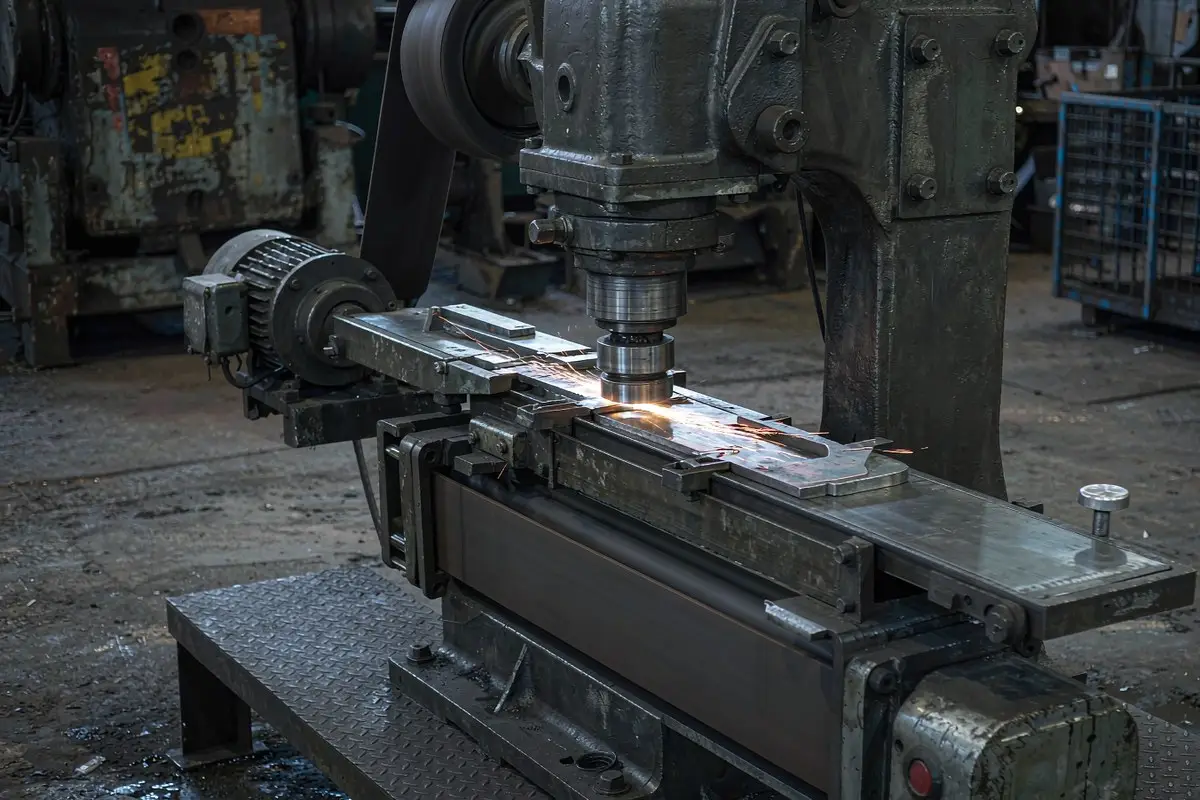
An abrasive belt grinding machine uses a continuous loop of coated abrasive — aluminium oxide, zirconia, or ceramic grains bonded to a cloth or paper backing — driven over contact and idler wheels. The belt’s speed and the contact wheel’s hardness decide whether the machine cuts aggressively or finishes gently. Belt grinders handle flat, contoured, and cylindrical parts, and they sit at the front of most finishing lines because they remove the most material fastest.
How Does Abrasive Belt Grinding Work?
The mechanics are simple, but tuning wins results:
- Drive the belt. A motor spins the belt, typically 10–35 m/s, over a contact wheel and idler.
- Present the part. The operator or robot feeds the component against the belt with controlled force.
- Cut the surface. Sharp grains fracture and self-sharpen, removing stock and blending imperfections.
- Manage heat. Belts run cooler than wheels, but flood or mist coolant prevents discolouration on stainless.
- Refresh and finish. Worn belts are swapped, and the part moves to polishing or coating.
For consistent results at scale, our automated surface grinding guide explains force and path control.
Belt Types and When to Use Them
Choosing grain and backing is half the battle:
| Grain / type | Best for | Behaviour |
|---|---|---|
| Aluminium oxide | General steel, ferrous | Economical, moderate life |
| Zirconia alumina | High-pressure grinding | Self-sharpening, long life |
| Ceramic | Hard alloys, heavy stock | Highest cut rate, premium |
| Silicon carbide | Non-ferrous, finishing | Sharp, brittle, fine work |
| Non-woven | Blending, satin grain | Conformable, low cut |
Backing weight (J, X, Y cloth) sets flexibility versus tear resistance, so match it to part shape and pressure.
Manual vs Automated Belt Grinding
Buyers weigh cost against consistency:
- Manual belt grinders. Low capital cost, flexible, but operator-dependent and slow at volume.
- Semi-automatic. Fixtures and pass tables standardise repeat parts.
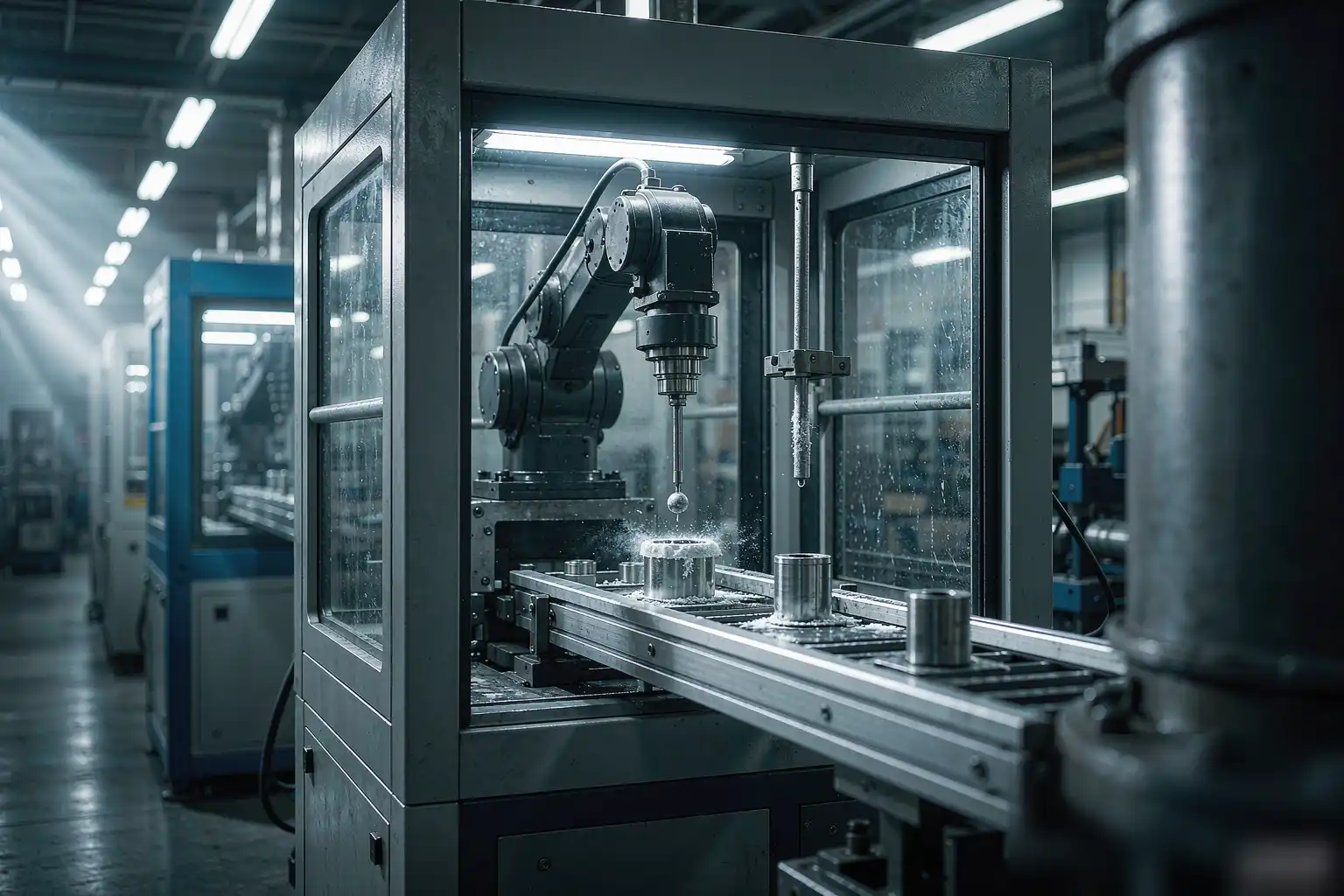
- Robotic cells. Force-controlled grinding that holds quality across shifts — see our robotic grinding Q&A.
For foundries in particular, our best grinding machine for foundries guide compares production-grade options.
Key Applications Across Industries
An abrasive belt grinding machine appears wherever stock must come off fast:
- Die casting. Removes gate and parting-line flash on aluminium and zinc parts.
- Welded fabrications. Blends seams and smooths HAZ on stainless and steel.
- Automotive. Cleans cast housings and prepares surfaces before coating.
- Hardware & sanitary ware. Pre-polish blending on faucets and fittings.
On complex welds, our cast aluminium welding repair guide covers the prep that grinding enables.
Benefits: Speed, Cool Cutting, and Versatility
Why belt grinding leads most lines:
- High removal rate. Coated belts cut faster per pass than bonded wheels on most alloys.
- Cooler operation. The belt’s open coat and air flow reduce heat tint on stainless.
- Versatility. One machine handles deburring, blending, and finishing by swapping belts.
- Lower skill need. Automation makes repeatable quality less dependent on operator craft.
Our automatic grinding machine guide shows how to convert manual benches into a cell.
How to Select the Right Abrasive Belt Grinding Machine
Use this buyer’s checklist:
- Part geometry. Flat, round, or contoured parts need different platens and wheels.
- Material. Hard alloys demand ceramic or zirconia belts and stiff contact wheels.
- Target finish. Rough grind, blend, or satin — each sets belt grit and wheel hardness.
- Volume. Batch benches versus in-line cells depend on daily throughput.
- Automation level. Robotic force control pays off above a few hundred parts per day.
- Dust and coolant. Confirm extraction or mist collection for a clean shop.
For grasping the bigger picture, our grinding vs polishing vs deburring guide clarifies where belt grinding fits.
Integrating With a Robotic Grinding Cell
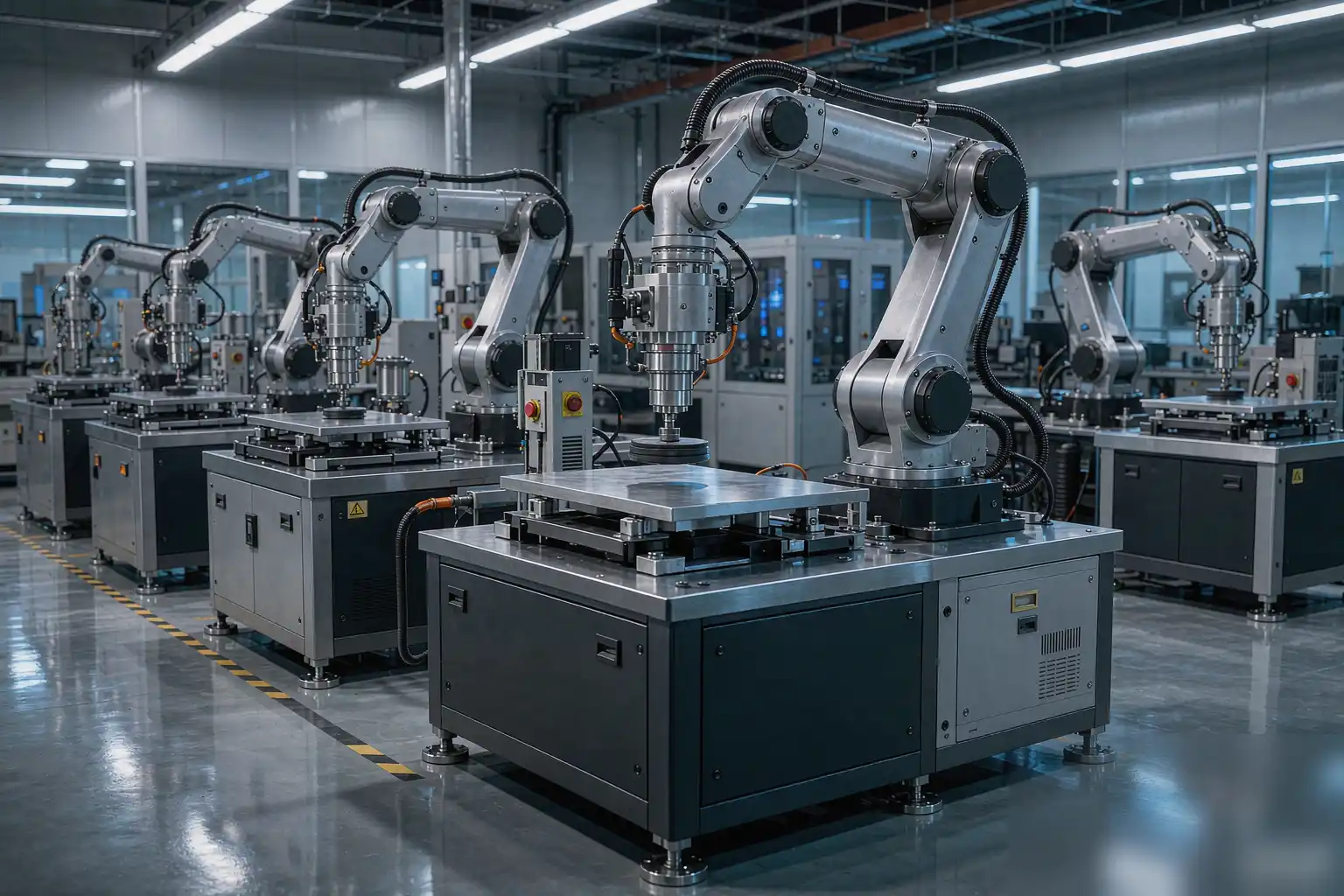
The most capable setup is a robotic grinding cell that pairs belt grinding with polishing in one fixture. Force control keeps pressure constant as the belt wears, and offline programming handles families of parts. This is where an abrasive belt grinding machine delivers its best return.
Maintenance Tips for Maximum Uptime
Protect throughput with routine care. Track belt wear and rotate before glazing, align tracking to avoid edge wear, verify contact-wheel hardness, and keep extraction clear. The discipline mirrors our consistent-finish guide across the fleet.
Common Mistakes to Avoid
Belt grinding looks simple and fails in familiar ways:
- Wrong belt for the job. Aluminium oxide on hard alloys loads and burns; ceramic or zirconia is the better call.
- No coolant on stainless. Heat tint and work hardening follow almost immediately without mist or flood.
- Letting belts glaze. Worn belts cut slower and mark parts; rotate before glazing sets in.
- Poor dust extraction. Abrasive dust is a health and housekeeping risk that compounds over time.
- Under-automating. Manual grinding at volume cannot hold tolerance shift to shift, so quality drifts.
Cost and ROI Considerations
An abrasive belt grinding machine usually pays for itself at the first bottleneck it removes. Manual benches consume skilled labour and still vary part to part; a calibrated cell holds the same removal rate every cycle. The saving comes from three places: less operator time, fewer scrapped parts from uneven grinding, and faster upstream throughput because castings stop piling up waiting for finish. At a few hundred parts per day, robotic force control shifts from nice-to-have to clear winner. Energy use is low because belts cut efficiently and run only while in contact, and belt cost per part drops once wear is monitored instead of guessed. Belt grinding also reduces the ergonomic strain of hand work, lowering injury and turnover among finishing staff.
When you model the decision, include rework and the cost of late shipments caused by a finishing bottleneck, not just the equipment price. A cell that frees one operator and lifts first-pass yield often clears its cost inside a year. For shops weighing a bench against a robot, the practical path is staged: start with a semi-automatic fixture, then add force-controlled robotics once volume justifies it, so capital follows demand instead of leading it.
Safety and Dust Control
Grinding generates heat, noise, and fine abrasive dust that demand controls. Enclose the belt where possible, fit spark-proof extraction rated for the metal in use, and protect operators with eye, hearing, and respiratory equipment. Coolant collection and separation keep the floor safe and the coolant reusable, while regular guard and tracking checks prevent the violent failures a broken belt can cause. Documented procedures and routine inspections also satisfy insurer and regulator expectations, which protects both people and your ability to keep shipping. Building these into the cell from the start is cheaper than retrofitting, and it keeps throughput steady because the machine is never pulled offline for a safety fix.
Operators should also be trained to recognise early signs of trouble — a belt that tracks off-centre, a rising motor current, or a change in spark pattern — because catching these prevents both injury and unplanned downtime. A short daily start-up check is the cheapest insurance a grinding cell can have, and it pays for itself the first time it catches a worn contact wheel before it fails. This staged, demand-led approach also preserves flexibility, so a shop can pivot to new part families without stranded capital.
Frequently Asked Questions
What is the difference between belt grinding and wheel grinding?
Belt grinding uses a flexible coated-abrasive loop that runs cooler and conforms to shape, while wheel grinding uses a rigid bonded wheel for heavy, precise stock removal. Belts suit blending and finishing; wheels suit deep, fixed cuts.
Which belt grit should I start with?
For aggressive flash and seam removal, start at 36–60 grit, then step to 80–120 for blending and 180–240 for a pre-polish satin. The sequence depends on the starting condition and target finish.
Can an abrasive belt grinding machine handle stainless steel?
Yes, with the right approach. Use zirconia or ceramic belts, a suitable contact wheel, and coolant or mist to prevent heat tint and preserve corrosion resistance.
Is robotic belt grinding worth it?
Above a few hundred parts per day, yes. Robotic force control holds quality across shifts, cuts scrap, and frees operators for higher-value work.
How often should belts be changed?
Change when cut rate drops, loading appears, or tracking drifts — not on a fixed clock. Monitoring wear and rotating before glazing keeps quality and throughput steady.
Conclusion
An abrasive belt grinding machine is the fastest, most versatile way to remove stock and prepare metal parts for finishing. Match the belt grain and contact wheel to your material, decide the automation level by volume, and integrate it upstream of polishing for a line that is both fast and repeatable. If you are specifying a new grinder or cell, talk to our team about a belt grinding solution sized to your parts and throughput.