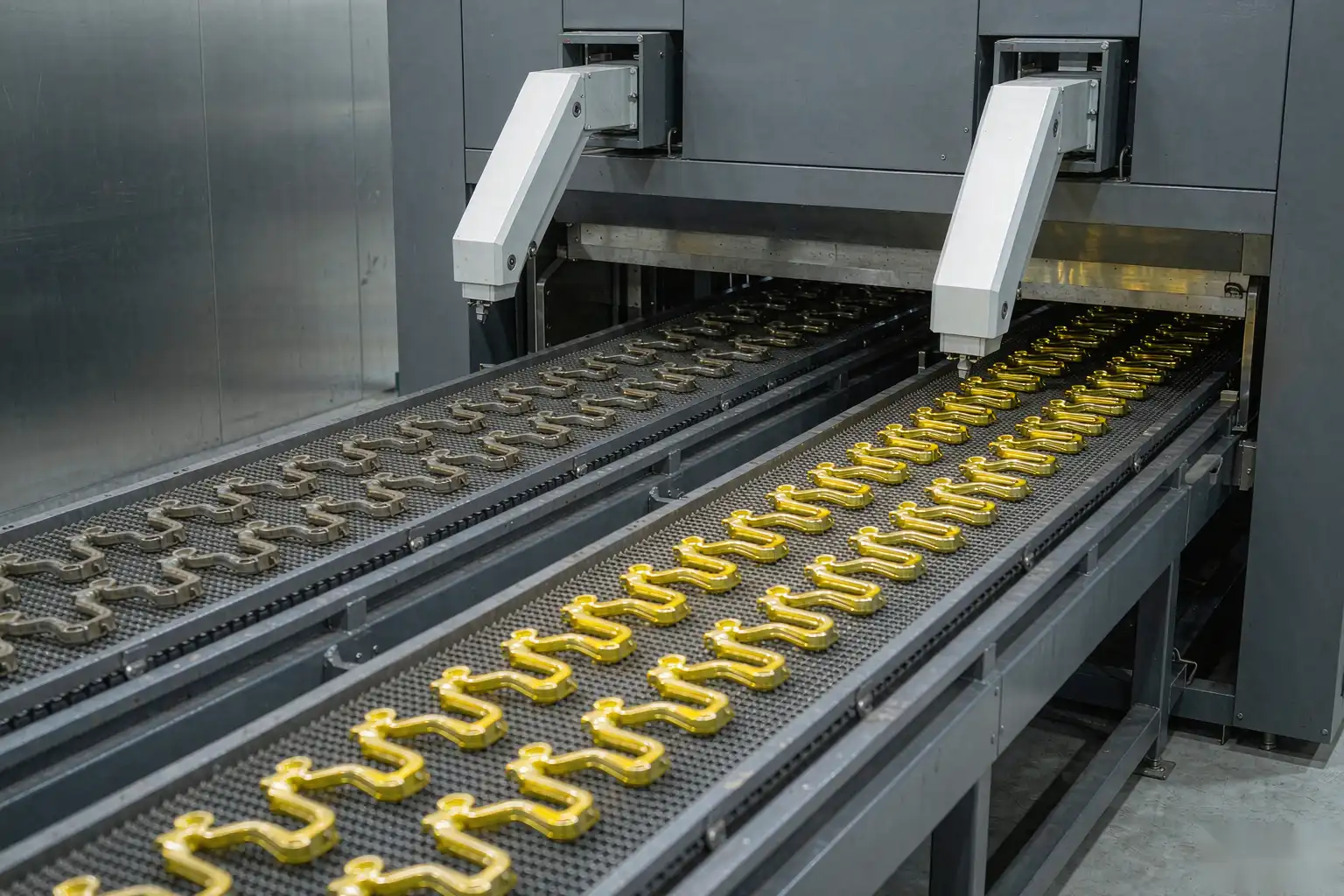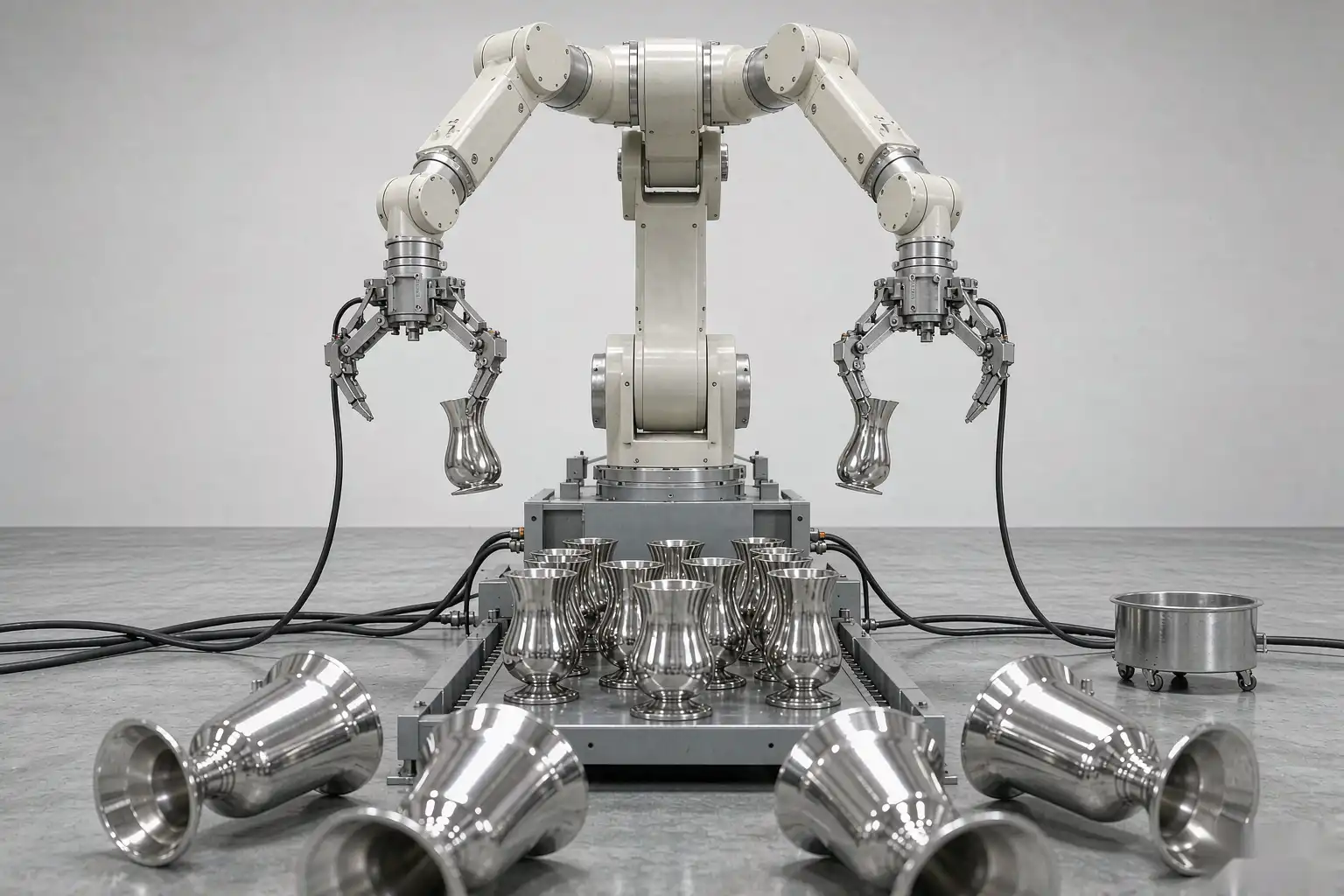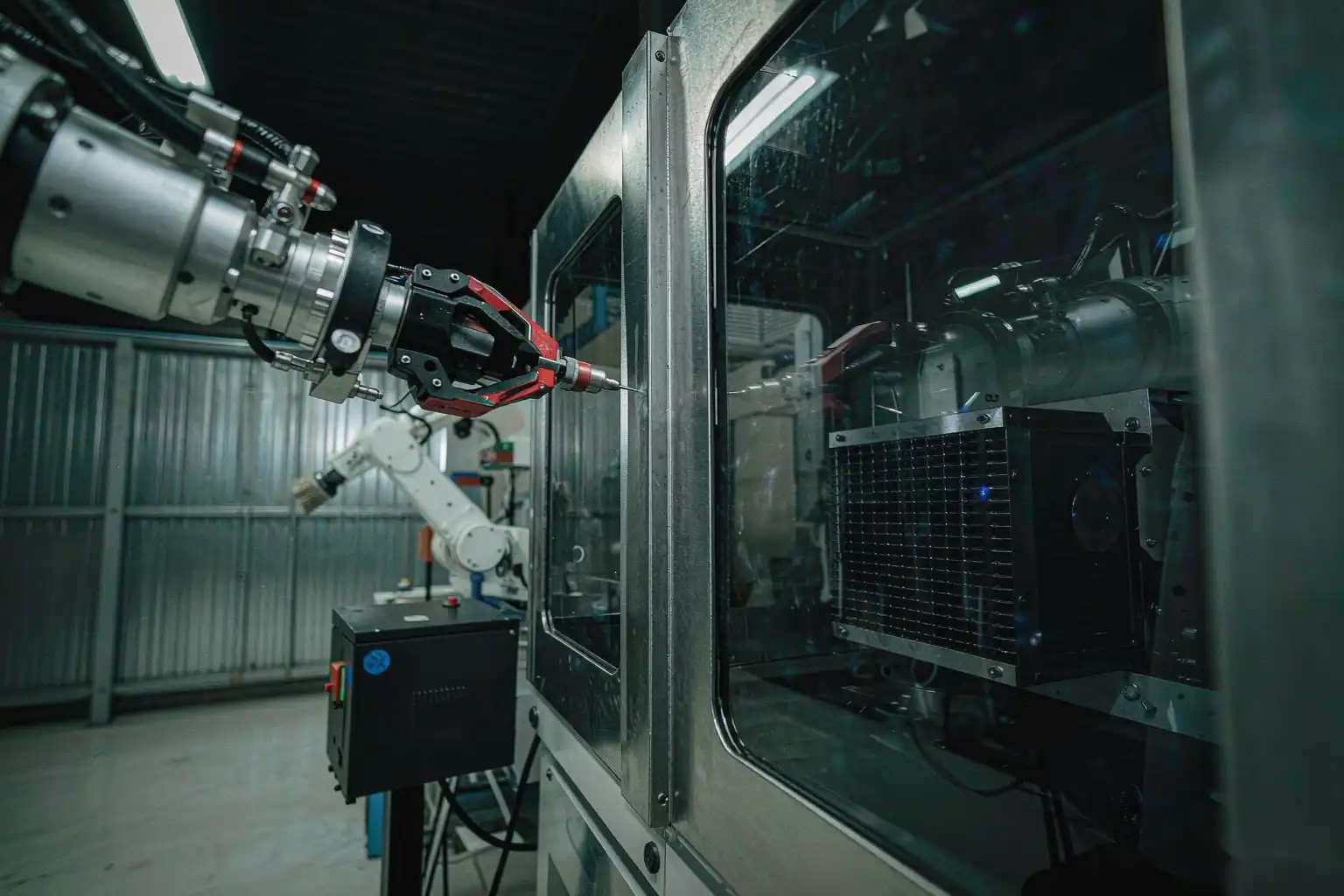


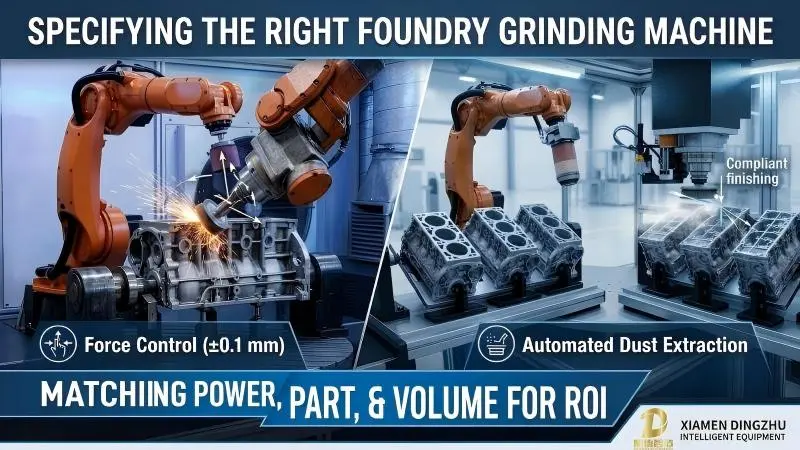
The best automatic grinding machine for a foundry is the one matched to your alloy hardness, part weight, and annual volume—not the most powerful model on the spec sheet. Foundries that match spindle power and fixture type to their casting mix report 25–40% lower cost per finished part than those that oversize the machine (American Foundry Society benchmarking). Start with our cast iron selection tips if you run ferrous parts, or our sanitary fittings guide for thin-walled decorative work.
1. Match Spindle Power to Alloy Hardness
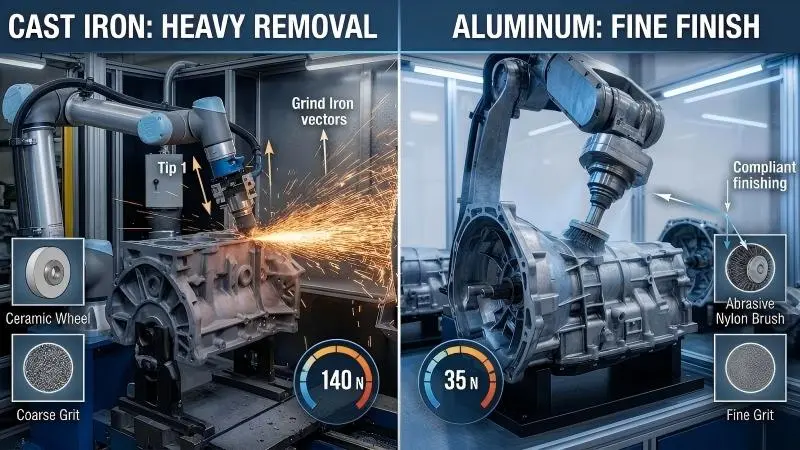
Grinding force scales with material hardness and the cross-section of the gate. Soft aluminum die castings need 4–7 kW and fine grit; gray and ductile iron need 7–15 kW with coarse ceramic or zirconia wheels to keep the removal rate up without stalling. Oversizing the spindle wastes capital and energy; undersizing stalls on gates and burns the wheel, shortening its life. As a rule, size to the hardest, heaviest part you run most often, not to the rare outlier.
2. Choose the Right Part Presentation
- Rotary index table: best for 5–50 kg parts at 2k–50k/yr, keeps duty cycle high and the operator safely outside.
- Single-station fixture: lowest capital cost, suits 500–5k/yr or large castings where a turntable is impractical.
- Twin station (load while grinding): lifts robot utilization above 90% for high volume by overlapping load and cut.
- Conveyor in-line: for small parts under 2 kg at >100k/yr with automated singulation.
3. Force Control Is Non-Negotiable for Flash
Castings vary ±0.5–1.5 mm at the parting line. A constant-force spindle (30–150 N band) tracks that variation so you never gouge the body or leave flash. Fixed-pressure grinding only works on near-net parts where the flash is already uniform and thin. If your scrap is driven by edge consistency, force control is the feature that moves the needle, and it is worth more than an extra kilowatt of spindle.
This point is expanded in our robotic grinding cell setup guide, which walks through force-band calibration.
4. Dust Extraction Rated for Your Metal
Iron and steel dust are combustible; aluminum dust is explosively so. The extractor must meet NFPA 484 with spark separation and frequent filter cleaning. Skimping here is a safety and insurance liability, not a savings, and it also shortens robot life by letting abrasive-laden air into the joints. Budget for the correct class of collector from day one rather than retrofitting later.
5. Program Changeover Speed
If you run more than three part numbers, the machine must swap programs and fixtures in under 30 minutes. Offline path programming from CAD is the differentiator versus teach-by-hand cells, and it is what lets a jobbing foundry justify automation at all. Ask the supplier to demonstrate a live changeover during acceptance, not just quote a number.
Top Picks by Application
| Application | Recommended config | Why |
|---|---|---|
| Gray/ductile iron, 10–40 kg | 11 kW spindle, rotary table, force control | High removal rate, no stall |
| Aluminum die cast, 0.5–5 kg | 5.5 kW spindle, twin station | Fine finish, high volume |
| Steel castings, large 50+ kg | 15 kW, single gantry fixture | Reach and torque |
| High-mix jobbing | CAD offline prog, quick-change nests | Fast changeover |
Don’t Forget Total Cost of Ownership
The purchase price is a fraction of a five-year cost. Abrasive consumption, extractor filters, and scrap dominate. Ask each supplier for estimated wheel life per 1,000 parts and filter change interval before deciding; the cheaper machine often costs more per part once abrasives and reject rates are counted. Our cost reduction guide breaks the per-part math down, and our manual vs robotic comparison sets the labor baseline.
QUICK DECISION TIP
Total cost of ownership over 5 years is dominated by abrasive consumption and scrap—not the purchase price. Ask each supplier for estimated wheel life per 1,000 parts before deciding.
ROI SNAPSHOT
A foundry running 30k ductile iron parts/yr cut grinding labor from 1.5 FT to 0.3 FT and dropped scrap from 5% to 1.8% after adopting a force-controlled 11 kW cell—payback in 16 months.
Frequently Asked Questions
Should I buy a robot or a CNC grinder?
A. Robots win on complex 3D paths and mixed parts; CNC rotary grinders win on round or symmetrical parts needing tight Ra. See CNC grinding robot features.
How many wheels per shift?
A. At 3,000 RPM on iron, plan one wheel change every 2–4 hours; dressing extends life between changes.
Can one machine do aluminum and iron?
A. Yes, but you must segregate dust collection and re-qualify wheels—mixing aluminum dust into an iron cell is a blast risk.
What about grinding cost reduction?
A. Force control, correct wheel, and twin-station loading are the three levers that move cost per part most.
Need help specifying the right machine?
Contact Xiamen Dingzhu Intelligent Equipment — we size deburring and grinding cells to your castings, volume, and tolerances. Talk to our application engineers.