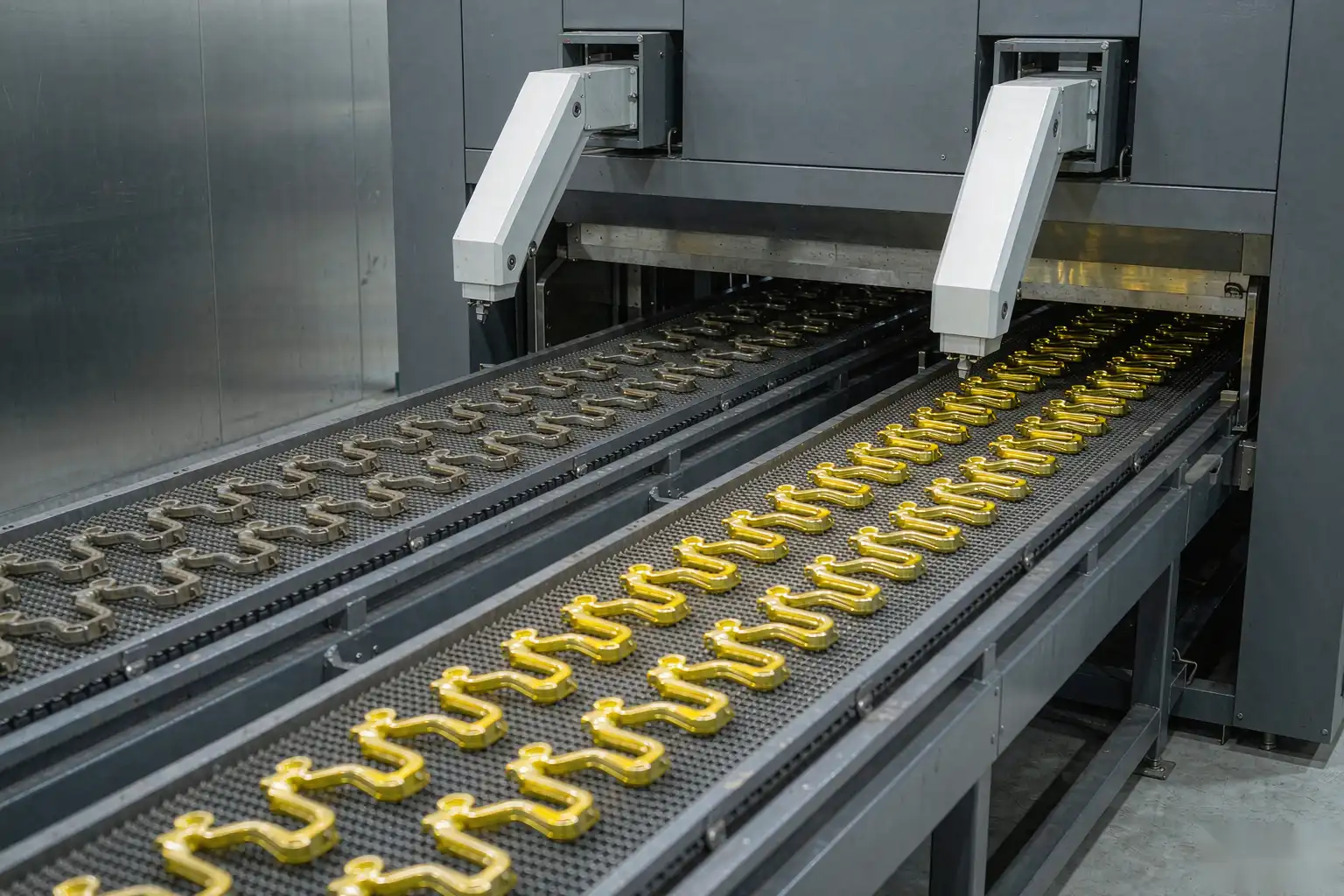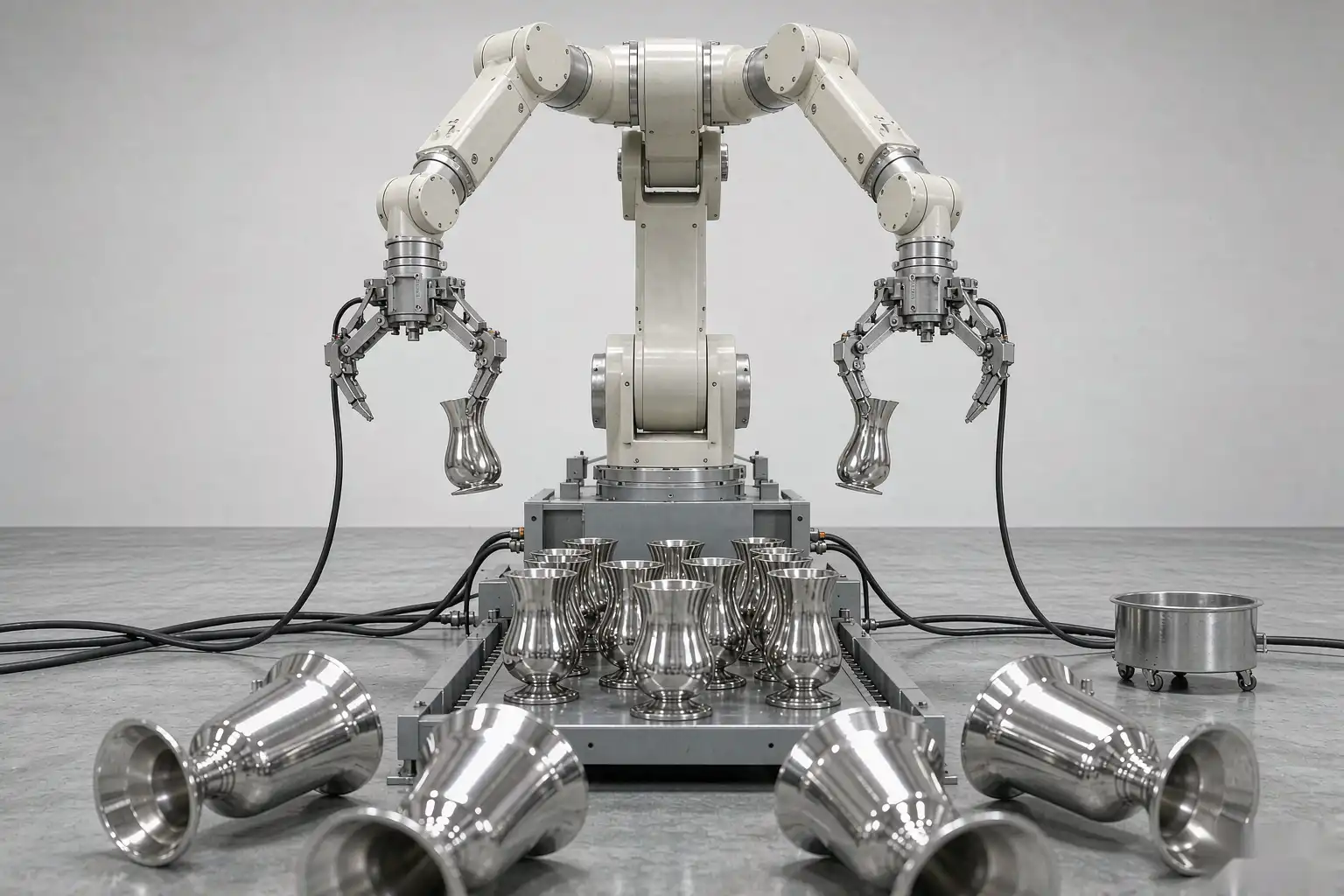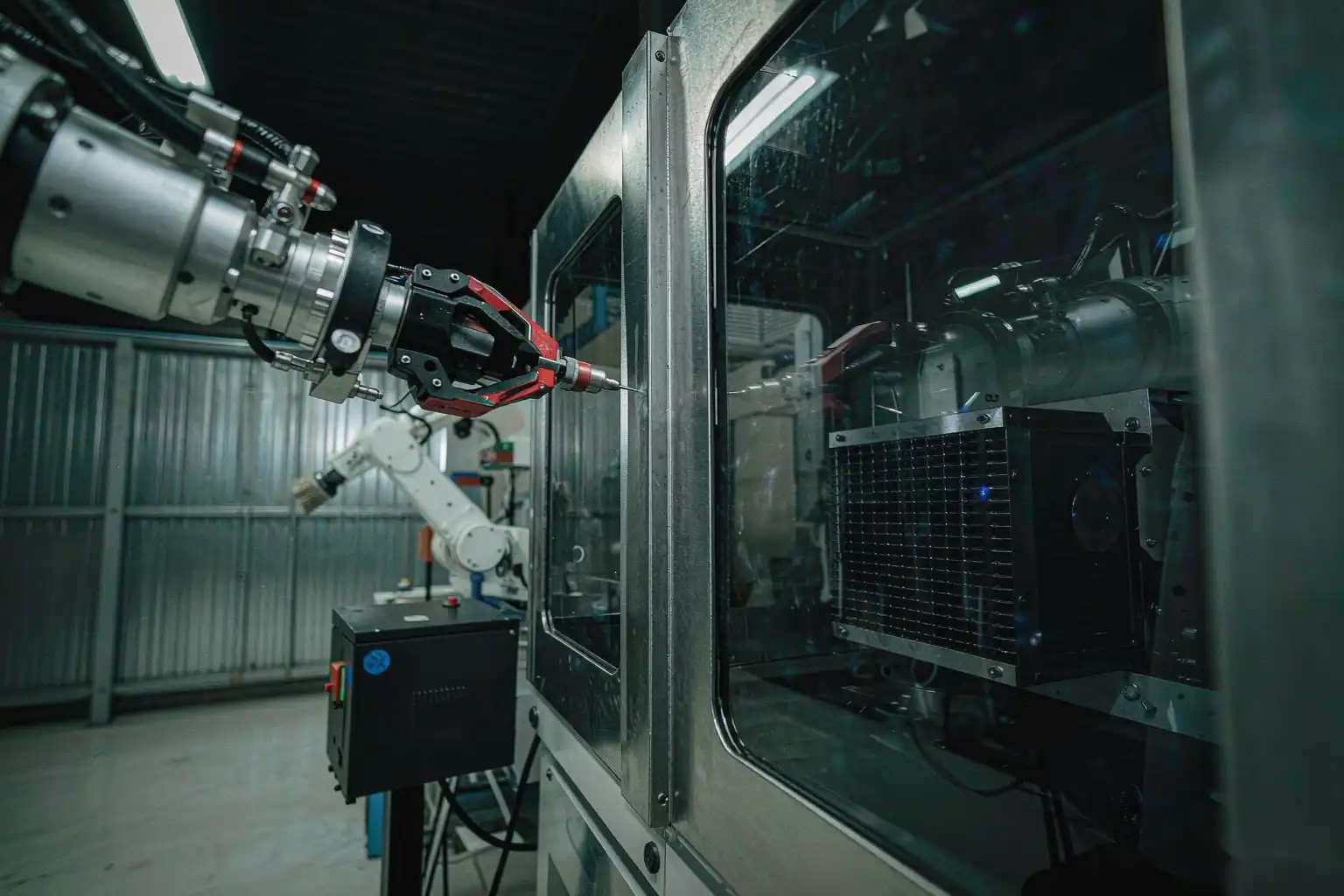


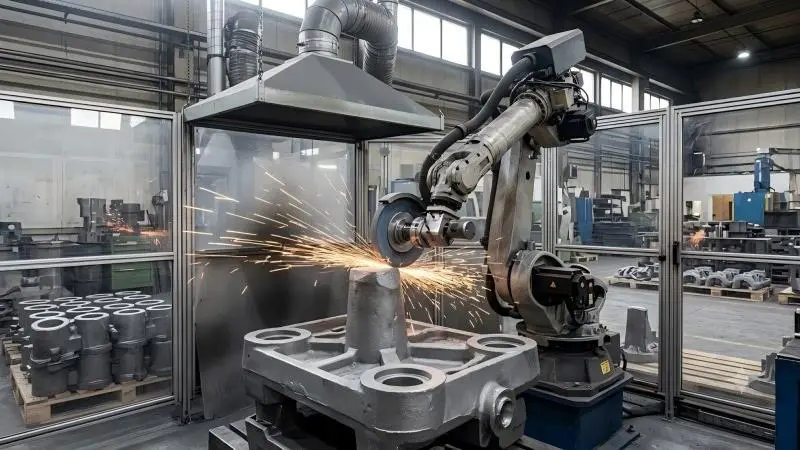
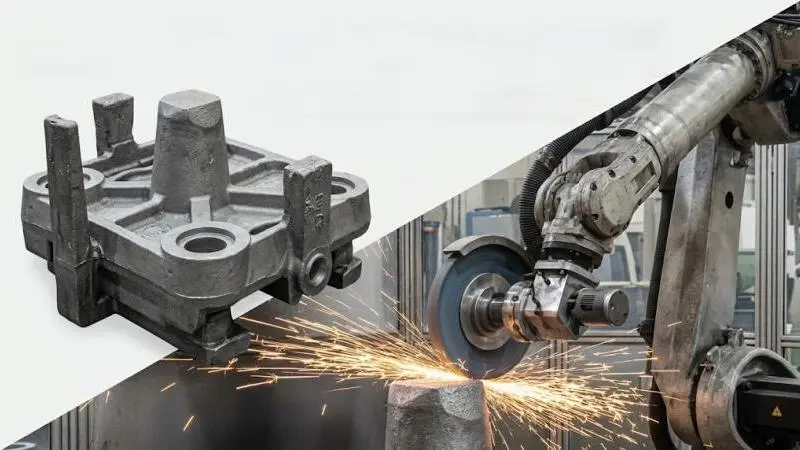
Grinding removes far more material than deburring — it cuts gates, risers, parting-line fins, and heat-affected zones down to a finished dimension — so automating it delivers the biggest labor and consistency gains on a casting line. An automatic grinding machine replaces the handheld angle grinder with a programmed, force-controlled spindle that repeats the same stock-removal pass thousands of times without fatigue or variation. The American Foundry Society reports that grinding and finishing are among the most labor-intensive foundry operations, which is exactly why automation yields fast payback.
Step 1: Identify the Grind Operations to Automate
List every manual grind step: gate/riser cutting, parting-line fin removal, weld seam blending, and dimensional correction. Not all belong on one machine. High-force gate cutting needs a robust robotic arm; light fin removal can run on a rotary table. Our full robotic grinding guide details the architectures.
Step 2: Choose the Right Architecture
- Robotic grinding cell: best for complex 3D parts and mixed families, 6-axis access.
- Rotary indexing grinder: best for one-face parts at high rate.
- CNC fixture grinder: best where dimensional tolerance under 0.1 mm is required.
For a comparison with deburring scope, see deburring vs grinding explained.
Step 3: Select the Grinding Wheel
Wheel choice dictates cut rate and surface finish. Our grinding wheel selection guide covers abrasives per material; in short, zirconia-alumina works for iron, while ceramic or AO blends suit aluminum with coolant.
| Factor | Robotic Cell | Manual Grinder |
|---|---|---|
| Stock removal consistency | ±0.05 mm | ±0.3 mm |
| Operator exposure | Enclosed, low dust | High-noise, high-dust |
| Parts per shift | 800–2,000 | 150–400 |
| Skill dependency | Low after teach | High, varies by worker |
QUICK DECISION TIP
Automate the highest-force operation first (usually gate/riser cutting) — that is where manual inconsistency and injury risk concentrate.
Step 4: Integrate Dust and Coolant Control
Grinding iron and aluminum generates flammable or explosive dust. Enclose the cell, add spark detection, and use wet collection for aluminum to meet NFPA/ISO housekeeping standards. This also extends wheel life.
Step 5: Program and Validate
Teach the path on a sample, then run a 50-part validation measuring removed stock and surface Ra. Lock parameters only after the spread is within spec. The programming beginner guide applies the same teach-validate loop to deburring cells.
ROI SNAPSHOT
A foundry replacing three manual grinders (≈$120k/yr loaded labor) with one robotic cell typically reaches payback in 14–22 months, before counting scrap and injury reductions.
Common Pitfalls to Avoid
- Buying on price per machine instead of cost-per-good-part.
- Ignoring dust collection until after install, then retrofitting awkwardly.
- Under-specifying spindle power and living with stalls on heavy gates.
- Skipping the 50-part validation and discovering drift in production.
Phasing the Rollout
You do not need to automate everything at once. Start with one cell on your highest-volume or highest-scrap family, prove the cycle and payback, then replicate the cell for the next family. This staged approach limits capital risk and builds internal programming expertise. The budgeting guide helps phase the spend.
Cell Layout and Floor Footprint
Plan the cell footprint before delivery. A typical single-robot grinding cell needs roughly 3 × 3 m for the robot and enclosure, plus 1.5 m on the load side for the operator and infeed conveyor. Allow service clearance behind the enclosure for spindle and dust-system access. A cramped layout forces awkward loading and quietly erodes the labor savings that justified the project.
Training and Changeover Discipline
The biggest threat to automated grinding ROI is inconsistent changeover. A trained tender who follows the fixture and program checklist keeps the cell running; an untrained one who guesses settings reintroduces variation. Invest a day of hands-on training per operator and keep a laminated setup sheet at the station. The operator training guide lays out the curriculum we recommend for a smooth ramp.
Documenting the Process for Repeatability
Once the cell is validated, freeze the program, wheel spec, force limits, and coolant settings into a controlled document. Treat it like any other manufacturing process sheet so a new shift reproduces the same result. Version the program with the casting revision, and keep the previous version archived; when a die change alters the part, you can quickly fall back or branch without re-teaching from zero.
Frequently Asked Questions
Can one cell grind and deburr?
Yes; many cells swap between a grinding wheel and a deburr brush automatically within the same program.
What arm payload is needed?
Gate grinding on iron often needs 20–50 kg payload with a positioner; light fin work runs on 10 kg arms.
How do I handle wheel wear?
Force-controlled cells compensate by extending dwell; volumetric sensors can also trigger automatic wheel dressing.
Is coolant required for aluminum grinding?
Strongly recommended to prevent loading and fire risk; dry grinding aluminum is discouraged in automated cells.
Need help specifying the right machine?
Contact Xiamen Dingzhu Intelligent Equipment — we size deburring and grinding cells to your castings, volume, and tolerances. Talk to our application engineers.