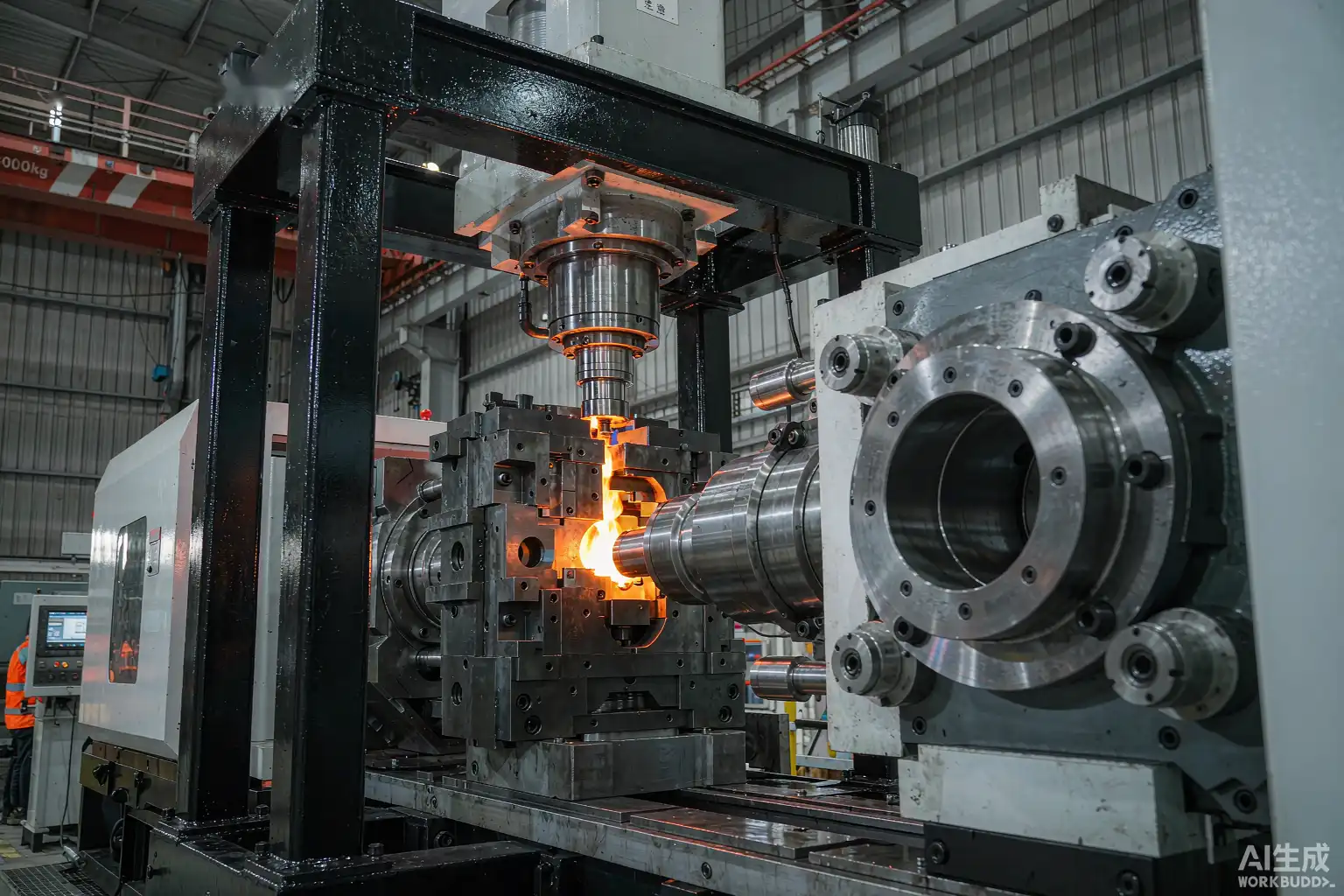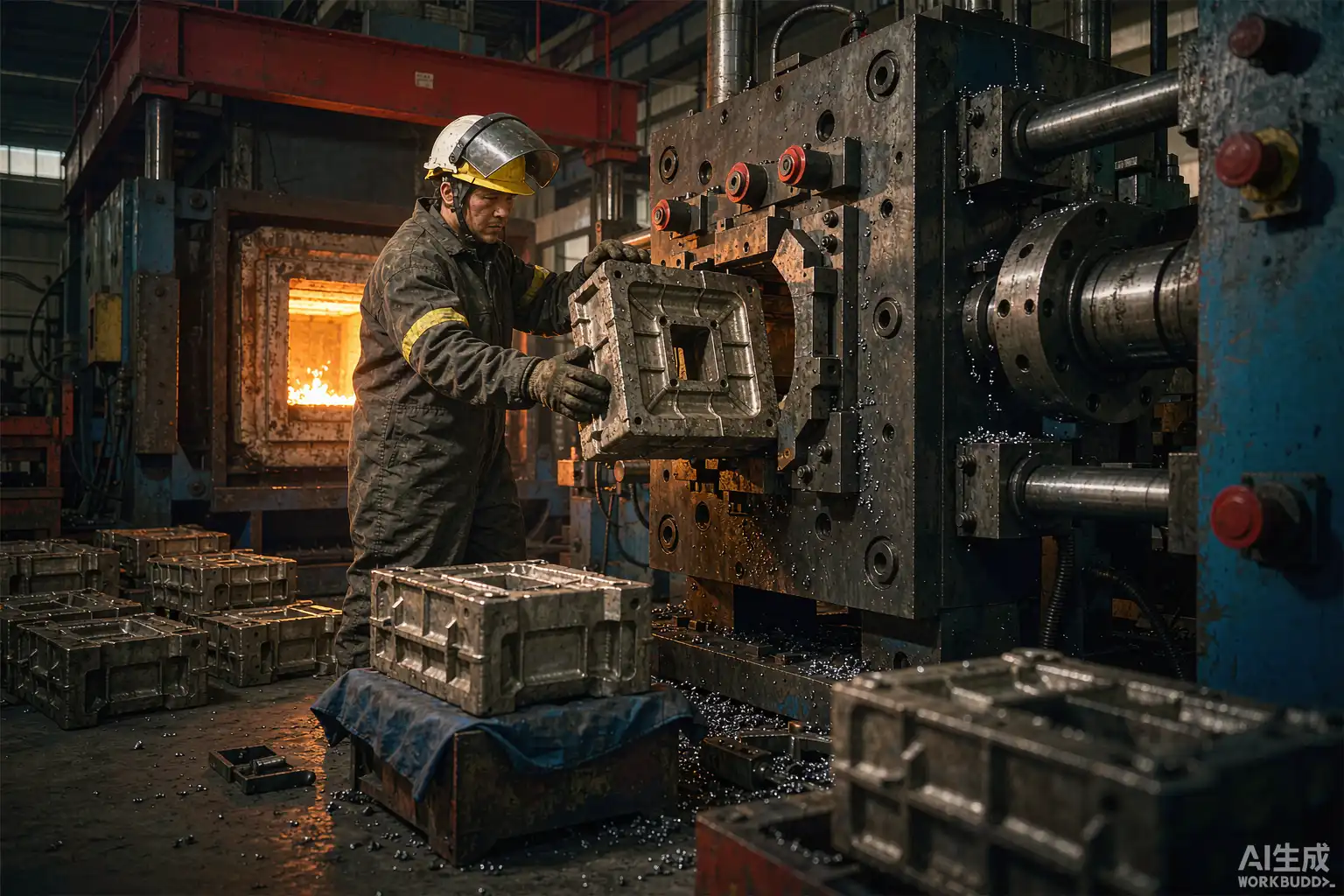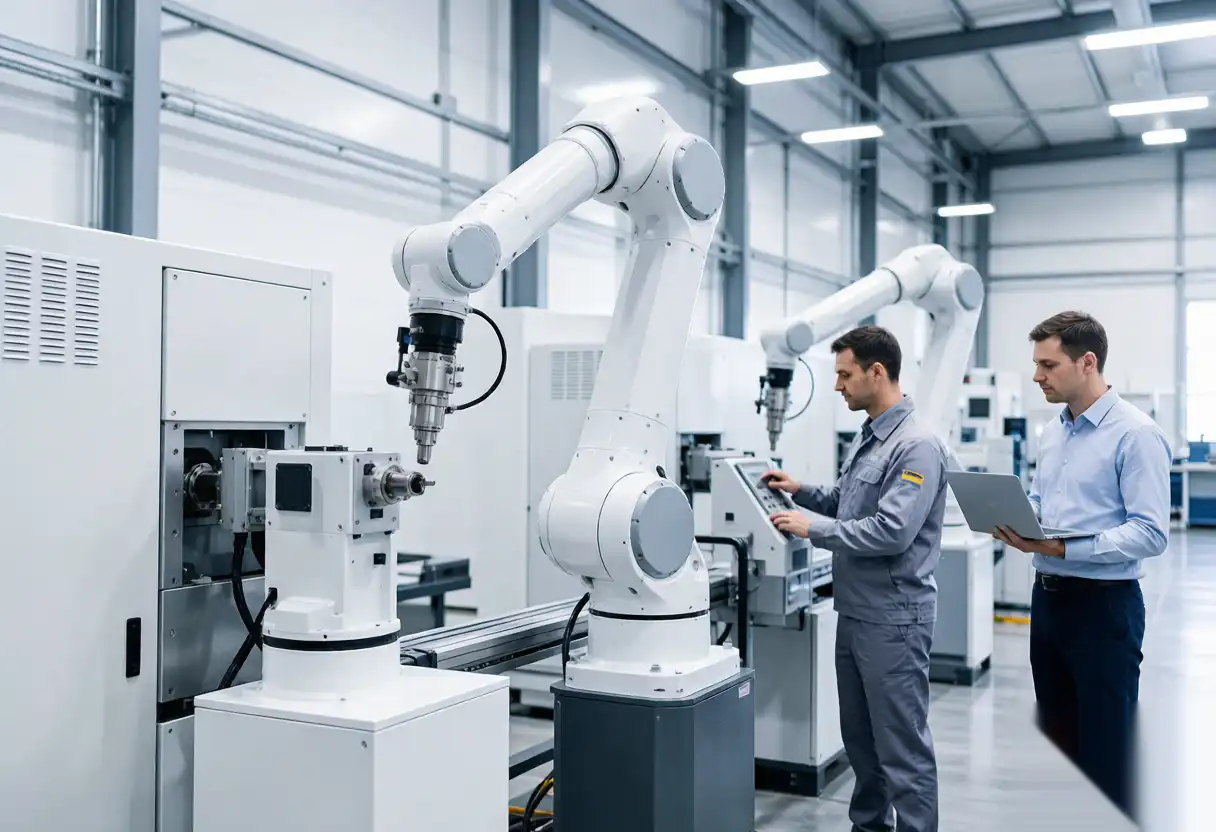


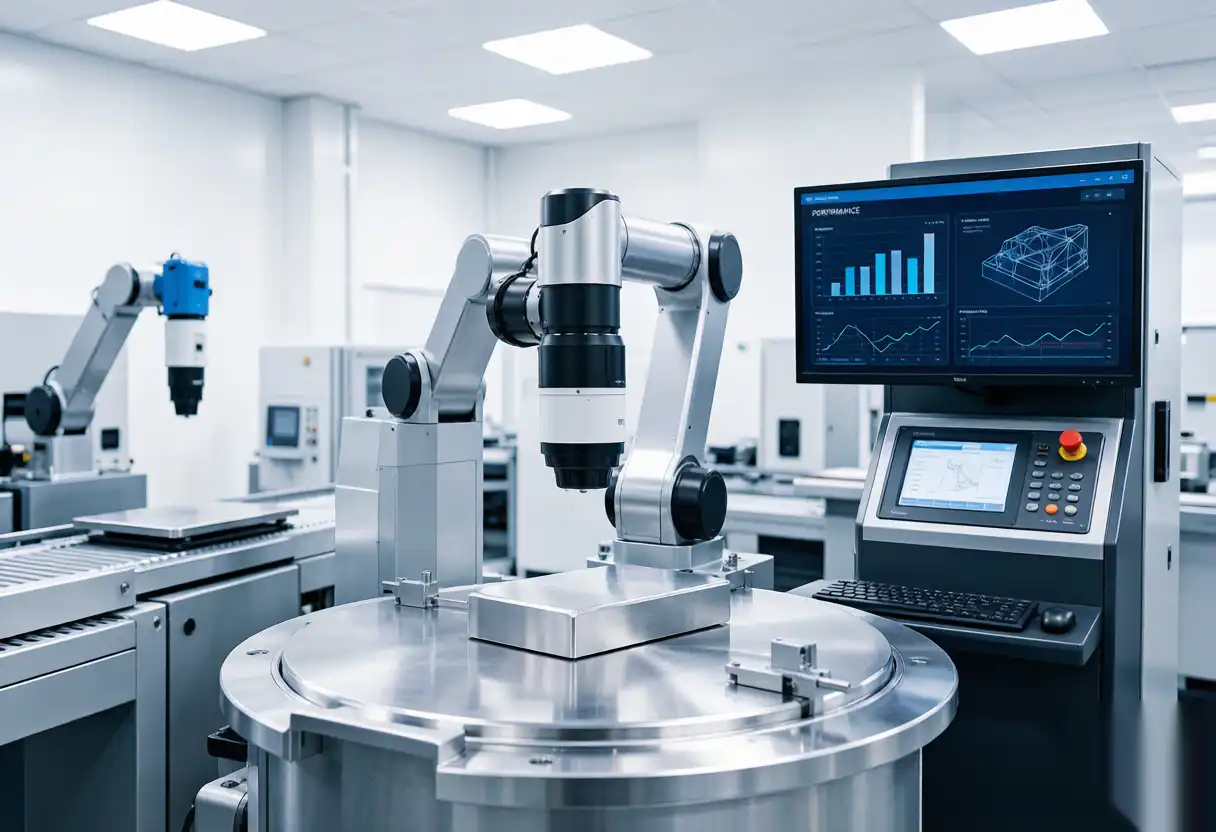
Smart surface finishing sounds futuristic, but the parts are already here. Robots with force control, vision, and recipe databases are working in real factories today. They finish parts while collecting data, and they improve as that data grows.
However, smart does not mean autonomous. It means the machine sees, senses, and decides within a defined frame. This article explains what that means in practice, and where the field is heading.
What Makes Finishing Smart
A smart finishing cell combines four layers. Sensing sees the part and the tool. Control adjusts force and speed in real time. Software stores recipes and data. Integration connects the cell to the plant. Together, they replace guesswork with measurement.
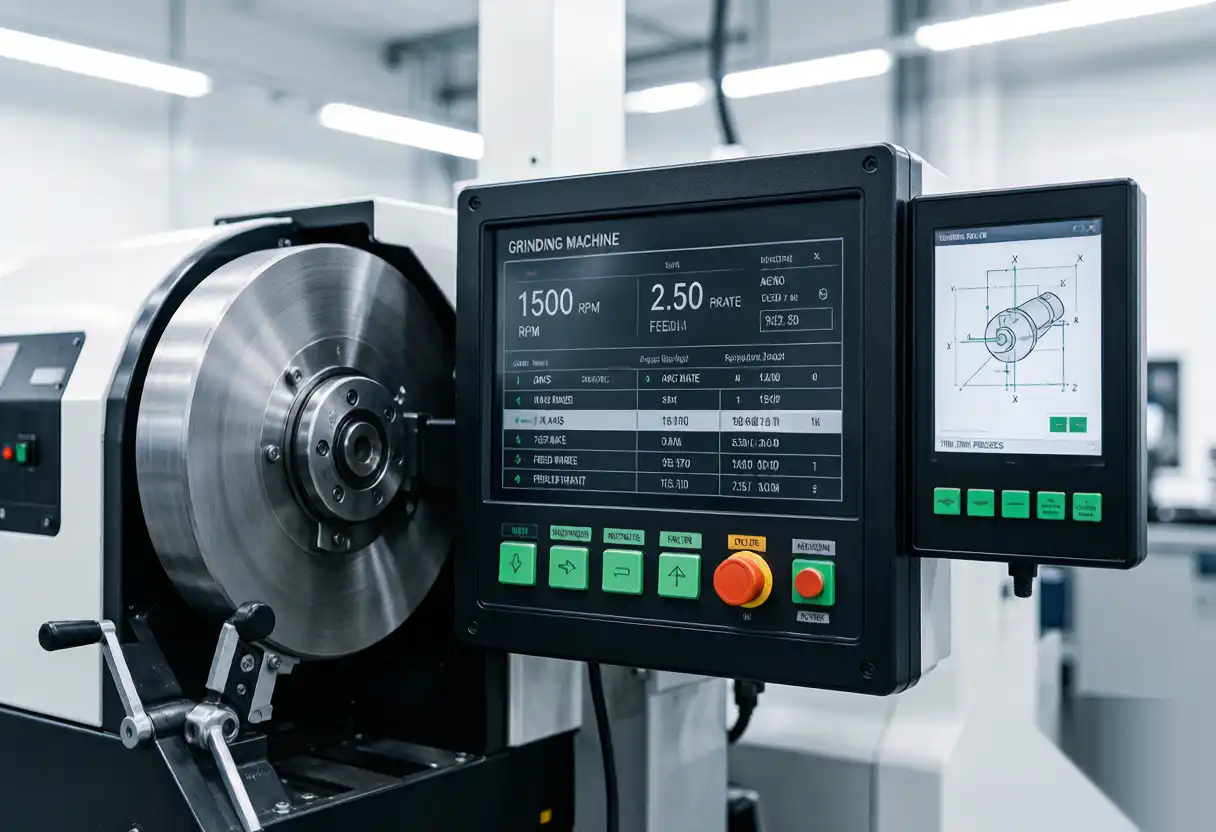
Therefore, smartness is not one feature. It is the whole loop working together.
Vision and Part Recognition
Vision guides the robot to the part and verifies the result. A camera finds the part location, so the fixture does not need perfect repeatability. Another camera checks the finish after the pass.
For example, a cell with vision can handle castings that shift in the fixture. The robot adjusts its path to the actual part, not a drawing. That removes a whole class of variation.
In addition, vision data feeds the quality log. Every part gets a record. The traceability is a real selling point for medical and automotive work.
Force Control Gets Smarter
Force control is the heart of finishing. It holds contact pressure steady as the tool wears and the part varies. Smart versions learn the right force per feature and adjust per pass.
Key automatic buffing technologies all build on this idea. The spindle feels the surface and reacts. On soft metals like zinc, that reaction prevents smearing.
Consequently, the finish does not drift across the batch. The worst part is as good as the best part.
Recipe Automation
A recipe holds every setting for a part family. Tool path, force, speed, compound, and passes. Smart cells switch recipes with one button, and log which one ran when.
For example, robotic polishing for metal parts becomes a library of recipes. A new part means a new entry, not a new program from scratch. The knowledge compounds.
As a result, changeover time drops to minutes. High-mix production becomes practical.
Data and Predictive Maintenance
Every cycle generates data. Cycle time, force, media wear, and downtime. Smart cells store it and trend it. The first sign of trouble shows in the data before it stops the line.
For example, a rising force trend means the belt is wearing. The system flags it, and the operator changes it on schedule. Unplanned stops become planned ones.
In addition, the data proves the cell’s value. First-pass yield, uptime, and cost per part are all there for the monthly review.
The Role of AI Today
AI today works in narrow, useful ways. It classifies defects from camera images. It tunes force parameters from past runs. It predicts media life from usage patterns. These are real, installed capabilities.
However, AI does not yet replace process knowledge. A good recipe still comes from an engineer who understands the part. The AI makes the recipe more consistent, not the recipe itself.
Therefore, think of AI as an accelerator. It turns good process knowledge into repeatable, measurable results.
What Is Coming Next
The next few years will bring three changes. First, digital twins will let plants simulate a finish before cutting metal. Second, self-tuning cells will adjust force from part feedback. Third, standard interfaces will connect finishing cells to plant software with less custom work.
Meanwhile, CNC polishing machine features keep pushing speed and precision. The line between robot cells and CNC machines will keep blurring.
Consequently, the factories that start now will build a data advantage. The ones that wait will catch up later and pay more.
How to Start Your Smart Journey
Start small and measure. Add one force-controlled cell with a saved-recipe library. Track yield and downtime weekly. Add vision when the manual inspection becomes the bottleneck. Connect the data when two cells exist.
In addition, choose a supplier that documents interfaces. The cell you buy today should feed data to tomorrow’s system. Open standards protect that path.
Finally, train your team. The smart cell changes the operator’s job from pushing to monitoring. That is a promotion, and it should be presented that way.
The Data Loop in Practice
The smart cell closes a loop. It senses the part, adjusts the process, checks the result, and stores the record. Over a week, that loop produces a clear picture of what works and what drifts.
For example, the weekly report shows that yield dips on the second shift. The data points to the media age. The fix is a simple schedule change, and the yield returns. The loop catches what eyeballs miss.
Therefore, the data loop turns finishing from a craft into an engineering process. Each week adds evidence, and each decision gets sharper.
Skill Shift for Operators
Smart cells change the operator’s work. The job moves from muscle to monitoring. Operators read screens, interpret trends, and manage changeovers. That shift needs training and a mindset change.
For example, an operator who used to feel the finish now reads the force trend and the yield report. The skill is different but deeper. The job is safer and more valued.
In addition, name the new role clearly. A cell technician sounds like a promotion, because it is one. The label affects how the team accepts the change.
Choosing a Partner
Not all suppliers deliver the same smartness. Ask three questions. Does the cell log data in an open format? Can the recipes be edited and versioned by your team? Is force control standard, not an add-on?
For example, a cell that exports cycle and yield data as standard reports integrates with your plant far faster than a closed system. Open interfaces protect the future.
Consequently, choose the partner that documents the interfaces and trains your team. The hardware matters, but the knowledge transfer decides the outcome.
What Stays Human
Smart systems handle the repeatable decisions, but some things stay human. Setting the target finish, judging a new part family, and deciding when a surface is truly wrong are still judgment calls.
For example, an engineer decides that a new housing needs a satin finish with no visible direction. The cell then holds that decision across every part. The human sets the standard; the machine enforces it.
Therefore, keep the experts close. The smart cell amplifies their knowledge. It does not replace the need for it.
Common Smart Cell Myths
- It runs itself. No. Operators, recipes, and maintenance keep it running.
- It replaces engineers. No. It makes their recipes consistent.
- It needs perfect parts. No. Vision and force control absorb variation.
- It works offline. No. The data loop needs real parts and real feedback.
Therefore, go in with clear expectations. The smart cell is a tool, not a miracle. Used well, it is a very good tool.
Frequently Asked Questions
Is smart finishing expensive? The sensors and software add cost, but the payback comes from yield and uptime. Start with the basics and add layers as the value shows.
Do I need AI expertise? No. The intelligence is built into the system. Your team tunes recipes and reads the reports.
Can my old cell be upgraded? Often yes. Force control, vision, and data logging can be retrofitted if the robot and controller support them.
How fast is adoption growing? Fast. Force control is now standard on new finishing cells, and vision is following the same curve.
Does the data really change decisions? Yes. Yield, uptime, and media trends give managers facts instead of impressions. The first weekly report usually surfaces two or three quick wins.
What if my operators resist the change? Involve them early. Let them name the job, run the samples, and own the recipes. People support what they help build.
Can I start without vision and add it later? Yes. Buy the force control and recipes first. Vision slots in when inspection becomes the bottleneck.
How reliable is the data? Very, if the sensors are calibrated. A monthly calibration check keeps the force and vision data honest. The reports are only as good as the sensors behind them.
Will the cell work with my existing quality system? Yes, if you choose open interfaces. Ask for export formats like CSV or standard databases, and the cell feeds your system directly.
How long before the smart features pay off? The basics pay immediately. The data-driven tuning pays within months, as yield and uptime trends drive small fixes. Plan a quarterly review to harvest the gains.