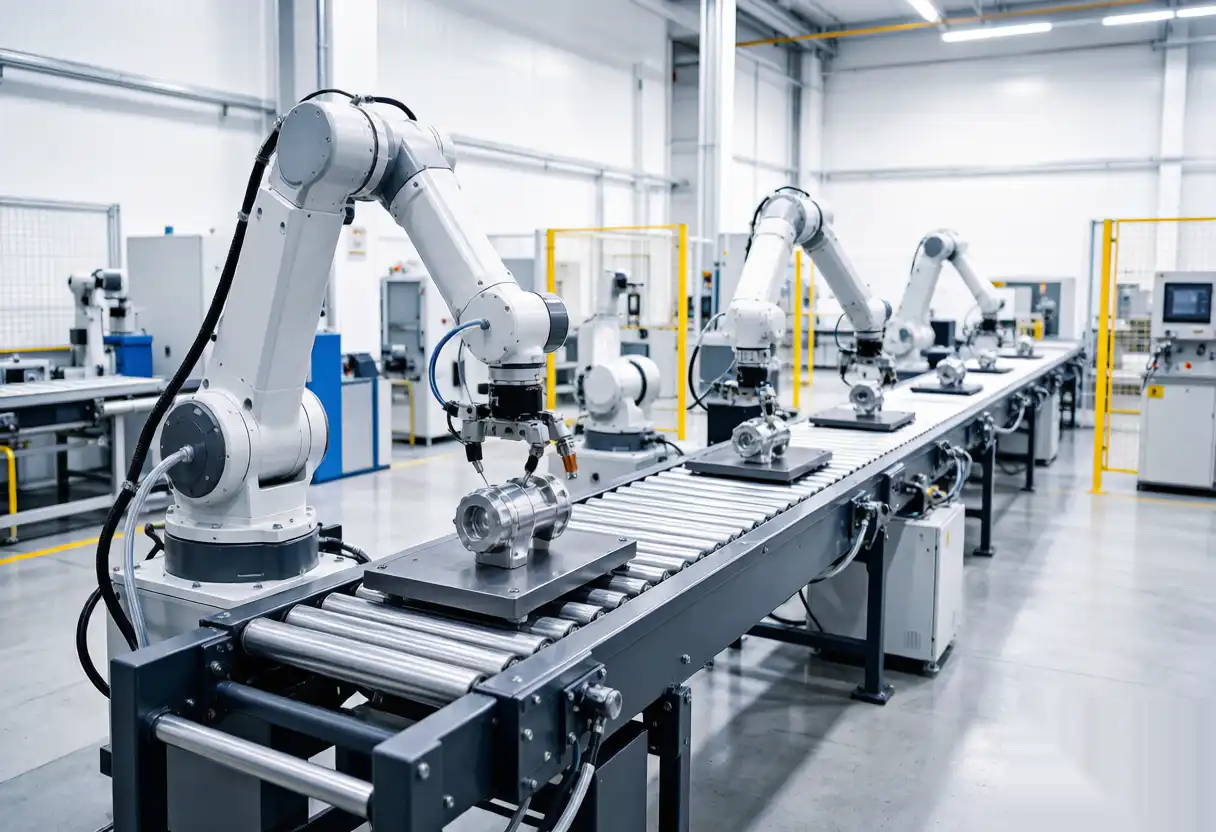


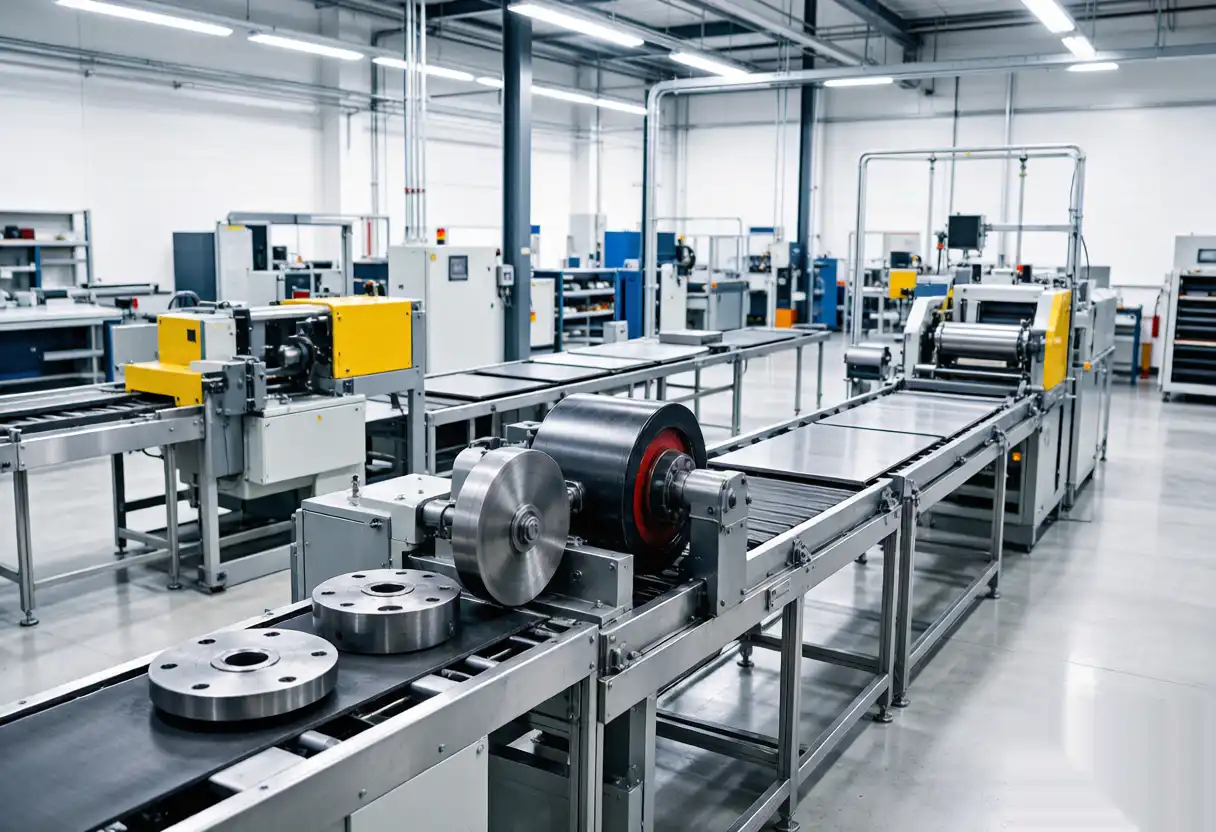
AT A GLANCE · A turnkey surface finishing line takes castings from the shakeout and delivers parts that are deburred, ground, polished, and inspected — ready for assembly or packaging. Instead of sending parts to three or four outside shops, the plant controls every step under one roof. Surface finishing automation makes this possible, but a true turnkey solution also designs the logistics, fixtures, and quality gates so the line runs without constant engineering support.
What Turnkey Surface Finishing Means for Casting Plants
Turnkey does not mean buying separate deburring, grinding, and polishing machines and placing them next to each other. It means one supplier designs the cell, integrates the robots, specifies the media, programs the paths, and hands over a line that hits your throughput and quality targets from day one.
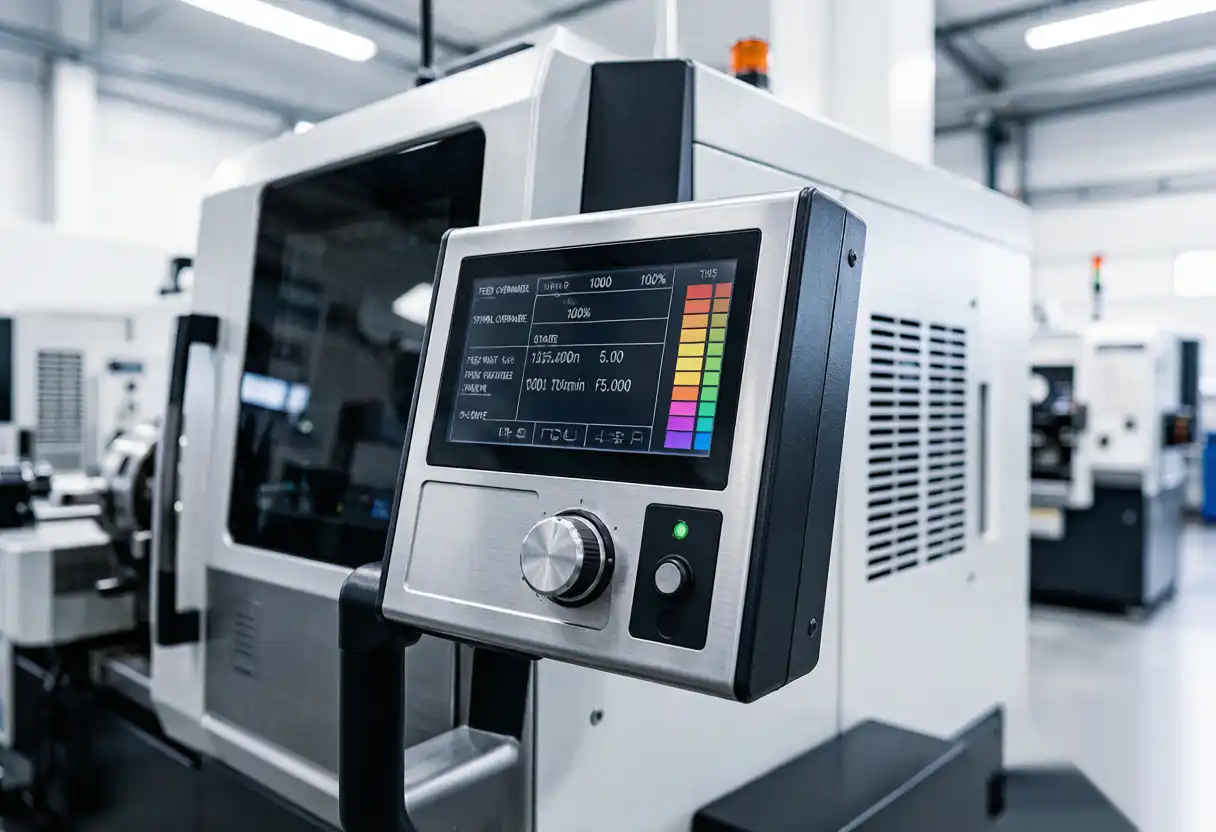
The value is easy to state and hard to copy. You cut logistics cost, reduce WIP inventory, protect proprietary geometry, and gain the ability to react to design changes in hours instead of weeks. For foundries that already own the casting process, finishing is the last frontier of margin.
A turnkey contract usually covers mechanical design, robot programming, fixture supply, media and compound selection, safety guarding, and operator training. Some suppliers also include a performance guarantee: a defined Ra, a defined edge break, and a defined cycle time.
Choosing the right turnkey partner matters as much as choosing the right equipment. Look for a supplier who has built cells for your alloy family, who keeps spare parts in regional stock, and who can train your maintenance team on robot controllers and pneumatic circuits. A partner who only ships hardware and disappears will leave you with an expensive island of automation.
Contract structure also varies. Some buyers prefer a single purchase order with milestone payments tied to layout approval, factory acceptance, and site acceptance. Others split the order into mechanical build, robot integration, and commissioning phases. The second approach adds management overhead but reduces risk if the supplier is new to you.
The Typical Workflow From Casting to Finished Product
Every casting family follows a slightly different path, but the sequence below covers more than eighty percent of aluminium, zinc, and brass parts made for automotive, sanitary, and hardware markets.
| Stage | Operation | Typical Cycle | Key Parameter |
|---|---|---|---|
| 1. Receiving | Load castings into fixtures | 15–30 s | Datum repeatability ±0.05 mm |
| 2. Deburring | Remove flash and parting lines | 20–60 s | Edge break 0.3–0.8 mm |
| 3. Grinding | Blend weld lines, flatten seams | 30–90 s | Ra 1.6–3.2 µm |
| 4. Polishing | Mirror or satin finish | 40–120 s | Ra 0.2–0.8 µm |
| 5. Inspection | Visual + dimensional check | 10–30 s | 100 % or SPC sampling |
| 6. Unload | Place finished parts in trays | 15–30 s | No surface contact damage |
Total tact time for a medium-complexity aluminium casting usually falls between two and five minutes. That includes robot motion, tool change, and compound dosing. If your target is six hundred parts per shift, the line needs at least two finishing stations or a very fast single-station cycle.
Quality gates belong between stages, not only at the end. A vision station after deburring can catch parts with excessive flash before they damage a polishing wheel. A dimensional check after grinding confirms that stock removal stayed within the allowance before the final polish begins.
WIP buffers are often overlooked. A small conveyor queue between grinding and polishing absorbs the mismatch when one station is faster than the other. Without that buffer, the faster station stops and restarts constantly, adding wear to motors and reducing effective throughput.
Equipment Configuration by Part Family
Not every casting needs all six stages. A zinc die-cast faucet body may skip grinding and move straight from deburring to polishing. A heavy aluminium automotive bracket may need aggressive grinding before any polish is possible. The matrix below shows how equipment selection changes by material and geometry.
| Part Family | Deburring | Grinding | Polishing | Key Consideration |
|---|---|---|---|---|
| Zinc sanitary ware | Rotary brush + robot | Usually skipped | Bright buff + compound | Soft alloy; low force to avoid smearing |
| Aluminium automotive | Spindle + abrasive disc | Belt grinder | Polishing wheel or mop | Tight tolerances; fixture rigidity critical |
| Brass hardware | Wire brush | Satin belt | Mirror buff | Compound compatibility with copper content |
| Steel structural | Heavy deburring disc | Aggressive belt | Optional clear coat prep | Dust extraction and spark containment |
The table is a starting point, not a specification. A flexible finishing cell can handle two or three of these families on the same line by swapping fixtures and tools in under fifteen minutes. That is the difference between a dedicated line and a truly turnkey platform.
Media life also varies by alloy. A ceramic deburring belt on aluminium may last one hundred and twenty parts. The same belt on steel may last forty. Compound consumption follows a similar pattern: brass and zinc need more frequent dosing because the material loads the wheel faster. Your turnkey supplier should model these consumable costs in the operating estimate, not only the capital cost.
Integration Challenges You Should Plan For
Hardware is only half the battle. The other half is making the stations talk to each other, keeping parts clean between operations, and matching cycle times so one station never starves the next.
Intra-cell logistics. Robots can pass parts directly from deburring to grinding, but the grippers must be compatible with both the raw casting flash and the semi-finished surface. A dual-gripper design or a pallet-based conveyor is often the safest choice. Pallets also let you buffer parts when a downstream station needs maintenance.
Fixture commonality. If the same fixture holds the part through three operations, design time drops and repeatability rises. The compromise is that the fixture must survive grinding grit, polishing compound, and washdown without losing datum accuracy. Hardened steel or coated aluminium fixtures usually pay for themselves in reduced rework.
Cycle matching. When grinding takes ninety seconds and polishing takes forty, the polishing station sits idle half the time or the grinder becomes a bottleneck. Parallel stations, buffer conveyors, or a slightly faster grinding spindle can rebalance the line. Model this in simulation before you cut steel.
Data traceability. Automotive and medical customers increasingly demand lot-level traceability. A turnkey line should log part ID, operation timestamp, spindle load, and force data for every cycle. That sounds like an IT project, but it is really a sensor-and-networking task that your integration partner should include in scope.
Timeline and Investment Expectations
A small turnkey cell — one robot, two spindles, a conveyor, and guarding — can be scoped, built, and commissioned in twelve to sixteen weeks. A multi-station line with automatic tool change, vision inspection, and central compound dosing may need six to nine months from purchase order to first production batch.
| Phase | Duration | Deliverable |
|---|---|---|
| Concept & layout | 2–4 weeks | 3-D layout, cycle-time model, quote |
| Mechanical build | 6–10 weeks | Framing, guarding, conveyors installed |
| Robot programming | 2–4 weeks | Paths, forces, and tool schedules loaded |
| Trials & tuning | 2–4 weeks | First-article approval, operator training |
| Ramp to production | 1–2 weeks | Shift handover, SPC limits confirmed |
Investment ranges vary widely. A single-robot deburring-and-polishing cell for zinc parts typically starts around one hundred fifty thousand US dollars. A full automotive line with three robots, automated load-unload, and inline measurement can exceed eight hundred thousand. The right number depends on part mix, annual volume, and the labour cost you are replacing.
Hidden costs deserve attention. Freight and customs for overseas machinery can add eight to twelve percent. Foundation work, compressed air upgrades, and electrical distribution are rarely included in the machine quote. Training travel, spare-part inventory, and the first six months of consumables should also be in your budget. Ask for an all-in estimate, then add fifteen percent contingency.
Acceptance Criteria and Handover Checklist
Before you sign the final acceptance certificate, verify that the line meets the criteria you defined in the concept phase. Do not accept verbal promises or informal samples.
- Cycle time. Run fifty consecutive parts at target speed and measure the average tact time. It must be within five percent of the quoted value.
- Surface finish. Measure Ra on five parts from the first, middle, and last positions of the trial run. All readings must fall inside the specified band.
- Edge break. Check critical edges with a shadowgraph or optical comparator. The edge radius must match the drawing.
- Dimensional stability. Compare pre- and post-finishing CMM data. Finishing should not move datum features outside the drawing tolerance.
- Operator training. Your team must be able to load a new program, change a worn tool, and clear a common fault without calling the supplier.
- Maintenance training. Your technicians should replace belts, grease slides, and back up robot programs using the documentation provided.
- Documentation. Demand electrical schematics, pneumatic diagrams, robot backup files, and a spare-parts list with lead times.
This checklist turns a hardware delivery into a production-ready asset. Skip any item and you will discover the gap during your first customer audit.
When Turnkey Makes Sense — and When It Does Not
Turnkey surface finishing is not a universal answer. It fits best when your annual volume is stable above fifty thousand parts, your part geometry is well defined, and your current outsourced cost is high enough to fund the capital in eighteen to thirty months.
It fits less well when your mix changes every month, your volumes are experimental, or your castings still have significant dimensional variation that would require constant reprogramming. In those cases, a staged investment — first a standalone deburring station, then a grinder, then a polisher — lets you prove each step before committing to the full line.
Automated finishing line design principles apply either way. The difference is only whether you buy the whole journey at once or one station at a time. Risk-averse buyers often negotiate a performance clause: if the line misses cycle time or finish targets by more than ten percent, the supplier covers rework or programming time until the gap closes.
A well-built turnkey line removes the finish bottleneck from your foundry. The castings leave the cell ready for the next value-added step, whether that is assembly, coating, or direct shipment to the customer.
ROI estimates assume stable volume and the cited yield gains; model your own numbers before investing.