

QUICK FACTS
| Cell footprint | 2.5–6 m² |
| Changeover | <15 min between SKUs |
| Media life | 60–180 parts/belt |
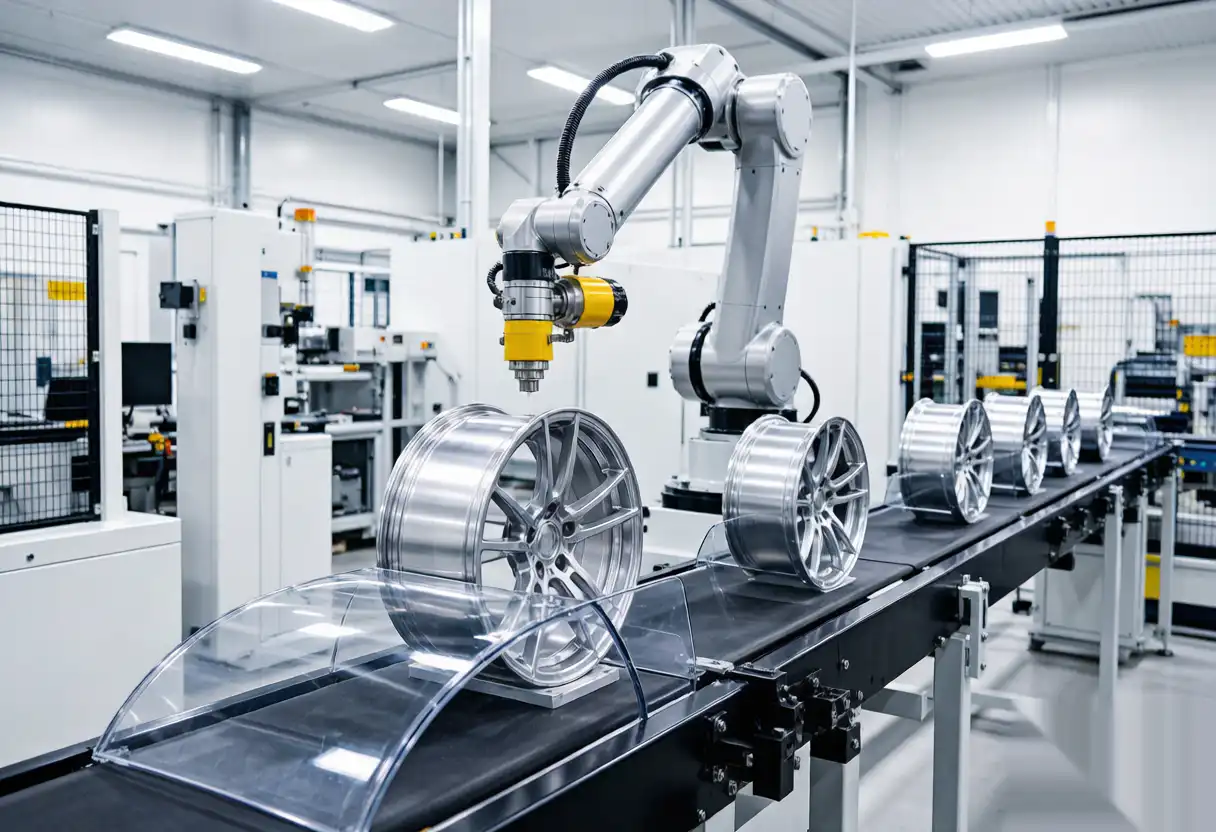
Foundries live and die by yield, throughput, and the cost of turning a raw casting into a saleable, finished part. Finishing — deburring, grinding, and polishing — is where much of that value is won or lost, yet it is too often a manual bottleneck at the end of the line. Surface finishing automation changes that equation: a casting-to-polishing production line shows what is possible when these steps are linked instead of handed between separate stations and separate teams.
This guide walks foundry managers and process engineers through surface finishing automation: what it covers, how to sequence the stations, what to buy first, and how to prove the business case — so you can size the right robotic finishing cell for your floor, not just for the sales brochure.
What Surface Finishing Automation Actually Means
It is more than one robot with a buffing wheel. Surface finishing automation connects deburring, grinding, and polishing into a single, controlled flow where each casting moves from rough to ready without a person re-fixturing it by hand between steps. The goal is a finished part that meets spec every time, at a predictable cycle, with a fraction of the labor.
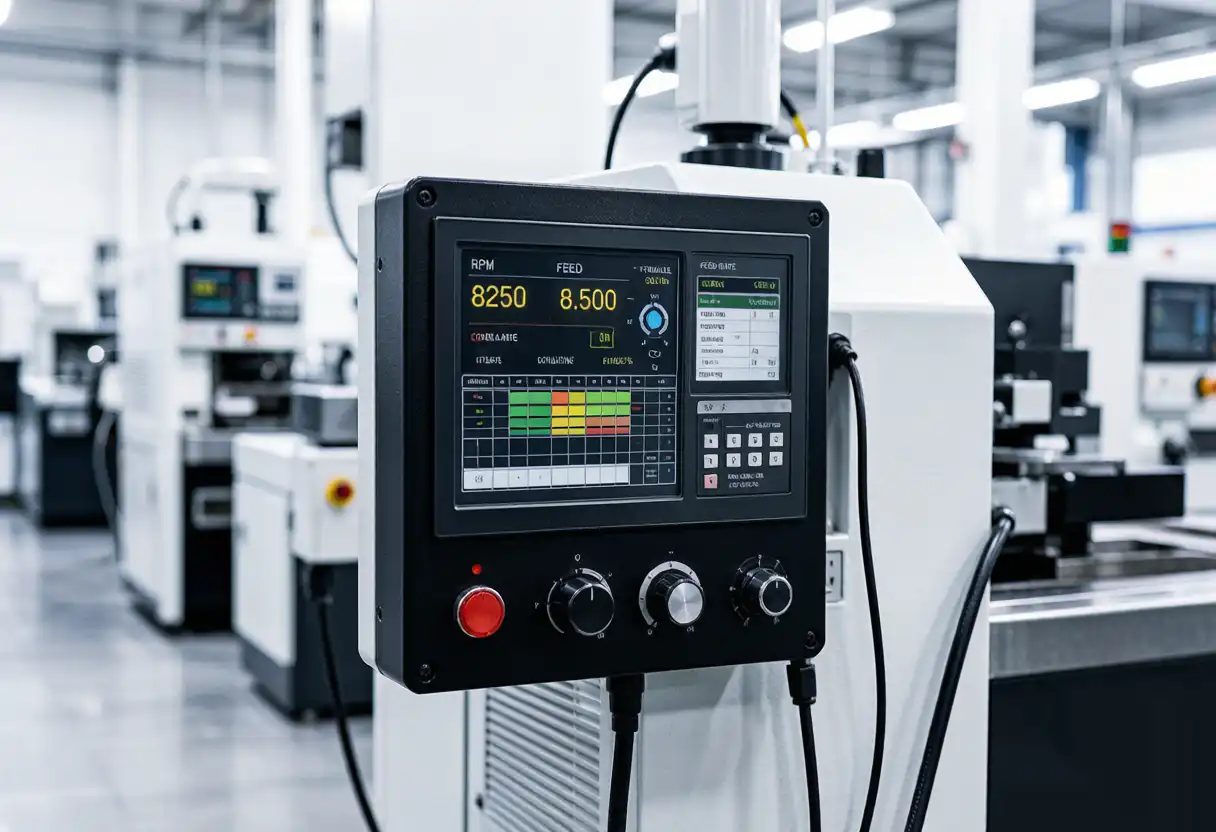
For a foundry, that usually means three linked capabilities: removing gates and parting-line flash, blending and deburring edges, and applying the final cosmetic or functional finish. Done well, the casting leaves the cell ready for assembly or plating.
Why Foundries Feel Finishing Pain First
Casting defects — flash, gates, ejector marks, porosity — all surface during finishing. Manual finishing hides variation by hand, which means quality depends on whoever is on the wheel that day. As volumes rise, the bottleneck moves straight to the finishing bench, and labor cost climbs faster than output. Foundry finishing automation attacks exactly that curve, replacing the variability of a manual bench with a repeatable, programmable process that holds the same finish quality shift after shift.
How to Sequence a Robotic Finishing Cell
The most reliable cells run rough-to-smooth in order. This grind-deburr-polish sequence is the backbone of any foundry finishing automation project:
- Grind first. Remove gates, risers, and parting-line flash with a robust grinding pass. This is where most material comes off, so it should run before anything cosmetic.
- Deburr and blend. Break edges and blend transitions so the polish has a clean base.
- Polish last. Apply the final finish only after the part is close to net shape, protecting the polishing media from aggressive cutting.
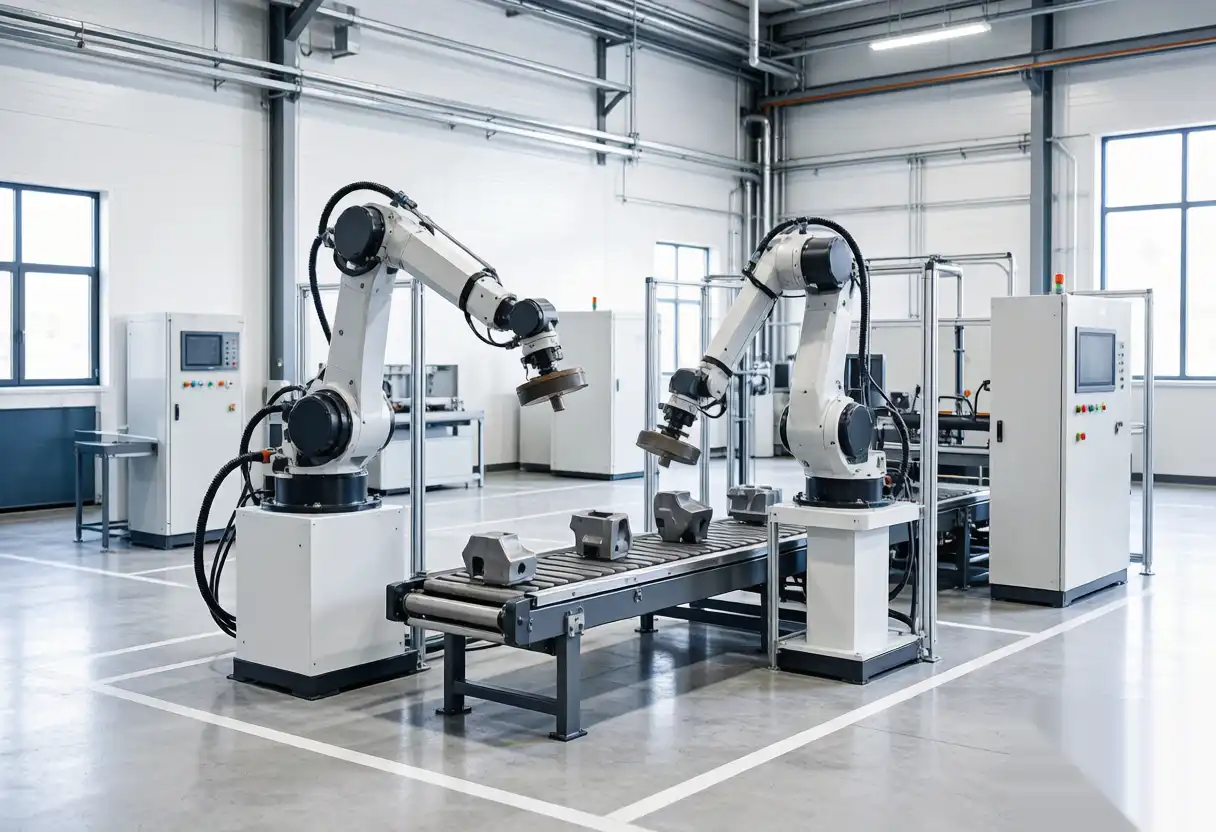
Robotic grinding for metal castings is the natural anchor of the sequence, because getting the rough work consistent is what makes the polish consistent.
Foundry Finishing Cell Layouts by Volume and Mix
Robotic finishing cell layouts follow volume and mix:
- Rotary or twin-station. Best for high-volume, identical parts. The robot never waits; one station loads while the other finishes.
- Quick-change single fixture. Best for high-mix foundries. Switchover is a fixture swap plus a recipe load, not a re-commissioning.
- Linked line. Multiple cells fed by a conveyor or shuttle, for the highest throughput.
Two-in-one machines that grind and polish in one footprint are attractive for floor space, but they work best when the part’s rough and finish needs are compatible on a single locating scheme.
What to Buy First for Your Foundry Finishing Cell
Do not try to automate the entire catalog at once. Pick the highest-volume, most consistent casting and build the first cell around it. Buy:
- A robot with force control, sized to your largest part plus tool offset.
- A locating fixture built to datums, not to the cosmetic face.
- Metered compound or slurry delivery so cut rate stays constant.
- Dust extraction at source — zinc and aluminum fines are a real hazard.
Automatic polishing machines are only as good as the fixture and recipe around them, so budget more for tooling and less for robot bragging rights.
Integration With Upstream Processes
The best casting finishing cells start upstream. If the casting arrives already close to net shape from a well-controlled die, grinding is lighter and polishing media lasts longer. Feed the cell good parts and throughput rises more than either station alone suggests. Treat the whole finishing department as one connected process rather than three disconnected machines.
Finish Specifications to Define Up Front
Before any cell is built, write the finish spec in plain numbers: target Ra, allowed direction of polish, no-burn rule, and any no-go zones such as threads or seals. A spec that lives only in a reviewer’s head cannot be programmed or inspected. The clearer the spec, the faster the cell reaches a stable, repeatable result — and the easier it is to prove the automation met its goal when the numbers are reviewed.
Foundry Finishing Automation Metrics to Track From Day One
- Cycle time per part — confirms you hit the throughput the business case assumed.
- First-pass finish yield — the direct measure of consistency versus manual.
- Scrap and rework rate — the hidden saving that pays back the cell.
- Labor hours per 100 finished parts — the headline automation metric.
- Unplanned downtime — separates robot issues from fixture or supply issues.
Review these weekly for the first month. The data proves the cell’s value to management and tells you exactly which knob to turn next.
Common Foundry Finishing Automation Mistakes
- Underspecified fixture. Saving on locators buys scrap. Locate on datums.
- No compound delivery. Dry polishing loads the wheel and burns parts within minutes.
- Skipping validation. Shipping the first “looks good” batch hides variation that surfaces at the customer.
- Unrecorded recipes. If the recipe lives only in one person’s head, the cell dies when they leave.
Building the Business Case
The case for a foundry finishing cell rests on three legs: labor reduction, yield improvement, and capacity. Manual finishing labor drops sharply; first-pass yield and rework gains add margin; and freed capacity lets the foundry take more orders without more heads. Model all three, then validate on a sample run before committing the full line. This three-leg approach is what separates surface finishing automation projects that get funded from those that stall at the approval stage.
Robots and End Effectors for Casting Finishing
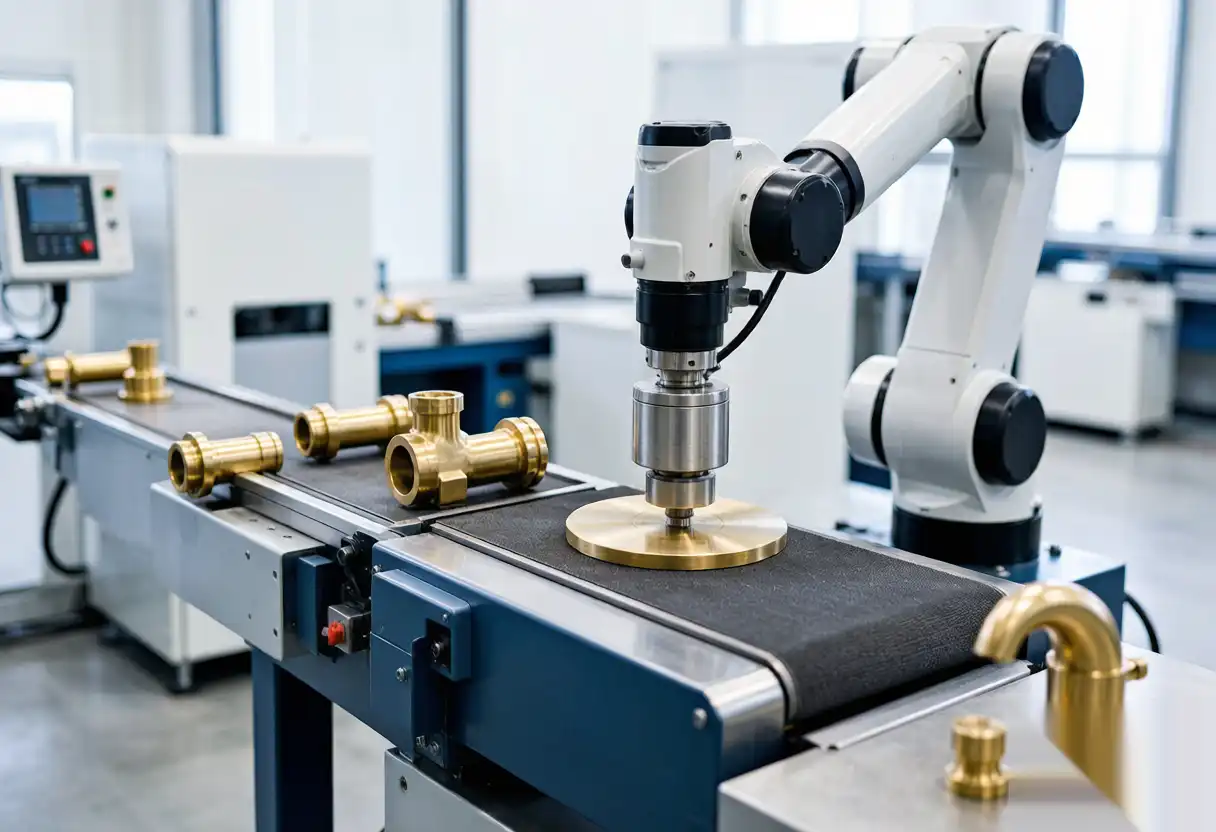
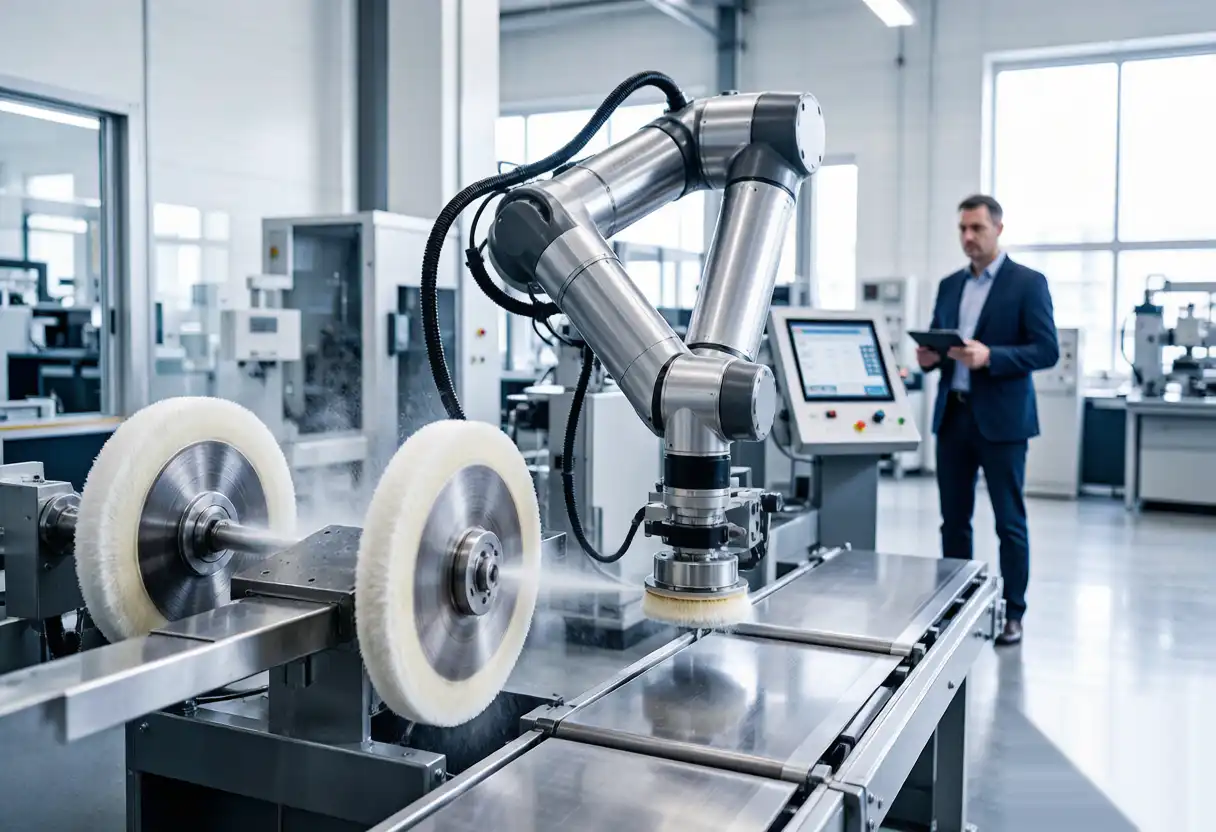
The robot is only as capable as the tool at the end of its arm. For robotic grinding, deburring, and polishing of castings, common end effectors include compliant buffing spindles, abrasive belt heads, and brush tools for deburring. A force-controlled spindle that conforms to the surface is the workhorse; pair it with quick-change tooling so a cell can switch from grind to polish without a long changeover.
Reach and payload should be sized to your largest part plus the tool offset, with margin for fixture and approach angles. Undersizing the robot forces awkward paths and missed zones; oversizing wastes floor space and budget.
Compound and Media Strategy for Automated Polishing
Compound delivery is the difference between a cell that runs for hours and one that smears parts in minutes. Metered liquid or greased compound keeps the abrasive cutting and carries away fines. For aluminum and zinc especially, source extraction must run whenever the wheel turns, because the dust is both a finish hazard and a workplace risk.
Track media life by part count and swap on schedule. A worn belt cuts slower and hotter, which is exactly when defects creep in. Scheduled media changes are cheaper than scrapped castings.
Safety, Guarding, and Dust Control
A finishing cell throws abrasive dust and moves a robot at speed, so guarding is not optional. Enclose the cell with interlocked fencing so the robot stops the instant a gate opens, and capture dust at the source with local extraction. Keep operators out of the breathing zone and tend the cell from outside the enclosure. This protects people and keeps the finish clean.
Total Cost of Ownership of Foundry Finishing Automation
The purchase price is a small part of the story. Factor in tooling, compound, media, extraction, integration, and the labor to run and maintain the cell. Against that, count labor saved, yield gained, rework avoided, and capacity freed. On a high-volume foundry line, the operating savings usually dwarf the capital cost within the first two years, which is why the quality and throughput case and the financial case arrive together.
Scaling Foundry Finishing Automation From One Cell to a Line
Once the first cell is trusted, expansion is mostly repetition. Clone the fixture logic for the next part family, duplicate the recipe structure with new force and speed tables, and standardize the layout so operators move between machines without relearning. At two or three cells, a simple scheduling board or MES link lets parts flow to the next free cell. The marginal cell is cheaper than the first because tooling, recipes, and training already exist.
Frequently Asked Questions
How much floor space does a cell need? Typically 2.5 to 6 square meters depending on layout and robot reach. Twin-station cells use space more efficiently than a row of manual benches.
Can one cell handle different castings? Yes, through quick-change fixtures and saved recipes. Switchover is a fixture swap plus a recipe load.
Do I need force control? Strongly recommended. Porosity and flash variation make open-loop finishing unreliable; force control absorbs those differences.
What finish can it reach? From heavy deburr through satin to near-mirror, depending on abrasive sequence and number of passes. Mirror on porous castings is the hardest case and needs densification first.
How long until it pays back? On a high-volume line, often twelve to eighteen months when labor, yield, and capacity gains are all counted. Lower volumes stretch the payback, so start with your best part.
Key Takeaways
- Sequence the cell rough-to-smooth: grind, deburr, polish — and anchor it with robotic grinding.
- Match the cell layout to volume and mix: rotary for high-volume, quick-change fixtures for high-mix.
- Start with one high-volume casting, not the whole catalog.
- Track cycle time, first-pass yield, scrap, labor hours, and downtime from day one.
- Prove the business case on labor, yield, and capacity before committing the full line.