

QUICK FACTS
| Typical cycle | 20–120 s/part |
| Spindle range | 6,000–18,000 RPM |
| Force control | Active compliance ±5 N |
A surface finishing robot does one thing better than any person ever will. It repeats the same motion with the same pressure, all day, every day. That repeatability is why manufacturers keep adopting them. It turns a skilled, tiring job into a programmed process that never varies.
However, not every application suits the same robot. This article compares the top five applications in manufacturing. It explains what each one demands, so you can see which fits your parts.
What a Surface Finishing Robot Does
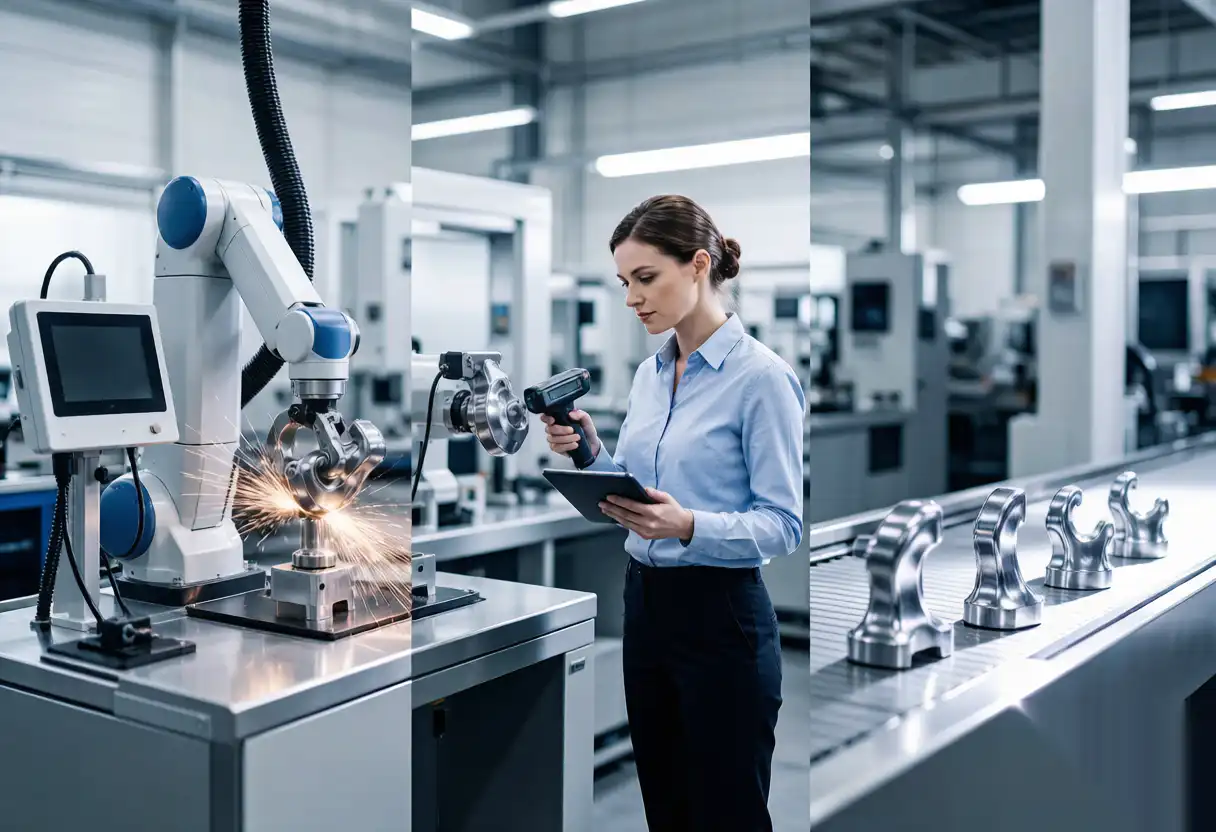
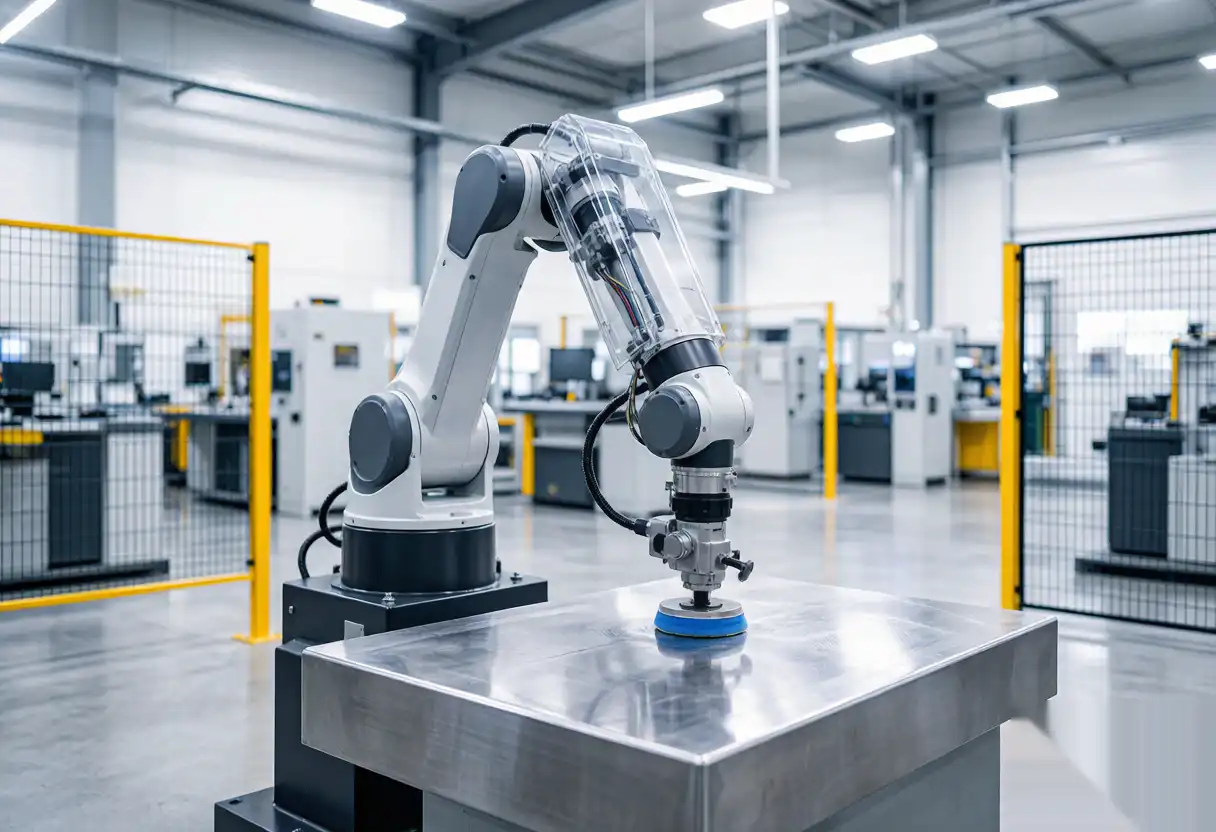
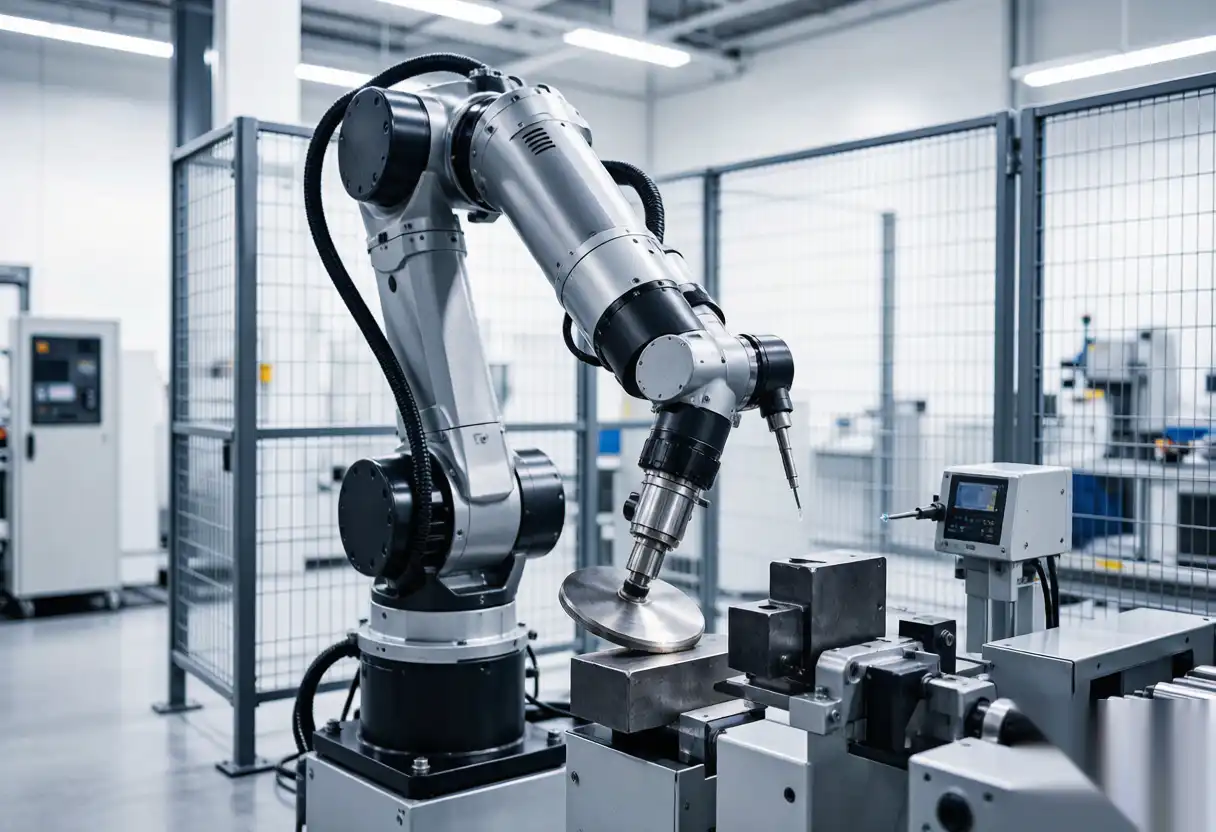
A finishing robot holds an abrasive tool and follows a taught path. It applies force control so the tool follows the part surface. It works with belts, wheels, brushes, and compound. The cell around it holds the part and protects the operator.
Therefore, the robot replaces the person at the wheel, not the process knowledge. The recipe still comes from experience. The robot just delivers it consistently.
Application 1 — Faucet and Sanitary Ware Polishing
Faucets need a bright, even finish on curved brass and zinc bodies. The geometry is complex, so the robot must reach around corners and into recesses. Force control keeps the cut even on the curved surfaces.
For example, a faucet body with a spout, handles, and base needs several passes. Coarse grit removes the cast surface. Fine grit builds the shine. The robot switches between them without losing position.
As a result, robotic polishing for metal parts delivers the same mirror on part one and part five hundred. That consistency is what the brand sells.
Application 2 — Automotive Wheel Finishing
Wheels are large, heavy, and unforgiving. A wheel with a scratched face goes straight to the reject pile. The robot must hold a steady path across a large diameter and a complex spoke pattern.
However, wheels also need heavy material removal. Cast flash around the rim must go first. That demands a stiff tool and enough spindle power, not just gentle buffing.
In addition, the cell must handle wheel size variation. Quick-change fixtures and saved recipes make that practical. One cell serves several wheel models.
Application 3 — Die-Cast Housing Finishing
Die-cast housings cover electronics, tools, and appliances. They carry parting lines, gates, and ejector marks that must disappear before assembly. The finish quality reflects directly on the product.
For example, a power-tool housing needs a clean satin look. The robot deburrs the edges, blends the parting line, and applies the final pass in one cycle. The result is uniform across every batch.
Therefore, the die-casting plant gains twice. It removes the finishing bottleneck and it stops shipping inconsistent parts. Both improve the bottom line.
Application 4 — Medical and Precision Parts
Medical instruments and precision components demand controlled, documented finishes. Every part must meet the same spec. Human variation is not acceptable when a surface touches a patient or seals a critical joint.
However, precision parts are often small and delicate. The robot needs light, accurate force. Active compliance is essential, because a fixed path would press too hard on small features.
Consequently, automated mirror polishing fits this world well. The process is repeatable, measurable, and traceable. Each batch carries the same result.
Application 5 — Architectural and Rail Hardware
Handrails, fittings, and rail components need long, straight finishes that are hard to keep even by hand. A long, consistent stroke is exactly what a robot does best.
In addition, these parts come in long bars and odd shapes. The cell must handle their length and weight. A large-reach robot with a linear track is a common answer.
As a result, the finish runs clean from end to end. There are no stop marks, no uneven patches, and no rework at the customer site.
How the Applications Compare
| Application | Key demand | Best tool |
|---|---|---|
| Faucets and sanitary ware | Curved surfaces, mirror finish | Compliant buffing spindle |
| Automotive wheels | Large area, heavy flash | Stiff belt head, high power |
| Die-cast housings | Parting lines, satin finish | Brush and belt combo |
| Medical and precision | Light force, traceable result | Force-controlled spindle |
| Architectural hardware | Long, straight strokes | Large-reach robot |
Therefore, the tooling and the cell layout follow the application. The robot arm itself is similar. The difference lives in the fixture, the tool, and the recipe.
Choosing the Right Robot for Your Application
Start with the part, not the robot. List your top three parts by volume. Measure their size, weight, and finish spec. Then size the robot reach and payload to the worst case.
In addition, plan for force control. It is the difference between a finish that varies and one that holds. For castings, it is not optional.
Finally, an industrial polishing robot pays off fastest on the application you run the most. Prove it there first. Expand when the numbers justify it.
The Cell Around the Robot
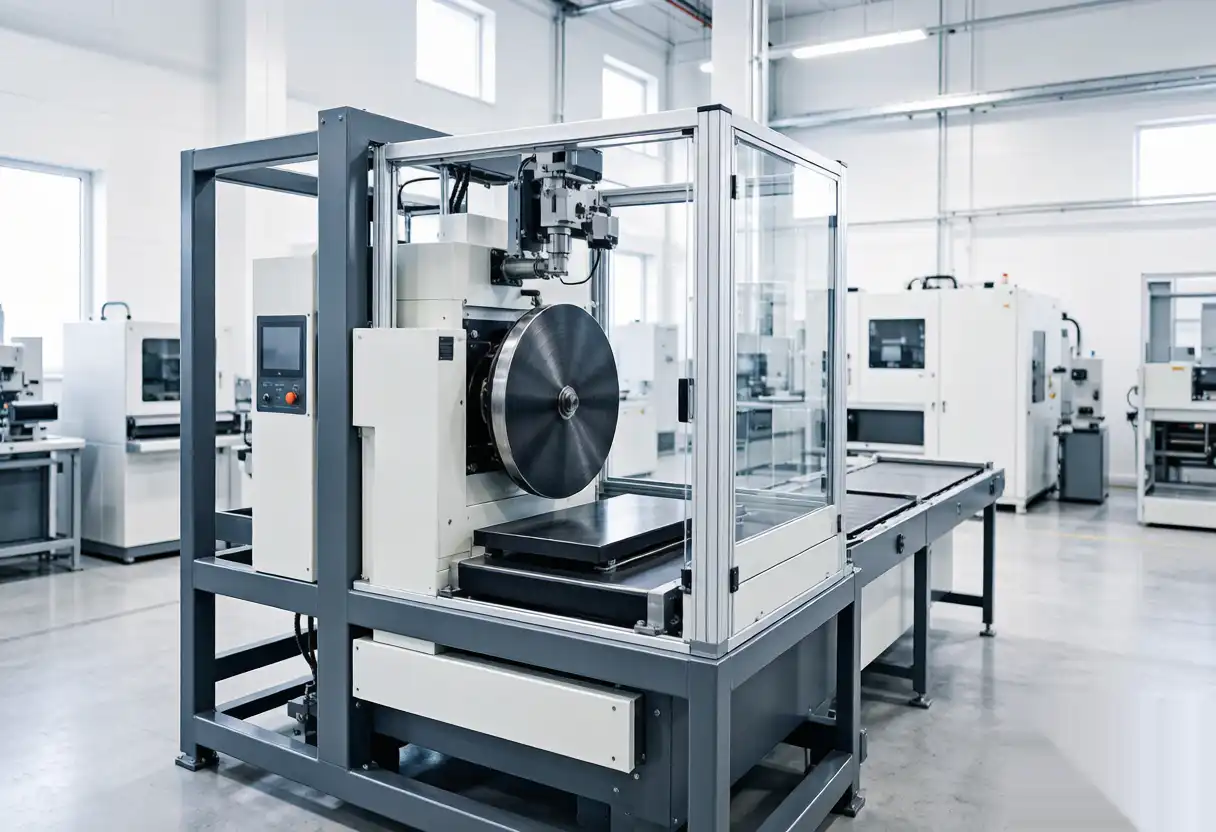
The robot is the visible part, but the cell does the work. The cell holds the part, contains the dust, and protects the person. A well-built cell includes a rigid fixture, interlocked guarding, and extraction at the source.
For example, a rotary table lets the operator load one side while the robot finishes the other. The robot never waits. That single layout choice can lift output by a third.
In addition, the cell keeps the process predictable. The part is always in the same place, the tool is always in the same range, and the dust never reaches the finish. Predictability is the whole point.
Operator Roles Change
Automation does not remove people. It moves them. The polisher becomes a cell operator. The job shifts from pushing a wheel to loading parts, watching the screen, and swapping media on schedule.
However, the operator role is more valuable, not less. A good cell operator catches a bad recipe before it makes scrap. They tune the force table and keep the fixture true.
Therefore, plan training from the start. A week of hands-on training turns a bench worker into a cell operator. That person becomes the most stable asset in the department.
Integration With Your Existing Line
A finishing robot does not need a new building. It needs a place in the existing flow. Feed it parts from the same racks, and send finished parts to the same next station.
For example, a cell placed between casting and assembly receives rough parts on a pallet and returns finished parts to the same line. The rest of the factory does not change.
In addition, start with the highest-volume application. The cell proves itself fastest there. The savings fund the next cell and the next application.
Safety and Cell Design
A finishing robot moves fast and throws abrasive dust. Safety is part of the cell, not an add-on. Interlocked fencing stops the robot the instant a gate opens. Extraction captures the dust at the source.
For example, a cell with local extraction keeps both the operator and the finish clean. The dust never settles on the part, and the operator never breathes it. That is non-negotiable.
In addition, design the cell for maintenance. A swing-open guard, a tool rack, and a clear path for the robot make daily checks quick. A cell that is easy to tend gets tended.
Frequently Asked Questions
Can one robot handle several applications? Yes, with quick-change tools and saved recipes. The fixture and the recipe define the job, not the robot.
Do I need a programmer on staff? Most cells are taught by the integrator and tuned by your team. Basic recipe edits need little more than a week of training.
How long does a cell pay back? On high-volume parts, often twelve to eighteen months. Labor, yield, and rework all move in your favor.
What about small batches? Flexible cells handle them through quick changeovers. The switch is minutes, not hours, once the fixtures are built.
How do I pick the first application? Choose the one with the most labor, rework, or customer complaints. The visible pain is the right starting point.
What maintenance does the cell need? Media changes, a daily checklist, and a weekly check on the fixture and guarding. The robot itself is the most reliable part of the system.
Can the cell run without full force control? Not well on castings. Force control absorbs variation in the part and the tool. It is worth the investment from day one.
How do I compare quotes from suppliers? Compare the delivered cell, not the robot price. Include fixtures, guarding, extraction, training, and spare parts in every quote.
What if my parts change next year? A flexible cell adapts with new fixtures and recipes. The robot and the tooling carry over. That is the safety net most buyers value most.