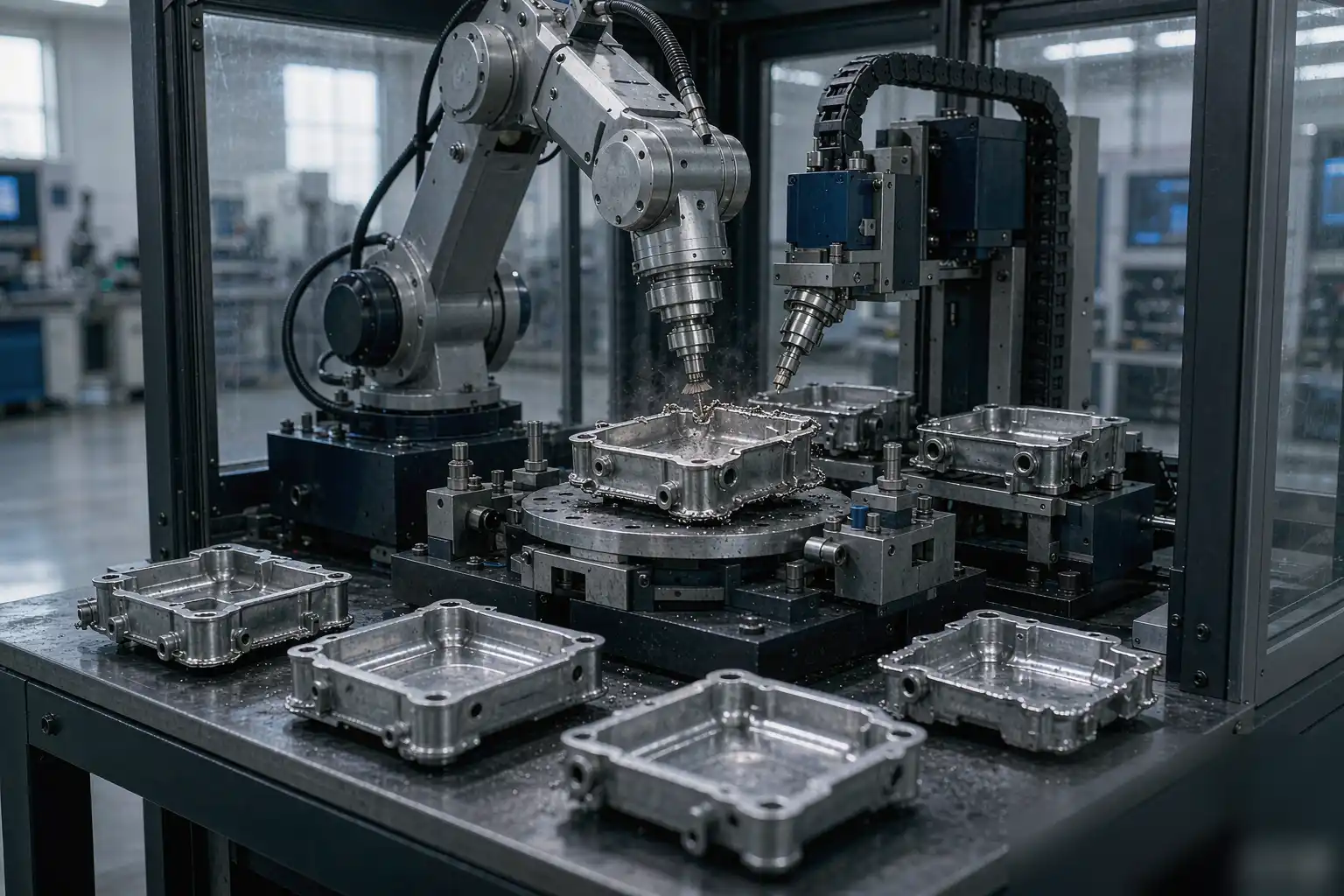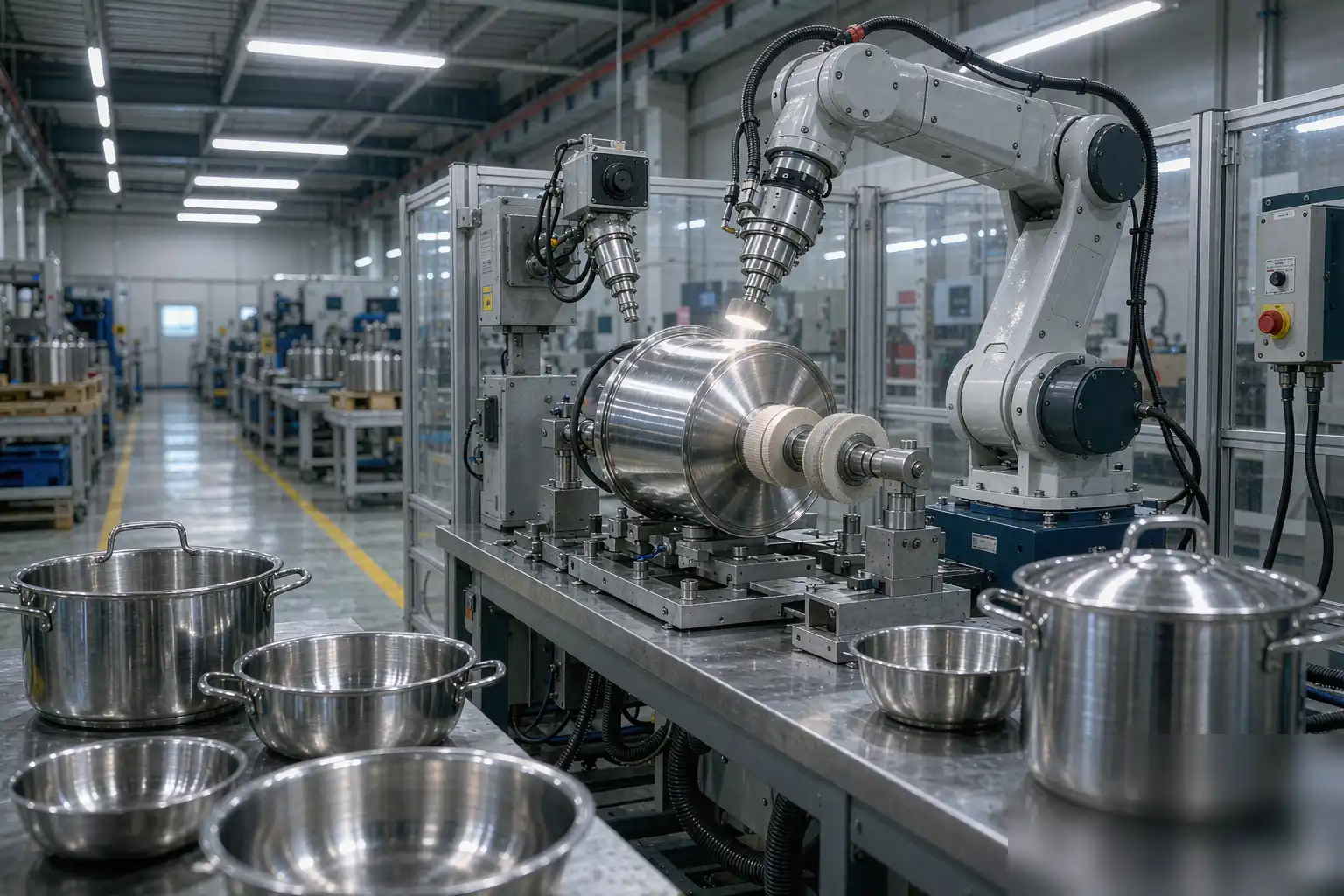


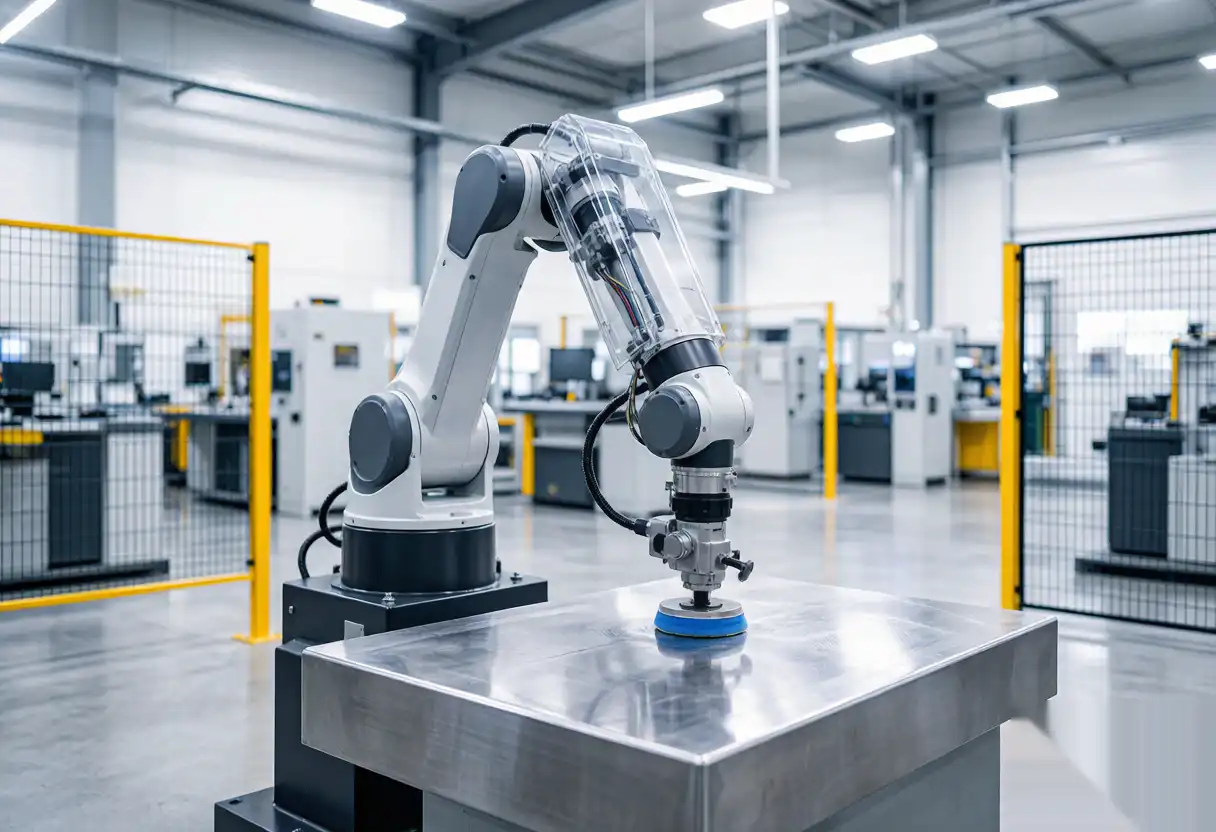
An industrial polishing robot brings unmatched repeatability, dramatic labor savings, and significantly safer working environments to modern surface finishing operations. For high-precision metal components, robotic polishing eliminates human error to deliver uniform Ra surface roughness that manual buffing simply cannot sustain across high production volumes. These automated cells integrate seamlessly into flexible manufacturing lines, linking upstream automatic grinding stations directly with downstream automated optical inspection (AOI) units.
As metal fabricators face persistent shortages of skilled manual polishers and tightening occupational safety standards, robotic automation transitions finishing from an artisanal bottleneck into a predictable, digitally controlled science. By utilizing multi-axis articulated arms equipped with active force-compliance end-effectors, manufacturers achieve flawless mirror or satin finishes while cutting consumables waste and re-work rates.
Key Advantage 1: Superior Repeatability & Force Control
Manual buffing suffers from operator fatigue, leading to inconsistent contact pressure, localized over-grinding, and edge rounding. An industrial polishing robot executes precise 3D motion paths with active pneumatic or electric force compliance. Whether polishing flat faces or contoured curves, the system maintains constant contact force (typically within ±1 N), keeping surface roughness (Ra) and specular gloss within ultra-tight quality windows. Discover how this structural consistency drives automated surface polishing labor savings across automotive and sanitary manufacturing.
Key Advantage 2: Labor Optimization, Safety & Ergonomics
Robotic finishing cells transform workplace safety while maximizing labor efficiency across multiple operational dimensions:
- Multi-Cell Supervisory Operations: A single technician can manage up to three robotic polishing cells simultaneously, shifting staff from strenuous manual labor to high-value quality monitoring.
- EHS Risk Mitigation: Robotic enclosures isolate operators from hazardous metallic dust, airborne polishing compounds, high noise, and repetitive strain injuries (RSI).
- 24/7 “Lights-Out” Manufacturing: Integrated with conveyor systems or automated guided vehicles (AGVs), robotic cells enable continuous unattended shifts, doubling daily plant throughput.
Key Advantage 3: Digital Process Control & Data Recipe Ownership
Robotic polishing converts years of master polisher expertise into digitized, repeatable software recipes. Tool center point (TCP) speed, wheel RPM, contact force, and compound spray frequencies are stored in the controller PLC. When paired with automated quality control systems, real-time telemetry tracks wheel wear and compound usage, enabling predictive maintenance and full lot traceability.
Performance Comparison: Manual vs. Robotic Polishing
| Performance Metric | Manual Buffing Operations | Robotic Polishing Cell |
|---|---|---|
| Surface Consistency (Ra) | Variable (depends on fatigue & skill) | High (±0.02 µm tolerance band) |
| Direct Labor Cost / Part | High (1 dedicated worker per station) | Low (1 operator supervises 3+ cells) |
| Occupational Safety & Hazards | High risk (dust exposure, vibration) | Zero direct exposure (enclosed cell) |
| Consumables Optimization | Excessive (over-application of compound) | Optimized (25–35% reduction in compound/wheels) |
| Process Data & Traceability | None (unrecorded manual process) | Full digital logging via Industry 4.0 PLC |
EXPERT INSIGHT
The greatest long-term ROI of a robotic polishing cell lies in IP retention: your optimum polishing speed, pathing, and force parameters are permanently stored as digital recipes, eliminating production downtime caused by staff turnover.
Typical Industrial Applications
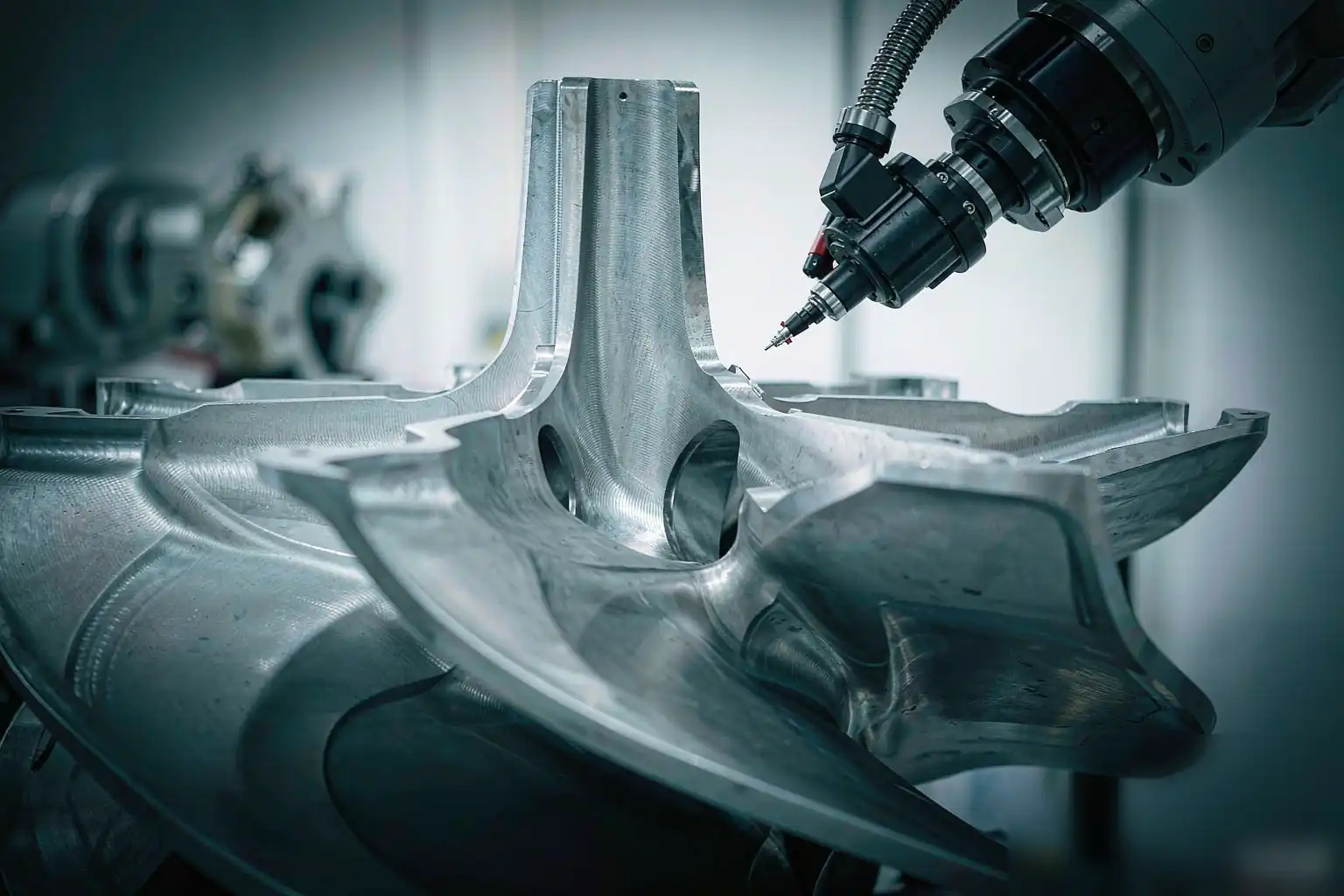
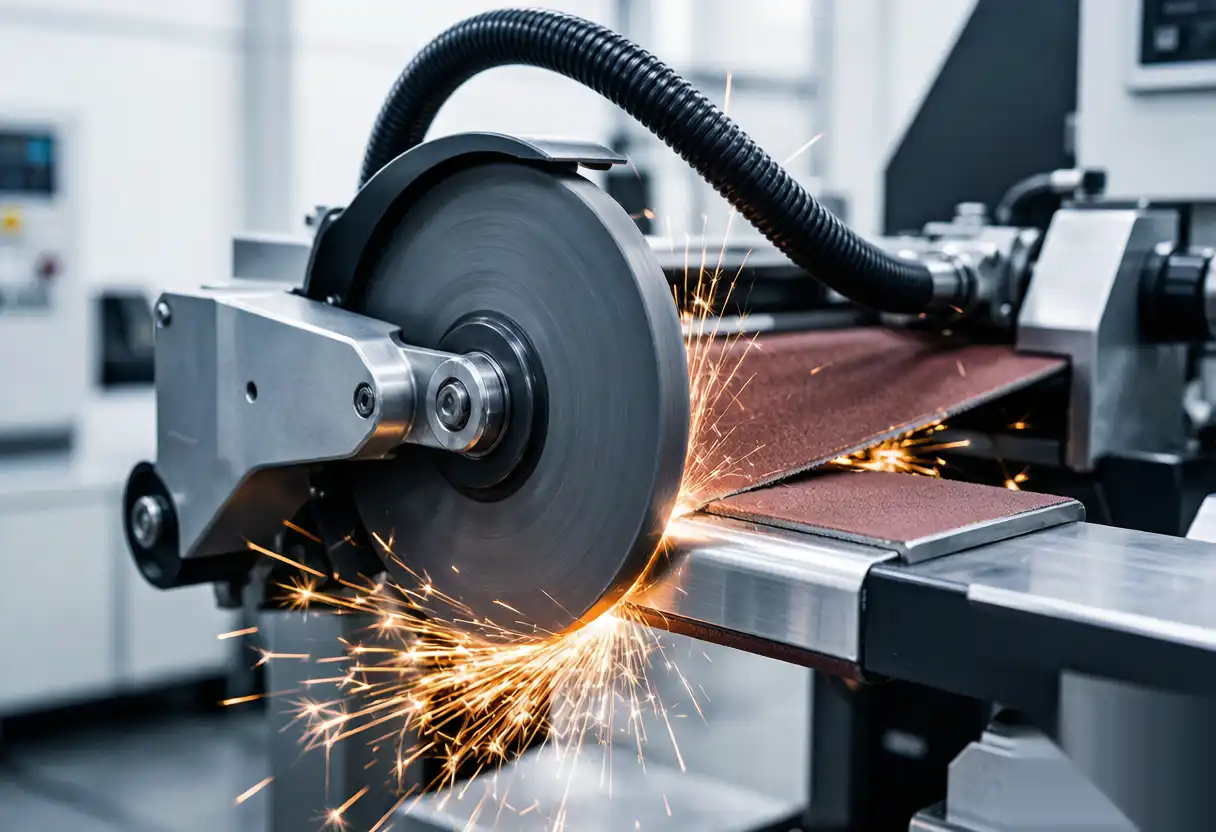
Robotic polishing excels on complex 3D shapes where uniform aesthetic or functional finishes are required. Key sectors include brass sanitary faucets, door hardware, automotive trim, stainless steel cookware, turbine blades, and orthopedic implants. Explore our field-tested implementation guide for faucet polishing automation to see a worked example of robotic cell architecture.
Frequently Asked Questions
Will industrial polishing robots completely replace human workers?
Robots absorb repetitive, high-volume production runs and hazardous grinding duties. Skilled polishers are upskilled to serve as cell programmers, quality auditors, and custom prototyping specialists.
How do robotic polishing cells comply with safety standards?
Complete robotic cells are built to ISO 10218 and ANSI/RIA R15.06 standards, featuring safety interlocked enclosures, optical light curtains, and integrated dust extraction systems to ensure full operator safety.
What is the primary factor driving the ROI of a polishing robot?
The payback period (typically 12 to 18 months) is driven by three main factors: reduced scrap/re-work rates, lower direct labor costs per unit, and a 20–30% increase in daily overall equipment effectiveness (OEE).
Conclusion: Elevating Metal Finishing Quality & Throughput
Transitioning from manual buffing to an industrial polishing robot represents a strategic upgrade for metal fabricators seeking long-term competitiveness. By combining rigid multi-axis movement with responsive force compliance, robotic polishing cells solve core industry challenges: eliminating scrap, boosting throughput, protecting workers from hazardous dust, and securing digital control over finishing recipes.
At Xiamen Dingzhu Intelligent Equipment, our application engineers partner with foundries and hardware manufacturers worldwide to design turnkey surface finishing cells tailored to your exact part geometries and volume targets. Explore our full spectrum of automated finishing solutions, from heavy-duty automatic grinding machines to multi-axis automatic polishing machines, or contact our team today to evaluate your process automation ROI.