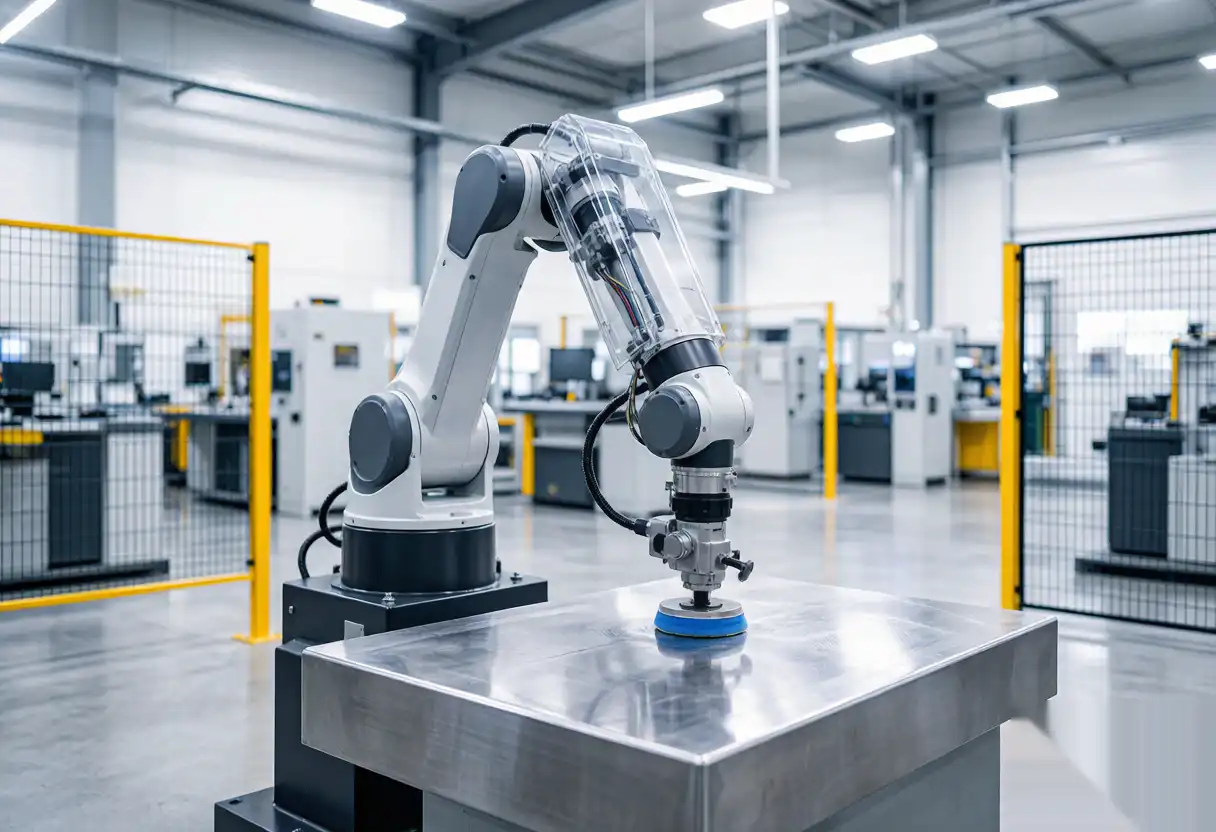


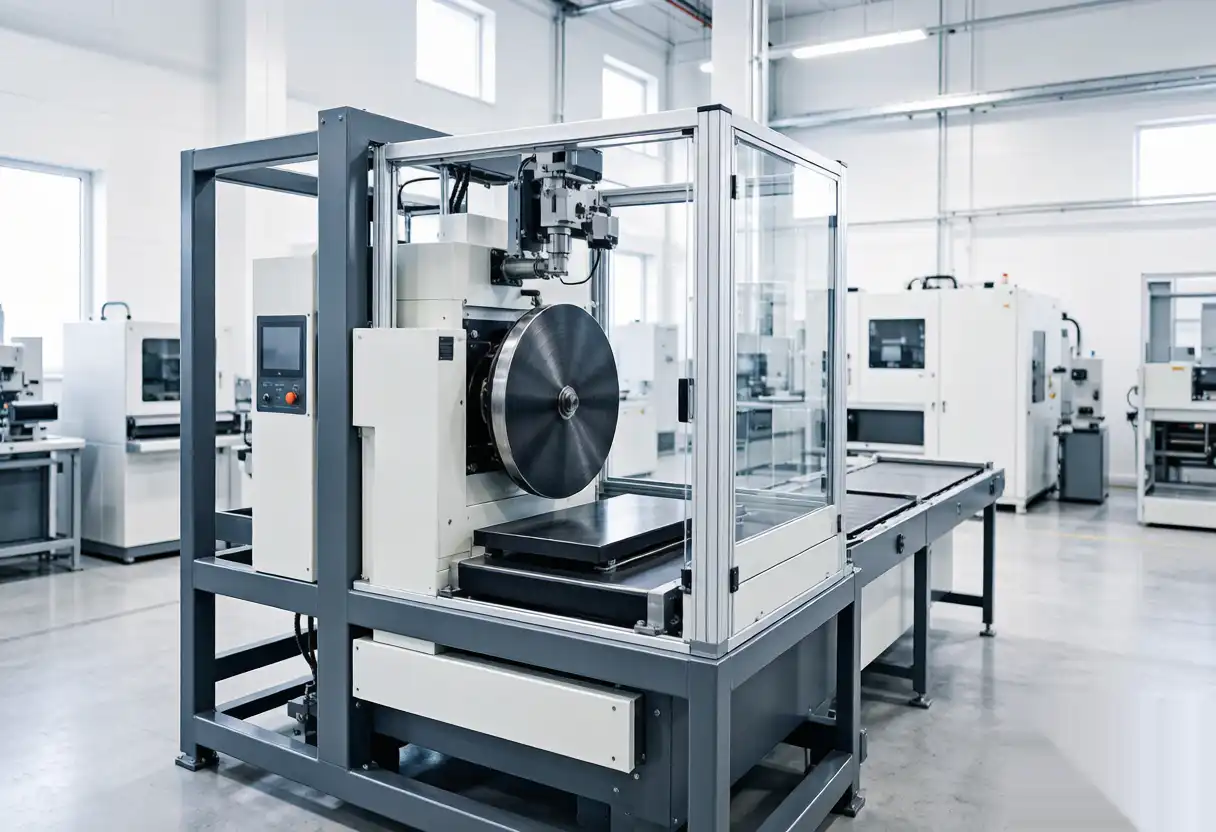
Surface polishing is where most metal-parts manufacturers quietly bleed money. The work is skilled, repetitive, and hard to staff — and every year the gap between what polishers earn and what the parts sell for gets tighter. If your finishing line still depends on people holding parts against a wheel for eight hours a day, automated surface polishing is the single highest-leverage change you can make to cut labor cost without cutting output.
This article breaks down the real labor economics, shows a side-by-side cost model, and gives you the payback math most vendors won’t put on one page. The goal is simple: help you decide, with numbers, whether a robotic polishing cell pays for itself in your shop.
Direct labor reduction per cell
Typical payback period
Can tend 3–6 machines
Why Labor Dominates Finishing Cost
In grinding and polishing, material is cheap and machines are a sunk cost. The variable that swings your unit cost is human time. A manual polisher spends most of a shift repeating the same motion, judging pressure and angle by feel, and stopping to re-check the surface. Three things make that expensive:
- Scarcity of skilled labor. Good finishers take months to train and are hard to replace. Turnover resets that training investment constantly.
- Inconsistency. Two operators produce two different finishes. Batch-to-batch variation means downstream rejects and customer complaints.
- Hidden rework. Burn marks, over-polish, and missed edges create scrap that never shows up on the labor line but destroys margin.
When you add overtime, benefits, and supervision, fully-loaded polishing labor in many markets now runs well above the machine-hour rate. Automating the motion removes the single largest and least predictable cost line on the finishing sheet.
The Automated Alternative
An automated polishing cell replaces the human wrist with a robot arm, a compliant force tool, and a programmed path. The part is held in a fixture; the robot follows the same trajectory every cycle; and a force sensor keeps the contact pressure constant so the finish is identical part after part. Operators move from “doing the polishing” to “loading parts, swapping media, and watching the cell.”
Cost Model: Manual vs. Automated
The numbers below are a representative mid-volume shop running stainless and aluminum components across two shifts. Your figures will differ, but the structure holds.
Manual line (per shift)
- 4 polishers × 8 h × loaded rate
- High scrap from variation
- Overtime to hit volume
- Low traceability
Automated cell (per shift)
- 1 operator tending 3–6 cells
- Scrap cut by consistent pressure
- Optional lights-out third shift
- Full cycle logging
Translate that to a month: four manual polishers at a fully-loaded rate across two shifts is a large fixed salary block. The automated cell converts most of that into depreciation plus one supervisor’s wage. The crossover point is usually reached the moment the cell runs a second shift, because the labor saving doubles while the machine cost stays flat.
The Payback Math
Here is the equation every buyer should run before signing:
Payback (months) = Cell cost ÷ Monthly labor savings
Example: $120,000 cell ÷ $8,000/month saved = 15 months
That example is conservative. It counts only direct labor and ignores scrap reduction, overtime elimination, and the ability to win overnight volume. Shops that run a true lights-out shift often see payback inside a year because the “third shift” labor cost is essentially zero while output rises.
Hidden Savings Most Calculators Miss
- Scrap and rework. Consistent force control means fewer burnt edges and over-polished surfaces — directly fewer scrapped parts.
- Quality claims. Fewer finish complaints means less warranty and returns cost.
- Safety. Removing operators from dust and repetitive-motion exposure lowers injury and compliance risk.
- Scalability. Adding a second cell is far cheaper than hiring and training a second crew.
Where Automated Polishing Pays Fastest
Not every part is a good fit on day one. The business case is strongest when:
- Volume is steady and the geometry repeats (faucets, handles, cookware, castings).
- Finish spec is tight and customer-driven (cosmetic A-surface parts).
- Labor is the binding constraint — you are turning down orders for lack of polishers.
- You already pay heavy overtime to keep up.
If all four are true, automation is not a question of “if” but “how fast.” If volume is erratic and parts are one-off, start with a flexible cell and a few fixtures rather than a fully dedicated line.
What to Prepare Before You Buy
- ✓Sample parts for a finish trial — send your worst-case geometry, not your best.
- ✓Current labor cost per part, per shift, fully loaded.
- ✓Target finish spec and acceptable tolerance band.
- ✓Floor space and utility (air, power) for the cell.
- ✓One internal owner for the cell (setup + programming).
Build Your Own Labor Baseline
Before requesting quotes, quantify the line you already run. Capture, for one representative month: total polishing labor hours, fully-loaded wage per hour (wages plus benefits plus supervision), scrap value attributed to finish, and overtime premium paid to keep up. Divide finish-related scrap by total parts to get a per-part quality cost. Add those three numbers — labor, scrap, overtime — and you have the monthly saving a cell can target. Most shops undercount scrap and overtime, which is exactly why automation looks unprofitable until they do the math honestly.
Pilot-First: De-Risk the Purchase
You rarely need to commit to a full line on day one. A common, lower-risk path is to pilot one cell on your highest-volume part, prove the finish and the labor saving, then replicate. Suppliers often offer a paid trial or a finish-sample service where they run your part and return measured results before any capital is committed. Use that data to validate your payback assumption with real cycle times rather than brochure numbers. A pilot also trains your cell owner and surfaces fixture issues while the stakes are small.
Sensitivity — What Moves the Number
The payback equation is sensitive to three inputs, and knowing them protects you from over-optimism. First, cell utilization: a cell running one shift saves far less than one running two or three, so the biggest lever is simply keeping it loaded. Second, labor rate: the higher your local fully-loaded rate, the faster any automation pays back — which is why high-wage regions adopt first. Third, scrap reduction: even a few percent drop in scrap on a high-volume part can halve the payback period. Run the model at 50%, 100%, and 150% of your assumed savings to see the range; if it still pays back inside two years at the pessimistic case, the decision is safe.
Workforce Transition Done Right
The fear that automation means layoffs is usually misplaced on a growing shop. Polishing labor is already scarce, so most cells don’t cut headcount — they let you accept orders you previously declined for lack of finishers. The people who ran the manual line become cell tenders, setup technicians, and quality checkers, roles that pay better and carry less physical toll. The shops that struggle are the ones that automate and then have no plan for where the displaced workers go; the ones that thrive treat the cell as a step up the skill ladder, not a headcount cut.
Why Adoption Is Accelerating
Three forces are pushing surface polishing automation from “nice to have” to “table stakes.” Labor costs in manufacturing regions keep climbing while worker availability falls. Customers — especially in faucets, appliances, and automotive — demand tighter, documented finish specs that manual work cannot guarantee. And robotic force control has matured to the point that a cell can handle real-world part variation, not just lab-perfect samples. The result is a shrinking window where manual finishing remains competitive; shops automating now lock in margin before the wage gap widens further.
Frequently Asked Questions
Will one cell really replace four people? It replaces four people doing that task. Those workers are typically reassigned to loading, inspection, and programming, so headcount rarely drops by four — capacity rises instead.
How long until it pays back? For two-shift operations with steady volume, 8–18 months is the normal band. Lights-out third shifts pull that under a year.
What about very small batches? Use a flexible cell with fast fixture swaps. The labor saving is smaller per part but still positive once setup time is optimized.
Do I need a programmer on staff? Not at first. Most suppliers deliver a commissioned cell with your recipes loaded; your team learns to duplicate and tweak them over time.