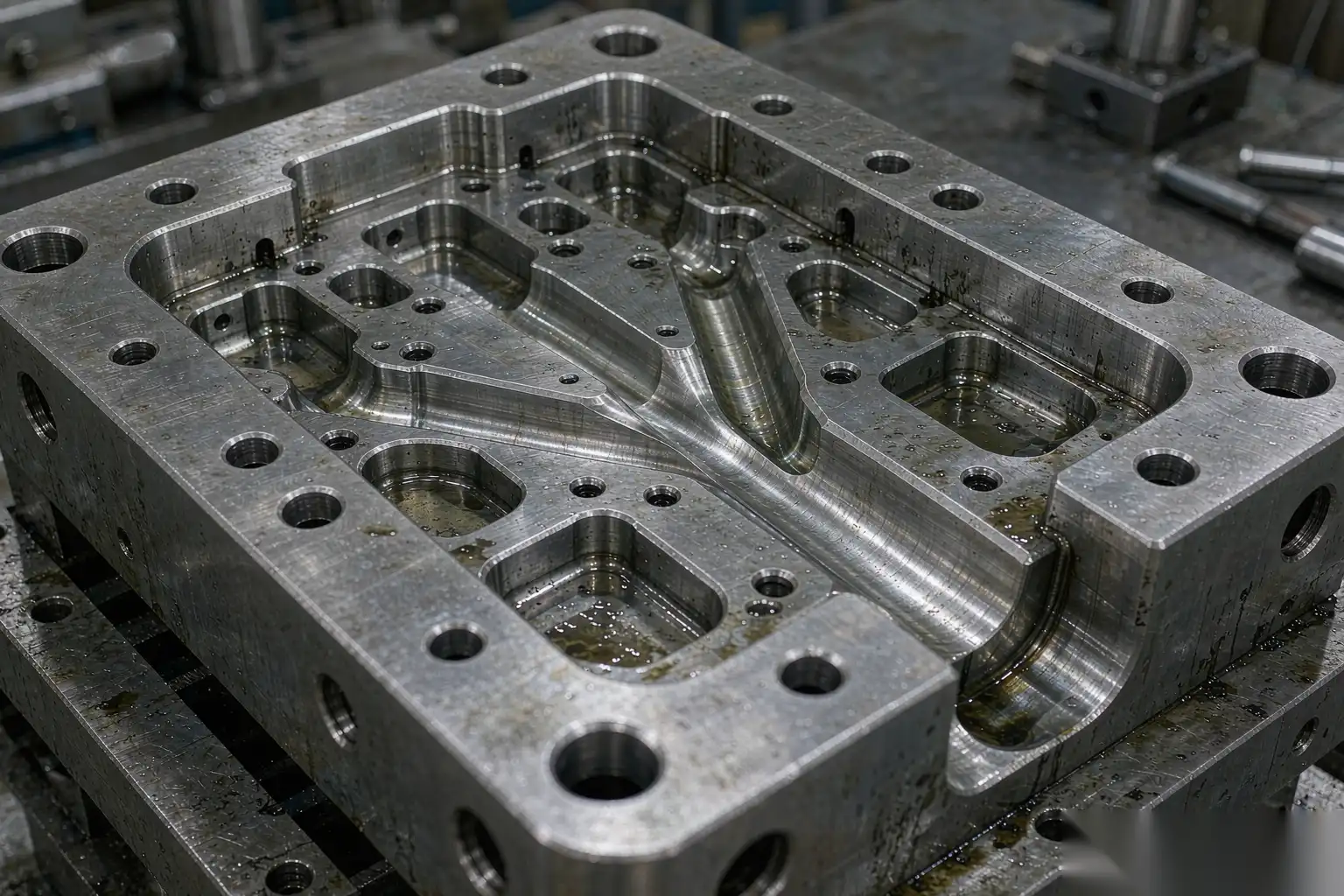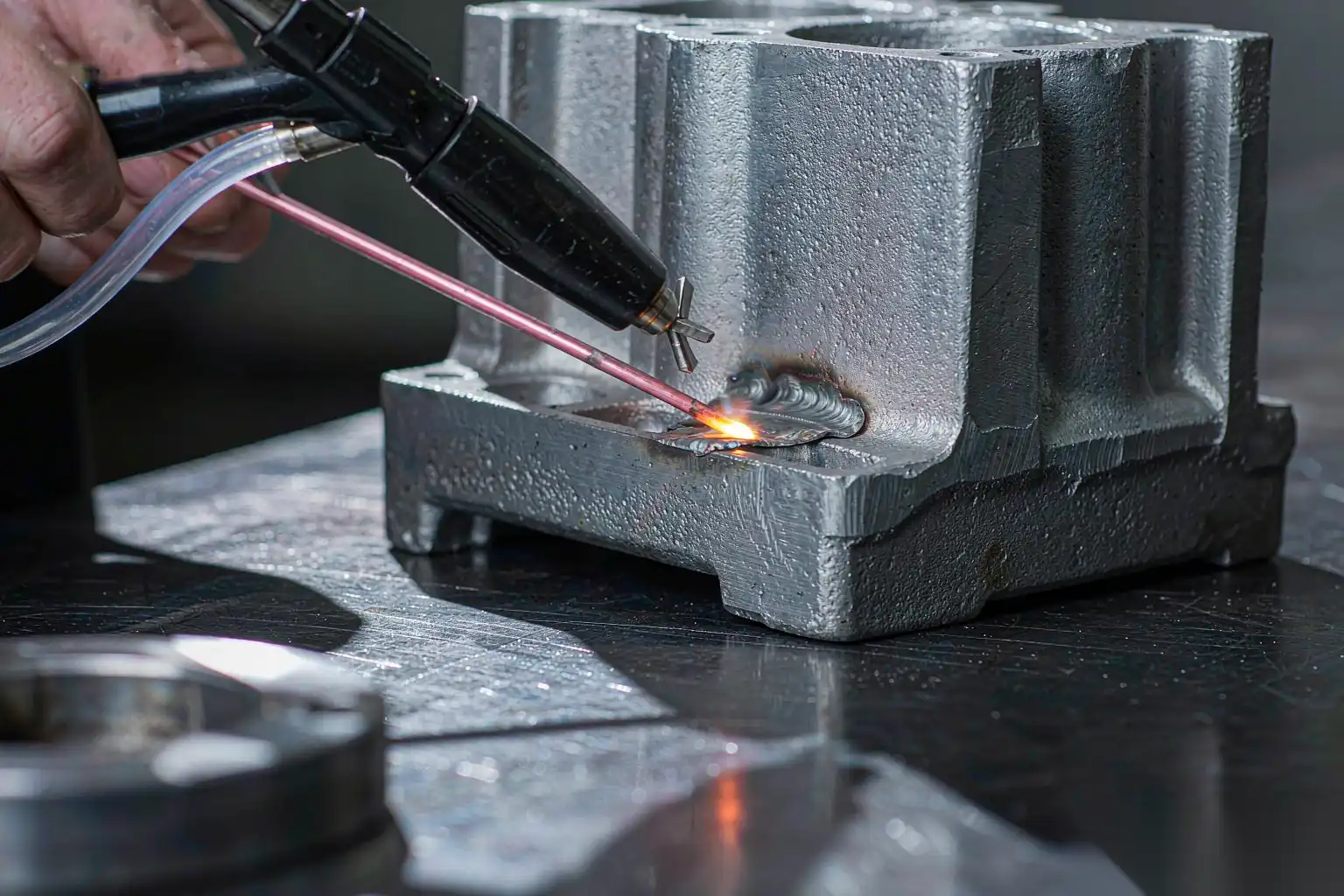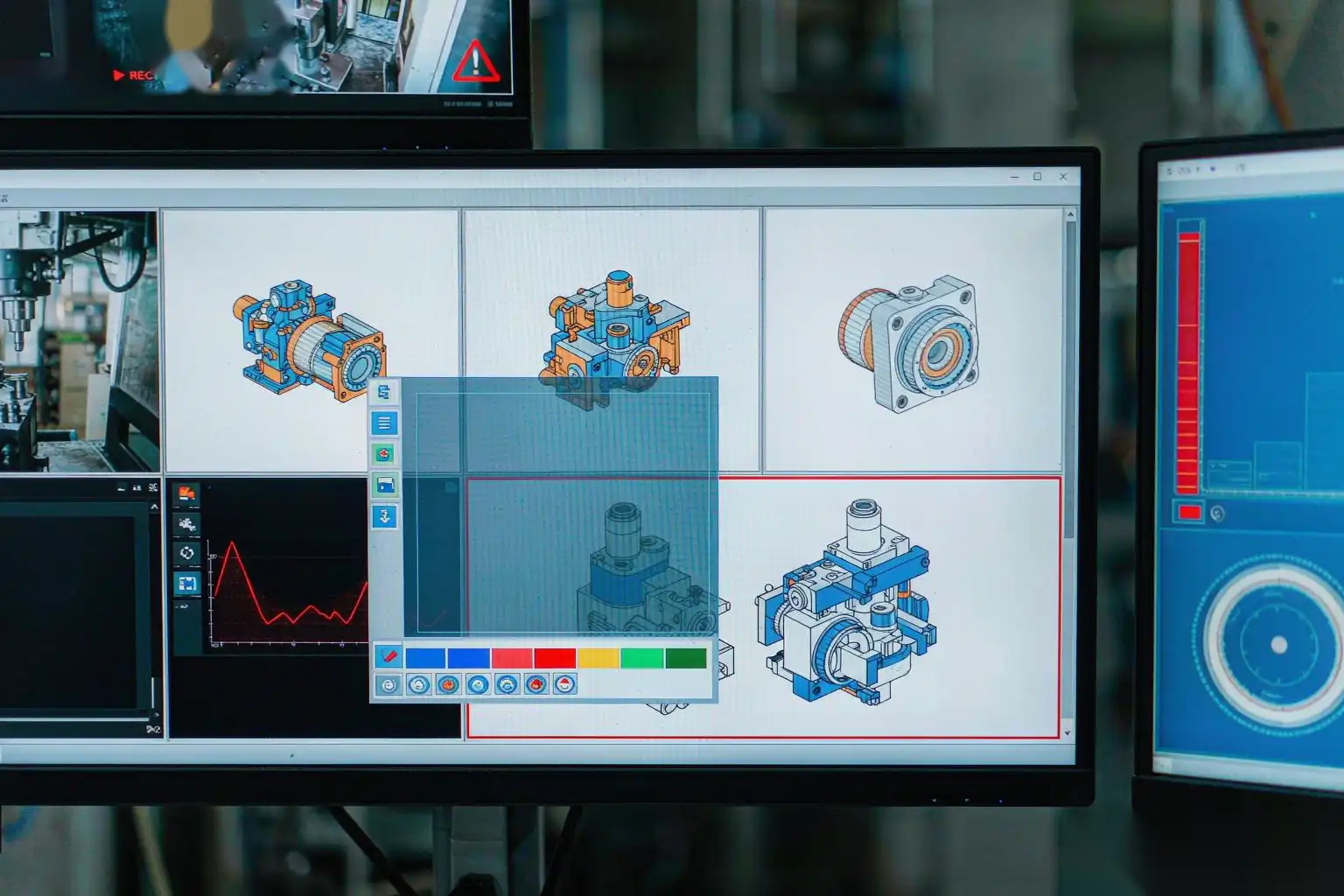


Walk through any faucet plant, lock factory, or sanitary ware line and you will find the same small, heavy, intricately detailed parts coming off the casting machines: handles, escutcheons, valve bodies, latch housings, shower trims. Most of them are zinc alloy die castings. The material family behind those parts — Zamak, the name given to zinc-aluminum-magnesium-copper alloys — is one of the oldest and most cost-effective ways to mass-produce small metal components, yet it is also one of the most misunderstood.
I have spent two decades on the finishing side of this industry, grinding and polishing zinc alloy castings for plating, and I can tell you exactly where the real cost of zinc die casting hides. It is rarely in the casting itself. It is in what happens after the part leaves the die: flash removal, parting line grinding, gate stub cutting, and the mirror polishing that every plated zinc part demands before it ever touches a chrome bath. This guide covers the alloy system, the process, the applications, and the finishing bottleneck that determines whether your zinc die casting project makes money or bleeds it.
What Is Zinc Alloy Die Casting?
Zinc alloy die casting is a manufacturing process in which molten zinc alloy is forced under high pressure into a hardened steel die, where it cools and solidifies in seconds. The process is best known for its ability to produce thin-walled, dimensionally precise parts at very low cost per piece. Zinc has the lowest melting point of the common die casting metals — around 387 to 390 °C for Zamak grades — which means shorter cycle times, longer die life, and lower energy use than aluminum or magnesium casting.
The term Zamak comes from the first letters of its primary ingredients: Zinc, Aluminum, MAgnesium, and Kupfer (the German word for copper). The most common grades are Zamak 2, Zamak 3, Zamak 5, and Zamak 7, plus the higher-aluminum ZA-8. Each grade trades a little castability or strength for ductility, hardness, or creep resistance.
Zamak Alloy Comparison
| Property | Zamak 2 | Zamak 3 | Zamak 5 | Zamak 7 | ZA-8 |
|---|---|---|---|---|---|
| Aluminum (%) | 3.5–4.3 | 3.5–4.3 | 3.5–4.3 | 3.5–4.3 | 8.0–8.8 |
| Copper (%) | 2.5–3.0 | ≤0.25 | 0.75–1.25 | ≤0.25 | 0.8–1.3 |
| Magnesium (%) | 0.020–0.05 | 0.020–0.05 | 0.03–0.08 | 0.005–0.02 | 0.015–0.03 |
| Tensile strength (MPa) | 359 | 283 | 331 | 283 | 374 |
| Elongation (%) | 7 | 10 | 7 | 13 | 10 |
| Brinell hardness | 100 | 82 | 91 | 80 | 103 |
| Minimum wall thickness (mm) | 0.6 | 0.5 | 0.6 | 0.5 | 1.0 |
| Typical use | High-strength parts, gears | General-purpose, plating | Hardness + strength | High ductility, thin walls | Higher-temperature, structural |
Zamak 3 is the default choice for roughly 90% of all zinc die castings. It offers the best combination of castability, dimensional stability, and plating performance, and it is the grade most faucet and hardware casters run. Zamak 5 adds copper for higher hardness and strength, which matters for parts that see wear, such as locks and window hardware. Zamak 2 is the strongest and hardest standard grade, often used for gears and heavy-duty mechanical components. Zamak 7 has lower magnesium, which improves ductility for very thin sections.
How the Process Works: Hot-Chamber Die Casting
Zinc die casting is almost always done on hot-chamber machines, and the difference from aluminum matters for anyone planning a production line. In a hot-chamber machine, the gooseneck and plunger sit inside the molten zinc bath, so metal is drawn directly into the shot chamber and injected into the die at pressures from about 7 to 35 MPa. Because there is no metal transfer delay, cycle times are dramatically shorter than aluminum — a small zinc part can cycle in 15 to 30 seconds, and multi-cavity dies routinely produce six or more parts per shot.
The low melting point also extends die life. Where an aluminum die casting die might survive 80,000 to 150,000 shots, a well-maintained zinc die can deliver 500,000 to over one million shots before significant wear. That makes tooling amortization much gentler, which is one reason zinc is attractive for high-volume, lower-priced parts.
Why Thin Walls and Tight Tolerances
Zinc can be cast with walls as thin as 0.5 to 0.8 mm, thinner than any other cast metal. The metal flows easily into fine detail, reproducing sharp corners, lettering, and even threads directly from the die. Dimensional tolerances of ±0.05 mm are achievable on critical features without secondary machining. This is why small mechanical parts — gears, levers, cams, and housings — are natural zinc applications.
The practical implication for a production manager: zinc parts come out of the die closer to final geometry than almost any other casting, yet they still carry casting flash, parting line witness, and gate remnants that the customer will not accept. The gap between “cast shape” and “deliverable part” is exactly where finishing cost and quality are decided.
Typical Applications of Zinc Alloy Die Castings
Zinc die casting earns its place where part count is high, detail is fine, and a plated or painted cosmetic finish matters:
- Faucets and sanitary fittings — handles, cross handles, escutcheons, shower heads, and valve bodies. Zinc electroplates beautifully and mirrors brass at a fraction of the material cost.
- Door and window hardware — locks, latches, handles, hinges, and cylinders where hardness, detail, and dimensional consistency matter.
- Small mechanical parts — gears, levers, pulleys, and mechanisms in office equipment, appliances, and automotive interiors.
- Electronic and electrical housings — connectors, plugs, and small enclosures that benefit from zinc’s natural EMI shielding and precise detailing.
In almost every one of these applications, the finishing step — deburring the flash, grinding the parting line, polishing the surface to a mirror for plating — consumes more labor hours than the casting itself. That single fact drives the business case for automation, and it is the reason this article spends as much time on finishing as on metallurgy.
What Comes Out of the Die: The Finishing Reality
Let me describe the part that lands in the tote at the end of a zinc casting line. It has thin flash along the parting line, a sprue or gate stub where the runner was cut, small ejector pin witness marks, and possibly a small sink mark or two on the cosmetic face. The casting itself is excellent — precise, dense, and consistent. What it is not, yet, is deliverable.
Every zinc part destined for plating must go through the same sequence: flash removal, parting line grinding, gate cutting, surface conditioning, and progressively finer polishing up to a mirror finish. The chrome plating tank is merciless — it magnifies every scratch, every grind line, and every inconsistently polished spot. A cloudy or blotchy plated surface is the number one reason zinc parts get rejected at final inspection, and it almost always traces back to manual finishing variation.
Manual Finishing: The Cost You Cannot See
Manual deburring and polishing of zinc parts is where most projects quietly lose money. Skilled polishers are scarce and aging. The work is dusty, loud, and repetitive, and the outcome depends on the mood, fatigue, and experience of the person holding the wheel. Two parts polished by the same operator an hour apart can differ noticeably in surface quality. When you multiply that variation across thousands of parts, the scrap and rework numbers become significant — many plants report first-pass plating acceptance rates below 90 percent because of polishing inconsistency alone.
This is the core pain point our customers bring to us at DZ Machinery: they cannot hire enough qualified polishers, and the ones they have cannot hold the consistency that modern plating lines demand.
Robotic Deburring and Polishing for Zinc Alloy Parts
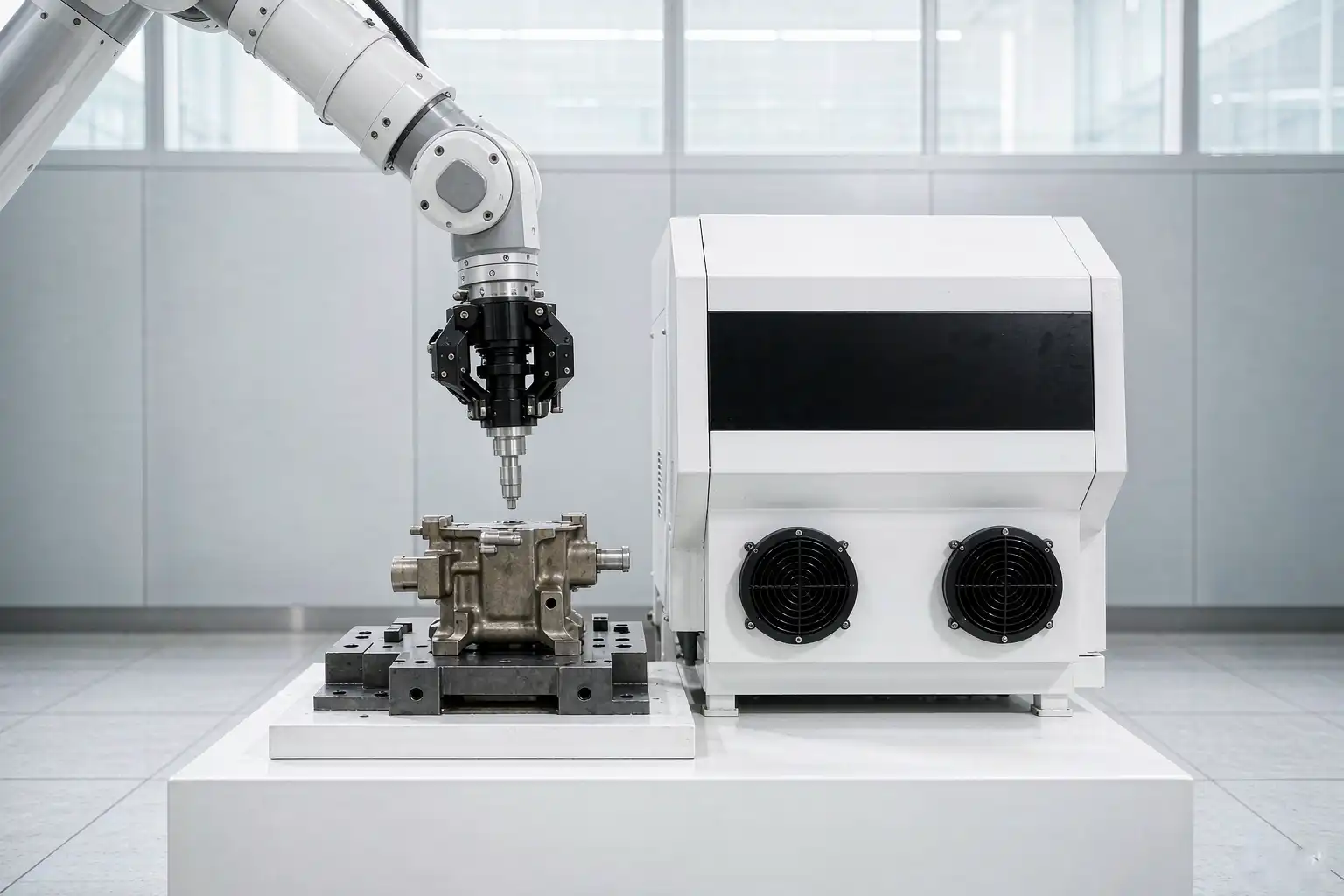
Robotic finishing cells solve the zinc finishing problem the same way die casting solved the production problem: replace human variation with a repeatable, programmable process. A six-axis robot equipped with a spindle or polishing head follows the same tool path, at the same feed rate, with the same contact force, on every part. The deburring pass that removes flash from the parting line is identical from part one to part ten thousand. The polishing sequence — coarse, medium, fine — is executed the same way every cycle, so the surface reaching the plating tank is uniform.
The results show up directly in the numbers that matter:
- First-pass plating acceptance climbs from the 80 to 90 percent range to 99 percent or better.
- Labor on the finishing line drops by 60 to 80 percent, freeing scarce polishers for setup and inspection roles.
- Scrap and rework fall sharply because the grinding and polishing process no longer damages thin-walled cosmetic faces.
- Capacity becomes predictable — a robotic cell runs consistent cycles around the clock, with program changes that take minutes instead of weeks of retraining.
We cover the technical detail in our guide on how robotic polishing improves quality for zinc alloy parts, including force control, tool path programming, and how to avoid the common mistake of over-polishing thin sections.
Which Operations to Automate First
For most zinc parts, the biggest gains come in this order. First, automate deburring and flash removal — it is the highest-volume operation and the easiest to program. Second, automate parting line grinding and gate stub cutting, which eliminates the most repetitive manual work. Third, automate the polishing sequence, which delivers the quality consistency the plating line depends on. A flexible robotic cell can be reconfigured between these jobs as part mixes change; for dedicated products, a robotic deburring machine tailored to zinc alloy die castings can be set up as a single-purpose line.
Plating Preparation: Why Polish Consistency Decides Chrome Quality
Zinc parts are almost always finished by electroplating — typically copper, then nickel, then chrome. The plating process deposits a few micrometers of metal that copies the surface underneath exactly. A scratch on the zinc surface becomes a scratch on the chrome. A wave in the polish becomes a cloudy area on the mirror. Because plating cannot hide defects, polishing quality is the acceptance test for the entire finishing operation.
Automated polishing changes the economics of plating preparation. Instead of inspecting and reworking polished parts, the line produces a consistent mirror from every cycle. Platers can run longer, denser racks because they no longer have to sort good and bad polished parts. Rejects move from the plating inspection bench to the rare occurrence that a quality team investigates with a root-cause analysis. This is the measurable ROI of robotic polishing, and for high-volume faucet and hardware plants it typically pays for a cell in twelve to eighteen months.
Common Defects and How Finishing Affects Scrap Rate
No zinc casting is perfect, and knowing which defects exist at the die and which appear at the buffer helps you attack scrap where it actually happens:
- Flash and parting line witness — unavoidable at the die, removed by deburring. If removal is inconsistent, parts go to plating with visible lines and get rejected.
- Sink marks — shallow depressions opposite heavy sections. Grinding can remove minor sinks, but aggressive polishing of a thin section can push it through. Process control matters more than brute force.
- Porosity — mostly internal in zinc, but surface porosity can open during polishing and ruin the plated finish. Robotic force control polishes without burning through the surface.
- Ejector pin marks — small witness marks on the non-cosmetic side; acceptable in most designs, but on visible faces they must be blended uniformly, which is another consistency problem manual finishing cannot reliably solve.
The pattern is consistent: the die determines the defects, but the finishing process determines how many of them become scrap. This is why we always advise casting buyers to evaluate a supplier’s finishing automation, not just their casting machines. Compare the cost and quality implications of automated versus manual finishing before you commit to a sourcing decision — the principles for zinc mirror what aluminum casters experience.
Choosing Between Zinc and Aluminum
If you are still at the material selection stage, our detailed comparison of zinc versus aluminum die casting walks through strength, density, cost, and finishing differences. As a rule of thumb: choose zinc for small, intricate, cosmetic, or plated parts; choose aluminum when weight, heat, or structural strength dominates. Both materials demand the same disciplined approach to deburring and polishing — the automation case is identical even though the metallurgy differs.
A Supplier Checklist for Zinc Die Casting Projects
When you evaluate a zinc die casting supplier, add these finishing-related questions to your standard audit:
- Do they automate deburring and polishing, or is it all manual? Manual-only suppliers will struggle to hold consistency on plated parts.
- What is their first-pass plating acceptance rate? Anything below 95 percent means your cost includes their rework.
- Can they hold ±0.05 mm on critical features without machining? This signals die design maturity.
- How do they handle cosmetic face polishing? Ask for process documentation, not promises.
- What is their scrap classification process? A supplier who understands where scrap originates can reduce it.
FAQ
Is Zamak the same as zinc alloy? Yes — Zamak is the standard family of zinc die casting alloys containing aluminum, magnesium, and copper. Zamak 3 is the general-purpose grade used for most applications.
Can zinc die castings be polished to a mirror finish? Yes. Zinc takes an excellent mirror polish, which is why it is the standard material for plated faucets and hardware. The challenge is holding consistent polish quality across high volumes, which is where robotic polishing pays off.
How thin can zinc walls be cast? Production parts commonly use walls of 0.5 to 0.8 mm, and critical sections can go thinner in controlled designs.
Is zinc die casting cheaper than aluminum? On small, intricate parts, yes — faster cycles, longer die life, and lower melting temperature make zinc very cost-effective. The finishing cost is often the hidden variable that erases the advantage if automation is missing.
Do zinc parts need polishing before plating? Always. Plating copies the surface underneath, so any grinding mark or inconsistent polish shows through the chrome. Automated finishing is the only reliable way to prepare high volumes of zinc parts for consistent plating.
Get Your Zinc Finishing Line Right
Zinc alloy die casting is a proven, cost-effective process for small precision parts — and its profitability is decided in the finishing room. DZ Machinery designs and builds robotic deburring, grinding, and polishing cells and complete finishing lines for zinc die castings, faucets, and hardware. Tell us your part, your volume, and your plating requirements, and we will show you a cell layout with realistic ROI numbers. Contact us for a free evaluation of your finishing line.