

Die Casting vs CNC Machining from Billet: Finding the Cost Crossover
Every manufacturing engineer eventually faces the same decision on a new aluminum part: cast it near net shape and machine only what matters, or machine the whole thing from solid bar or plate. The answer is rarely ideological. It is arithmetic. This guide lays out that arithmetic — material utilisation, machine time, tooling amortisation, and the volume at which the two routes cross — using real numbers you can adapt to your own shop rates.
The Two Routes, Stated Precisely
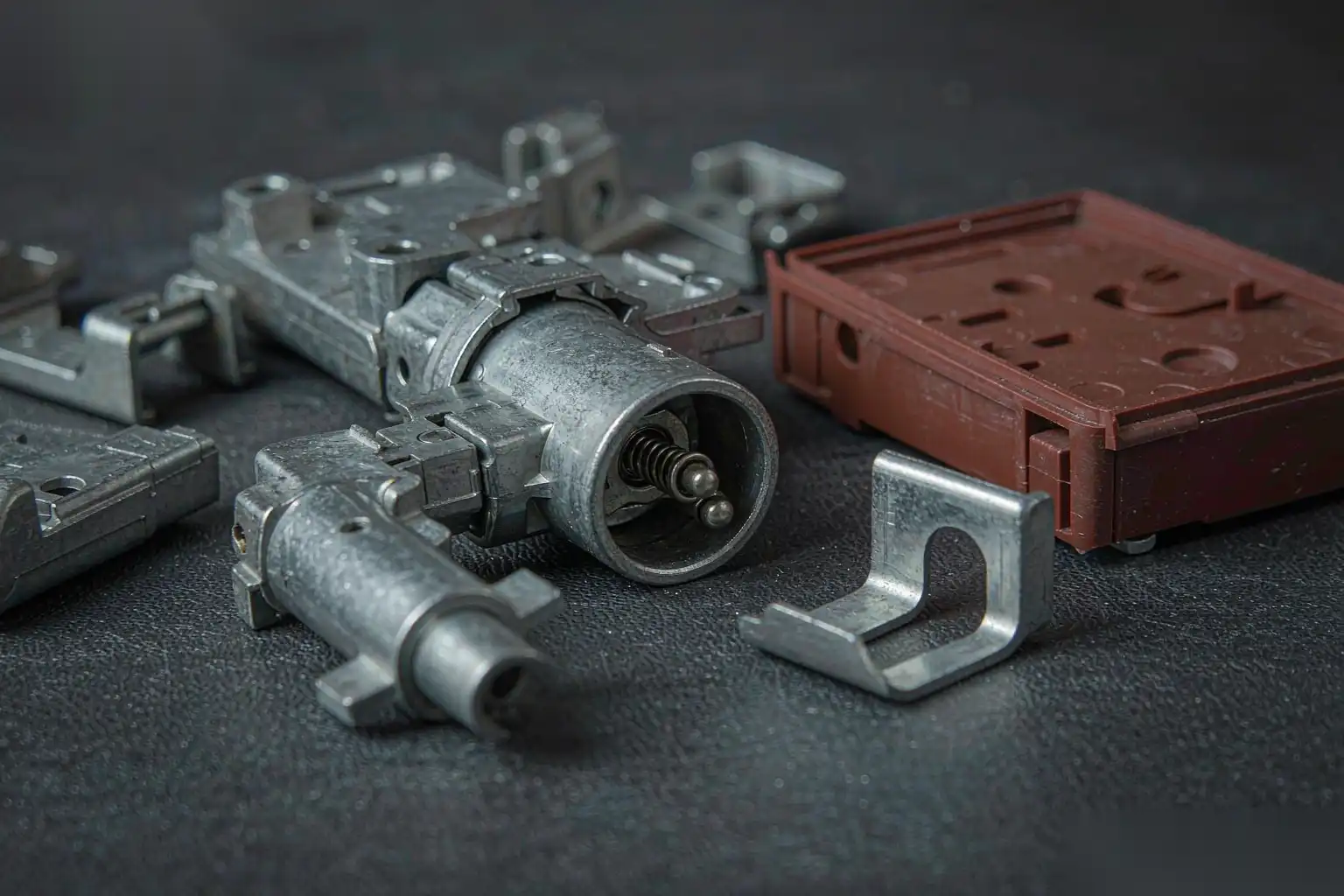
Route A — near net shape die casting plus selective CNC. Metal is injected into a hardened steel die, the part comes out within 0.5 to 1.5 mm of final geometry, and machining is limited to sealing faces, bore diameters, threaded holes and datum features. Typical machining allowance is 0.5 to 1.0 mm per face.
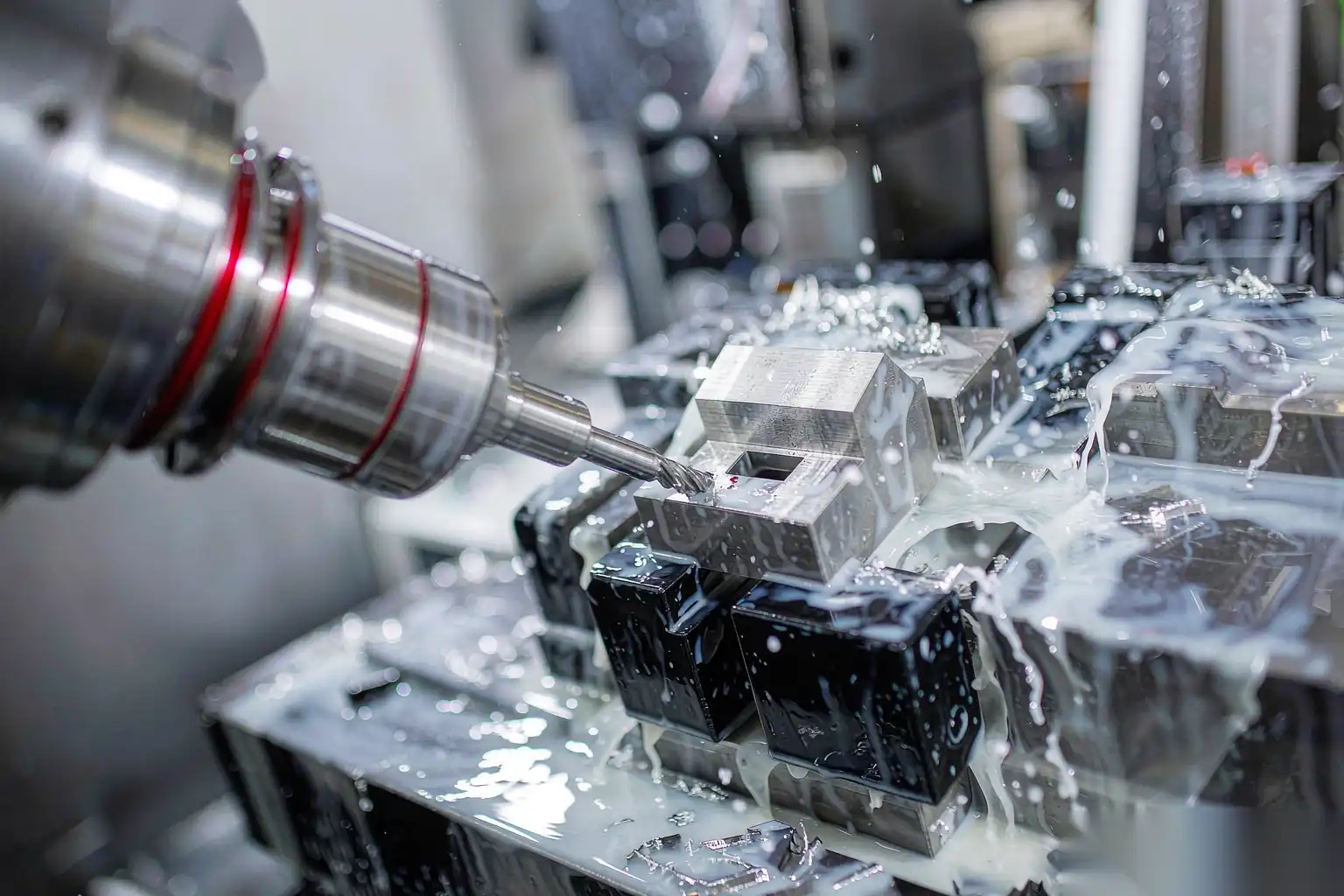
Route B — machining from billet. Everything is removed by the cutter. A part that weighs 380 g finished may start life as a 2.4 kg sawn billet. You buy the difference as chips, pay machine time to liberate it, and pay again to handle the swarf.
The naive comparison looks at material price per kilogram and stops. That comparison is wrong because it ignores three things: the cost of machine minutes, the cost of the tooling you amortise, and the cost of the capital tied up in cycle time.
Material Utilisation: Where Billet Machining Bleeds
Start with the buy-to-fly ratio, the mass of raw material divided by the mass of the finished part.
- Simple bracket machined from plate: buy-to-fly 2.5 to 3.5
- Complex housing machined from solid block: buy-to-fly 4 to 8
- Same housing die cast plus minimal machining: buy-to-fly 1.15 to 1.35
Take a housing that finishes at 900 g. Machined from billet at a buy-to-fly of 5.5, you purchase 4.95 kg of 6061-T6 plate per part. At USD 3.10/kg you spend USD 15.35 of material, and you recover perhaps USD 0.55/kg for the chips depending on your local market and whether you segregate alloys properly. Net material cost lands near USD 12.30.
The die cast version purchases 1.2 kg of A380 ingot equivalent (including runner and biscuit, which are remelted in-house at typically 92 to 96 percent recovery) at roughly USD 2.35/kg. Net material cost is about USD 2.80. The difference is close to USD 9.50 per part before a single spindle turns.
That gap alone often decides the argument at volumes above a few thousand pieces per year.
Machine Time: The Dominant Variable at Low Volume
Material is a small part of machined cost. Machine time dominates.
Consider the same 900 g housing. Machined from solid, you remove roughly 4 kg of aluminum. Even with aggressive parameters on a modern three-axis vertical — a 63 mm face mill at 3,500 rpm, 0.25 mm/tooth feed, 6 mm axial depth — you remove perhaps 300 cm³/min of metal. Four kilograms is about 1,480 cm³, so roughing alone consumes close to five minutes. Add semi-finishing, finishing, drilling of twelve holes, tapping of six, deburring and a second operation to reach the back face, and total cycle lands between 11 and 16 minutes.
At a fully loaded machine rate of USD 65/hour — which includes depreciation, floor space, tooling consumption, coolant, power and the operator attending two machines — every minute costs roughly USD 1.08. A 14 minute cycle is USD 15.12 of machine time.
The die cast version arrives with most geometry already present. Machining drops to three faces, one bore and four holes: perhaps 2.5 to 3.5 minutes, or about USD 3.24. Add the casting conversion cost, around USD 2.60 to USD 4.20 depending on machine tonnage and cycle count for the part size, and the total sits well below the fully machined figure.
The structural reason is simple: when you machine from billet, you are paying a spindle to convert expensive aluminum into chips for ten minutes. When you cast, the molten metal takes the shape in about 40 seconds.
Tooling Amortisation: The Fixed Cost That Sets the Crossover
Here is where casting stops being obviously cheaper. A production die for a mid-size part costs real money.
- Single cavity die, simple geometry, no side actions: USD 15,000 to USD 35,000
- Single cavity die with two slides and lifters: USD 40,000 to USD 90,000
- Multi-cavity die for small parts: USD 60,000 to USD 150,000
- Prototype or bridge tool in softer steel: USD 4,000 to USD 12,000, life 2,000 to 10,000 shots
Machining from billet needs fixtures and programs, not hardened steel tooling. A solid workholding setup for the housing might be USD 2,500 to USD 6,000. That difference is the entry fee you must amortise.
| Annual volume | 3 yr total (units) | Tooling USD | Tooling cost/part | Verdict |
|---|---|---|---|---|
| 500 | 1,500 | 45,000 | 30.00 | Machine from billet |
| 1,500 | 4,500 | 45,000 | 10.00 | Borderline |
| 4,000 | 12,000 | 45,000 | 3.75 | Cast |
| 10,000 | 30,000 | 45,000 | 1.50 | Cast clearly |
The crossover for a part of this size usually lands between 1,500 and 3,000 pieces per year. Below it, machined billet wins because you never recover the die. Above it, casting wins and the margin widens every year.
Note that the analysis should use expected lifetime volume, not one year. A die lasts 100,000 shots or more with proper maintenance, so a program spanning five years can spread its tooling much further than a three year view suggests.
Accuracy, Tolerance and Surface Finish
Cost is not the only axis. The routes deliver different capability, and sometimes capability decides.
- Dimensional capability. Die casting holds ±0.10 mm per 25 mm routinely on dimensions crossing the parting line, and tighter on dimensions within a single die half. Machining holds ±0.025 mm without effort. If your drawing calls for ±0.02 mm across twenty features, no casting process will deliver that directly — those features must be machined regardless.
- Flatness over large areas. A 400 mm die cast plate will not stay flat to 0.05 mm without stress relieving and a machining pass. Large thin sections move.
- Surface finish. As-cast Ra typically runs 1.6 to 6.3 µm depending on die condition and alloy. Machined surfaces routinely achieve Ra 0.8 to 1.6 µm. Polished cosmetic surfaces require mechanical finishing regardless of route — see how we structure that work in aluminum die casting finishing options.
- Porosity. This is the real constraint. Machined billet is sound metal. Die castings contain gas porosity, and near-surface porosity is exposed when you cut. For pressure boundary parts, specify porosity acceptance explicitly — our discussion in aluminum die casting porosity causes and solutions covers X-ray acceptance levels and vacuum assistance that pushes capable suppliers below 1 percent porosity volume in critical zones.
If the part must hold pressure, machined billet removes an entire class of risk. If it can tolerate defined porosity limits, casting wins economically.
Lead Time and Iteration Speed
Machining from billet has one decisive advantage early in a program: speed to first part.
- Machined prototypes from billet: 3 to 10 days including programming
- Die casting with a production tool: 8 to 14 weeks to T1
- Bridge or soft tooling: 3 to 5 weeks, adequate for a few thousand pieces
This is why most sensible programs do both. Build the first twenty parts from billet, validate fit and function, freeze the geometry, then commit to the production die. The machined parts fund learning cheaply; the casting captures the unit cost once the design is stable.
Making design changes after the tool is built is expensive and slow. Weld-up and re-machining of a die insert takes two to four weeks and consumes 10 to 20 percent of the original tool cost. Plan your iteration before you cut steel, not after.
Hybrid Strategies That Usually Win
Pure strategies rarely produce the lowest total cost. Four hybrid patterns cover most production situations:
- Cast near net shape plus a single CNC finishing operation. One fixture, one part setting, all critical features machined in one cycle. This is the default for housings, valve bodies and pump bodies.
- Cast blank plus localised machining on sealing surfaces only. Minimal contact area, shortest cycle, highest risk if the casting distorts.
- Cast cosmetic geometry, machine functional geometry. Common in sanitary hardware where appearance surfaces need no material removal beyond automated polishing, while mounting faces need flatness.
- Billet for the first production year, die thereafter. Lets you ship while the tool is on the floor.
Whichever pattern you choose, standardise the datum scheme early. A casting datum structure agreed before tool design prevents a class of argument later about whether a dimension is out of tolerance or the fixture is wrong.
Building Your Own Crossover Worksheet
Do not trust generic thresholds. Build the model for your part with these inputs:
- Finished part mass and CNC bill of operations with realistic removal rates per tool
- Buy-to-fly ratio — estimate from your CAM roughing stock or simply compare envelope volume to finished volume
- Raw material prices including your actual chip recovery credit
- Loaded machine rate per minute, not the purchase price divided by a guess at hours
- Die quotation including expected cavities, slides and expected shot life
- Expected lifetime volume over five years, not one year
- Secondary operations: deburring, grinding, polishing, leak testing, coating
- Quality cost: projected scrap rate times the fully burdened cost at the point of rejection
Then plot total cost per part against annual volume for both routes. The intersection is your crossover. Most teams are surprised how low it sits once machine minutes are priced honestly.
What Changes When You Add Finishing
Whichever route you pick, the part still has to look right and feel right. Gate stubs have to come off, parting line flash has to go, and cosmetic surfaces have to reach the specified finish. Those steps are manual by default in most shops, and that is where the cost you saved upstream leaks away.
A metered summary of typical cell economics is available in our comparison of robotic versus manual deburring for teams quantifying that last stage before committing capital.
DZ Machinery builds robotic deburring and polishing cells around exactly this kind of part — regardless of whether it started as billet or as a casting. Share your drawing and annual volume, and our engineers will run the crossover numbers with you and propose a cell sized to your part family.