

Aluminum Die Casting Surface Finishing: Options, Process, and Selection Guide
Why Surface Finishing Matters in Die Casting
A die cast aluminum part comes out of the die with a characteristic surface — slightly rough, with visible flow lines, parting line witness, and ejector pin marks. In some applications this as-cast surface is acceptable. In most, it is not.
Surface finishing accomplishes four things:
- Appearance — color, gloss, texture, and uniformity for the visible part
- Corrosion protection — the surface treatment slows or prevents environmental degradation
- Wear resistance — hardcoat anodizing and plating provide functional wear surfaces
- Functional surface — electrical conductivity, thermal emissivity, paint adhesion, food contact safety
The right finish is determined by the part’s function, not by what is easiest for the supplier. Choosing wrong is expensive — either through field failure or through reworking the finish.
The 8 Most Common Surface Finishes for Die Cast Aluminum
1. As-Cast (Raw)
Description: the part comes out of the die, gets a light trim of flash, and is shipped. No additional finishing.
Surface: characteristic die cast texture, visible flow lines, parting line witness, possibly some ejector pin marks.
Cost: lowest. Adds no process steps beyond trim and basic inspection.
Applications: internal components, hidden structural parts, industrial equipment where appearance does not matter.
Limitations: poor corrosion resistance, not acceptable for visible consumer parts, no surface uniformity.
2. Shot Blasting / Bead Blasting
Description: the part is exposed to a high-velocity stream of small metal or ceramic beads (typically glass bead, aluminum oxide, or steel shot) to create a uniform matte surface texture.
Surface: uniform matte finish, slight roughness (Ra 1.5-3.0 µm), removes minor surface imperfections and flow lines.
Cost: low. $0.05-0.30 per part depending on size.
Applications: industrial equipment, lighting fixtures, heat sink exterior surfaces, pre-treatment for painting.
Limitations: does not fill porosity or major surface defects. May not be sufficient for high-cosmetic applications.
3. Tumbling / Vibratory Finishing
Description: parts are placed in a tumbler or vibratory bowl with abrasive media. The motion creates a uniform surface finish and breaks off flash and sharp edges.
Surface: smooth, slightly matte, more uniform than as-cast. Some parting line witness may remain.
Cost: low. $0.10-0.50 per part.
Applications: small to medium parts, hidden or semi-hidden components, pre-treatment for plating or painting.
Limitations: can damage thin features or sharp corners. Not suitable for parts with fragile inserts.
4. Polishing and Buffing
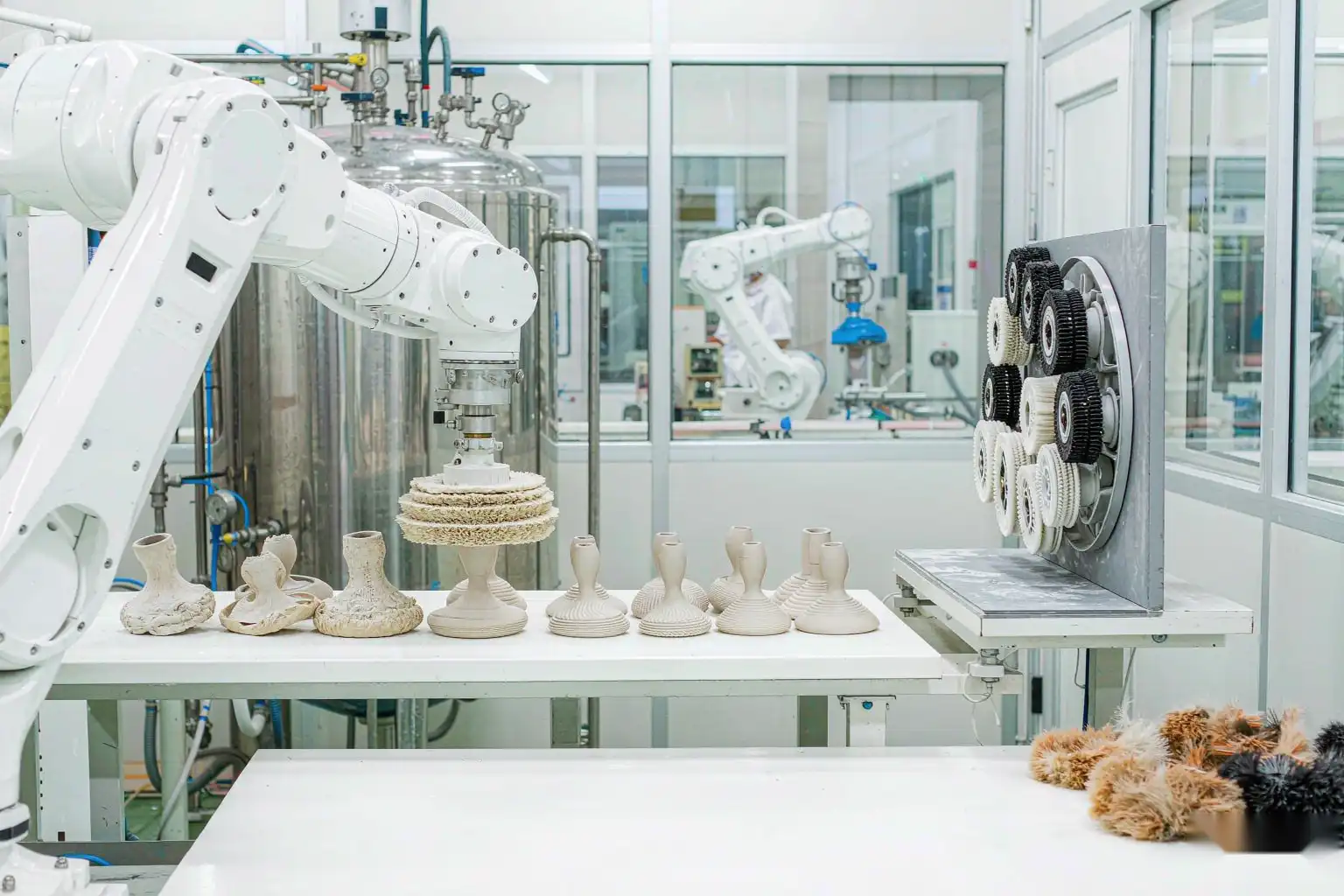
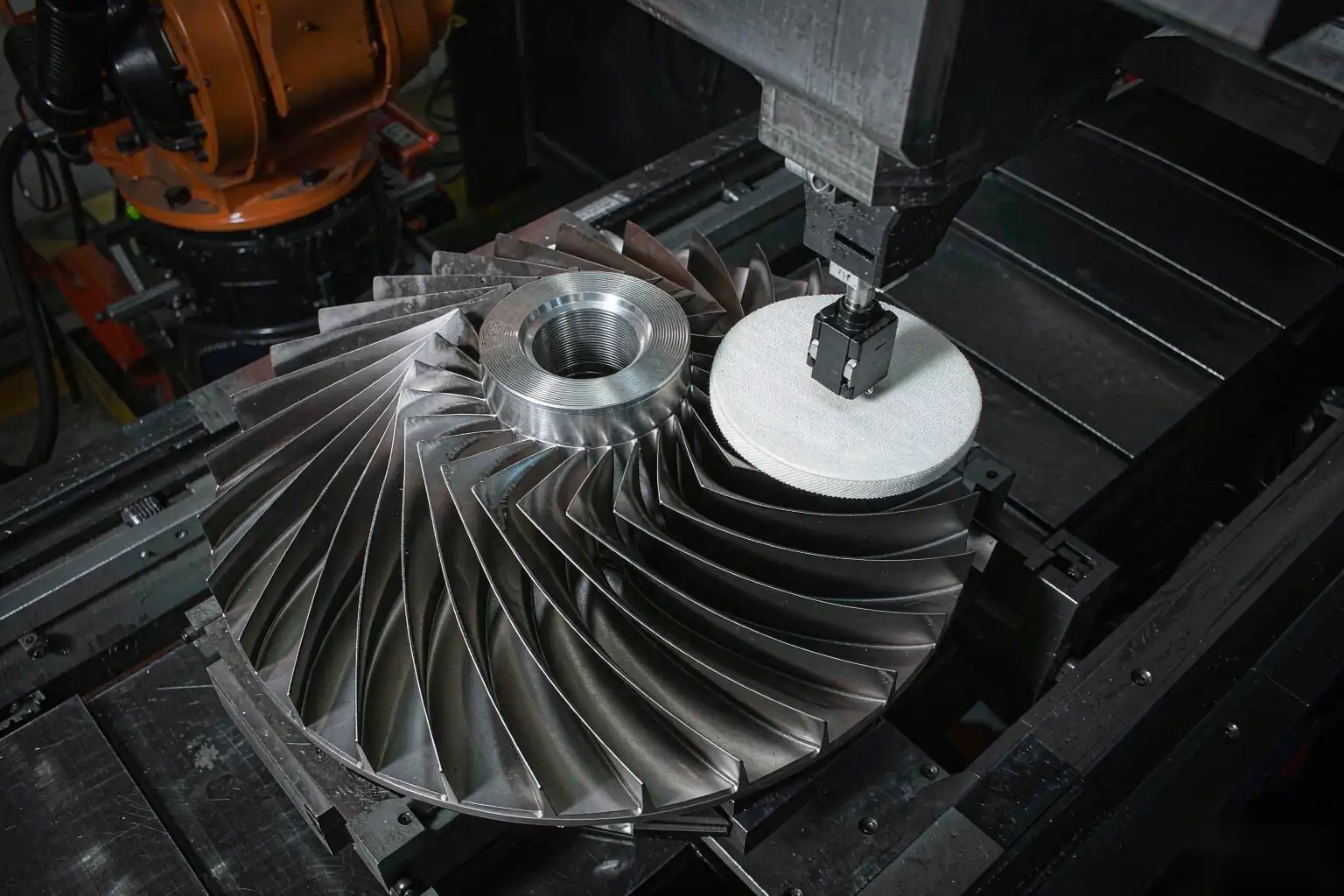
Description: multi-step process using progressively finer abrasives to produce a smooth, reflective surface. Often done by robot for high volume or by hand for low volume.
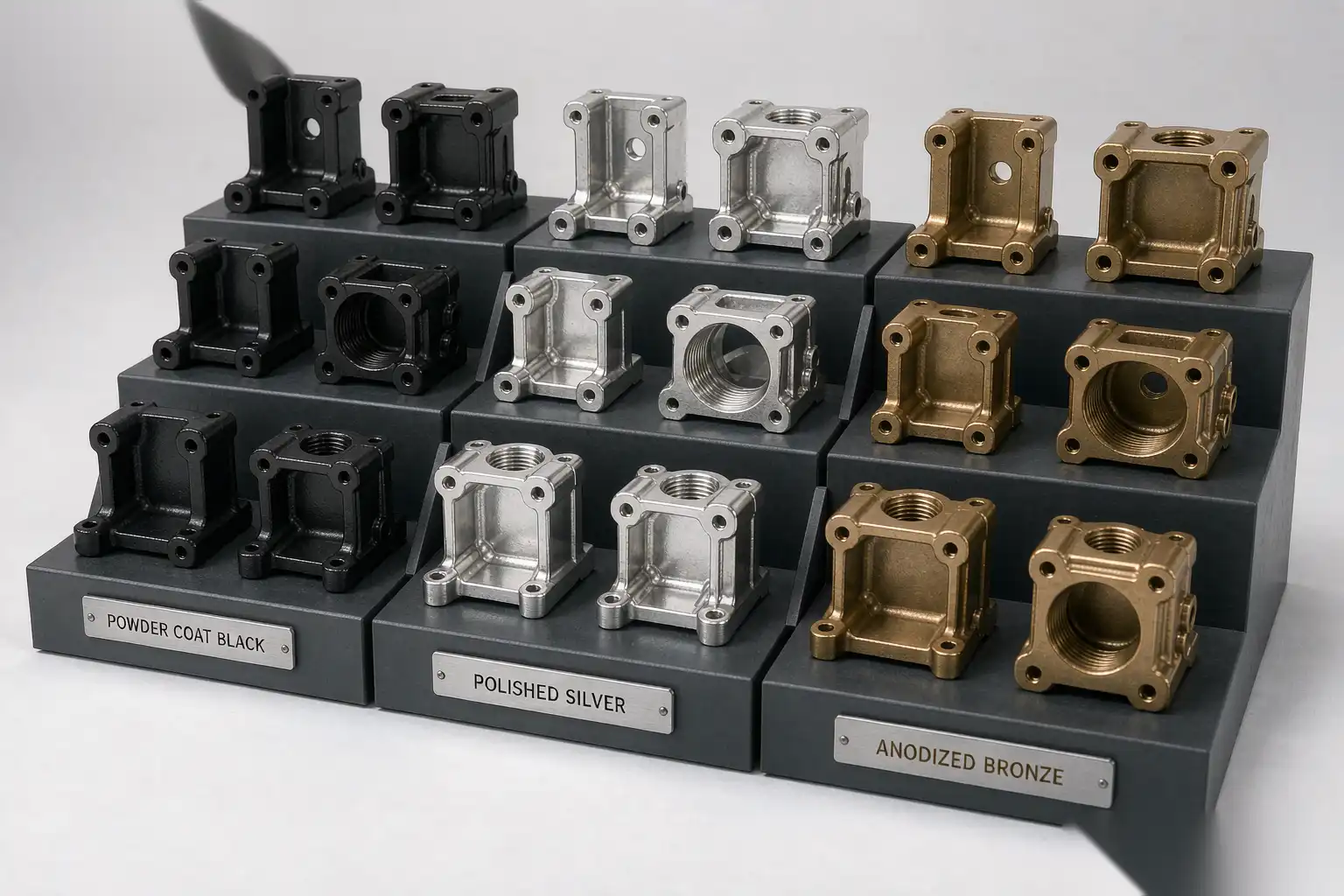
Surface: very smooth, from satin (Ra 0.4-0.8 µm) to mirror finish (Ra < 0.1 µm).
Cost: medium to high. $1-5 per part depending on size and finish quality.
Applications: decorative consumer parts, reflectors, plumbing fixtures (before plating), high-visibility automotive trim.
Limitations: does not hide surface defects. May require pre-polishing to remove parting line witness. Labor-intensive if done by hand.
5. Anodizing (Type II – Decorative)
Description: electrochemical process that converts the surface aluminum to aluminum oxide. The oxide layer is hard, corrosion-resistant, and can be dyed various colors.
Surface: metallic appearance with color (clear, black, bronze, blue, red, custom). Slightly rougher than polished. Coating thickness 5-25 µm.
Cost: medium. $0.30-1.50 per part depending on size and color.
Applications: consumer electronics, architectural hardware, premium lighting fixtures, nameplates.
Limitations: requires low-copper alloy (A384, A413) for best color consistency. A380 produces gray-tinted anodized surface due to copper content. Does not fill porosity.
6. Hardcoat Anodizing (Type III)
Description: thicker, harder anodized layer (25-150 µm) for functional wear and corrosion resistance.
Surface: dark gray to black (color depends on alloy and process). Very hard (60-70 HRC equivalent).
Cost: medium. $0.50-3.00 per part.
Applications: wear surfaces, hydraulic components, firearms, military hardware, food processing equipment.
Limitations: dimensional change (coating grows outward and inward), can affect fit. Requires tight process control. May not be decorative.
7. Powder Coating
Description: dry powder (typically polyester, epoxy, or polyurethane) is electrostatically applied to the part, then cured in an oven to form a continuous coating.
Surface: uniform color and gloss (matte, satin, gloss, or textured), 50-100 µm thick. Wide color range, custom colors available.
Cost: medium. $0.50-3.00 per part.
Applications: outdoor lighting, architectural hardware, automotive exterior, appliances.
Limitations: requires chemical pre-treatment for adhesion. Hides surface imperfections but not porosity (which can outgas through the coating). Can chip if impacted.
8. Wet Paint / Spray Painting
Description: liquid paint applied by spray, brush, or dip, then air-dried or oven-cured.
Surface: wide range of colors, gloss levels, and textures. 20-50 µm typical thickness.
Cost: medium. $1-5 per part depending on complexity and color.
Applications: automotive exterior, consumer products where powder coating cannot achieve the color or effect, custom low-volume parts.
Limitations: less durable than powder coating. VOC emissions. Requires skilled operators for color matching.
9. Plating (Chrome, Nickel, Copper)
Description: electrochemical deposition of a metal layer onto the part. Most common on zinc die castings (for bathroom fixtures, hardware), less common on aluminum (poor adhesion).
Surface: shiny metallic (chrome), satin (nickel), or color (brass, bronze via tinted nickel). Coating thickness 5-30 µm.
Cost: high. $2-10 per part.
Applications: bathroom fixtures, door hardware, automotive trim (historical), premium consumer products.
Limitations: aluminum is difficult to plate directly — requires a zincate pre-treatment. Quality depends heavily on pre-treatment. Environmental concerns with hexavalent chrome.
Finish Selection by Application
| Application | Recommended Finish | Reason |
|---|---|---|
| Internal automotive bracket | As-cast or shot blast | Low cost, hidden |
| LED heat sink | Black anodizing | High emissivity, corrosion resistance |
| Outdoor architectural fixture | Powder coating over chemical pretreatment | UV resistance, color flexibility |
| Bathroom faucet body | Polishing + chrome plating | Required aesthetic, durability |
| Consumer electronics housing | Anodizing (Type II) | Premium look, scratch resistance |
| Hydraulic valve body | Hardcoat anodizing (Type III) | Wear resistance, pressure tightness |
| Food processing equipment | Hardcoat anodizing or special coatings | FDA compliance, cleanability |
| Heat sink (raw) | Bead blast | Best thermal performance |
| Premium consumer part | Polishing + clear anodizing | Aesthetic + protection |
The Finishing Process Sequence
A typical finishing flow for a die cast aluminum part:
- Trim and deflashing — remove parting line flash and gate remnants
- Deburring — remove sharp edges and burrs from machining
- Pre-grinding — smooth major surface defects
- Tumbling or shot blasting — uniform surface preparation
- Pre-treatment — chemical cleaning and conversion coating
- Main finish application — anodizing, powder coating, painting, plating
- Curing or drying — for paint/powder
- Inspection — visual, thickness, adhesion, salt spray testing
- Masking and re-finishing — for multi-color or selective finishes
- Final inspection and packaging
Each step adds cost and time. Consolidate where possible, but do not skip pre-treatment.
Cost Drivers in Finishing
For a typical aluminum die casting project, finishing cost is 20-35% of the total part cost. Major drivers:
- Number of process steps — each step adds labor, equipment time, and handling
- Part size and geometry — larger parts need more material and time
- Cosmetic requirements — Class A cosmetic standards drive hand operations
- Volume — high volume justifies automation; low volume drives manual
- Inspection requirements — tighter inspection adds cost
- Environmental controls — wastewater treatment, VOC control, dust collection
Automating Finishing — The Trend
Manual finishing (hand deburring, hand polishing, hand painting) is increasingly difficult to staff and manage for quality. The trend across the industry is:
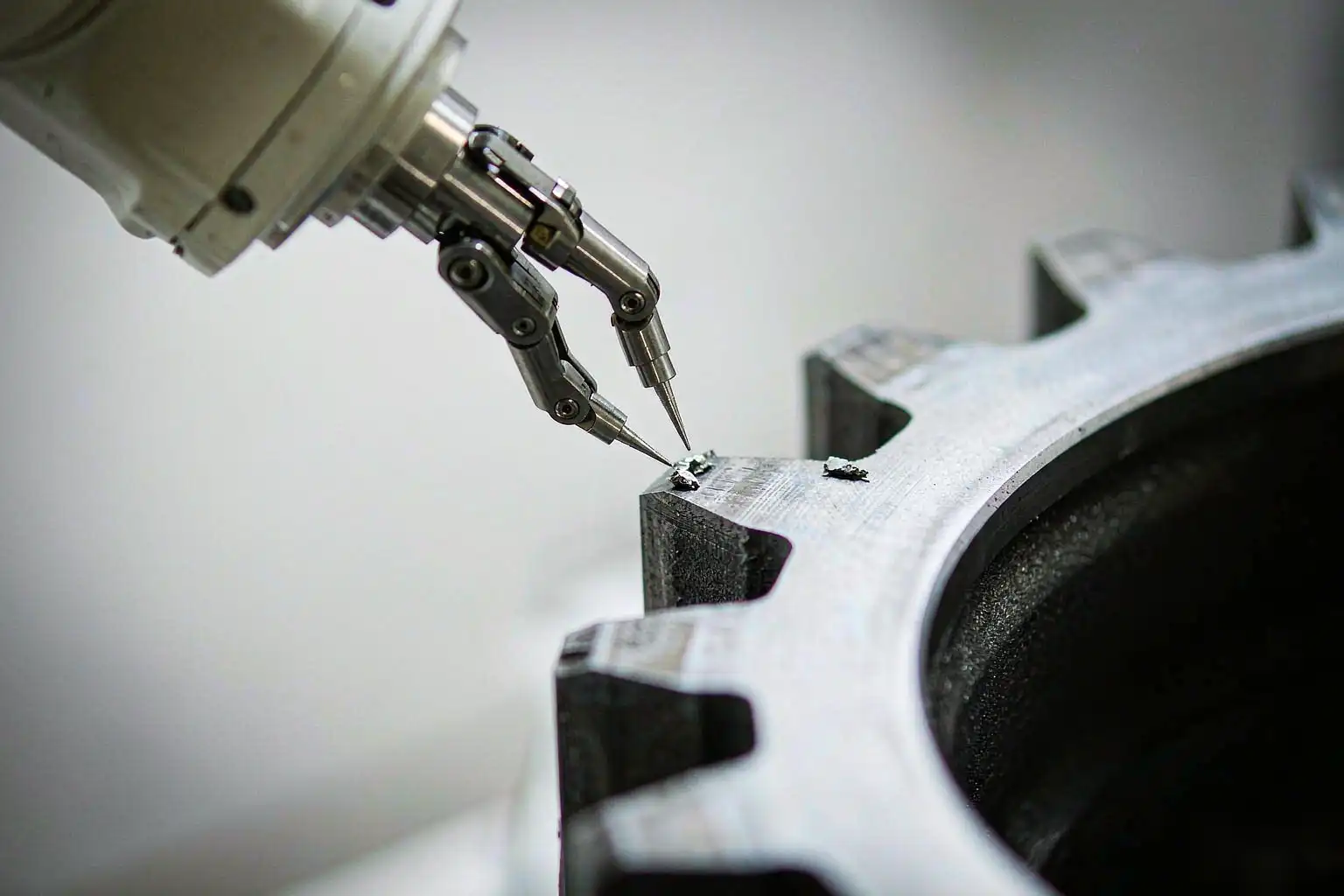
- Robotic deburring for flash removal and edge breaking
- Robotic polishing for cosmetic surface preparation
- Automated powder coating lines with conveyor and curing oven
- Automated X-ray inspection for porosity
- Vision-based surface inspection for cosmetic defects
A modern automated finishing cell can replace 5-10 manual operators and improve consistency dramatically. The capital cost pays back in 2-3 years on most production volumes.
Finish Combinations That Reduce Cost Without Cutting Quality
The most reliable way to cut finishing cost is not choosing a cheaper finish — it is choosing a smarter combination of finishes across the part. Three patterns recur across successful programs. First, zone the finish: specify the cosmetic surface and let hidden surfaces ride as-cast or with a light bead blast. A consumer enclosure with one Class-A face does not need Class-A economics on its underside. Second, let the casting carry the texture: an EDM-textured die can deliver a uniform matte appearance as-cast, eliminating polishing operations entirely on parts where matte is the design intent. Third, combine operations: polishing directly before anodize on the same handling fixture avoids re-fixturing, and powder over shot blast on hidden structural parts skips chemical pretreat on faces no one sees.
The calculation to run is cost per accepted part, not cost per operation. A slightly more expensive finish that produces 99 percent first-pass yield usually beats a cheaper finish sitting at 92 percent with rework labor attached.
DZ Machinery works with customers at exactly this decision point. Because we operate the deburring, grinding, and polishing steps that feed every downstream finish, we can quote what each finish actually costs to prepare for — in cycle time and operator counts, not catalog prices. Bring us the cosmetic map and the target price; we will tell you which combination hits it, and where the design could change to make a cheaper finish viable without a visible difference on the product.
FAQ About Aluminum Die Casting Surface Finishing
What is the best finish for outdoor aluminum die castings?
Powder coating over a chemical conversion coating (chrome-free) is the standard. For premium applications, anodizing (Type II) over polished surface. Avoid wet paint for outdoor — durability and UV resistance are typically inadequate.
Can aluminum die castings be chrome plated?
Yes, but with difficulty. Aluminum does not accept plating directly. The standard process: zincate pre-treatment, then copper strike, then nickel, then chrome. The process is sensitive to pre-treatment quality, and the plating is less durable than on zinc die castings or brass. For most decorative applications, anodizing or powder coating is preferred over chrome plating on aluminum.
How do I achieve a mirror finish on a die cast aluminum part?
Multi-step polishing: 80-120 grit to remove surface defects, 220-320 grit to refine, 400-600 grit to smooth, then buffing with rouge compound for final gloss. Done by hand for low volume, by robot for high volume. Expect 30-60 minutes per square meter of surface for hand work.
What finish gives the best corrosion resistance?
Hardcoat anodizing (Type III) provides the best corrosion resistance. Properly sealed Type II anodizing is also excellent. Powder coating over chemical pretreatment is good for most applications. As-cast has poor corrosion resistance, especially in salt environments.
Building a Finish That Lasts
A die cast aluminum part with the right finish will outlast a comparable steel or plastic part. The key is to match the finish to the function and environment, and to specify the finish with clear acceptance criteria (coating thickness, adhesion, salt spray hours, color match).
At DZ Smart Manufacturing, our robotic polishing and finishing cells handle the surface preparation steps (deburring, grinding, polishing, pre-treatment) for die cast aluminum parts across consumer, industrial, and automotive applications. If you are designing a new die cast aluminum part and want feedback on the finishing scope and cost, our engineering team can review your drawings and suggest a finish sequence with realistic cost and cycle time.
See our automated surface finishing for aluminum die castings