一、Product Overview
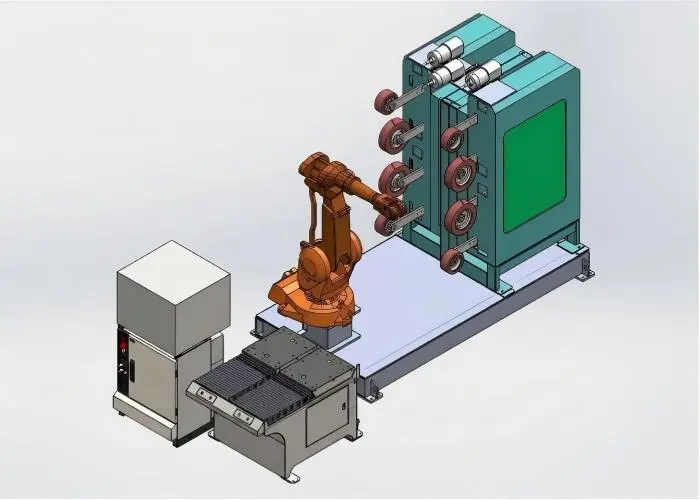
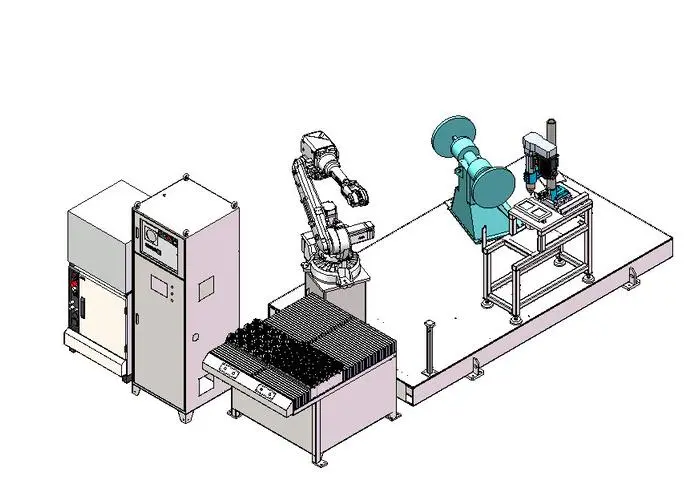
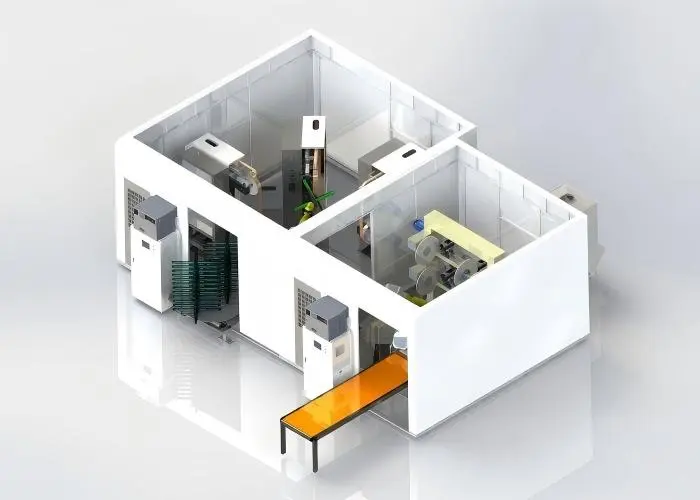
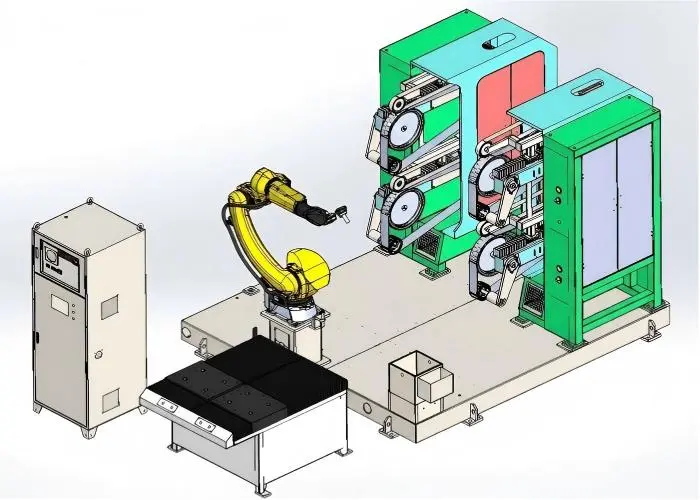
The HLD25‑F10‑E2 robotic deburring cell is a fully automatic robot‑driven burr removal workstation developed by **Xiamen Dingzhu Intelligent Equipment**. Built upon proven ABB IRB2400/16 industrial robot, this integrated unit combines abrasive‑belt grinding, floating pneumatic grinding heads and flap‑disc processing to handle multi‑position deburring for cast components.
It solves common foundry manufacturing pain points: slow manual deburring, inconsistent parting‑line removal, hard‑to‑reach inner‑cavity burrs, high labour cost and operator safety risks. This robot cell completes parting‑line sanding, inner cavity burr trimming and side‑surface flap‑disc finishing in one single station. Suitable for continuous mass‑production of aluminum, brass and zinc die‑cast workpieces in foundry, automotive and sanitary‑ware factories.
二、Core Advantages
1. Multi‑process Integrated Deburring for Complex Castings
One robot cell realizes three core deburring tasks:
- 1. Sanding‑belt removal of casting parting‑line flashes
- 2. Floating pneumatic grinding head for deep inner‑cavity burr cleaning
- 3. Flap‑disc processing for inner‑side and hidden‑position burrs
No need for multiple separate stations. The ABB 6‑axis robot performs flexible 3D‑space motion to access complex contours, deep cavities and narrow grooves that are difficult for manual operation.
2. Auto‑compensation & Intelligent Belt Management
- Automatic position compensation: System detects grinding wheel wear and automatically offsets position to keep stable deburring effect as wheels wear down.
- Adjustable sand‑belt rotating speed, automatic belt‑tension adjustment, electric belt correction with adjustable correction speed.
- Automatic copper‑powder removal function on correction wheel, prevents powder accumulation and extends abrasive‑belt service life.
- Swing‑arm‑cylinder belt tensioning structure delivers high rigidity and stability, reduces component wear.
3. Floating Pneumatic Grinding Head for Hard‑to‑reach Zones
Retractable floating pneumatic grinding head saves space when idle. It supports flap‑disc mounting for flexible contact on uneven casting surfaces. Floating design absorbs workpiece dimensional deviation, avoids over‑grinding or insufficient trimming, greatly improves finished‑part consistency.
4. Off‑line Programming + Professional Technical Support
Support offline programming software to shorten new‑product debugging cycle. Our in‑house professional grinding programmers provide process development and program optimization service. We help you solve tricky deburring challenges and cut cycle time for mass production.
5. Custom‑built Fixtures & Smart Feeding Table
Our dedicated fixture‑design team develops custom clamping jigs matched to your casting samples or drawings. Reliable clamping eliminates workpiece shifting during processing.
High‑precision double‑tray feeding table with elastic floating positioning. After batch processing completes, trays automatically move out for operator part loading & unloading, realizing semi‑continuous production workflow.
6. Stable Automatic Workflow & Improved Workplace Safety
Standard operation flow:
- Operator loads raw castings onto feeding tray
- Robot picks workpiece, laser‑checks gripper positioning
- Robot sends part to sand‑belt station for parting‑line deburring
- Transfer to pneumatic grinding head & flap‑disc station for inner‑cavity and side burr removal
- Finished‑batch tray automatically exits for next‑cycle loading
Replace heavy manual grinding work, reduce worker exposure to metal dust. Reduce labour dependency and improve production repeatability.
三、Packaging Standards
All machines are packaged in export-standard wooden cases with moisture-proof treatment. 👉 View packaging guide →
Standard Machine Configuration
✅ 1 set ABB IRB2400/16 industrial robot
✅ Abrasive belt grinding machine unit
✅ Double‑tray automatic feeding table (400×500×15 mm loading tray)
✅ Complete electrical control cabinet
✅ Custom‑developed workpiece fixture
✅ Heavy‑duty machine base plate
Technical Parameters
| # |
Items |
Sepcifications |
Qty. |
| 1 |
Robotic |
IRB2400/16 (ABB Second hand) |
1 set |
| 2 |
Sanding belt machine |
1095*1450*1590mm |
1 set |
| 3 |
Feeding table with double chaarging tray |
Charging tray size: 400*500*15 mm |
1 set |
| 4 |
Electric control cabinet |
650*500*1950mm |
1 set |
| 5 |
Fixture |
|
1 set |
| 6 |
Max. Power |
17.5KW |
|
| 7 |
Machine base plate |
– |
1 set |
| 8 |
Rated voltage |
380V |
|
| 9 |
Sanding belt size |
4000MM/2500MM |
4 pcs |
| 10 |
Max.line velocity |
29M/S |
|
| 11 |
Three-phase asynchronous motor |
3KW-4P(1440r/min) |
|
| 12 |
Air pressure |
0.4~0.7Mpa |
|
| 13 |
Machine size |
2400*4600*2400mm |
|
| 14 |
Machine weight |
4000KG |
|
Q1: What kind of workpieces can the HLD50‑D6D4‑A1 robotic grinding cell process?
A: It is mainly designed for brass faucet bodies, door lock handles, automotive metal parts and decorative hardware with complex curved surfaces. If you send us your workpiece samples or drawings, we can conduct free grinding test for you.
Q2: Can you customize fixtures and feeding trays for my parts?
A: Yes. Our professional fixture design team develops dedicated clamping jigs according to your samples or drawings. Feeding tray dimension, dust‑removal system can also be adjusted. Please contact us to share your workpiece information for evaluation.
Q3: What robot model is equipped on this grinding cell?
A: This cell adopts FANUC M‑710iC/50E 6‑axis robot, max wrist payload 50 kg, repeatability ±0.07 mm, stable for heavy‑duty continuous grinding production.
Q4: Does the machine support offline programming?
A: Yes, offline programming software is supported to shorten debugging time for new products. We also provide on‑site programming service for new‑part process optimization.
Q5: What is your warranty policy for this robotic grinding workstation?
A: 12‑month warranty from shipment date for manufacturing defects. Consumables such as abrasive belts, contact wheels are not under warranty. We supply overseas on‑site commissioning & technical training service.
Q6: What power supply and air pressure does this machine require?
A: Standard input voltage 380V, working air pressure 0.4‑0.7 MPa. We can adjust electrical configuration to match your local factory power condition.
Q7: How long is the lead time for this robotic grinding cell?
A: The lead time is typically within 30 days, depending on the production schedule and customization scope. Please contact our sales engineer for an accurate delivery quote.
Q8: Can you provide FAT factory acceptance test before shipment?
A: Yes. Customers can send 1‑2 engineers to our factory for machine acceptance and operation training before delivery.