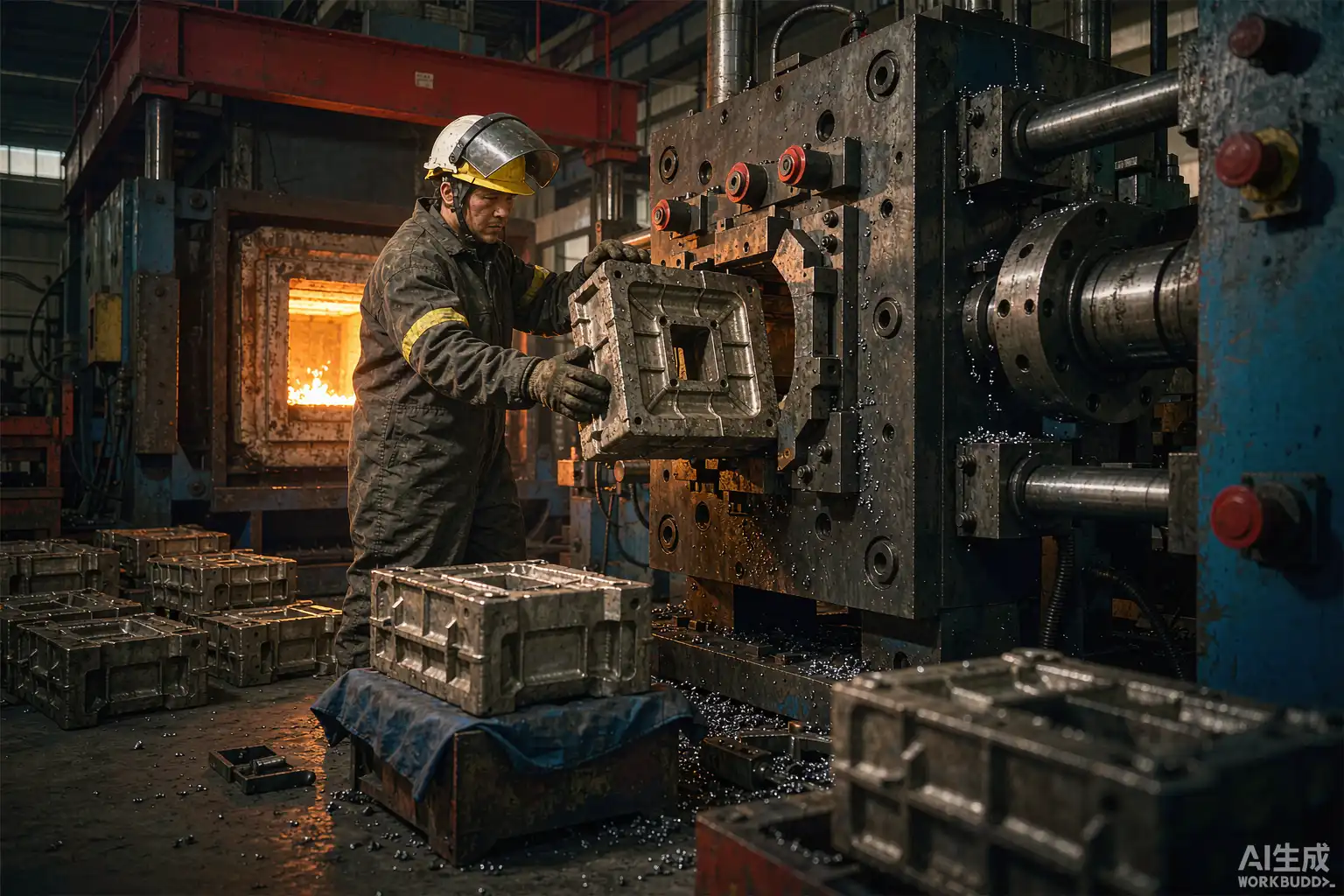


Every aluminum die casting leaves the die with flash along the parting line, gate stubs, and ejector marks. Somebody has to remove them — and in most plants, that somebody is still a person with a file, a belt sander, or a handheld grinder. If your plant is like the hundreds I have walked through over the last 20 years, you already know the cost of that choice: recruitment trouble, inconsistent quality, and a finishing department that never quite keeps up with the casting machine.
This article compares manual and automated deburring for aluminum die casting parts — honestly, with real numbers, and builds on our earlier manual vs robotic deburring comparison — and shows you how to build the automation business case your management will approve.
Why Deburring Quality Decides Your Reputation
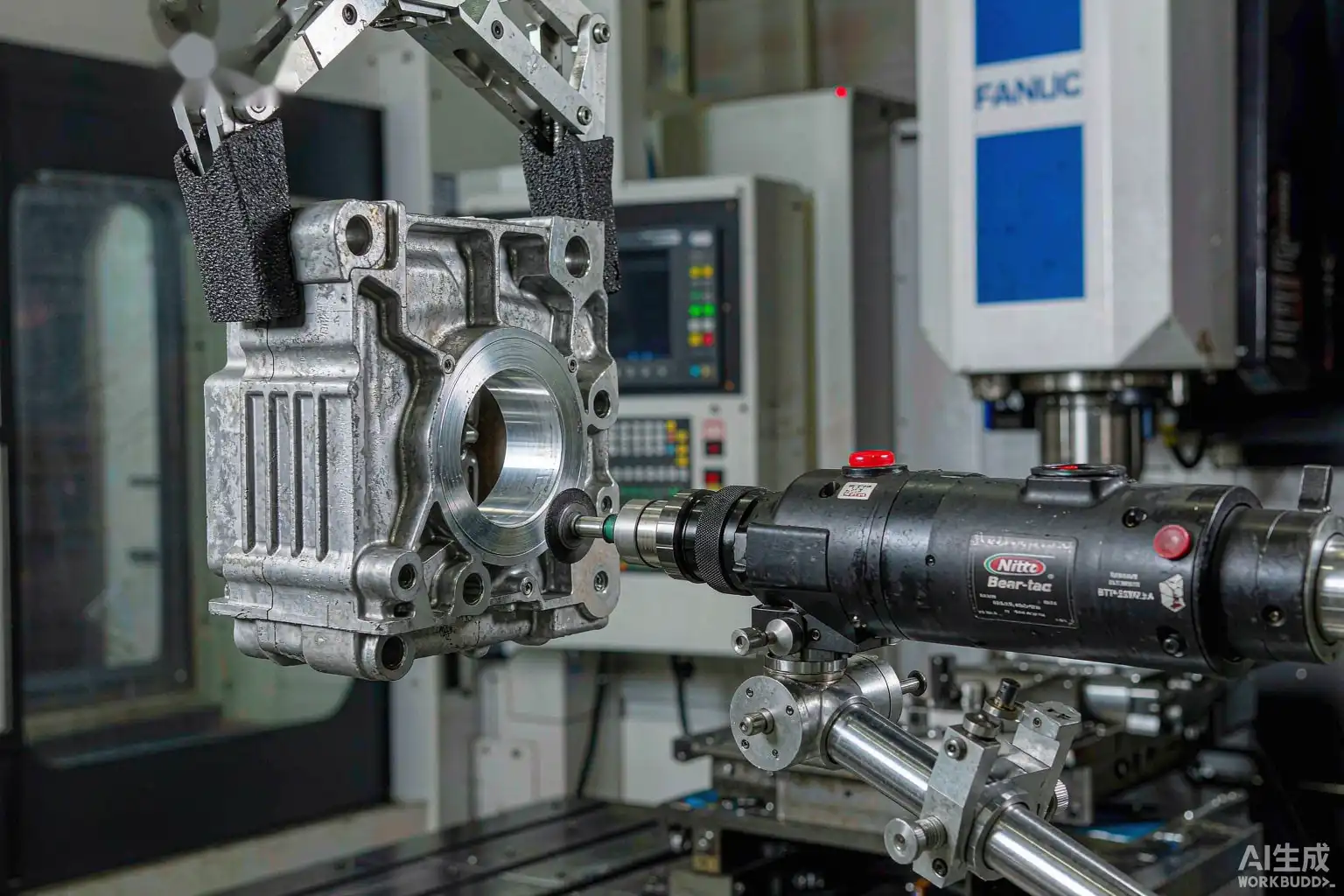
The casting machine only produces a “blank.” The moment your part is deburred, ground, and polished is the moment it becomes a product. Missed burrs and inconsistent surfaces show up at the worst possible time: after plating, anodizing, or painting, when rework costs three to five times more. In customer-facing products — faucets, door handles, automotive trim — a single visible burr is a rejected shipment, and a history of finish rejects is a lost customer.
The Main Deburring Methods Compared
| Method | Quality Consistency | Labor Intensity | Best For | Typical Cost |
|---|---|---|---|---|
| Manual (file/grinder/belt) | Operator-dependent | Very high | Small batches, prototypes, complex internal cavities | Low equipment, high labor |
| Vibratory / tumbling | Good for mass edges | Low | Simple parts with uniform edges | Low per part; slow |
| Thermal (TEM / electrochemical) | Excellent, no contact | Low | Internal and cross-hole burrs | High equipment cost |
| Robotic deburring cell | Repeatable to ±0.05 mm | Near zero per part | Medium-high volume, many SKUs | Moderate equipment, lowest per-part cost |
The True Cost of Manual Deburring
Let me show you the math your accountant will recognize. A typical casting plant running 20 manual finishers:
- Labor: 20 operators × $600–1,200/month (emerging-market rates, rising 8–12%/year).
- Turnover: skilled finishers leave within 12–18 months; recruiting and training costs hit 20–30% of annual salary per replacement.
- Quality: 3–8% finish-related rework at 3–5× the finishing cost per part.
- Capacity: manual finishing caps line throughput — the casting machine waits for the finishing department.
Add it up and the true cost of manual finishing is usually 30–50% higher than the labor line alone. That hidden cost is the automation business case — and automated systems cut scrap rates directly.
What Robotic Deburring Actually Delivers
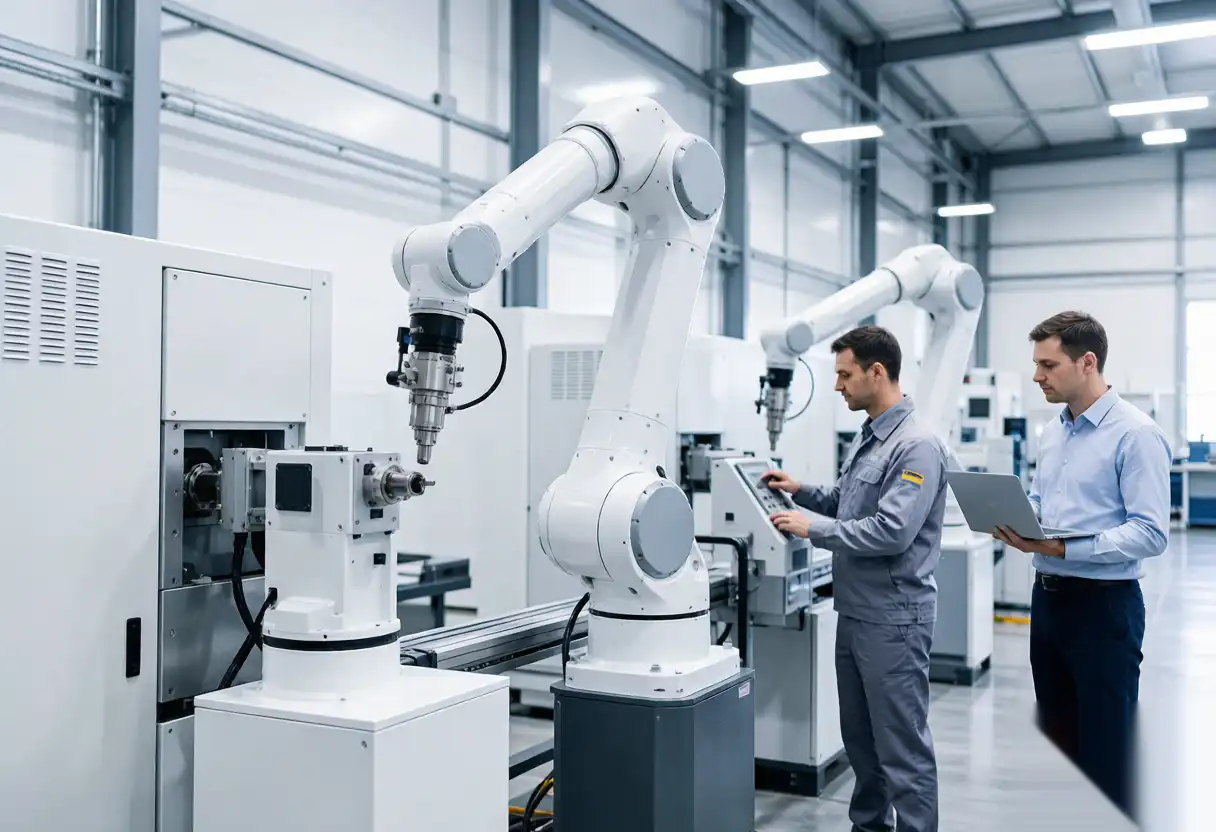
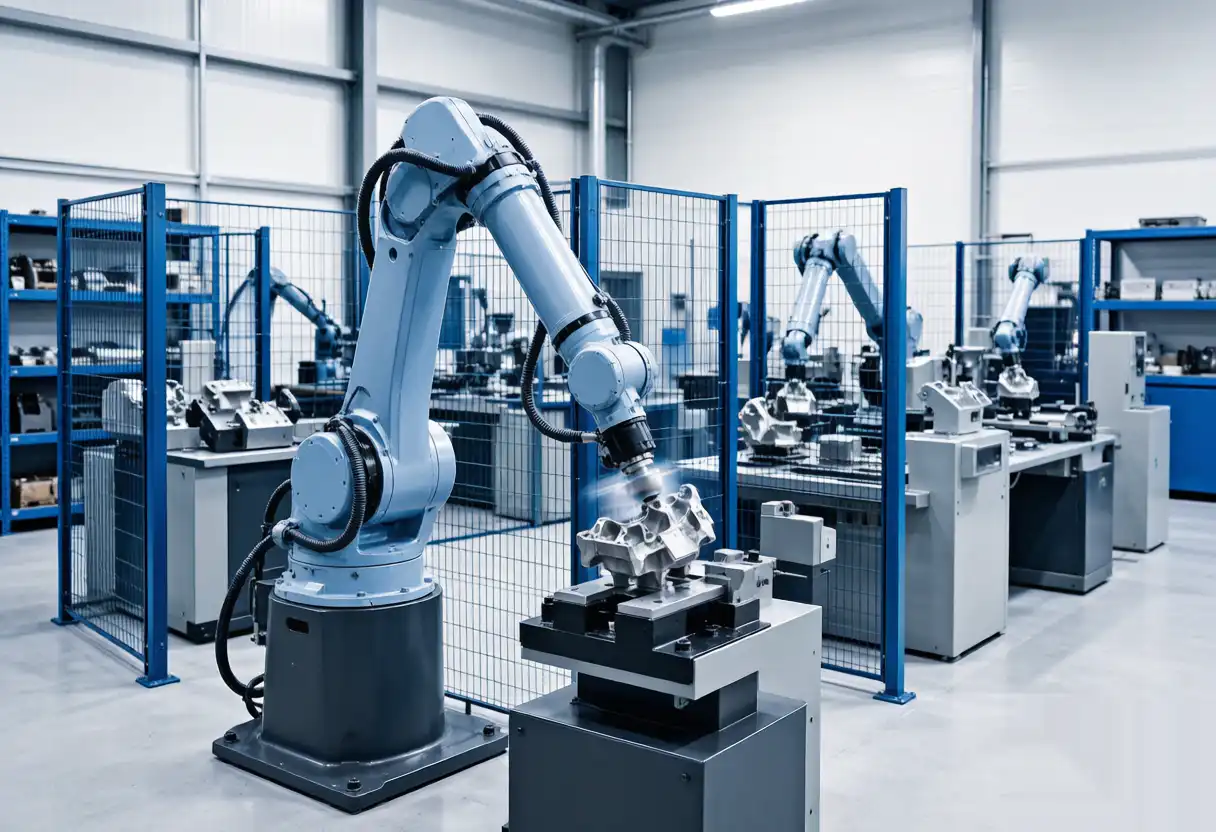
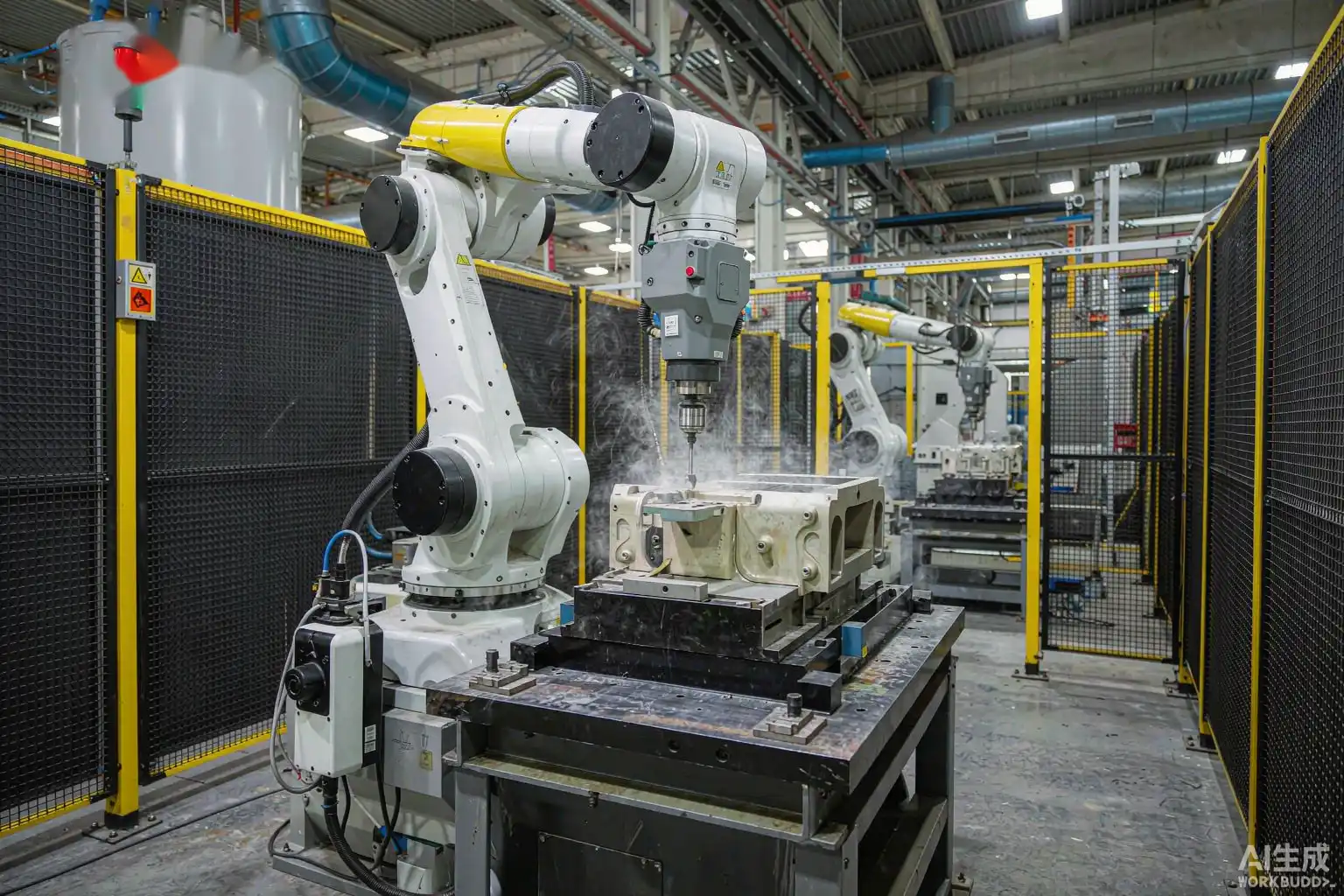
A robotic deburring cell uses a 6-axis robot fitted with deburring tools, grinding spindles, and polishing attachments. Parts are fixtured and presented, the robot runs a programmed path, and every part comes out the same — no fatigue, no shift drift, no “Friday afternoon quality.”
Measurable Benefits
- Consistency: path repeatability of ±0.05 mm — the same result on part 1 and part 100,000.
- Labor reduction: one operator supervises the cell instead of ten finishers on hand tools.
- Yield improvement: finish-related rejects typically drop 70–90%.
- Throughput: the cell runs through breaks and night shifts, matching casting output.
- Data: cycle times, tool wear, and process data recorded automatically — the foundation of Industry 4.0 reporting.
ROI: A Realistic Example
Take a plant finishing aluminum die cast parts for sanitary and automotive customers, currently paying for 15 finishers:
| Item | Annual Figure |
| Finishing labor (15 × $9,600 avg incl. burden) | $144,000 |
| Finish-related rework & scrap (~4% of finishing cost) | $28,000 |
| Recruiting/training turnover cost | $18,000 |
| Total manual finishing cost | $190,000/year |
| Robotic cell cost (1 cell, 2 shifts, 1 operator) | $120,000–160,000 |
| Operating savings (labor + quality + turnover) | $150,000+/year |
| Payback period | ~12 months |
These are conservative figures. Plants running three shifts or facing tighter labor markets see payback inside 8 months.
Flexible Cell vs. Dedicated Line
- Flexible robotic cell: one robot, quick-change tooling and fixtures. Best for 10–500 SKUs, frequent changeovers, prototype-to-production work. This is where most plants start.
- Dedicated automatic finishing line: multiple stations (deburring → grinding → polishing) linked by conveyor or robot. Best for high-volume, stable products like faucet bodies and automotive brackets.
From our installations, the smart path is: start with one flexible cell, validate quality and ROI on your top 20 SKUs, then expand to a line as volumes grow.
What to Automate First
Not everything needs a robot. Prioritize:
- Parts with high scrap or rework rates at finishing.
- Parts with visible/cosmetic surfaces (plated or anodized).
- High-volume SKUs that occupy most finisher hours.
- Parts where manual finishing is a bottleneck for delivery.
Deburring Tools and Abrasive Selection
The robot is the platform; the tooling is where the quality is made. Each aluminum die casting feature demands a different approach:
Parting-line flash. A deburring spindle with a carbide burr or a grinding disc removes flash along the parting line. For heavier flash, a motorized spindle at 20,000–30,000 RPM with a flat disc works best; for thin flash, a mounted point or brush avoids over-cutting the surrounding surface.
Gate stubs. Gates are the thickest material a finisher removes. A cutting wheel or a high-torque spindle with a reinforced disc takes them down quickly; then a follow-up pass blends the area flush to the casting surface.
Internal holes and cross-bores. Deburring inside holes is the classic manual bottleneck — operators use hand files and blades, with quality depending on the day. Robotic cells use fine wire brushes or bore brushes on a spindle that enters the hole axially, removing the burr without damaging the bore surface.
Ejector pin marks and surface blending. After deburring, the part needs surface grinding to blend ejector marks and flow lines. Abrasive belts in a range of grits (80 → 120 → 240 → 400) are applied by the robot with controlled pressure, so the surface comes out uniform instead of wavy.
Polishing before plating. For zinc and aluminum parts destined for chrome or nickel plating, the robot switches to buffing wheels with progressively finer compound — cutting the need for a separate, manual polishing step entirely.
A well-configured cell automatically changes tools between operations using an automatic tool changer, so one fixture can take a part from raw casting to pre-plate finish without human intervention.
Integration with Your Existing Line
Automation does not mean replacing your entire finishing department overnight. The practical integration path looks like this:
Step 1 — Cell placement. Locate the robotic cell adjacent to your existing finishing area so parts can be staged from the casting machine or trimming press. A 6-axis cell needs roughly a 3×3 m footprint plus fixturing and operator access.
Step 2 — Fixture design. The fixture is the unsung hero of finishing automation. A well-designed fixture locates the part from the same datums every time, presents it for tool access, and allows quick changeover between SKUs. For mixed production, modular pallets or quick-change fixtures cut changeover to minutes.
Step 3 — Programming and simulation. Offline programming software lets the robot path be developed and verified on a computer without stopping production. For each new part, the process is: program offline, run a trial batch, measure, adjust, and release. Our typical new-SKU bring-up takes 1–3 days including fixture setup.
Step 4 — Phased ramp-up. Start with your highest-scrap parts, validate quality on the first 500 parts, then expand the cell’s SKU list. Most plants begin with one cell covering their top 20 parts and add capacity as volumes grow.
Step 5 — Process data. The cell records cycle time, tool usage, and alarms automatically. That data feeds your OEE reporting and turns finishing from a black box into a measured process — which is what customers increasingly ask for in audits anyway.
FAQ About Deburring Aluminum Die Castings
Can a robot deburr complex internal cavities?
With the right end-effector and tool orientation, yes — articulated robots reach most internal geometries. For truly unreachable cross-holes, combine robotics with a thermal or electrochemical deburring step.
Do I need to redesign parts for robotic deburring?
Usually not. Robots handle existing designs; minor fixture and gate-location improvements make automation easier, and our engineers advise on those during the trial.
How long does it take to program a new part?
For an experienced integrator, 1–3 days per new SKU including fixture design, plus offline programming to avoid production downtime.
What about polishing before plating?
The same cell handles it — deburring spindles and polishing wheels are swapped automatically. Zinc and aluminum parts both finish on the same cell with different programs.
How many parts per hour can a robotic deburring cell handle?
For a typical aluminum die casting with 6–10 deburring operations, a single cell processes 60–150 parts per hour depending on size and cycle time — roughly 2–3× a manual finisher, with no fatigue breaks and consistent quality.
Can I run the cell 24/7?
Yes. The cell operates unattended between shifts with automatic tool wear monitoring and part-present sensors. Many plants run it through the night while the casting machines feed it, recovering the investment in as little as 8 months.
Do I need a dedicated maintenance team for the robot?
A skilled maintenance technician with basic robotics training is enough. Modern cells include self-diagnostics, and most wear parts (abrasives, belts, brushes) are consumables your operators already know how to change.
What if my parts change frequently?
Flexible cells are built for exactly this — quick-change fixtures and offline programming mean a new part can go from drawing to production in days, not weeks.
Conclusion
Manual deburring of aluminum die castings is the most expensive finishing method most plants never price correctly. Robotic cells cut labor, eliminate finish rejects, and pay back in roughly a year — while making your delivery promises actually achievable.
Xiamen Dingzhu has automated deburring, grinding, and polishing for faucet, hardware, automotive, and sanitary manufacturers in 30+ industries. Send us one part from your current top 20 SKUs — we will run a free finishing trial and show you the quality difference on your own component.