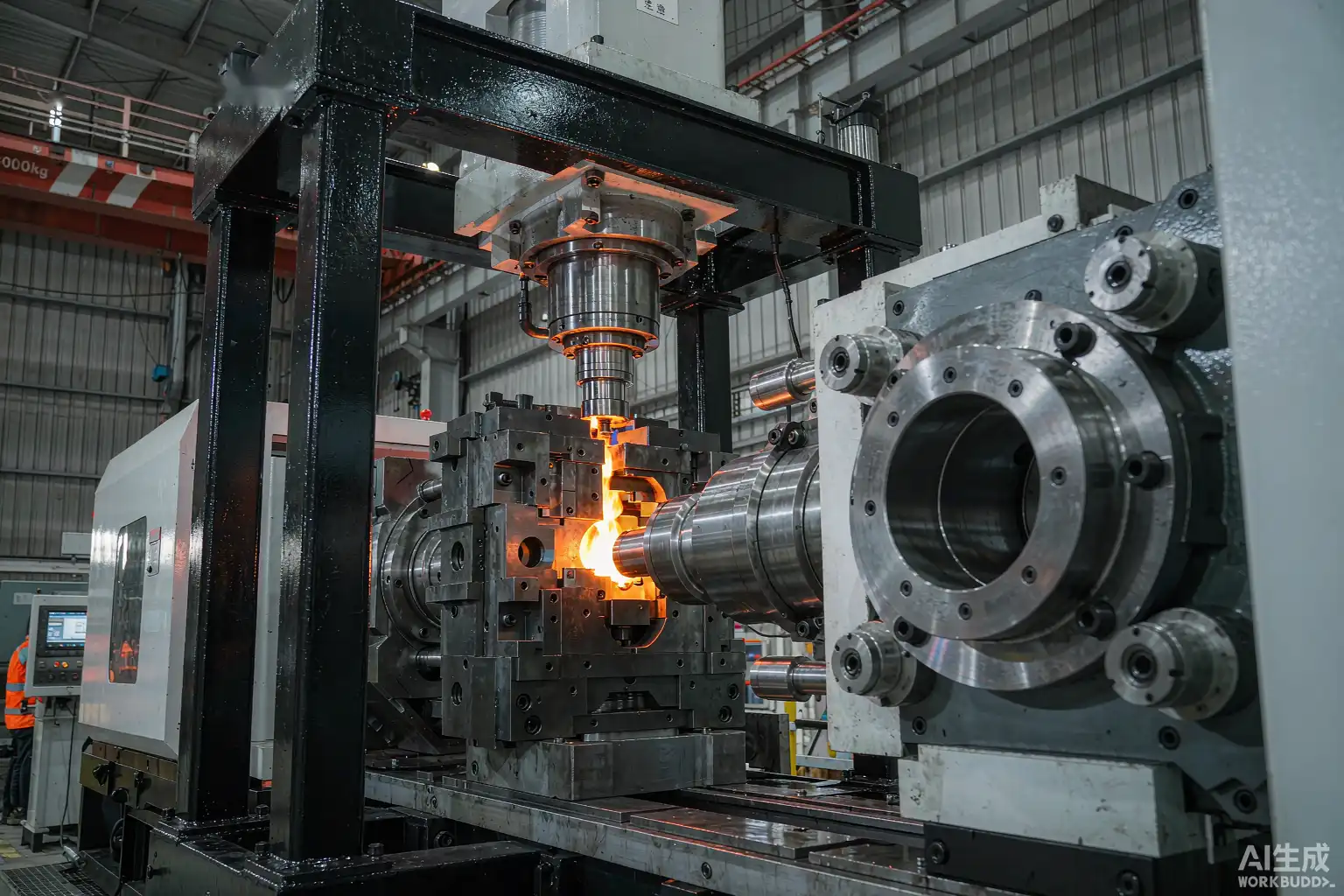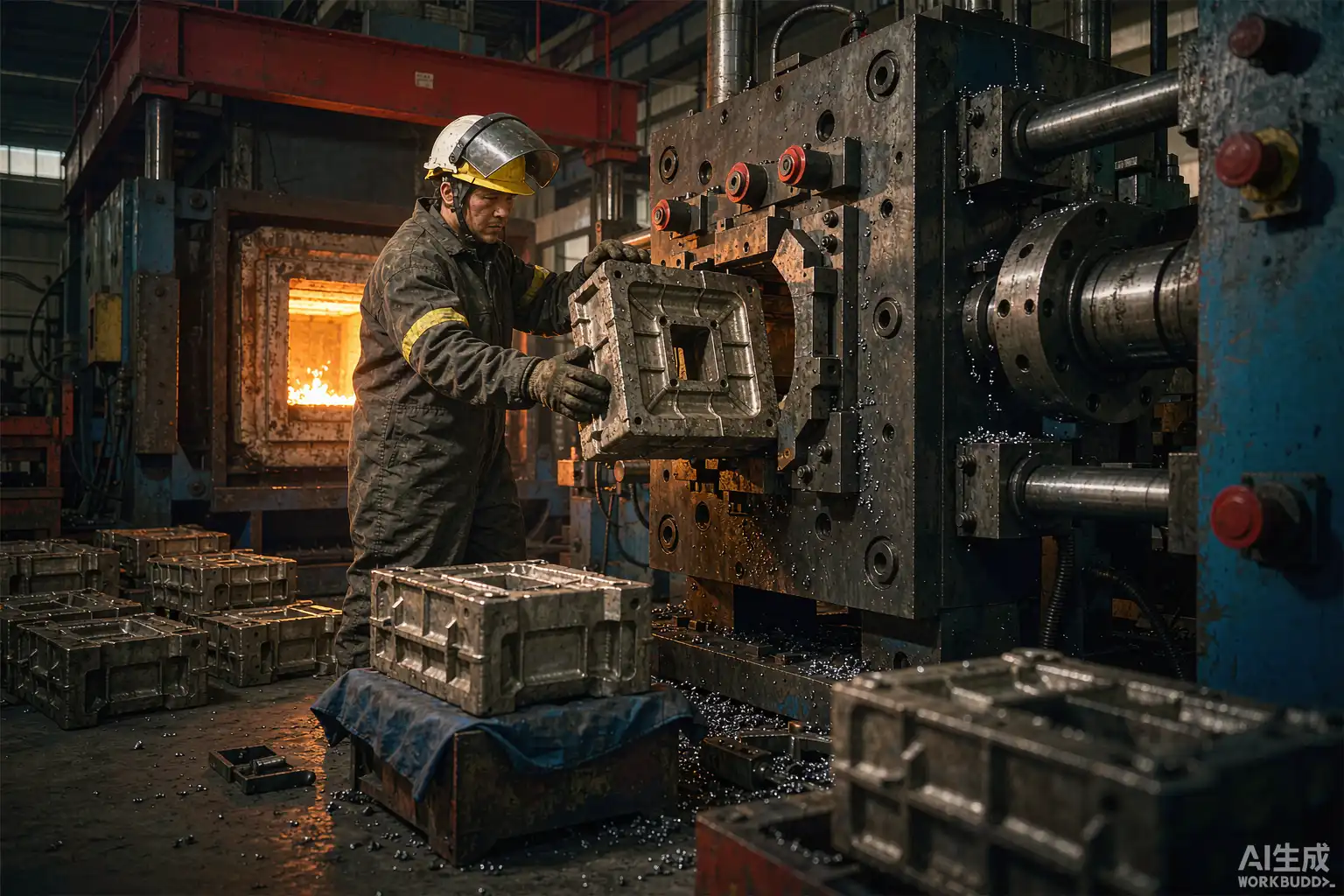


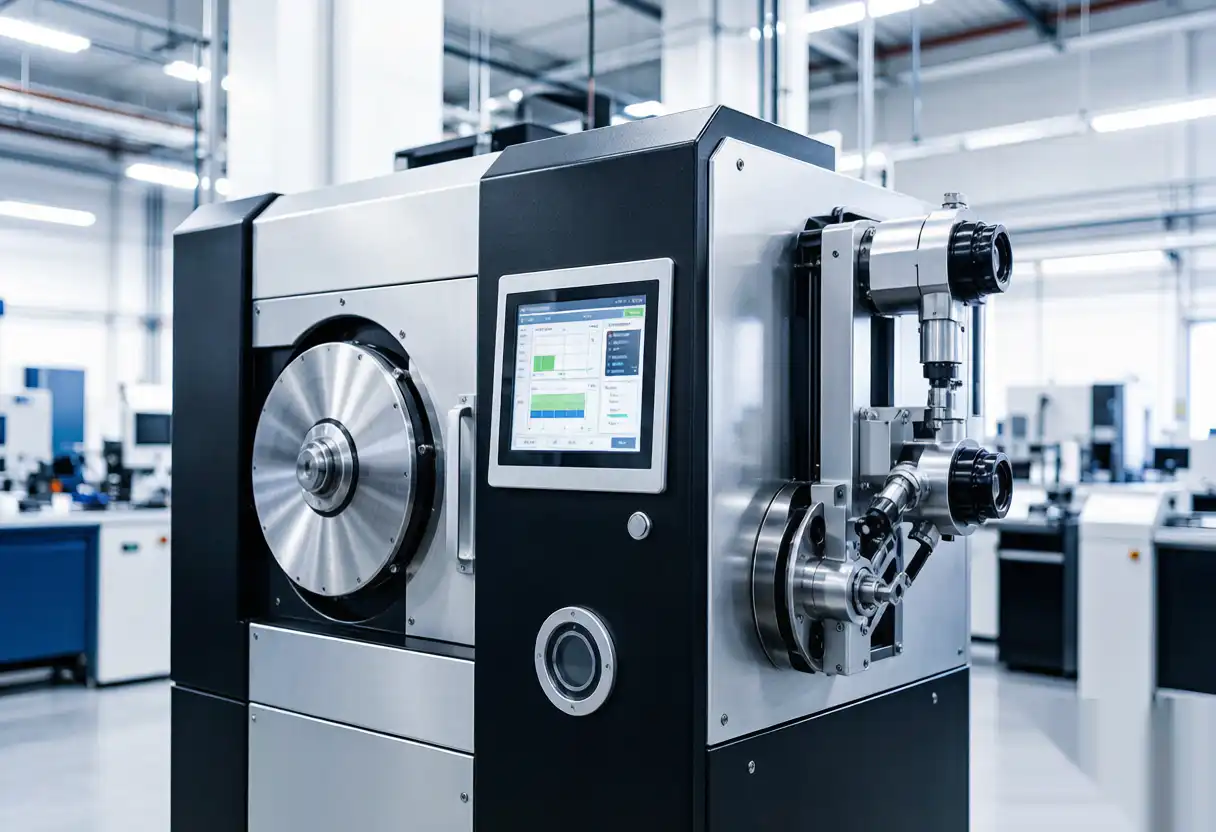
SPEED AT A GLANCE
| Offline programming | Changeover from hours to minutes |
| Force control | 5–15 N contact, ±2 mm compensation |
| Tool change | Cut-to-color without stopping |
Speed on a polishing line is not measured in spindle RPM — it is measured in good parts per hour, and those two numbers can disagree sharply. A machine that spins fast but stops often for programming, tool changes, or scrap rework will always lose to a slower spindle that runs continuously. A CNC polishing machine improves production speed through precise path control, automatic tool changing, and programmed compound dosing. Of all the features on a modern cell, two deliver the biggest wins: force feedback and offline programming, because they let a robotic polishing machine keep pace with high-volume lines instead of holding them back. This guide breaks down each speed feature, shows what it saves in real production terms, and explains how to measure the results.
Why Speed Starts With the Cell, Not the Spindle
The spindle is the visible headline, but the cell is where time is won or lost. Every hour you spend teaching a path, swapping wheels, or re-polishing a rejected part is an hour no customer is paying for. Experienced integrators estimate that toolpath programming determines roughly 80% of final surface quality — the abrasive only executes what the program decides.
Three levers move good-parts-per-hour:
- Precise path control — the arm holds contact angle and pressure across complex contours, so the first pass is the right pass.
- Automatic tool changing — the cell moves from rough to finish without an operator walking to the wheel rack.
- Programmed compound dosing — wax or liquid compound is applied at the right frequency for the right duration, automatically.
The fastest cell is the one that never stops for a decision a program can already make. Every one of these levers attacks a different kind of downtime: path control attacks scrap and rework, tool changing attacks changeover, and compound dosing attacks consumable-driven process drift.
Speed Feature 1: Offline Programming
Offline programming is the single biggest speed lever on a modern CNC polishing machine. Instead of jogging a teach pendant on a stopped line, your programmer builds and simulates the path on a PC, using the part’s CAD model.
The production benefits are immediate:
- Zero teaching downtime — the line keeps running while the next part’s program is written.
- Fewer scrap cycles — simulation catches collisions and over-polishing before a real part sees the wheel.
- Changeover drops from hours to minutes — a new part geometry becomes a file swap, not a day of hand-tuning.
- Consistent contact — the path generator holds the same angle and pressure on every run, eliminating operator-to-operator drift.
This is the same lever behind faster deburring programming — once a shop adopts offline workflows for one process, the habit pays off everywhere.
Speed Feature 2: Automatic Tool Change
Manual tool change is a silent tax on throughput. Every wheel swap takes minutes, and those minutes multiply across shifts, stations, and part families. Automatic tool change removes the stop entirely.
What the cell handles without an operator:
- Cut wheel to color wheel without stopping — roughing and finishing stages run back-to-back in one cycle.
- Automatic compound switch per program — each part recipe selects its own wax or liquid compound and dosing schedule.
- Faster changeover between part families — the robot swaps its end effector and the line is running the next SKU within minutes.
A well-designed cell changes the tool in the background while the next part is being picked, so the wheel rack never becomes the bottleneck.
Speed Feature 3: Force Feedback
High speed only helps if the finish survives contact. Fixed-pressure heads dig in on crowns and lift on flanks, forcing you to slow down to protect soft alloys. Active force feedback solves this by holding contact pressure constant in real time.
In practice that means:
- Consistent pressure through the pass — typically held within a narrow 5–15 N window regardless of surface variation.
- Compensation for part-to-part variation — the system adjusts for dimensional differences of ±2 mm without you touching a setting.
- Maximum safe RPM — you run the spindle fast because the force loop, not operator caution, protects the surface.
- Repeatable finish specs — the same roughness result run after run, which is what customers actually audit.
See how robotic polishing improves quality for zinc alloy parts for the effect on soft, easy-to-mark materials.
Speed Feature 4: Programmed Compound Dosing
Compound is easy to ignore and expensive to get wrong. Too little and the wheel glazes over, adding a cut cycle and shortening belt life. Too much and you waste consumable, coat the extraction filters, and leave residue that shows up as smears under inspection lights. Programmed compound dosing treats wax and liquid compound as part of the recipe instead of an operator routine.
What automatic dosing buys you:
- Right amount, every part — dosing frequency and duration are stored per program, so the finish does not drift across shifts.
- Less compound waste — applicators spray or press only what the recipe needs; most shops report measurable consumable savings.
- Fewer finish rejects — consistent compound coverage is the difference between a uniform gloss and patchy gloss that needs a second pass.
When you combine compound dosing with automatic tool change, the whole abrasive train — rough belt, cut wheel, color wheel, compound — runs unattended from loading to unload.
| Feature | Speed gain |
|---|---|
| Offline programming | Hours saved per part, no teaching downtime |
| Automatic tool change | No-stop changeover between cut and color |
| Force feedback | Max safe RPM without surface damage |
Measure Speed the Right Way — Good Parts per Hour
QUICK TIP Measure speed as good-parts-per-hour, not spindle RPM — RPM alone hides scrap.
RPM and cycle time are inputs; good-parts-per-hour is the output that pays the bills. Track it at target finish: a part that needs re-polishing was never fast, no matter how quickly the wheel turned.
A simple example shows why. An eight-hour shift, a 60-second cycle, and four manual tool changes of ten minutes each: the two changes of wheels cost 40 minutes, the two re-polishes cost another 12, and the day finishes at roughly 440 good parts instead of the theoretical 480. Offline programming and automatic tool change would have banked most of that lost hour without touching the spindle speed. That is why the KPI, not the headline spec, should drive the purchase.
Modern cells make this easy by streaming force feedback, spindle current, and cycle time into your MES for statistical process control. When you can see scrap reasons by program and by shift, the next improvement — a path tweak, a compound change, a tool-life threshold — stops being a guess.
Pair Polishing With Grinding to Remove the Bottleneck
A fast polish is wasted if the upstream grind is the bottleneck. Before you invest in speed features on the polishing side, confirm the whole line is balanced. A grinding machine that matches the polishing cell’s cycle time is what turns one fast station into a fast line.
Run the math on both stations before you buy: compare each station’s good-parts-per-hour, count the transfer and queue time between them, and find the longest cycle. That station is your bottleneck, and it — not the newest robot — sets line output. Balancing a line usually costs less than speeding up a single station.
The Bottom Line
A CNC polishing machine improves production speed when the cell removes its own downtime: offline programming takes teaching off the line, automatic tool change takes the wheel rack out of the loop, force feedback lets the spindle run at its safe maximum, and compound dosing keeps the process from drifting. Buy on good-parts-per-hour, verify with a sample run, and let the data set the next improvement.
Common Questions Buyers Ask
What’s the biggest speed lever?
Offline programming — it removes teaching downtime and scrap cycles before production even starts. Most shops see the largest single gain here.
Does automatic tool change help?
Yes. It removes the stop-and-swap between cut and color wheels, and it lets multi-stage finishing run in one cell without an operator in the loop.
How do I measure speed?
Good-parts-per-hour at target finish. Compare it before and after each improvement; if good parts don’t rise, the change didn’t help.
How much faster is offline programming?
Changeover between part geometries commonly drops from hours of teaching to minutes of file selection, and first-article scrap falls because the path is simulated before it touches metal.
Does force feedback slow the machine down?
No — the opposite. Because the force loop protects the surface, the spindle can run at its maximum safe RPM instead of a conservative manual setting.
Do I need grinding and polishing in one cell?
Only if your bottleneck is transfer time. Otherwise, balance both stations to the same cycle and let each cell do one job extremely well.
Plan Your Finishing Cell With Our Engineers
Talk to the application engineers at Xiamen Dingzhu Intelligent Equipment — we size grinding, polishing, and surface finishing systems to your castings, volume, and finish targets. Explore our full range of automatic grinding machines and automatic polishing machines, and tell us your good-parts-per-hour target — we will spec the cell to hit it.
Technical References
- American Foundry Society — afsinc.org
- ISO 10218 — iso.org
This article is for general guidance only and does not constitute a specification or quote. Confirm process parameters and tolerances with the equipment supplier for your specific parts.