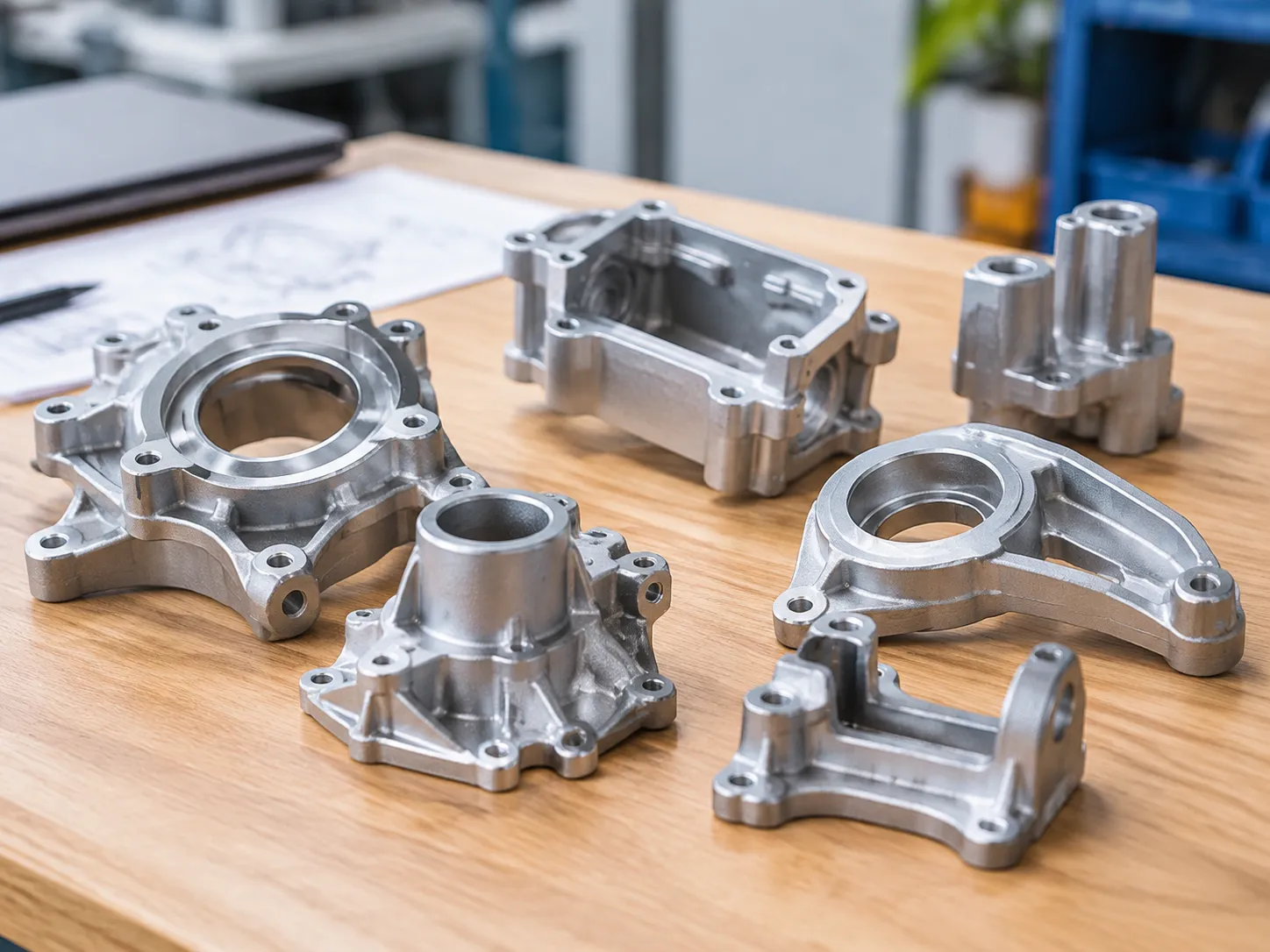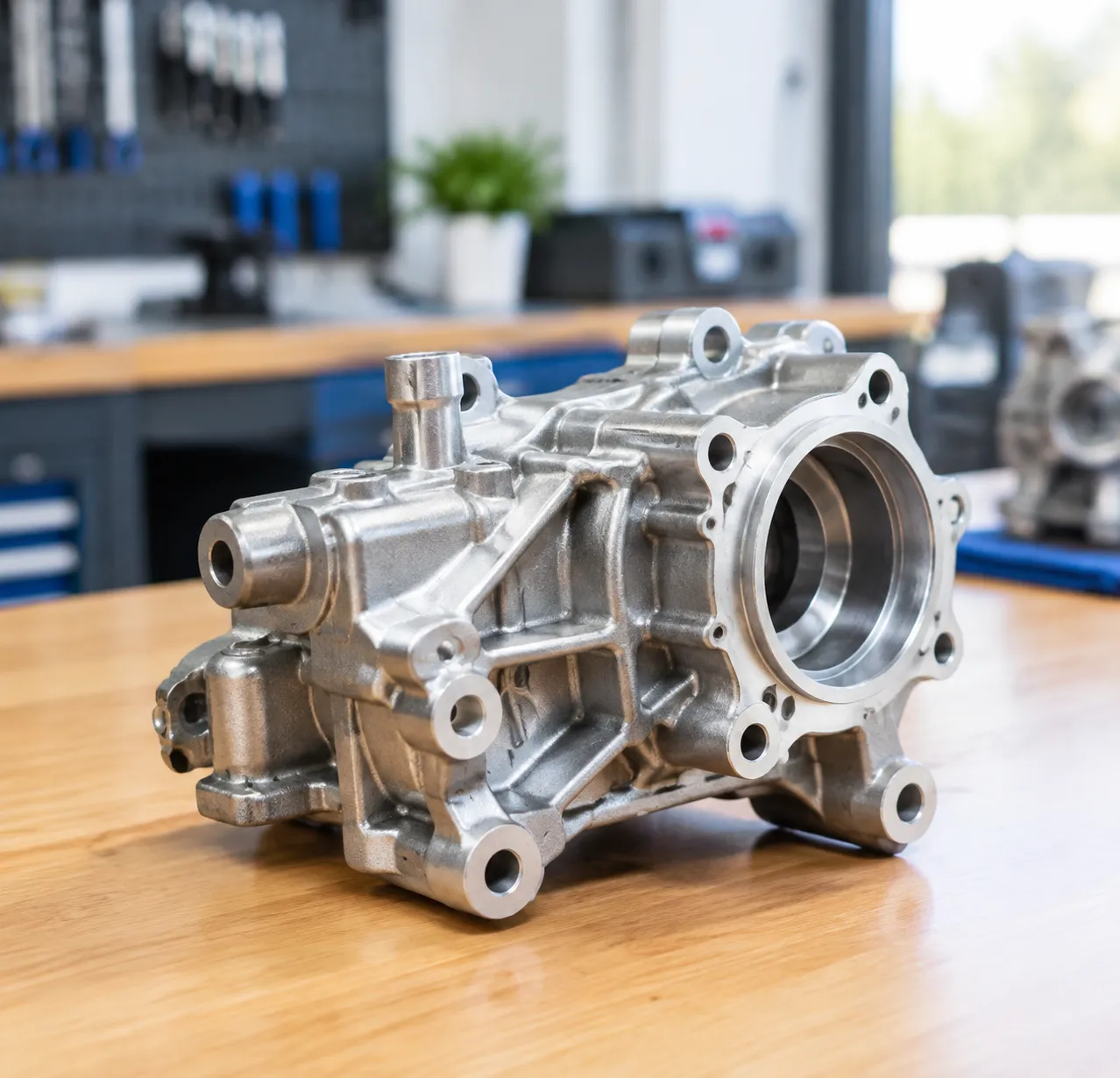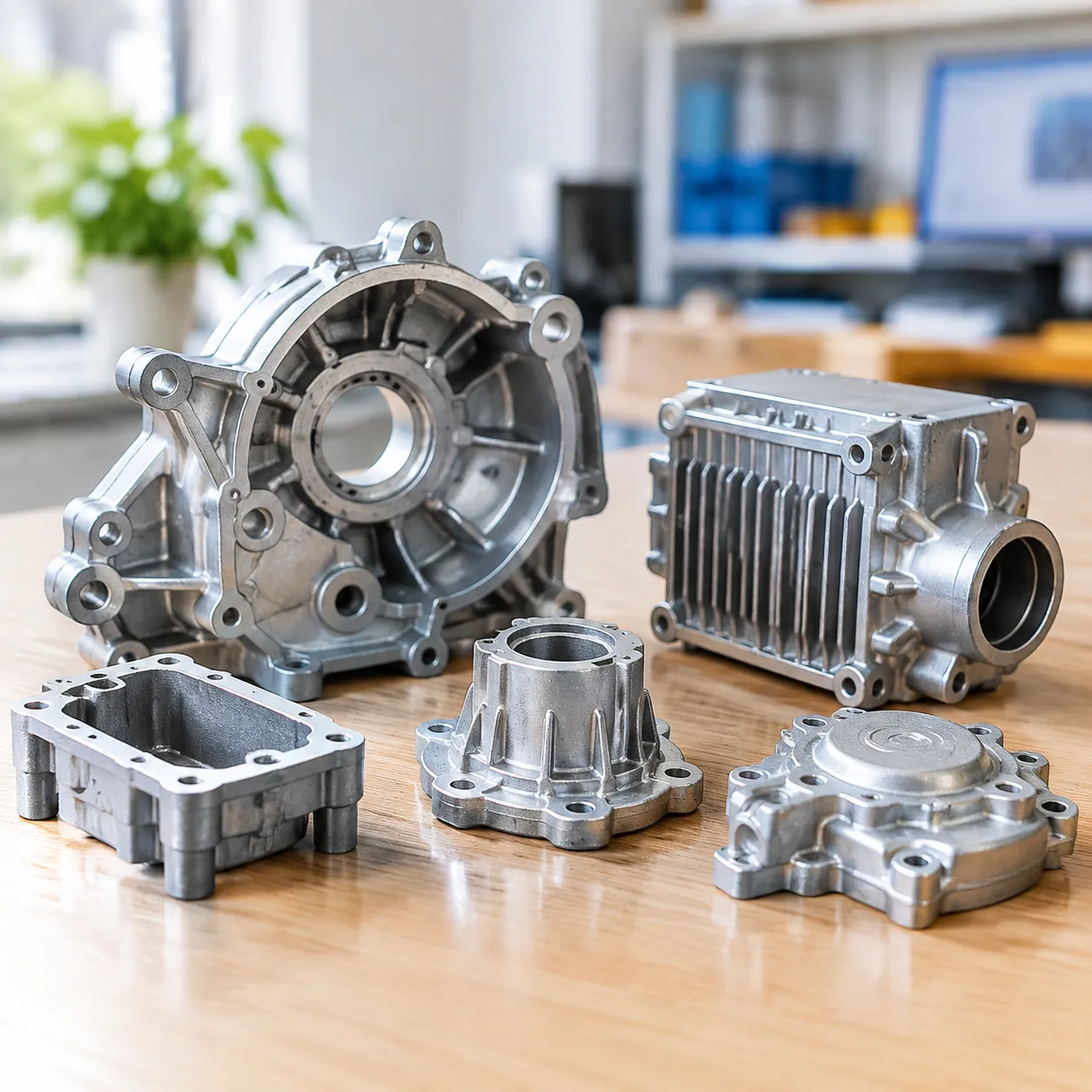


Chrome plated zinc die castings look impressive in the showroom and unforgiving on the plating line. The part itself is cast within microns of the drawing, but the surface that the plating tank sees still carries parting lines, gate remnants, micro-burrs, and a thin oxide layer from the casting cycle. Skip the prep work and the chrome amplifies every defect: a 0.05 mm scratch becomes a dark line under the bright nickel, a micro-burr becomes a pit, and the reject rate climbs past the single digits where the plater has to make money.
For Zamak 3 and Zamak 5 parts the prep work follows a clear sequence: trim gates and overflows, remove parting lines, blend any surface defects, then polish progressively to the finish the spec calls for, and finally transfer to the plating line with a clean, dry surface. The polishing step is where most Zamak platers lose hours and money. Done by hand it is slow and inconsistent. Done on a robotic cell it becomes predictable and fast.
Common Plating Stacks for Zinc Die Castings
Most decorative zinc parts ship with a multi-layer plating stack. The exact sequence depends on the spec, but a typical bathroom hardware stack looks like this:
| Layer | Purpose | Typical thickness |
|---|---|---|
| Copper | Leveling, coverage of micro-porosity | 8 to 20 µm |
| Bright nickel | Reflectivity, ductility | 8 to 15 µm |
| Optional satin nickel | Brushed look | 2 to 5 µm |
| Chrome | Wear, tarnish, color | 0.1 to 0.5 µm |
The copper layer is the workhorse. It fills porosity and gives the nickel a a smooth base. Without enough copper, the chrome looks mottled on lots where porosity varies. With too much copper the part feels soft after plating and dimensional tolerances drift.
For functional parts (door locks, electrical housings) the stack often drops the bright nickel and uses a thicker satin or matte nickel plus a thin chrome flash. For exterior automotive trim the stack adds a microporous or microcracked nickel layer on top of the bright nickel to spread corrosion when the chrome eventually gets a stone chip.
Surface Preparation Before Plating
The plater receives castings that have been deflashed, deburred, and pre-polished. The prep work falls into four families:
- Mechanical deflashing and gate removal — usually a belt grinder or a tumble operation for small parts. For Zamak the gate is small and the alloy is soft, so this step is quick.
- Parting line removal — a critical step that is invisible on a finished part. The plater sees the parting line as a 0.1 to 0.3 mm ridge running around the part. Belt sanding or a side-action buff on a robotic cell removes it.
- Defect blending — small surface defects (cold shuts, flow lines) get blended with a small abrasive point or by hand. Automated blending is harder; most platers still do this by hand because the geometry varies.
- Progressive polishing — moving from 180 to 400 to 600 to 1200 grit (or equivalent scotch-brite grades), then to a buffing wheel with cutting compound, then to a finishing wheel with coloring compound.
Steps 1 and 2 are well suited to robotic deburring cells. Step 3 is still mostly manual. Step 4 — the multi-stage polish — is where a robotic cell earns its keep, because each stage has to be done consistently on every part.
Buffing and Polishing Grades
Polishing grades for plating prep are usually described in three steps:
- Cut down — removes the deep sanding scratches, leaves a uniform 320 to 400 grit finish. Done with a sewn cotton wheel and a cutting compound (tripoli or equivalent).
- Color — removes the cut-down scratches, leaves a high-luster finish ready for plating. Done with a loose cotton wheel and a coloring compound (white rouge or equivalent).
- Final wipe — for mirror-grade parts, a final buff with a soft cotton wheel and a finishing compound removes the last haze.
The grade depends on the spec. A satin nickel finish only needs a uniform 400 grit. A bright chrome spec on a bathroom faucet needs the full cut-down and color sequence plus a final wipe. Cutting corners on the color step is the most common cause of plating rejects: the chrome amplifies any residual haze.
Automation of Plating-Prep Polishing
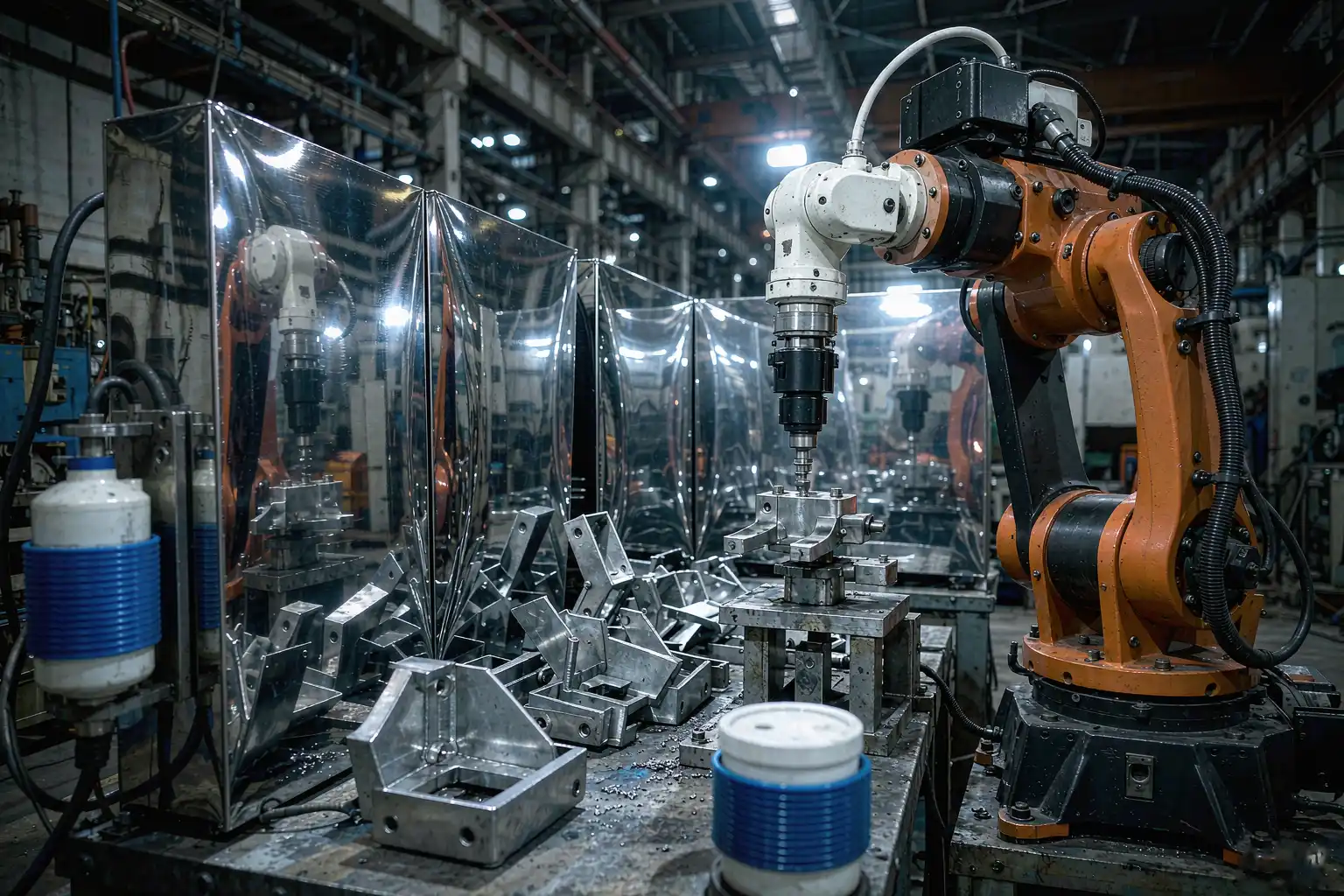
Robotic polishing cells built around the plating-prep workflow pay back faster than most finishing cells because the labor pool for hand buffing is shrinking and the reject cost is high. The cell layout typically has three to six stations:
| Station | Operation | Wheel / abrasive |
| 1 | Gate removal | Belt grinder, 80 to 120 grit |
| 2 | Parting line | Belt or wheel, 180 grit |
| 3 | Cut down | Sewn cotton, cutting compound |
| 4 | Color | Loose cotton, coloring compound |
| 5 | Final wipe | Soft cotton, finishing compound |
| 6 | Wash and dry | Aqueous wash, hot air dry |
A medium-volume plater running 50,000 to 200,000 parts per month will see a robotic cell replace six to ten hand buffers, hold a tighter finish grade, and cut the reject rate roughly in half. The payback usually lands in the 12 to 24 month range depending on labor rates and the reject cost. The biggest hidden savings is the drop in the skilled-bench turnover problem that every plater complains about.
Defects and Rejects
The plating tank turns prep defects into rejects. The most common defects seen on the plating line, and the prep step that controls them, are:
- Peeling chrome — almost always a prep issue. Residual compound, oil, or moisture in the surface breaks adhesion. Fix: better wash between polish and plate, shorter transfer time.
- Pitting — micro-porosity in the casting that the polish opened up. Fix: thicker copper layer, better polish blend of the pore.
- Haze under chrome — the color step was not fully done. Fix: longer color wheel time, fresh compound, consistent part presentation.
- Parting line ghost — the parting line was not removed before plating. Fix: more aggressive parting-line station, or move the station earlier in the cell.
Each defect costs the plater the part plus the plating chemicals plus the inspection labor. A 2% reject rate on chrome on a high-volume line is a six-figure annual cost. A 1% drop from automation usually covers the cell.
Cost and ROI
A plating-prep robotic cell costs more than a general finishing cell because of the wash and dry stations and the tighter finish spec. Budget ranges for a three-station cell land at roughly:
| Item | Range |
| Cell hardware (robot + tools + fixtures) | $80,000 to $160,000 |
| Wash and dry | $15,000 to $30,000 |
| Fixtures and programming | $10,000 to $25,000 |
| Installation and integration | $10,000 to $20,000 |
| Total | $115,000 to $235,000 |
On a 100,000 part per month operation, replacing six hand buffers at fully loaded labor rates pays back in 14 to 22 months in most markets. Add the drop in rejects and the payback tightens further. A plater running a mix of Zamak and brass parts can usually integrate the cell into an existing plating line without major re-plumbing.
The spec is the harder constraint. A mirror-grade chrome spec needs a color step that is still difficult to do well on a robot — most cells ship with manual color stations and only the cut-down automated. Platers running a satin or matte spec can automate more aggressively and see faster payback.
Making the Call
Plating prep is the right place to automate for a plater running Zamak parts in volume, with a consistent spec, and a labor market that is tightening. Satin and matte specs are easy wins. Bright chrome specs need a careful station-by-station rollout and a willingness to keep a hand bench for the toughest color work.
For a plater doing low volume or a wide variety of parts, the cell is harder to justify. A hand bench with a few good buffers is still the most flexible setup. The economics only flip when the part count and the reject cost both rise together.
The first step is the same as for any finishing investment: pull three months of plating rejects, count the rejects that came from prep defects, and price them. If the price of the rejects exceeds the cost of a partial cell, the cell has a business case before any supplier walks in.
A Real Plating Prep Cell in Practice
A mid-sized bathroom hardware plater in the Guangzhou region runs roughly 120,000 Zamak parts per month across faucet handles, spout trims, and shower brackets. The plater used a hand-buff line of eight operators feeding a three-station plating line. Reject rate on bright chrome hovered around 3.5%, mostly from color-step inconsistencies between operators.
The plater installed a six-station robotic cell covering gate removal, parting-line removal, cut-down polish, color polish, final wipe, and aqueous wash. The cell replaced six of the eight operators; the remaining two ran the manual bench for special parts and the color step on parts where the geometry defeated the robot. Reject rate dropped to 1.4% within four months of commissioning. The plater recovered the cell cost in nineteen months from labor savings and reject reduction alone, before counting the consistency benefit that came from running the same finish spec on every part.
The plater’s biggest surprise was not the labor saving or the reject reduction. It was the drop in the skilled-bench turnover problem. Before the cell, the plater was constantly recruiting and training hand buffers. After the cell, the bench work became a skilled trade rather than an entry-level job, and turnover on the bench dropped to single digits annually.
The lesson is that plating prep automation is not just a cost play. It is a workforce play, and the workforce benefit often shows up faster than the cost line.