

Magnesium Die Casting: Process Window and Part Design
Magnesium is the lightest structural metal you can die cast, and for the right part it is the obvious choice: a density around 1.8 g/cm3 against aluminum’s 2.7, good damping, useful EMI shielding, and machinability that beats almost every other structural alloy. But magnesium also brings a property profile that aluminum and zinc die casters do not live with every day. It burns. It needs melt protection. It fills fast and freezes fast. And the corrosion story is different enough that you cannot copy an aluminum finishing sequence and expect it to work.
This article is a process-and-design reference for magnesium die casting, written for the engineer choosing an alloy and laying out a part. We cover why Mg earns its place, the safety envelope you must design around, hot-chamber versus cold-chamber, the common alloy families and where each fits, the wall and draft specifics, how porosity and gating differ from aluminum, finishing differences including the separate corrosion question, and where a DZ robotic cell slots into the line.
Why magnesium, and what it costs you in process discipline
The case for magnesium is straightforward on a weight basis. For a bracket that an aluminum part covers at 100 grams, a magnesium part often lands near 65 to 70 grams for equivalent stiffness, because Mg’s lower density is only partly offset by a lower modulus that you recover with slightly more section or a rib. In a handheld tool, a vehicle closure, or a robotics joint, that weight delta is real money in shipping, inertia, and operator fatigue.
Magnesium also machines at roughly double the speed of aluminum for comparable tool life, which matters when the part needs threaded holes, bores, and milled faces. And its electrical conductivity paired with its low density gives natural EMI shielding for enclosures without added coatings.
What it costs you is discipline:
- The molten metal reacts with oxygen and, above roughly 650 degrees C in certain conditions, can ignite. You do not get a second chance on a melt fire the way you might with aluminum dross.
- Magnesium’s low heat content means the part solidifies quickly, so your process window for fill is narrower than aluminum’s.
- The surface oxidizes and, worse, galvanically couples with almost anything, so corrosion protection is not optional in most outdoor or wet applications.
The decision to use Mg is therefore a systems decision: alloy, machine type, melt protection, and finishing have to be specified together, not picked independently.
Safety envelope: ignition, melt protection, and cover gas

You cannot design a magnesium die casting line without designing the melt safety envelope first. The relevant facts are physical, not optional:
- Magnesium melting point is about 650 degrees C; the liquidus-to-solidus band for common casting alloys sits around 595 to 615 degrees C for AZ91.
- Magnesium in air forms a porous oxide that does not shield the melt, unlike aluminum’s self-limiting oxide skin. Once ignited, Mg burns hot and is difficult to extinguish with water or standard CO2.
- The standard protection is a cover gas over the melt. Historically SF6 was used because a small concentration forms a protective layer, but SF6 is a potent greenhouse gas and is being phased out or restricted in many regions.
- Current practice favors mixtures such as SF6 diluted in dry air, or sulfur hexafluoride replacements, or argon-based blanketing with tight furnace sealing. Pure argon cover is common on smaller, well-sealed furnaces.
Practical design rules we hold:
- The furnace and the shot sleeve environment must be positively protected; do not run Mg on a furnace designed for open aluminum melting.
- Quench media and fire response must be Mg-rated (dry powder, covered salt, NO water, NO CO2 on a burning pool).
- The cell layout must isolate the melt from the trimming and finishing area, because fine Mg chips and dust from machining and deburring are themselves a fire and explosion risk. Dust collection on a Mg line is a safety system, not a housekeeping option.
This is the part of magnesium die casting that does not appear on the part drawing but absolutely shapes the factory you build around it.
Hot-chamber versus cold-chamber for magnesium
Magnesium’s low melting point and low iron pickup relative to aluminum make hot-chamber die casting viable, and that is a major difference from aluminum, which is almost always cold-chamber because aluminum attacks the gooseneck steel.
Hot-chamber magnesium:
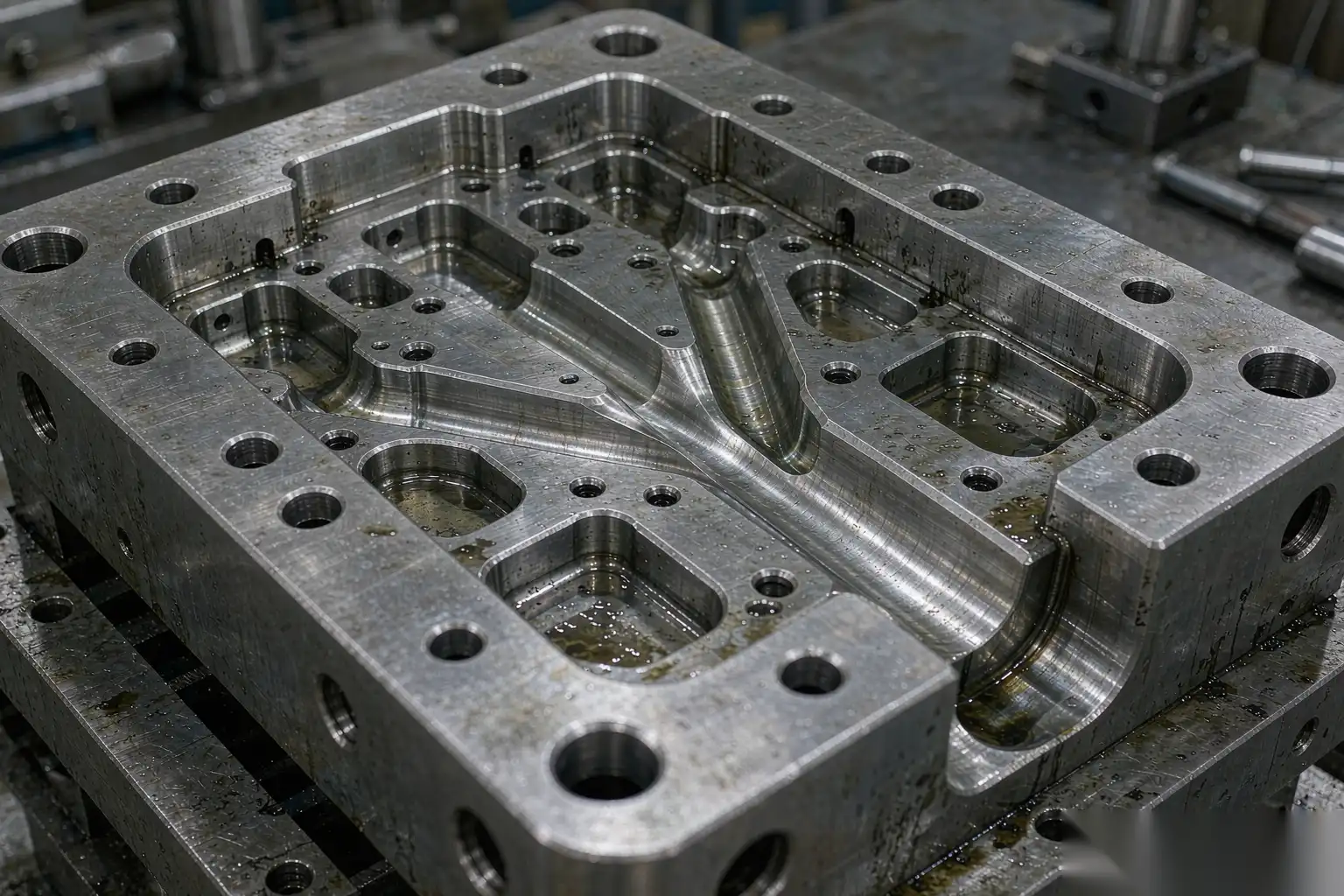
- The goose and plunger sit immersed in the melt, so the shot is fast and the metal never travels cold through air.
- Cycle times are shorter, often meaningfully so, because there is no separate ladling or metal transfer.
- Best for smaller, thinner parts and high volumes: enclosures, brackets, small housings, electronics frames.
- Limited by gooseneck life and by part size; very large shots favor cold-chamber.
Cold-chamber magnesium:
- Metal is ladled or dosed into a cold sleeve, then injected, mirroring an aluminum cold-chamber cell.
- Handles larger parts and higher shot weights than hot-chamber.
- Slightly longer cycle and a bit more oxidation risk at the pour, which the cover gas and a sealed pour box manage.
- Common for structural automotive and larger housings.
The choice is mostly driven by shot weight and wall thinness. Thin, small, high-volume parts lean hot-chamber; large or thick structural parts lean cold-chamber. Both feed the same downstream trimming and finishing logic.
Alloy families: AZ91, AM60, AM50 and where each fits
Magnesium die casting alloys are built around aluminum, manganese, and zinc as the main solutes, with zinc-aluminum compositions (the AZ series) and aluminum-manganese compositions (the AM series) dominating.
| Alloy | Al content | Zn content | Key property | Typical use |
|---|---|---|---|---|
| AZ91D | ~9% | ~0.7% | Best castability, good strength, corrosion-resistant grade | Housings, brackets, covers, general parts |
| AM60B | ~6% | <0.2% | Higher ductility, energy absorption | Automotive interior, crush parts |
| AM50A | ~5% | <0.2% | Even more ductility, lower strength | Seat frames, energy-absorbing structures |
Design implications:
- AZ91D is the default for die casting because it fills well and has the widest process window. If you are unsure, start here.
- AM60 and AM50 trade some strength for ductility. For a bracket that must not snap under impact, the extra elongation matters more than peak strength.
- Manganese in the AM series improves corrosion resistance by tying up iron and other heavy-metal impurities that would otherwise trigger galvanic corrosion.
- Keep impurity iron, nickel, and copper extremely low. Iron above a few hundred ppm ruins corrosion performance; this is why melt handling and the gooseneck alloy choice matter.
Compared with aluminum, magnesium alloys are less strong per volume, so the part is often a touch thicker or ribbed to match stiffness. The weight still wins because of the density gap.
For a broader comparison of how magnesium stacks up against aluminum and zinc on cost and properties, our zinc vs aluminum die casting comparison covers the tradeoffs that also apply when Mg enters the candidate set.
Wall thickness, draft, and parting-line specifics
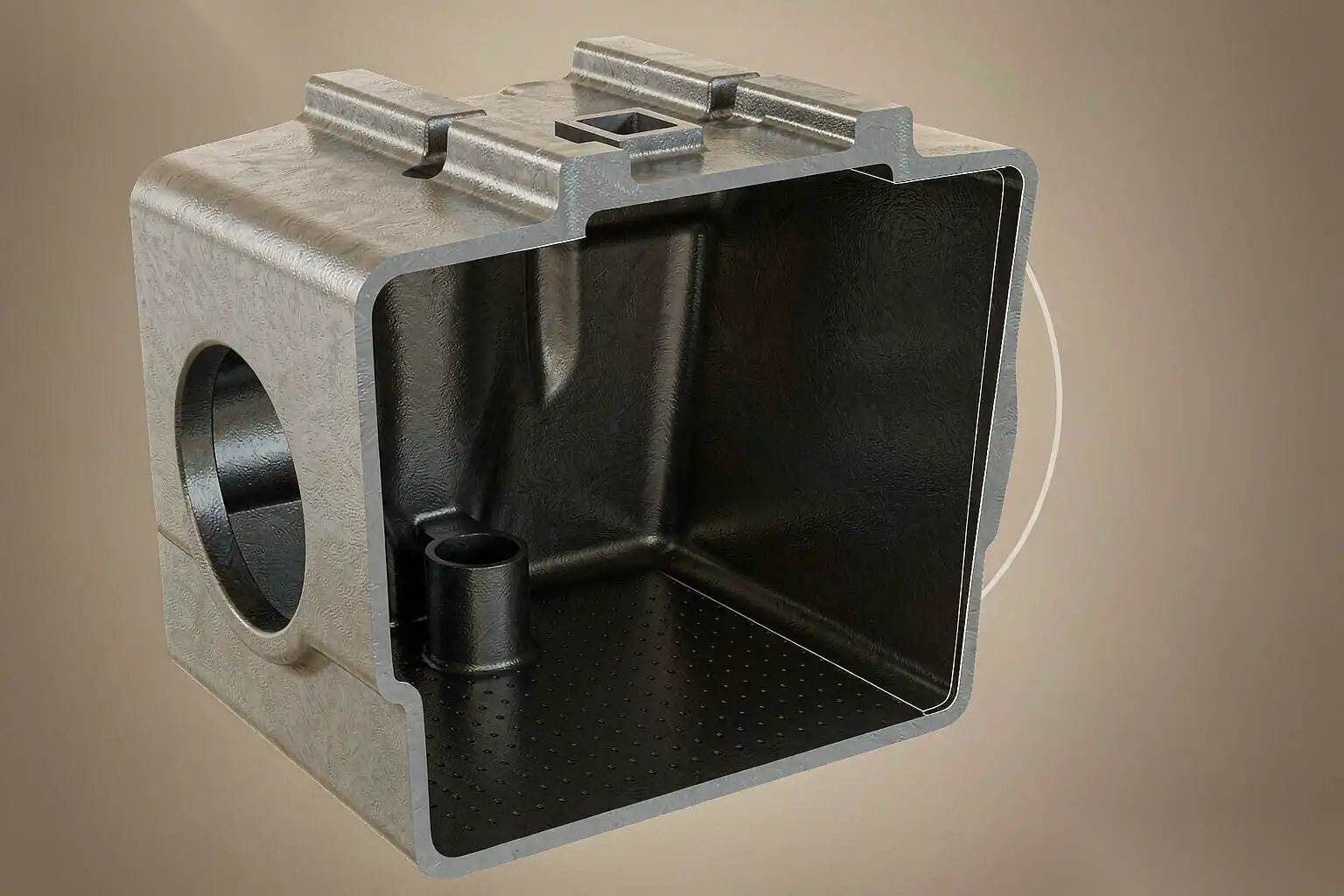
Magnesium fills thin walls exceptionally well because of its low viscosity and low heat content, which means you can hold thinner nominal walls than with aluminum at the same flow length.
Practical numbers:
- Small parts under 100 mm: minimum wall around 0.6 mm is achievable in production, with 0.8 to 1.0 mm a comfortable production norm.
- Larger parts over 250 mm: plan 1.0 to 1.5 mm minimum to keep fill reliable across the whole cavity.
- Keep wall uniformity better than 2:1 thick-to-thin, same as aluminum, because shrinkage still pools in thick sections.
- Draft: magnesium ejects readily, but because parts are often thin and large, hold 1.0 to 1.5 degrees on external walls and 1.5 to 2.0 degrees on internal cores to avoid drag marks on fragile thin walls.
- Radii: same logic as aluminum, 0.5 to 1.0 mm internal radii to avoid hot spots, with a small parting-line radius so the flash plane is clean for trimming.
One difference worth noting: magnesium’s fast freeze means gates must be sized generously and placed for rapid, balanced fill. A gate that works for aluminum at a given speed will short-fill magnesium because Mg freezes before it reaches the far wall. Gating is a process-design task, not a copy-paste from an aluminum die.
Porosity and gating differences versus aluminum
Porosity in magnesium die castings comes from the same two sources as aluminum: gas entrapment from turbulent fill, and shrinkage from poor feeding. But the balance shifts.
- Magnesium’s low density and viscosity mean it accelerates and froths easily in a turbulent runner. A gating system that is too aggressive entrains gas that has nowhere to go before freeze.
- Shrinkage porosity is less forgiving on thin sections because the solidification front closes fast; generous overflows and short flow paths help.
- Vacuum assist, common on aluminum for leak-tight parts, is also used on magnesium when pressure tightness or low porosity is required, with the same caution that the vacuum equipment must be Mg-compatible.
For a systematic view of defect modes and their process fixes, our aluminum die casting defects and solutions reference maps the same root causes (cold shut, gas porosity, shrinkage, hot crack) to corrective actions that carry directly to magnesium, adjusted for the faster freeze.
The design takeaway: design overflows and vents up front, keep flow paths short, and avoid thick sections that must be fed through a thin gate. Magnesium punishes a gating layout that was “good enough” on aluminum.
Finishing differences: easier to polish, different corrosion rules
Magnesium is a pleasure to finish mechanically and a headache to finish chemically if you treat it like aluminum.
Mechanical finishing:
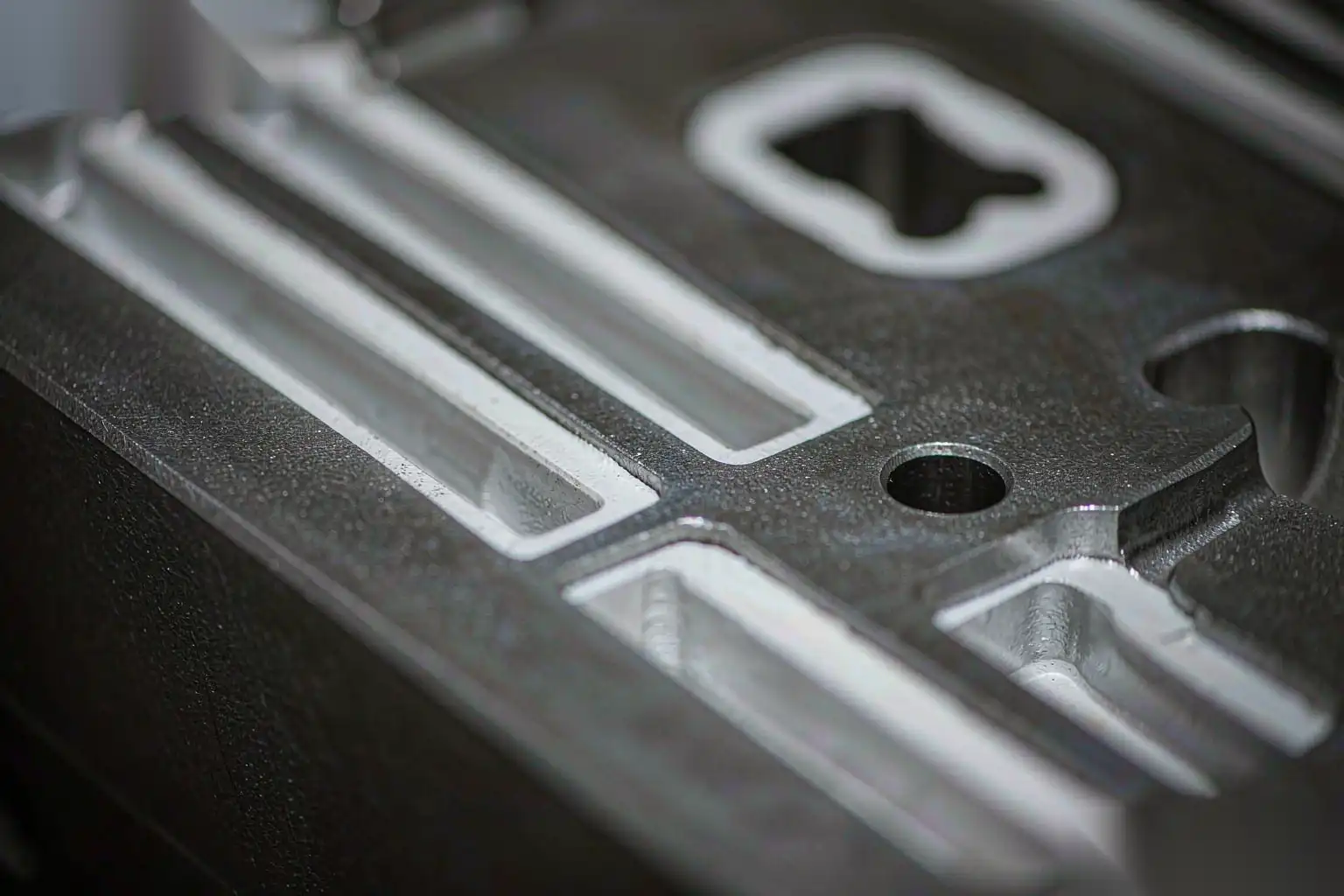
- Magnesium machines and polishes faster than aluminum. Deburring and brushing cycles are typically shorter, and the lower hardness means abrasives cut quickly, so spindle loads and contact forces can be lower.
- That speed is a hazard too: too much force or a clogged wheel can load and heat the part, and fine Mg dust is ignitable. A DZ robotic deburring cell on magnesium runs with controlled force, spark-free tooling, and dust collection sized for the metal.
- Cosmetic polishing to a bright or satin finish is readily achieved, which is why Mg shows up in premium housings and consumer hardware.
Chemical and coating finishing, where the rules diverge:
- Anodizing is essentially an aluminum process. Magnesium can be surface-treated, but the common sulfuric acid anodize used on aluminum does not transfer; Mg anodizing uses different chemistries (e.g., proprietary fluoride or plasma processes) and is not the same operation. Do not assume an aluminum anodizing line will finish a magnesium part.
- For the full aluminum picture, our die cast aluminum anodizing guide explains the anodize route specific to Al; magnesium must be specified on its own track.
- Magnesium requires corrosion protection as a system: chromate conversion (where permitted), or modern non-chrome passivates, followed by paint, powder coat, or plating depending on the service environment.
- Galvanic corrosion is the trap. Magnesium coupled to steel or copper alloys in the presence of an electrolyte will corrode rapidly. Design for isolation: insulating washers, separate coatings, or select fasteners that are compatible.
So the finishing plan for a magnesium part is two separate decisions: how to make it look and feel right mechanically (easy), and how to keep it from corroding in service (a real engineering task).
Where a DZ robotic cell fits the magnesium line
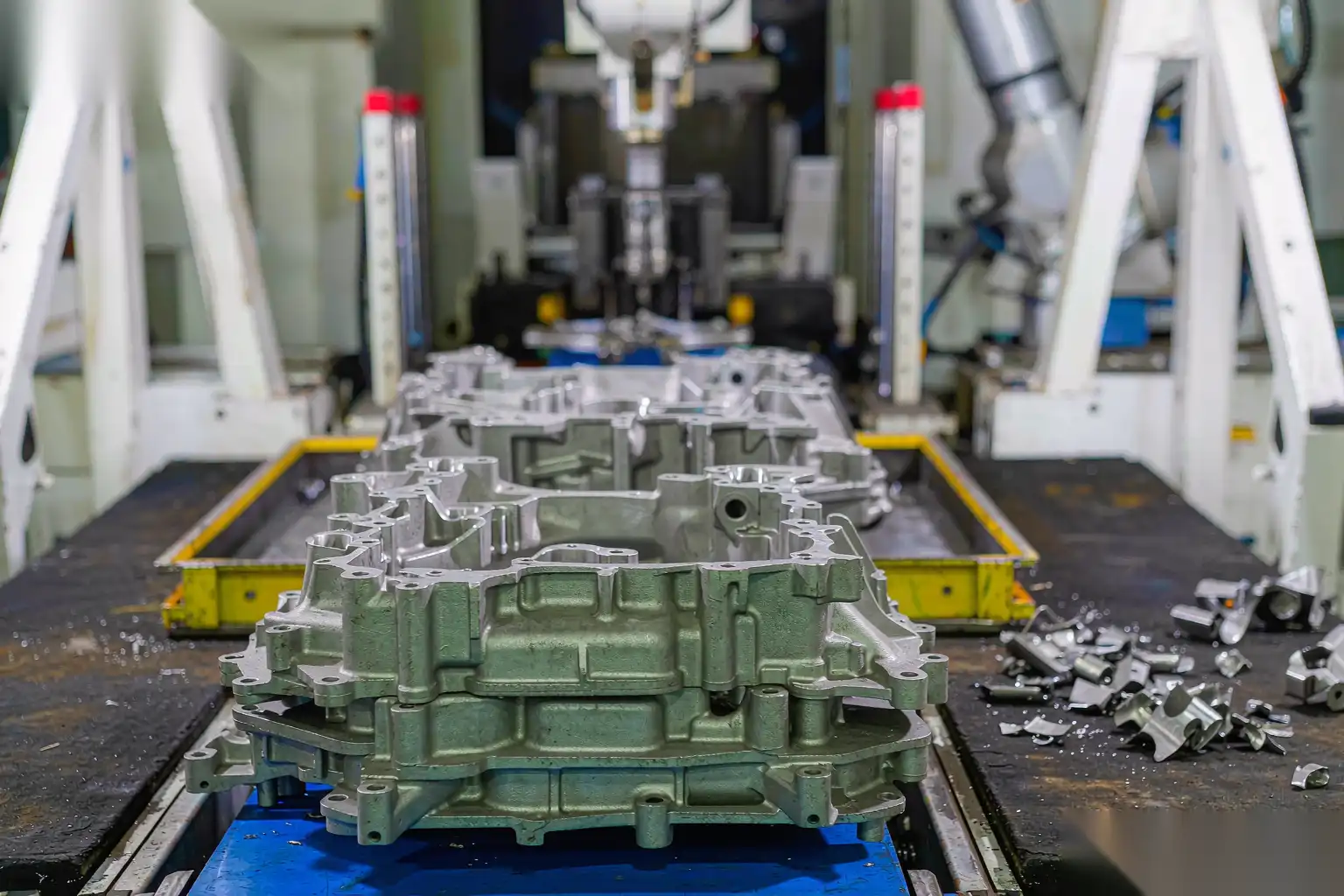
A magnesium die casting line is not just an aluminum line with a different melt. The downstream cell has to respect the fire and dust risks while still hitting cycle time.
How we build the cell around the metal:
- Trim press first, with Mg-rated tooling and spark-safe handling, because the gates and flash are combustible in fine form.
- Robotic deburring with compliant floating spindles and controlled force, so the part is not over-cut and the dust load stays manageable. Lower contact force than aluminum is usually sufficient and safer.
- Dedicated, isolated dust collection with explosion precautions, separate from any aluminum line, because mixed Mg and Al dust changes the hazard profile.
- Polishing stations for cosmetic parts, with wax or compound delivery matched to Mg’s fast cut rate.
- Inspection and packaging that keep bare magnesium from contacting incompatible metals before coating.
The part design work described above, single planar parting line, consistent flash band, cored bosses, and stable datums, pays off exactly as it does for aluminum: the robot meets a known edge and delivers a repeatable finish without a person at the bench.
Soft CTA
DZ Machinery designs robotic deburring, grinding, and polishing cells with the magnesium process envelope built in, from Mg-rated dust collection to force-controlled finishing that respects the metal’s fast cut and fire risk. If you are moving a part to magnesium, talk to our engineering team about your drawings and we will lay out a trimmed, finished, safe cell around them.