

Low Pressure Die Casting Line: How to Set Up for Production
A buyer in Vietnam called us after a bad first attempt. He’d bought a low pressure die casting machine and parked it in a corner with no furnace feed, no cooling water planned, and the trimming cell a building away. Six months in, the line made a few good parts and a lot of chaos. The machine was fine. The setup wasn’t a line — it was a lonely island. If you’re standing up an LPDC cell, the machine is maybe a third of the job. This guide is the other two-thirds.
What a Complete LPDC Line Actually Includes
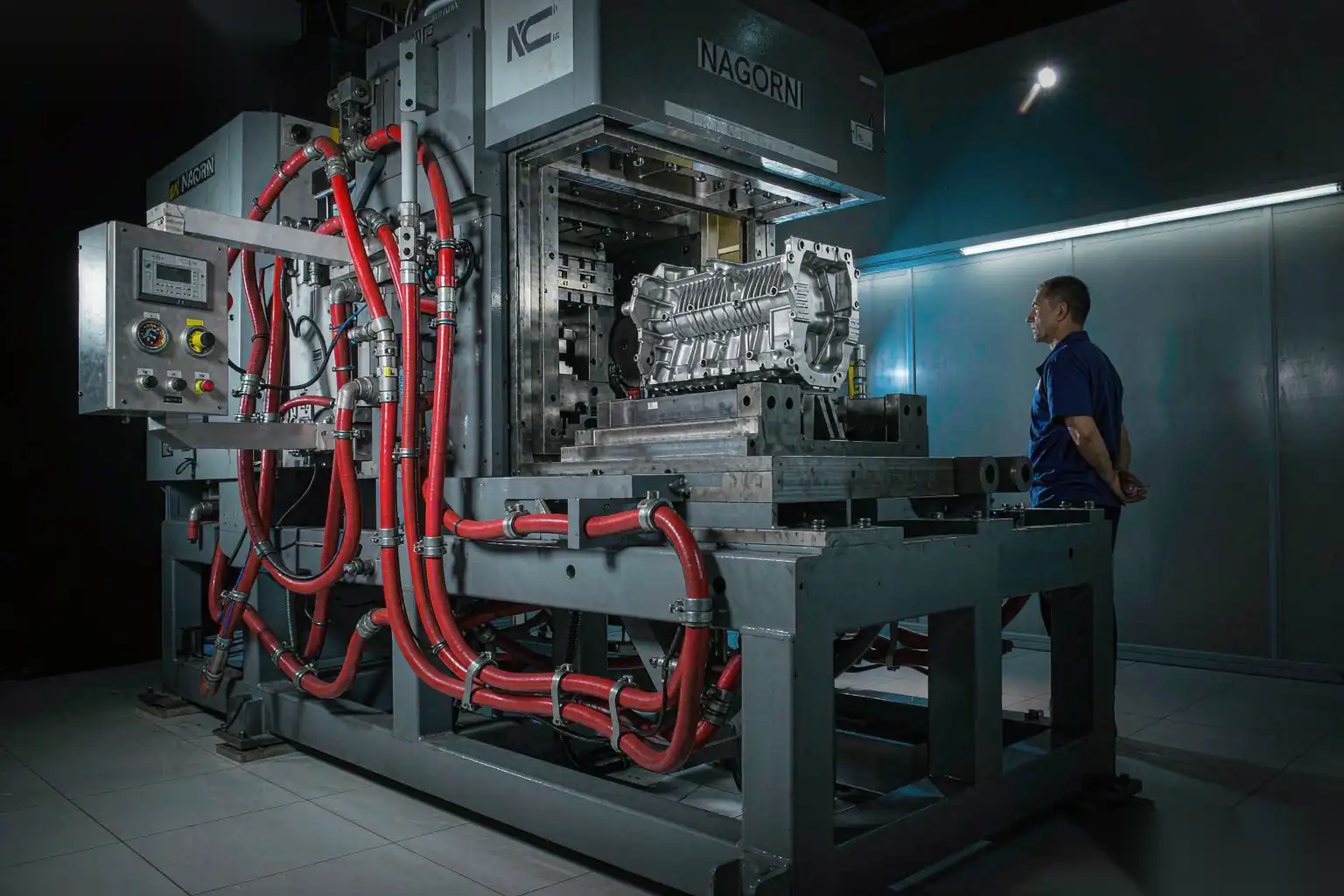
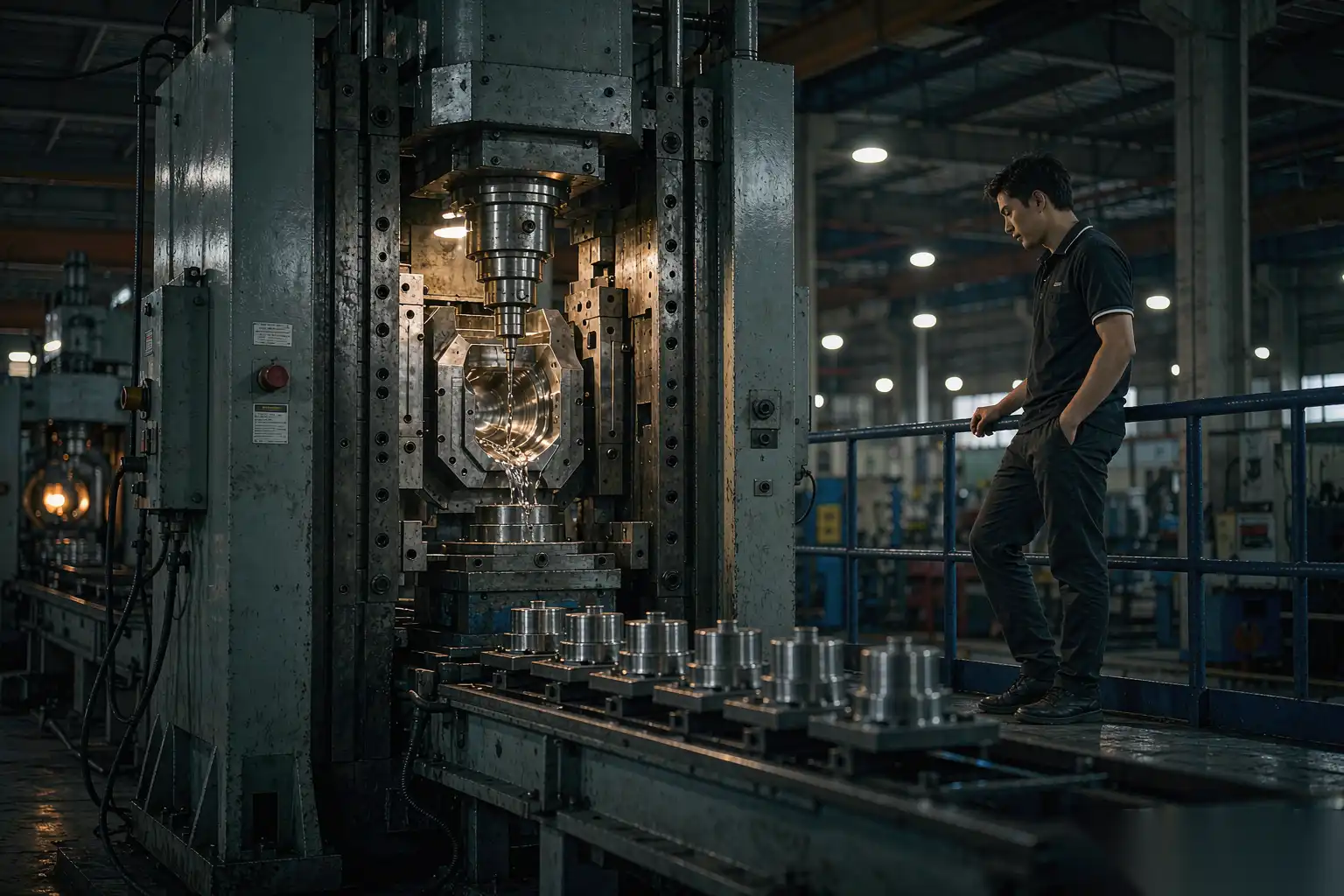
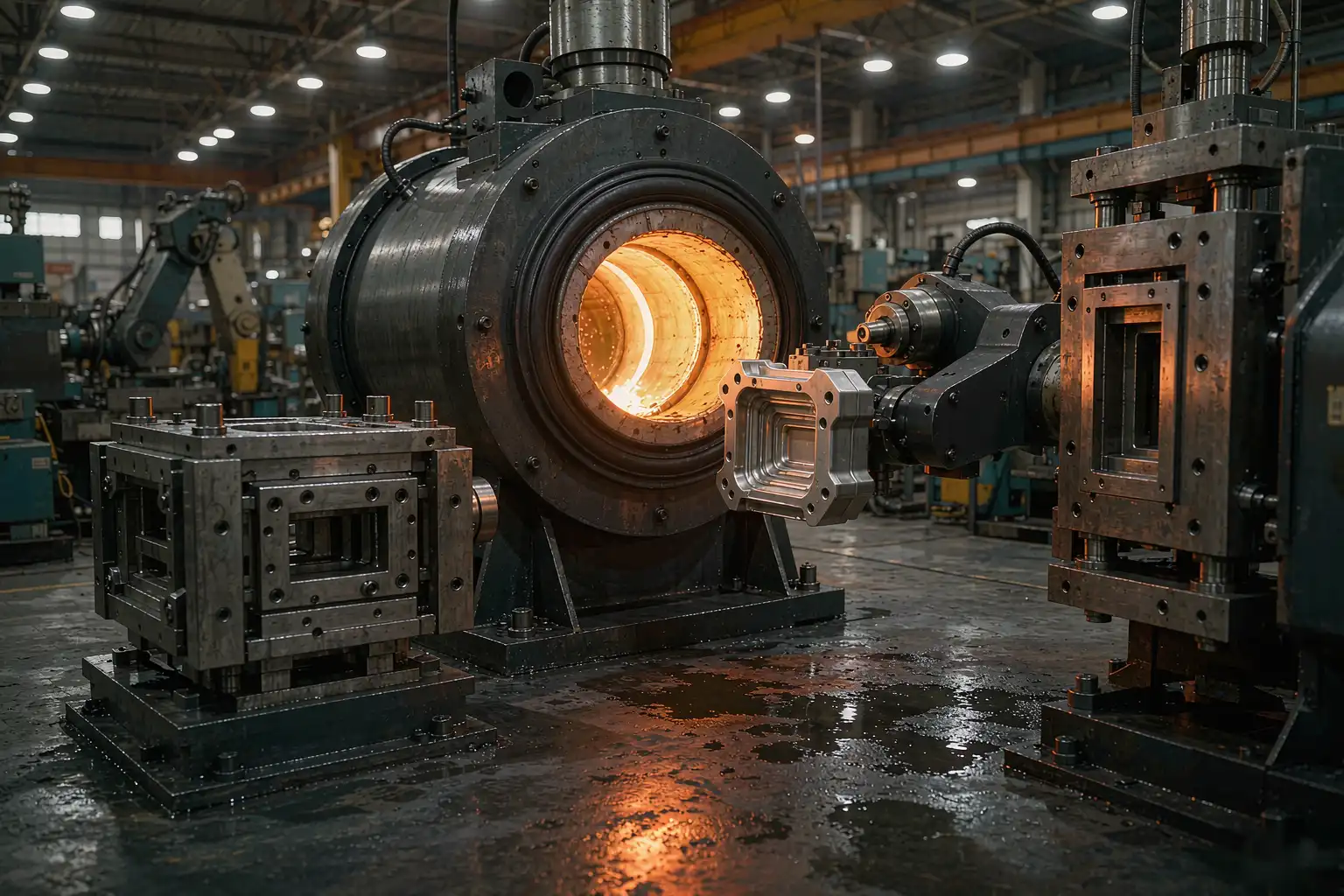
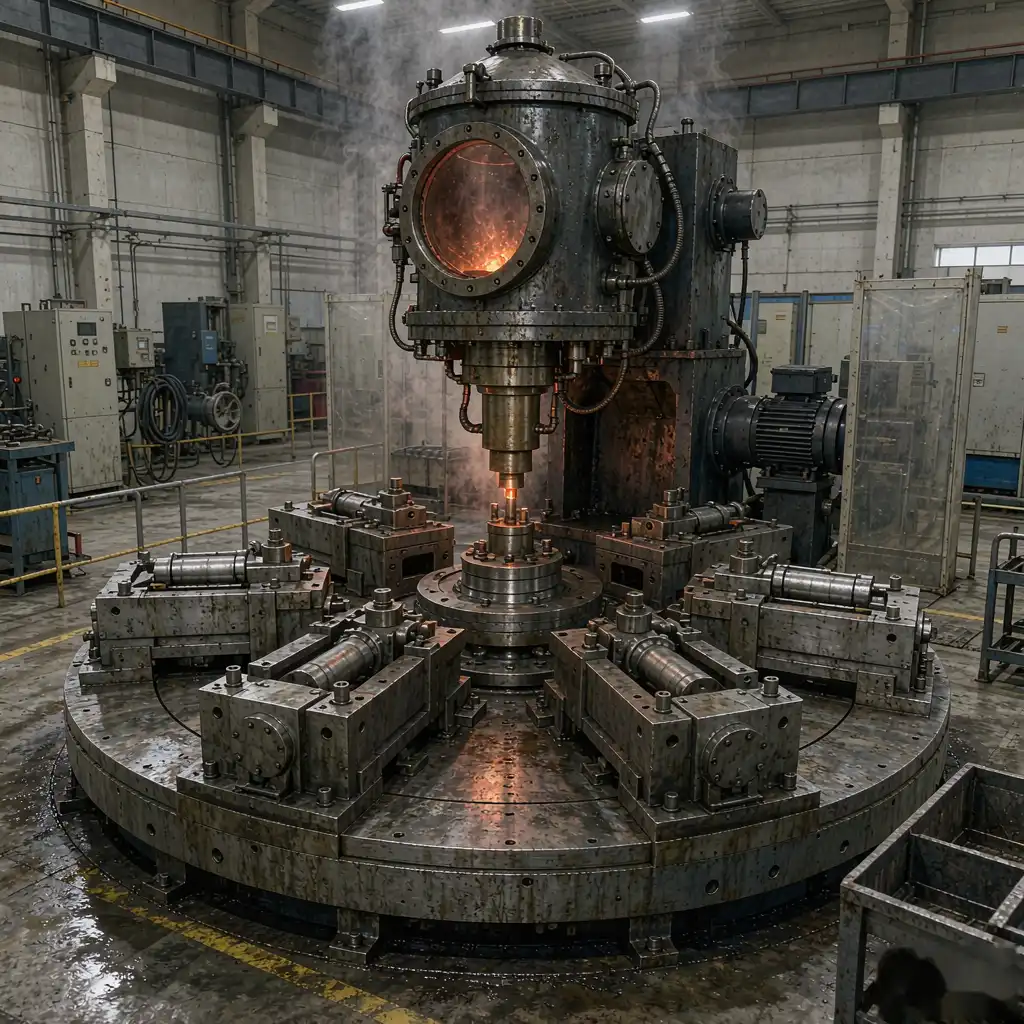
LPDC pushes molten metal up a stalk from a sealed furnace into a chilled steel die, fills from the bottom, and drains the unused metal back down. That method dictates the layout. A working line is: the furnace and stalk, one or more mold stations, extraction or manipulation, die cooling and temperature control, and the downstream trimming and finishing that the casting still needs.
Layout: Flow Beats Floor Space
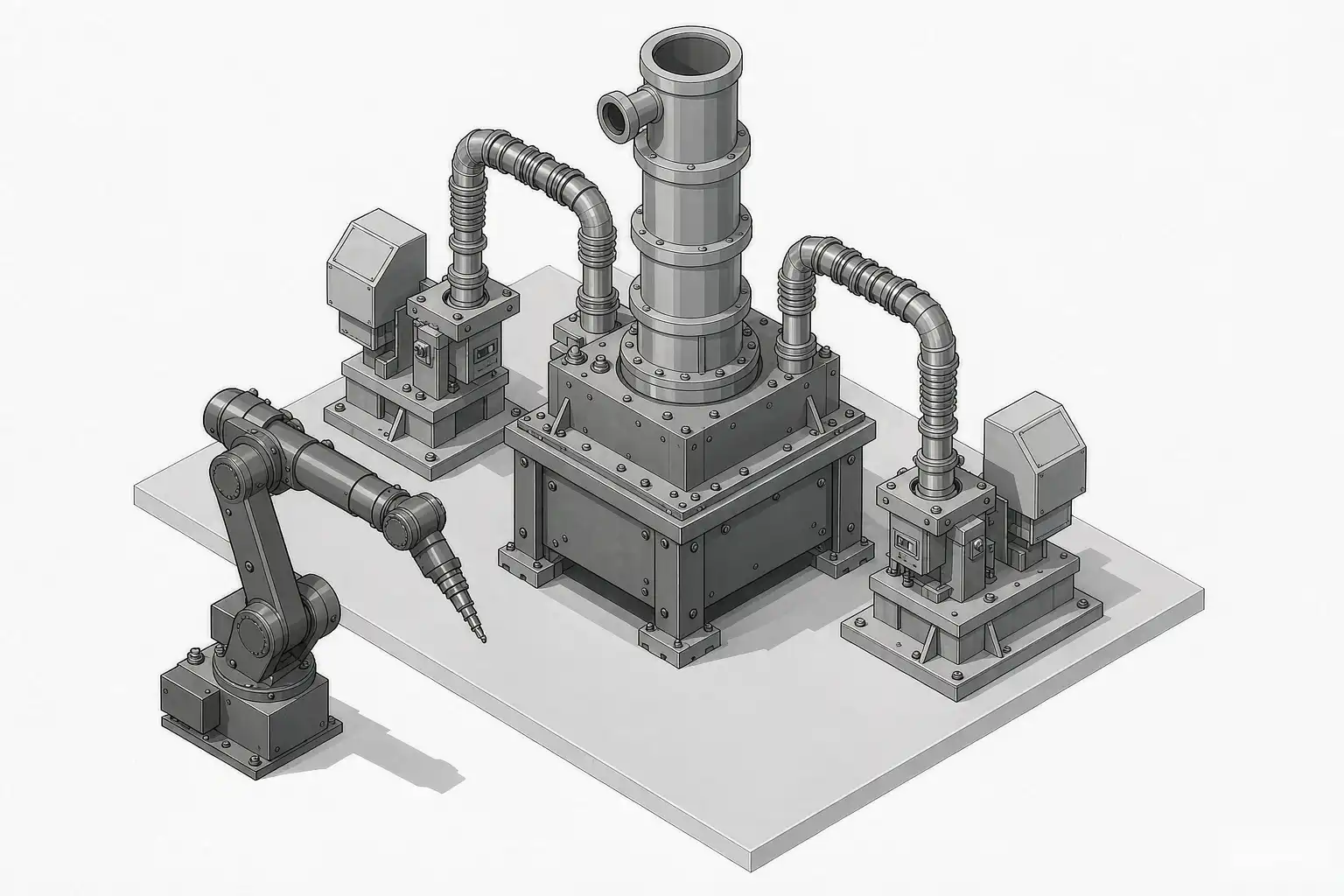
Put the furnace at the logical center, not against a wall because it fit. One furnace can feed several mold stations, so station spacing and rotation matter more than the machine footprint. Plan the operator’s path: load, extract, trim, inspect — without crossing the hot side. If you’re still choosing the machine itself, our LPDC selection guide covers what to buy first.
Utilities You Must Plan Before Install
Power and Compressed Air
LPDC is low-pressure but not low-power. Size the electrical supply for furnace heat-up plus the cell, and confirm compressed air for clamping and extraction. Undersized air is the quiet killer of cycle consistency.
Cooling Water
Die cooling sets your cycle time. Plan flow, temperature, and filtration before the machine arrives, not after. Poor cooling water is why some lines run slow and warp — our die cooling design notes apply directly here.
Exhaust and Safety
Molten aluminum and flux need captured fume and a safe operator zone. Build exhaust and guarding into the layout from day one; retrofitting them later means shutting the line down to fix what should have been first.
Balancing the Flow
A line is only as fast as its slowest station. If the caster makes parts faster than the trimmer can finish them, you build a WIP pile of hot castings — and the line isn’t really a line. Balance caster, extractor, trim, and finish before you commit, the same way you’d size a whole die casting cell rather than one machine.
Integration With Finishing
The casting is half the job. Plan robotic extraction into trimming and deburring so a part leaves the cell finished, not queued. Leaving finishing out of the plan is the most common reason an LPDC “line” never reaches its quoted rate.
Three Setup Mistakes
1. Buying the machine before the line. The furnace feed, cooling, and finishing decide whether you make good parts. Buy the system, not the island.
2. Skipping flow balancing. A fast caster behind a slow trimmer just makes a bigger WIP pile. Balance before install.
3. Forgetting the crew. LPDC needs an operator who understands furnace safety and fill recipes. Train into the project from day one, or the line runs badly no matter how good the iron.
A Pre-Install Checklist
- Furnace position as the center, with station spacing planned
- Power and compressed air sized for heat-up plus the cell
- Cooling water: flow, temperature, filtration specified
- Exhaust and guarding designed into the layout
- Caster, extractor, trim, and finish balanced to one rate
- Operator training planned from day one
Frequently Asked Questions
How much floor space does an LPDC line need?
More than the machine alone — furnace, mold stations, cooling, extraction, and trimming all take room. Plan the cell as a flow, not a machine footprint, or you’ll crowd the hot side.
Can one furnace feed multiple molds?
Yes. One sealed furnace can feed several mold stations, which is why LPDC fits repeatable mid-volume work. Station spacing and rotation scheme decide the floor layout.
Why does my LPDC line run slower than quoted?
Usually unbalanced flow or undersized cooling and air, not the machine. If trimming or cooling can’t keep pace, the caster just makes a bigger WIP pile.
This guide was prepared by the application engineering team at Xiamen Dingzhu Intelligent Equipment Co., Ltd. (DZ Machinery), which designs and commissions deburring, grinding, polishing, and die-casting lines for manufacturers across more than a dozen countries. Layout details above reflect typical LPDC practice; confirm utilities and spacing against your site and supplier.
Tags: low pressure die casting, die casting machine, die casting, foundry, die casting selection, buying