

A foundry owner came through our workshop last year with a fair question. He makes brass faucet bodies, his manual lines can’t keep up with orders, and a competitor told him he needs a low pressure die casting machine. “Which model?” he asked. He wasn’t wrong to ask — but the machine was the third thing he should have been looking at, not the first.
If you’re shopping for one right now, the same trap is waiting. Most buyers fixate on tonnage and price, sign a purchase order, and discover six months later that the cell doesn’t match their part, their alloy, or their crew. This guide covers what actually separates a good LPDC cell from an expensive mistake, drawn from what we’ve learned building and commissioning these lines for foundries in India, Turkey, Egypt, and Brazil.
What a Low Pressure Die Casting Machine Actually Does
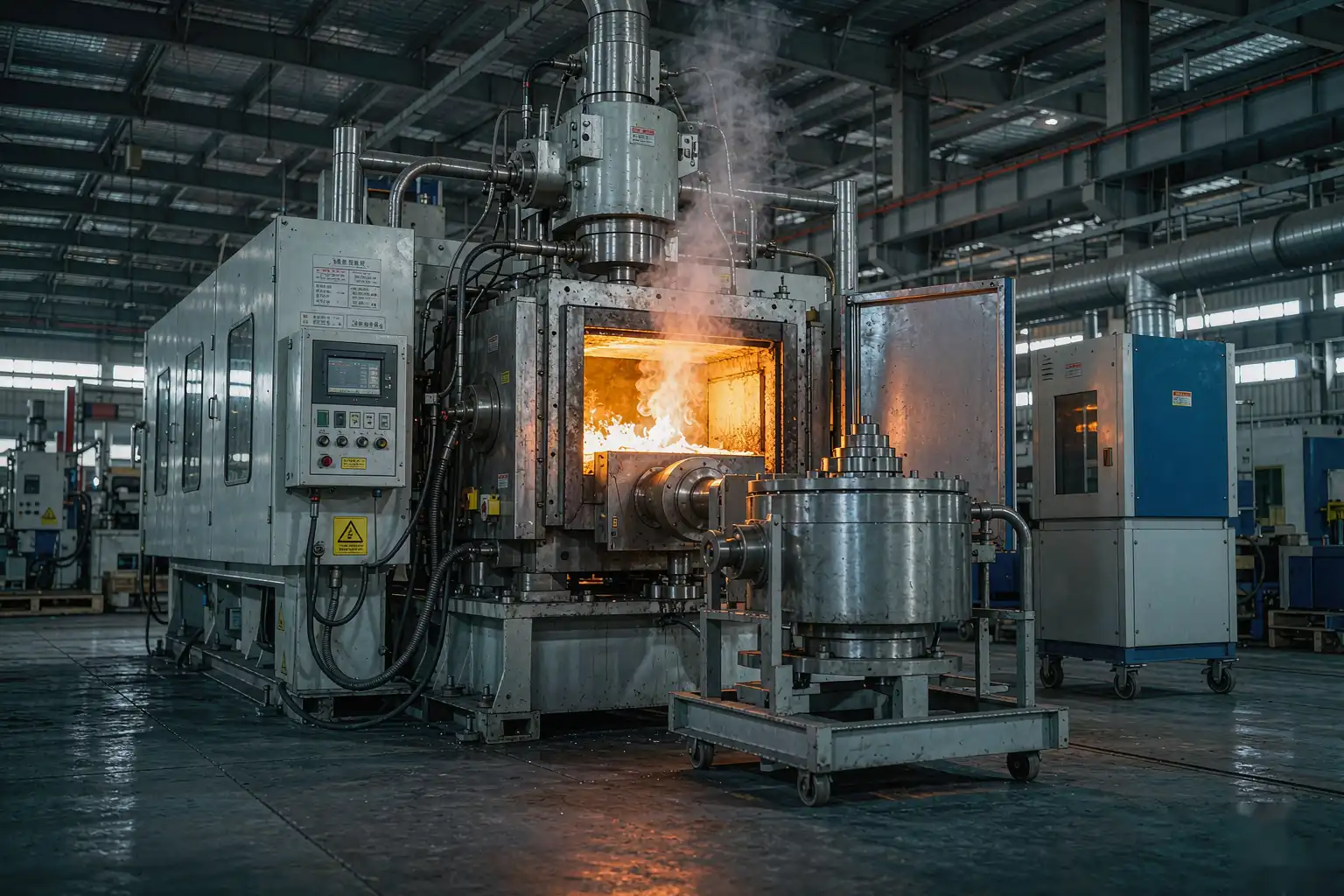
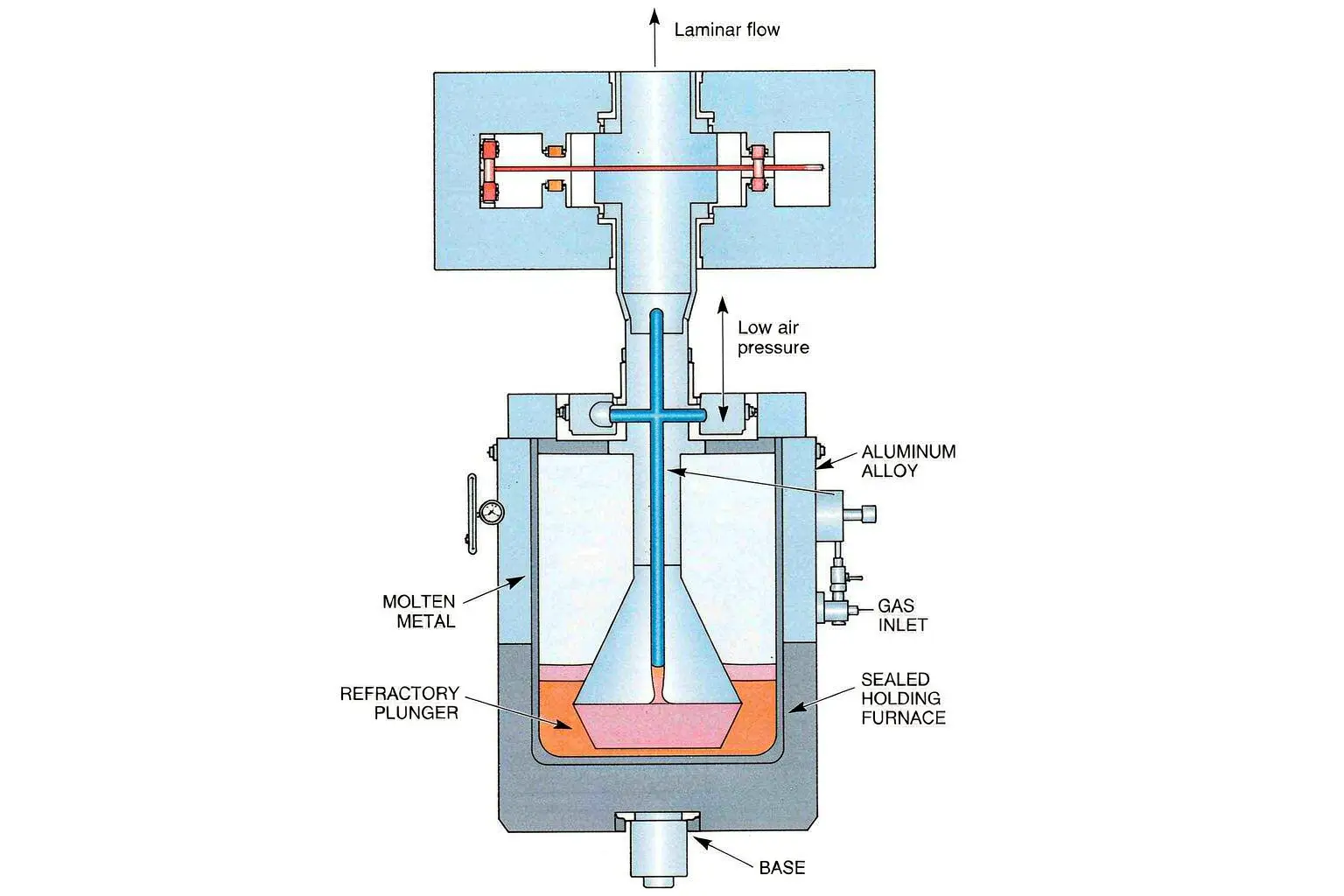
The name explains the method. A sealed furnace holds molten aluminum (or magnesium, or zinc). Compressed air at low pressure — usually around 0.02 to 0.07 MPa, barely a breath more than half a bar — pushes the metal up a refractory stalk and into a chilled steel die. The part fills from the bottom and rises slowly, so it stays laminar and hardly oxidizes.
That single detail is the reason LPDC parts show far fewer gas pores than gravity or sand casting. When the part solidifies, the metal you didn’t use drains back down the stalk. You lose almost nothing to sprue or runner. One furnace can feed a single mold or several at once, which is why the process fits repeatable, mid-volume work so well.
Start With Your Part, Not the Machine
This is the rule we repeat to every first-time buyer. The part dictates the machine, never the other way around.
Alloy and Part Size
LPDC does its best work with aluminum (A356, ADC12), magnesium, and certain zinc alloys. If your component weighs from about 0.1 kg up to 30 kg and you’re running hundreds to tens of thousands of pieces a month, you’re squarely in the sweet spot. Beyond that range, high-pressure die casting or squeeze casting usually takes over. If you’re still deciding on alloy and tolerances, our notes on custom zinc die cast parts walk through Zamak selection and DFM rules that apply here too.
Wall Thickness and Geometry
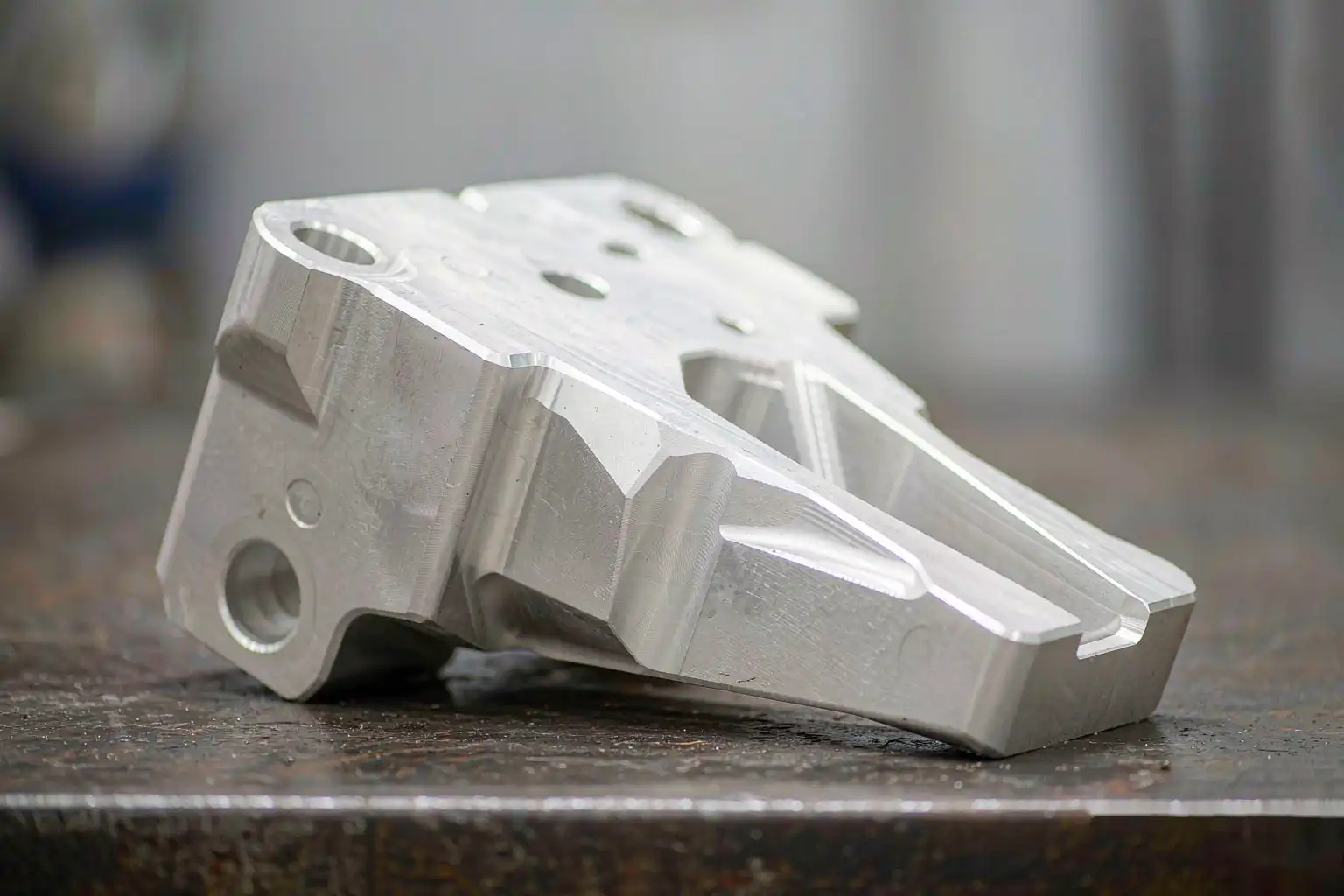
Thin, clean walls between 1.5 and 3 mm with tight tolerances are where this process earns its keep — wheel hubs, cylinder heads, faucet bodies, structural brackets. If your part is a solid 50 mm block, you’re paying for a method you don’t need, and a simpler gravity or sand route would serve you better.
The Specs That Decide Whether It Fits Your Shop
Furnace Capacity and Refill Method
Match furnace size to your shot weight plus a comfortable margin, not to the biggest part you’ll ever make. A furnace that’s too large holds more molten metal than you’ll use, burns more energy, and oxidizes faster. Check how the furnace refills: a side-well or holding furnace that lets you top up without stopping production is worth more on a two-shift line than a spec sheet number.
Platen and Mold-Station Layout
Measure your die footprint against the platen, then add room for cooling lines, ejectors, and the stalk connection. If you plan to run several molds off one furnace, confirm the station spacing and rotation scheme — a four-station rotary table and four fixed stations are different animals in floor space and labor.
Clamping and Fill Control
Low pressure means low clamping force, but fill control is where quality lives. Look for a closed-loop pressure profile you can tune per part, not a fixed ramp. The ability to adjust the rise rate and holding pressure by recipe is what keeps wall thickness consistent across a 20,000-piece run.
Cooling and Cycle Time
Cycle time is set by how fast the part sheds heat, and that comes down to die cooling design more than machine brand. Well-placed cooling lines and balanced flow can trim seconds off every shot and cut warpage. If you want the detail, our piece on die cooling system design covers line placement and thermal balance in practice.
Manual, Semi-Auto, or Fully Automatic?
A manual cell costs less upfront and suits low volumes or prototype work, but it lives or dies on operator skill. Semi-automatic adds powered clamping and programmable fill, which removes most human error. Fully automatic — robot extraction, integrated cooling, and downstream handling — is the right call once you’re past a few thousand parts a month and can’t afford inconsistent cycle times.
Don’t buy automation you won’t run. A fully automatic line that sits half-idle because your order book doesn’t support it is a worse investment than a semi-auto cell working two shifts flat out.
Where LPDC Beats — and Loses To — High-Pressure Die Casting
Low pressure wins on density and cleanliness for thicker, lower-volume aluminum parts, and it wastes less metal. High-pressure die casting wins on speed and unit cost for thin-wall, high-volume components by the million. Pick LPDC when part integrity and low scrap matter more than raw throughput; pick HPDC when you’re stamping out the same small part all day. Mixing the two up is the most expensive mistake we see.
Three Mistakes That Sink First-Time Buyers
1. Chasing the lowest price per ton. A cheap frame with weak fill control costs you in scrap and rework long before it costs you in purchase price. The number that matters is cost per good part.
2. Ignoring the downstream step. Casting is half the job. The part still needs deburring and surface finishing, and that cell has to keep pace or your beautiful LPDC line backs up into a WIP pile. Plan the robotic deburring and finishing step before you commit, not after.
3. Forgetting the crew. LPDC needs an operator who understands furnace safety and fill recipes. If you don’t have one, budget training into the project from day one, or the machine will run badly no matter how good it is.
A Pre-Quote Checklist
Before you email a supplier, write down:
- Your part’s alloy, weight, and wall thickness
- Monthly volume now and in 18 months
- Available floor space and utilities (power, compressed air, exhaust)
- How the part leaves the cell — handling, trimming, finishing
- Who will run and maintain it, and what training they need
Send that list with a sample part or drawing. A supplier who asks good questions back is worth more than one who quotes instantly.
Frequently Asked Questions
What is the difference between low pressure and high pressure die casting?
Low pressure uses air at roughly 0.02–0.07 MPa to push molten metal up into the die from below, giving dense, clean parts at lower volume. High pressure injects metal at much higher force for thin-wall, high-volume production. LPDC wastes less metal; HPDC is faster per shot.
What alloys can a low pressure die casting machine use?
Primarily aluminum (A356, ADC12), magnesium, and some zinc alloys. It is not suited to ferrous metals or very high-melting-point alloys.
How much does a low pressure die casting machine cost?
Entry semi-automatic cells start in the low six figures and rise with automation, furnace size, and station count. The better question is total cost per good part, which includes scrap, energy, and labor across the run.
Is low pressure die casting good for small batches?
Yes for batches of hundreds to tens of thousands, especially when part integrity matters. For one-off or very low volumes, gravity or sand casting is usually cheaper to set up.
This guide was prepared by the application engineering team at Xiamen Dingzhu Intelligent Equipment Co., Ltd. (DZ Machinery), which designs and commissions deburring, grinding, polishing, and die-casting lines for manufacturers across more than a dozen countries. Specifications above reflect typical LPDC practice; confirm exact parameters against your part and supplier before purchase.
Tags: aluminum die casting, buying, die casting, die casting machine, die casting selection, foundry, high pressure die casting, low pressure die casting, machine selection