

How to Choose a Zinc Die Casting Manufacturer: A Buyer’s Guide
Why Zinc Die Casting Is a Different Decision from Aluminum
Zinc die casting (using Zamak alloys or ZA alloys) has a different set of trade-offs than aluminum:
- Lower melting point (380-420°C vs 660°C for aluminum) means lower energy cost, longer die life, and faster cycle times.
- Higher density (6.6-7.1 g/cm³ vs 2.7 g/cm³ for aluminum) — heavier parts, which is an advantage for “premium feel” applications like bathroom faucets, door hardware, and consumer electronics.
- Superior as-cast surface finish — zinc die castings can be polished to a near-mirror finish and chrome-plated with excellent results. This is why the bathroom hardware industry is dominated by zinc die casting.
- Tighter as-cast tolerances — zinc can hold ±0.03 mm on small features vs ±0.05-0.10 mm for aluminum.
- Higher material cost per kg — zinc is roughly 2-3x more expensive per kg than aluminum, but the smaller part size and faster cycle time often offset this.
A manufacturer that excels at aluminum die casting is not automatically a good zinc die casting manufacturer. The hot-chamber die casting machines used for zinc are different equipment, with different operators, different die steel grades, and different process parameters.
What to Look for in a Zinc Die Casting Manufacturer

1. Hot-Chamber Machine Capacity
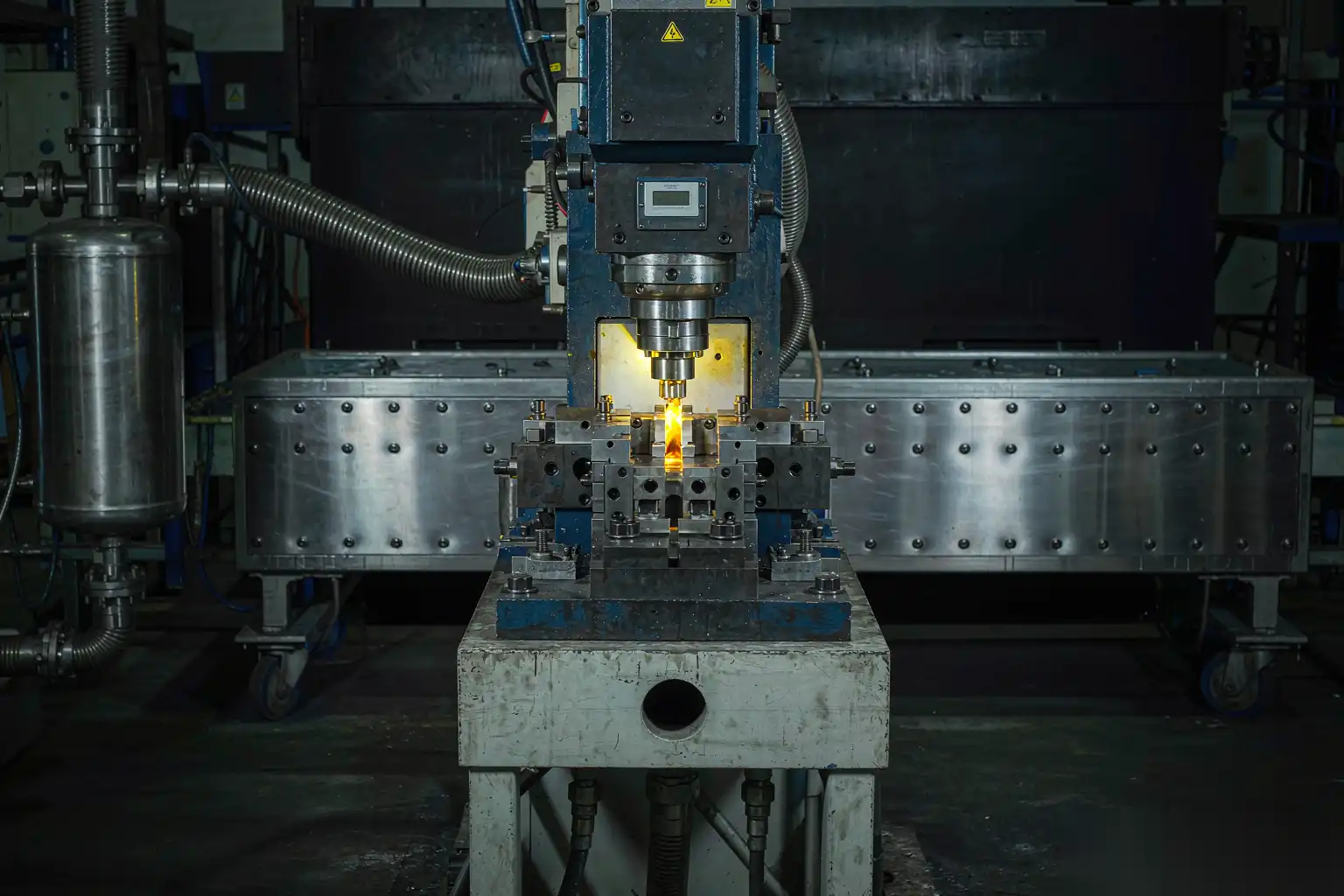
Zinc die casting uses hot-chamber machines (the metal is melted in a furnace integral to the machine), with clamping forces typically 20-800 tons. Confirm:
- Number of hot-chamber machines in the shop
- Tonnage range — your part should fit comfortably in the middle of their range, not at the maximum
- Machine age and condition — machines built after 2010 with modern controls are dramatically more consistent than older machines
- Real-time process monitoring — shot profile, die temperature, hydraulic pressure logged per cycle
A serious zinc die casting shop has at least 8-10 hot-chamber machines and a continuous improvement program on cycle time and yield.
2. Zinc Alloy Experience
The dominant zinc die casting alloys are:
- Zamak 3 (ZnAl4): the workhorse, used for 80%+ of zinc die castings. Excellent castability, good dimensional stability.
- Zamak 5 (ZnAl4Cu1): slightly higher copper for better strength and hardness. Used where wear resistance matters.
- Zamak 7 (ZnAl4Ni): lower impurity levels, better ductility. Used for special applications.
- Zamak 2 (ZnAl4Cu3): hardest Zamak, used for high-stress applications.
- ZA-8 (ZnAl8Cu1): higher aluminum content, better creep resistance, used for structural parts.
- ZA-27 (ZnAl27Cu2): highest aluminum, lightest zinc alloy, used as a structural alternative to cast iron.
A good manufacturer has experience with all of these and can recommend the right alloy for your application. A great manufacturer has ZA-8 or ZA-27 capability (not all do, since they require cold-chamber machines).
3. Tooling Capability
The die for zinc die casting can be:
- Solid tool steel (H13): standard for production. Die life 1M+ shots typical.
- Pre-hardened steel: lower cost, shorter life (200-500K shots), used for medium volume.
- Aluminum die: used for prototypes only (5-10K shots).
- 3D-printed steel insert dies: emerging for low-volume production (10-50K shots).
A manufacturer with strong in-house tooling (or a partner tool shop with 20+ years of die experience) is far more capable than one that outsources tool design and build.
4. In-House Finishing
Zinc die castings almost always need finishing — deburring, grinding, polishing, plating, painting. A manufacturer with in-house finishing is dramatically easier to work with than one that subcontracts it. The cycle time is shorter, the quality is more consistent, and the accountability is clearer.
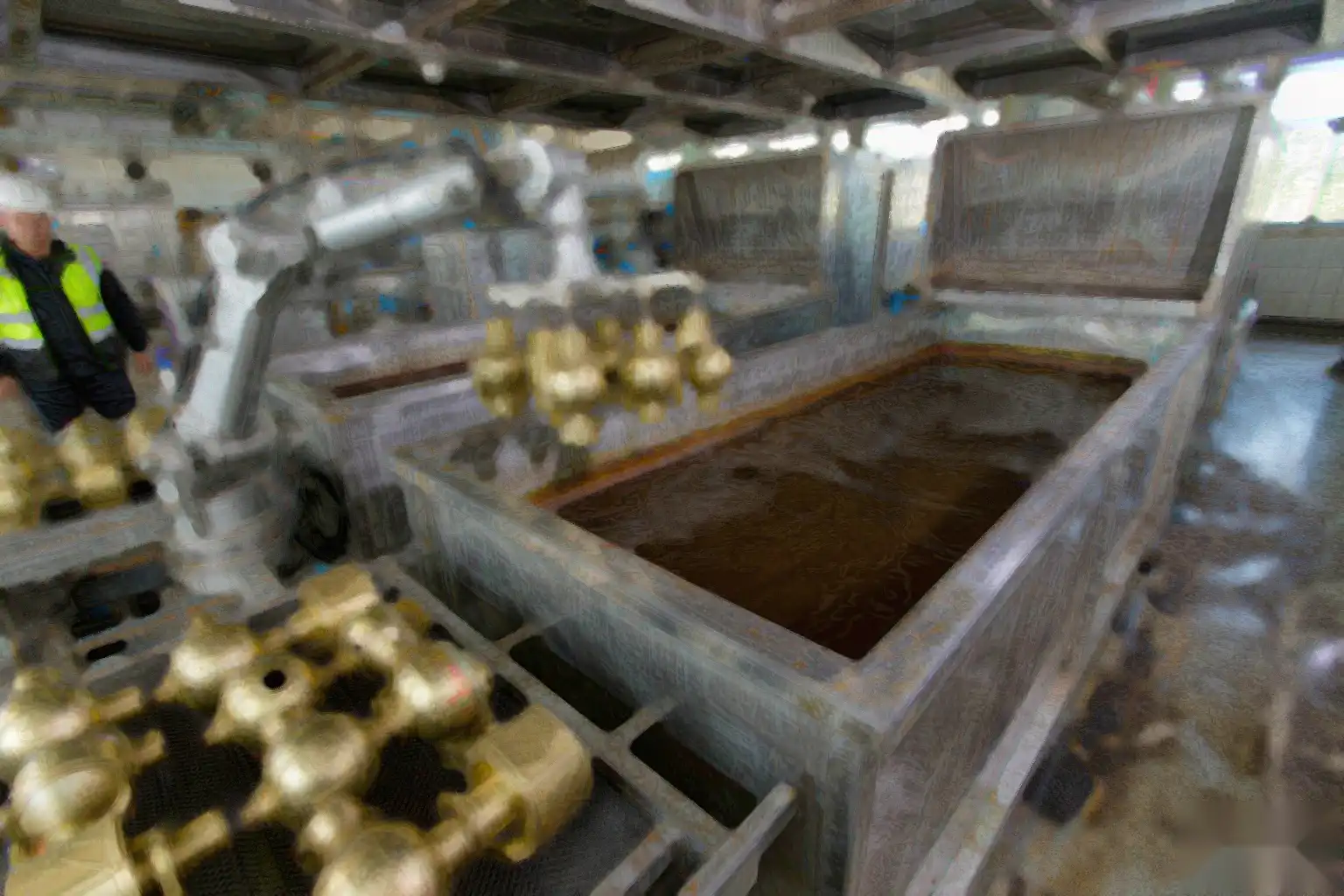
For plating (chrome, nickel, brass) — a critical finish for bathroom and decorative hardware — confirm that the plating line is in-house and automated, not a manual dipping line.
5. Quality Systems
Minimum expectations:
- ISO 9001 for general manufacturing
- IATF 16949 for automotive parts
- ISO 14001 for environmental management (important for European OEMs)
- Specific certifications for your industry: NSF/ANSI 61 for potable water contact, EN 16771 for sanitary ware, etc.
A serious manufacturer can show you their quality manual, their calibration records, and their capability study data for parts similar to yours.
Questions to Ask a Prospective Zinc Die Casting Manufacturer
Prepare these questions for the supplier qualification meeting:
- What percentage of your production is zinc die casting vs aluminum? (Want >60% zinc for a zinc-focused project.)
- How many hot-chamber machines do you run, and what tonnage range? (Sanity check against your part size.)
- What is the largest zinc die casting you have produced? (Confirms capability for your part size.)
- Can you show me a similar part you have produced, with the material certification? (Real evidence, not just words.)
- What alloys do you run regularly? (Want Zamak 3/5 minimum, ZA-8/27 for high-spec.)
- Where is your die tooling made — in-house or outsourced? (In-house is better, but not essential if the partner is qualified.)
- What is your typical die lead time for a new project? (6-10 weeks is normal; much faster suggests cutting corners.)
- What finishing capabilities do you have in-house? (Deburring, grinding, polishing, plating, painting.)
- What is your typical first-pass yield on a new part during T1-T2 sampling? (Want >85%; below that, the process is unstable.)
- Can you provide customer references in my industry? (Will they actually give you names?)
If a supplier cannot answer these clearly and with documentation, they are either too small for your project or they are not really a manufacturer.
Red Flags When Choosing a Zinc Die Casting Manufacturer
In our experience, the most common warning signs:
- The “manufacturer” is a trading company. They will broker your work to the lowest bidder. Check the business license: does the company own the factory, or are they a trading company with a “cooperative factory”?
- No in-house hot-chamber machines. If they outsource the casting itself, you have no control over quality. Demand that the casting be done on equipment the company owns.
- Aggressive pricing on first quote. If the price is 30%+ below competitors, something is missing — wrong alloy, no finishing included, low-quality die steel, or the order will be brokered.
- No material certifications provided. A serious manufacturer provides heat-by-heat alloy certification from the smelter (from an established international alloy producer).
- No process capability data. Cpk studies, first-pass yield data, scrap rates — all of this should be available.
- Pushback on third-party inspection. A good supplier welcomes independent inspection. A bad one makes excuses.
- No track record in your industry. Switching from automotive to sanitary ware, or from consumer electronics to industrial, is not trivial. Look for relevant experience.
The Site Visit — What to Look for in Person
If you can visit the supplier (and you should for any serious sourcing decision), the on-site audit covers:
- Hot-chamber machine area: cleanliness, organization, machine age, operator safety practices. Look for evidence of preventive maintenance (clean filters, no leaks, organized spare parts).
- Die storage area: dies should be stored in a climate-controlled, organized space with clear identification. A messy die storage area is a red flag.
- Alloy storage and handling: zinc alloy ingots should be stored dry, with documented incoming material inspection.
- Finishing area: deburring, grinding, polishing, plating, painting. Look for worker safety (zinc plating involves caustic chemicals), environmental controls, and quality inspection.
- Quality lab: CMM, surface profilometer, XRF for alloy verification, salt spray test chamber for plating samples, pull test for plating adhesion.
- Warehouse and shipping: how are finished parts stored, packaged, and protected? Are FIFO principles followed?
- Management interviews: meet the key people — general manager, quality manager, tooling manager, process engineer. Are they technically competent? Do they have authority to make decisions?
A 1-day on-site audit tells you more than 10 RFQ responses. If the supplier is in a different time zone, the visit is non-negotiable.
Cost Drivers and What to Negotiate
For a typical zinc die casting project, the cost structure is:
- Material (zinc alloy): 30-45% of cost.
- Casting (machine + labor + overhead): 20-30%.
- Finishing (plating, polishing, painting): 20-35% — a major share, especially for decorative parts.
- Tooling amortization: 5-15% (depends on volume).
- Quality + inspection: 3-5%.
- Packaging + logistics: 3-5%.
Tooling cost for a typical zinc die casting:
- Single-cavity simple die: $5,000-$15,000 from China, $15,000-$40,000 from North America/Europe.
- Multi-cavity die with slides and lifters: $25,000-$80,000+ from China, $60,000-$200,000+ from Western suppliers.
Negotiation is reasonable on:
- Tooling cost — get 2-3 quotes; competitive tooling market.
- Per-part price at higher volumes — suppliers will reduce price for volume commitments.
- Payment terms — net 30 or net 60 is often negotiable for established customers.
Negotiation is not reasonable on:
- Alloy specification — never accept a substitution to a cheaper alloy to save 5%.
- Quality inspection — never accept a reduction in inspection to save cost.
- Tooling ownership — your tooling, your property, full stop.
Building a Long-Term Relationship
The best zinc die casting projects are long-term partnerships, not transactional. Ways to invest in the relationship:
- Quarterly business reviews — review quality, cost, delivery, and continuous improvement.
- Joint engineering projects — invite the supplier’s engineers to your design reviews early. Their input is most valuable at the design stage, not after tooling.
- Open-book costing — share your target cost and ask them to suggest cost-down opportunities.
- Predictable volume forecasts — give the supplier visibility into your 6-12 month demand so they can plan capacity and raw material.
- Fair treatment when problems occur — root cause analysis, fair allocation of cost (design defect vs manufacturing defect), no punishment for raising quality issues.
A good zinc die casting manufacturer is a long-term asset. Treat them as such.
FAQ About Choosing a Zinc Die Casting Manufacturer
What is the minimum order quantity for zinc die casting?
There is no technical minimum, but tooling cost needs to be amortized. For Zamak die casting, the breakeven against machined parts is typically 2,000-5,000 parts per year. For ZA-8 or ZA-27, the breakeven is lower because of the strength advantage.
How long does a new zinc die casting project take from order to first article?
Plan for 6-10 weeks: 1-2 weeks for DFM, 4-6 weeks for die fabrication, 1-2 weeks for sampling and T1. Add 2-4 weeks for plating and finishing setup.
Is Chinese zinc die casting quality acceptable for premium products?
Yes — for bathroom faucets, door hardware, and consumer electronics, Chinese zinc die casting is the global standard. Many leading global bathroom and hardware brands source from established Chinese zinc die casting manufacturers. The quality is excellent when you choose the right manufacturer.
What is the difference between Zamak and ZA alloys?
Zamak alloys have 4% aluminum and small amounts of copper, magnesium, or nickel. They are designed for hot-chamber die casting and are the dominant alloys for decorative and general-purpose parts. ZA alloys have 8-27% aluminum, are stronger and harder, and are used for structural applications. ZA-8 and ZA-27 require cold-chamber machines (different equipment).
A Final Recommendation
If you are choosing a zinc die casting manufacturer, the framework above will help you separate serious manufacturers from brokers and trading companies. The most important step is the on-site visit — quality, capability, and culture are visible in a way that no email exchange can replicate.
At DZ Smart Manufacturing, we work with zinc die casting foundries worldwide on the finishing side — robotic polishing, deburring, and pre-plate surface preparation. If you are evaluating a zinc die casting supplier and want an independent view of their finishing capability, send us a sample part and we will tell you what we see in the surface finish, the flash, and the parting line quality.
See how our automated finishing integrates with zinc die casting production