

Custom Aluminum Die Casting: A Complete Guide for OEM Project Teams
Why Custom Aluminum Die Casting Is the Default for Complex Metal Parts
When a part is complex (internal features, thin walls, tight tolerances), high volume (typically 1,000+ pieces per year), and weight-sensitive, custom aluminum die casting is almost always the most cost-effective process. Compared to machining from billet, die casting produces near-net shape in seconds, then trims and finishes the part. Compared to plastic injection molding, aluminum gives far better thermal conductivity, structural rigidity, and customer perception of “premium metal”.
The word “custom” matters. It means your supplier is building a dedicated die (steel tool) for your part geometry, not picking a part from a catalog. That capital commitment drives everything else: DFM review, alloy choice, sampling loop, lifecycle volume commitment.
Step 1: The Design Brief — What Your Supplier Needs From You on Day One
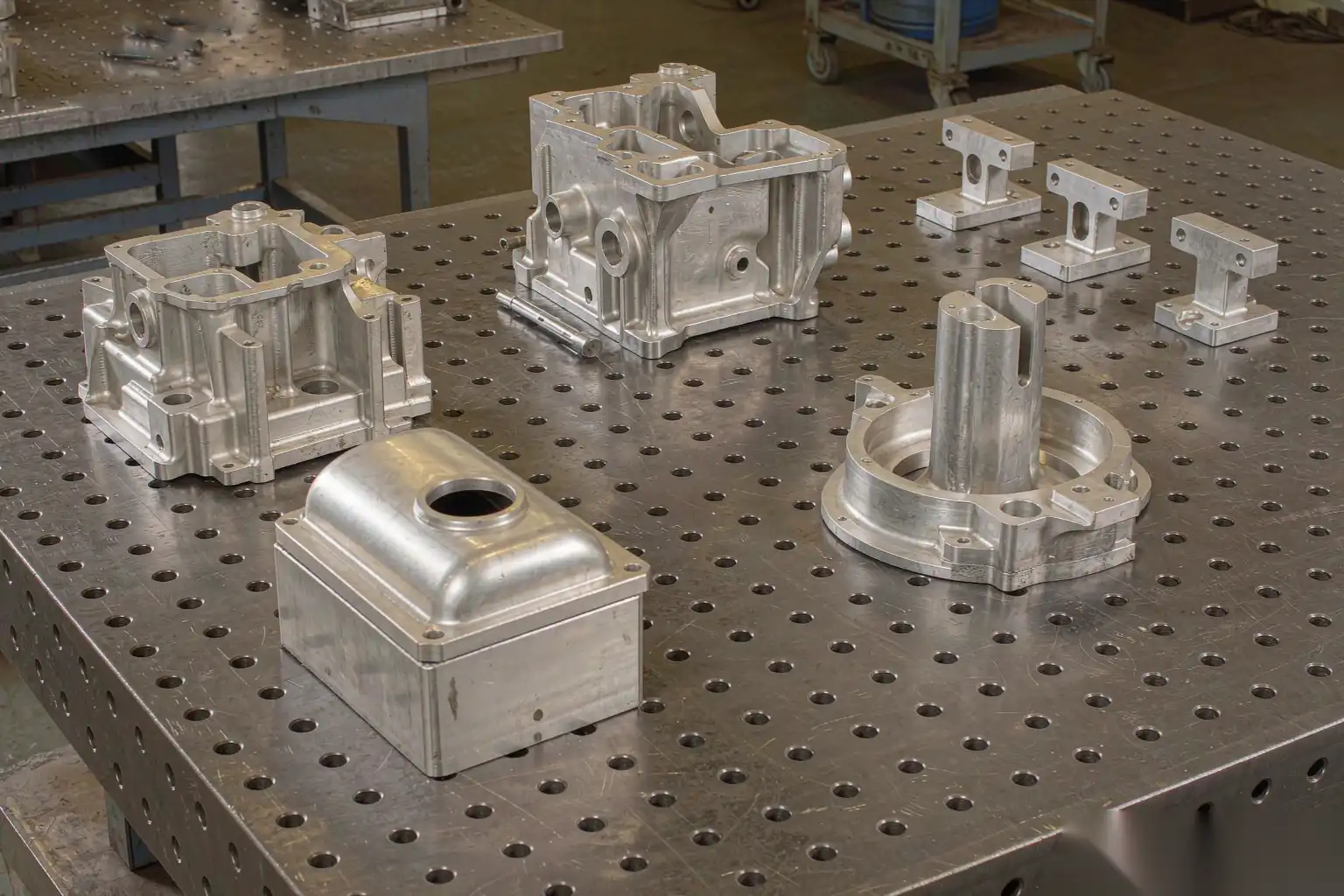
Before any geometry is discussed, your die casting partner needs four documents:
- A 3D model in STEP, IGES, or X_T format. Native CAD (SolidWorks, NX, Creo) is better because it lets the supplier interrogate draft angles, fillet radii and undercut features.
- A 2D drawing with critical dimensions, GD&T datums, surface finish callouts, and any cosmetic or functional notes.
- Annual volume forecast — for low-volume prototyping you may want a soft tool or 3D-printed die; for high-volume production you need hardened tool steel.
- Performance requirements — mechanical loads, thermal environment, corrosion exposure, regulatory needs (RoHS, REACH, food-grade, automotive IATF 16949).
If you can only provide items 1 and 2, a good supplier can still help — but expect more back-and-forth.
Step 2: Design for Manufacturability (DFM) Review
This is the highest-value 20 hours in the whole project. A proper DFM review examines:
- Wall thickness uniformity. Target 2-4 mm for most alloys. Variation over 1.5x between adjacent sections causes shrinkage porosity.
- Draft angles. 1° to 3° on all draw surfaces, more for deep cavities. Missing draft means the part will drag, warp, or scuff.
- Fillets and radii. Sharp internal corners are stress concentrators and die life killers. Specify R0.5 minimum on internal corners, R1.0 where geometry allows.
- Undercuts. If the design requires side-action cores or lifters, the die cost roughly doubles and cycle time increases. Evaluate if the feature is really needed.
- Parting line location. The die designer chooses this, but you should see the proposal and approve it. The parting line affects flash, trim quality, and cosmetic appearance.
- Gating and overflow placement. Affects whether the part fills cleanly or has cold shuts and flow lines.
A good supplier returns a marked-up 3D model with a written DFM report within 5-7 business days. If they do not offer this, find another supplier.
Step 3: Alloy Selection — A380/ADC12 Is the Default, But Not Always the Best
For most custom aluminum die casting projects, the conversation starts and ends with A380 (North America) or ADC12 (Asia/JIS). This is the workhorse alloy: excellent castability, good mechanical properties, well-understood heat treatment behavior, and lowest cost per kg.
But there are cases where a different alloy earns its premium:
- A383 (ADC10+): tighter pressure tightness, used for hydraulic components.
- A384 (ADC12+): better dimensional stability under thermal cycling.
- A390: hypereutectic, very hard, used for engine blocks and wear surfaces.
- A413 (A-S12): excellent pressure tightness, used for pump housings and meter bodies.
- Magnesium-containing alloys (e.g., Magsimal-59): better mechanical properties, lower density, more expensive.
If your part will be welded, anodized to cosmetic standards, or used in marine environments, the alloy choice changes significantly. Discuss with the supplier — but bring data, not opinions.
Step 4: Tooling — Steel Grade, Lifetime Expectation, and Modification Budget
The die is typically H13 tool steel, hardened to 46-50 HRC. For high-volume production (50,000+ parts per year), expect die life of 100,000-300,000 shots before major refurbishment.
Tooling cost varies wildly:
- Single-cavity simple die: $8,000-$25,000 from China, $25,000-$60,000 from North America or Europe.
- Multi-cavity die with slides and lifters: $40,000-$150,000+.
- Prototype die (soft steel or aluminum): $3,000-$10,000, life 1,000-5,000 shots.
Always budget 10-15% of tooling cost for engineering changes (ECs) that come up after first article. Trying to skip ECs causes a cycle of production problems.
Step 5: Sampling — T0, T1, T2, and PPAP
Industry standard sampling progression:
- T0 (first shot): typically 50-200 parts produced on a sampling machine. Used to check geometry and identify gross defects. Expect heavy cosmetic flaws.
- T1 (dimension approval): full dimensional report on 5-10 parts, Cpk analysis on critical dimensions, cosmetic approval on a golden sample.
- T2 (process validation): 300-1,000 parts produced under production conditions, full inspection report.
- PPAP (Production Part Approval Process): required for automotive customers, often accepted for industrial OEM. Includes material certification, dimensional study, appearance approval, and capability indices.
Do not skip T1. Skipping it to save 4 weeks typically costs a quarter when production problems emerge.
Step 6: Surface Finishing and What the Die Cast Part Needs
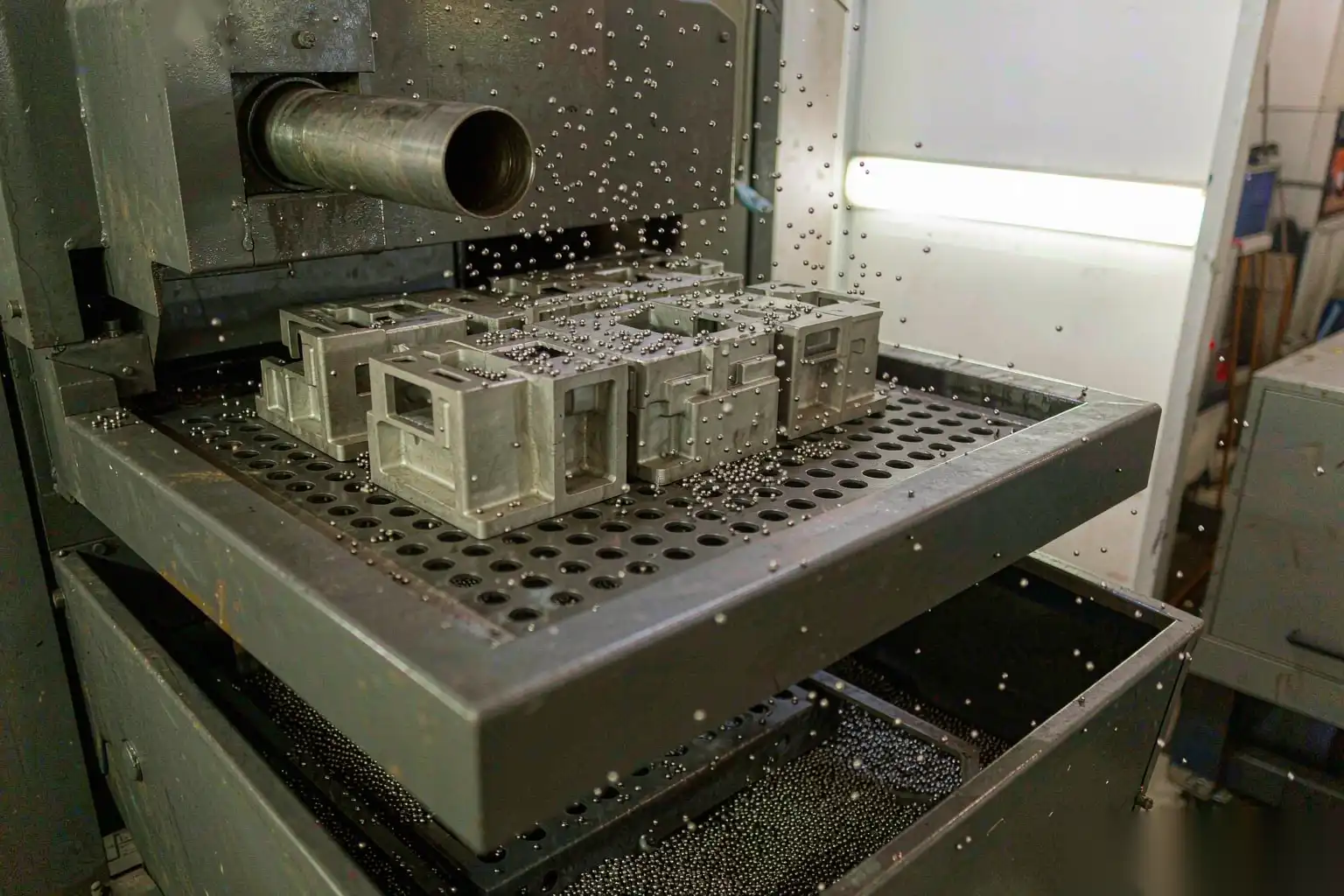
The die cast part comes out with as-cast finish — a characteristic texture from the steel die and any shot blasting or tumbling done at the die. For most custom aluminum die casting projects, you need additional finishing:
- Deburring: every die cast part has flash along the parting line and slide cores. Manual deburring is inconsistent and labor-intensive. Robotic deburring is the new standard.
- Grinding: for critical mating surfaces or assembly features.
- Polishing / buffing: for visible cosmetic parts (lighting, consumer electronics, hardware).
- Shot blasting / bead blasting: for uniform matte texture.
- Anodizing: Type II (decorative) or Type III (hardcoat) for corrosion and wear resistance.
- Powder coating or wet paint: for color and additional corrosion protection.
- Chrome or nickel plating: rarely on aluminum (poor adhesion); usually on zinc die cast parts.
The choice of finishing drives the cost-per-part as much as the casting itself. A visible consumer part might spend 30-40% of its cost in finishing.
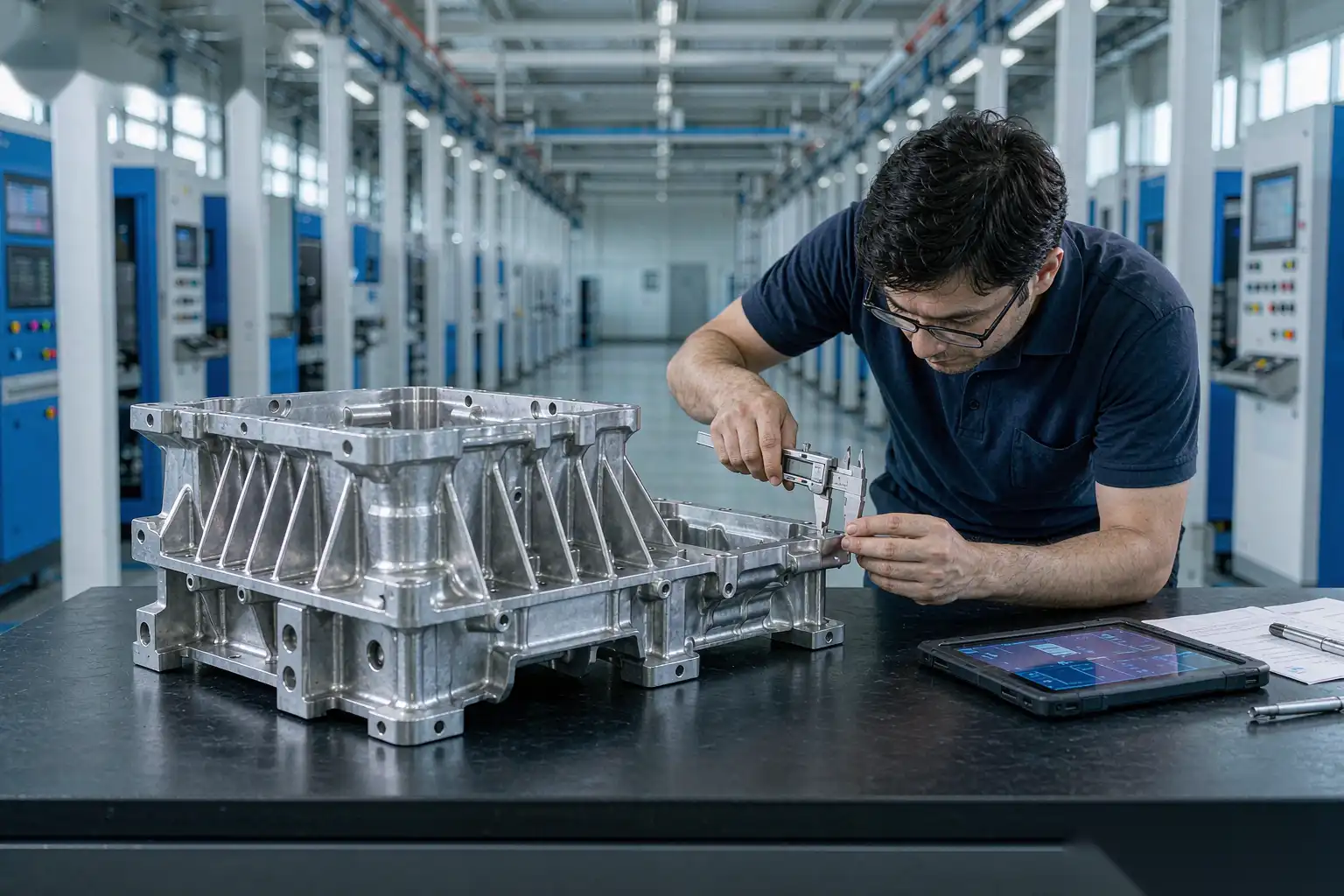
Step 7: Quality Control and What to Audit
A custom aluminum die casting project should have these quality gates:
- Incoming material certification for alloy and any inserts.
- In-process checks at defined cycle counts: dimensional, visual, weight.
- First-off and last-off inspection every shift.
- X-ray or CT scan for critical internal features (porosity detection).
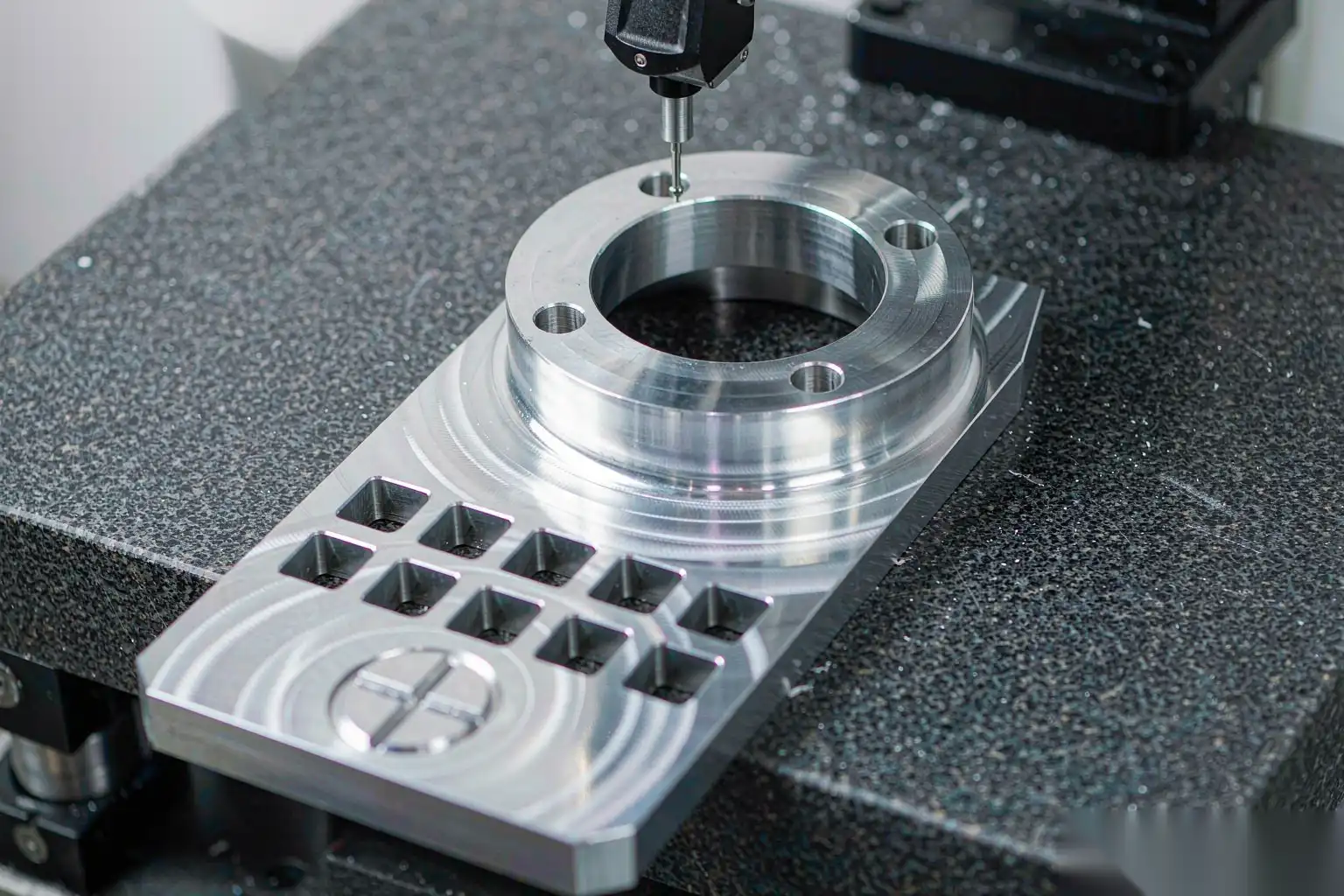
- CMM measurement for first article and capability studies.
- Surface finish measurement for cosmetic parts.
- Tensile and hardness testing for mechanical property validation.
Audit the supplier’s quality lab before placing the order. If they cannot show you a calibrated CMM, a surface profilometer, and an X-ray station, they are not equipped for serious OEM work.
Cost Structure — What Drives the Per-Part Price
For a typical custom aluminum die casting project, the per-part cost is:
- Material (alloy): 30-45% of cost.
- Casting (machine + labor + overhead): 25-35%.
- Finishing (deburr, grind, polish, coat): 15-30%.
- Quality + inspection: 5-10%.
- Packaging + logistics: 3-5%.
Tooling is a separate upfront cost, amortized over the production volume. The breakeven against machining or plastic injection molding is typically around 1,000-3,000 parts per year depending on part complexity.
Common Failure Modes — What Goes Wrong on Custom Projects
In our experience, the most common reasons custom aluminum die casting projects fail or run over budget:
- Unrealistic design tolerances. Tight tolerances on dimensions that do not actually need to be tight. Each tight tolerance adds cost and inspection time.
- Late DFM feedback. Engaging the supplier after the design is frozen, instead of during the design phase.
- Cosmetic standards that fight the process. Specifying “Class A cosmetic surface” on a textured as-cast part is a recipe for endless rework.
- Alloy substitution without communication. A supplier quietly switching from A380 to a cheaper alloy to win the bid.
- Hidden EC costs. Engineering changes billed as “additional services” after the project starts.
A good OEM project manager sees these coming and writes them into the supplier agreement.
Why Project Teams Keep a Finishing Partner Like DZ in the Loop Early
Most custom aluminum die casting projects treat finishing as a late-stage detail: the casting is quoted, the die is ordered, and only then does someone ask who will deburr, grind, and polish forty thousand parts a month. That sequencing is backwards, and it is expensive. Finishing scope drives per-part cost as much as the casting itself, and finishing feasibility often depends on decisions made during DFM — gate locations that leave accessible flash, parting lines placed on non-cosmetic surfaces, draft angles that allow robotic part presentation.
This is where an early conversation with a dedicated finishing partner changes the economics. At DZ Machinery, we build robotic deburring, grinding, and polishing cells for die casting plants, and the projects that go best are the ones where we see the part drawing before the die is cut. We can tell a design engineer that a particular boss will create flash in a corner no robot can reach, or that a proposed cosmetic surface will need two polishing operations instead of one, and that feedback lands while changing the design still costs nothing.
For project teams, the practical move is simple: add one meeting to the DFM phase with the finishing partner at the table alongside the die caster. Bring the 3D model, the cosmetic surface map, and the annual volume. In ninety minutes you will typically learn where the real finishing cost sits, which tolerances protect the finishing process, and whether a robotic cell or a hybrid manual cell matches your volume. That meeting routinely saves more than its entire project allocation in avoided rework, and it removes the most common surprise in custom die casting programs — discovering at T2 that the parts cast beautifully but cannot be finished economically at rate.
FAQ About Custom Aluminum Die Casting
How long does a custom aluminum die casting project take from design to first article?
For a typical part of moderate complexity, plan for 6-10 weeks: 1-2 weeks for DFM, 4-6 weeks for die fabrication, 1-2 weeks for sampling and T1 approval. Add 2-4 weeks for finishing and assembly if applicable.
What is the minimum order quantity for custom aluminum die casting?
There is no technical minimum, but the economics require amortization of tooling. Below 1,000 parts per year, consider machined prototypes or 3D-printed metal parts. Above 5,000 parts per year, die casting is almost always cheapest.
Can custom aluminum die castings be welded or assembled to other parts?
Yes. A380 welds well with TIG or MIG using 4043 or 5356 filler. Avoid welding A390 (high silicon, brittle). For assemblies, use mechanical fasteners, threaded inserts, or adhesive bonding.
Is custom aluminum die casting suitable for food-contact or medical applications?
Yes, with the right alloy and surface treatment. A380 and A413 are both FDA-compliant for food contact when properly finished. Medical applications typically require validated surface treatments (anodizing, passivation) and traceability documentation.
Bringing It All Together
A custom aluminum die casting project succeeds when the OEM engineering team and the die casting supplier treat the early DFM and sampling phases as a shared investment, not a transactional cost. The right partner will return a marked-up model, propose alloy and finish options, and tell you honestly which tolerances are realistic.
At DZ Smart Manufacturing, we focus on the downstream side of this process — robotic deburring, grinding and polishing cells that turn cast parts into finished components consistently. If you are planning a custom aluminum die casting project and want a second opinion on the finishing scope, tooling lifetime assumptions, or supplier evaluation criteria, our engineering team can review your drawings and share a realistic cost and timeline model.
See how our robotic finishing cells integrate with die casting production lines