

Aluminum Die Casting for Solar Components: Brackets, Housings and Corrosion
Solar hardware lives outside for twenty-five years. Mounting brackets, tracker joints, and inverter housings sit through coastal salt spray, desert UV, and freeze-thaw cycles, and the owner expects them to hold torque and seal integrity the whole time. Aluminum die casting is a strong fit for many of these parts because it gives a stiff, net-shape component at a unit cost that survives the volume and the price pressure of the solar market. This article covers which solar parts suit die casting, how corrosion exposure drives alloy and coating choice, the volume economics and repeatability that make the process win, the finish needed for long outdoor life, and how robotic deburring handles the high-volume bracket families.
Which solar parts suit die casting
Not every solar component should be cast. Die casting wins where the part is a stiff structural or protective shape produced in high volume, and loses where it is a thin conductive path or a precision optical element. The parts that fit:
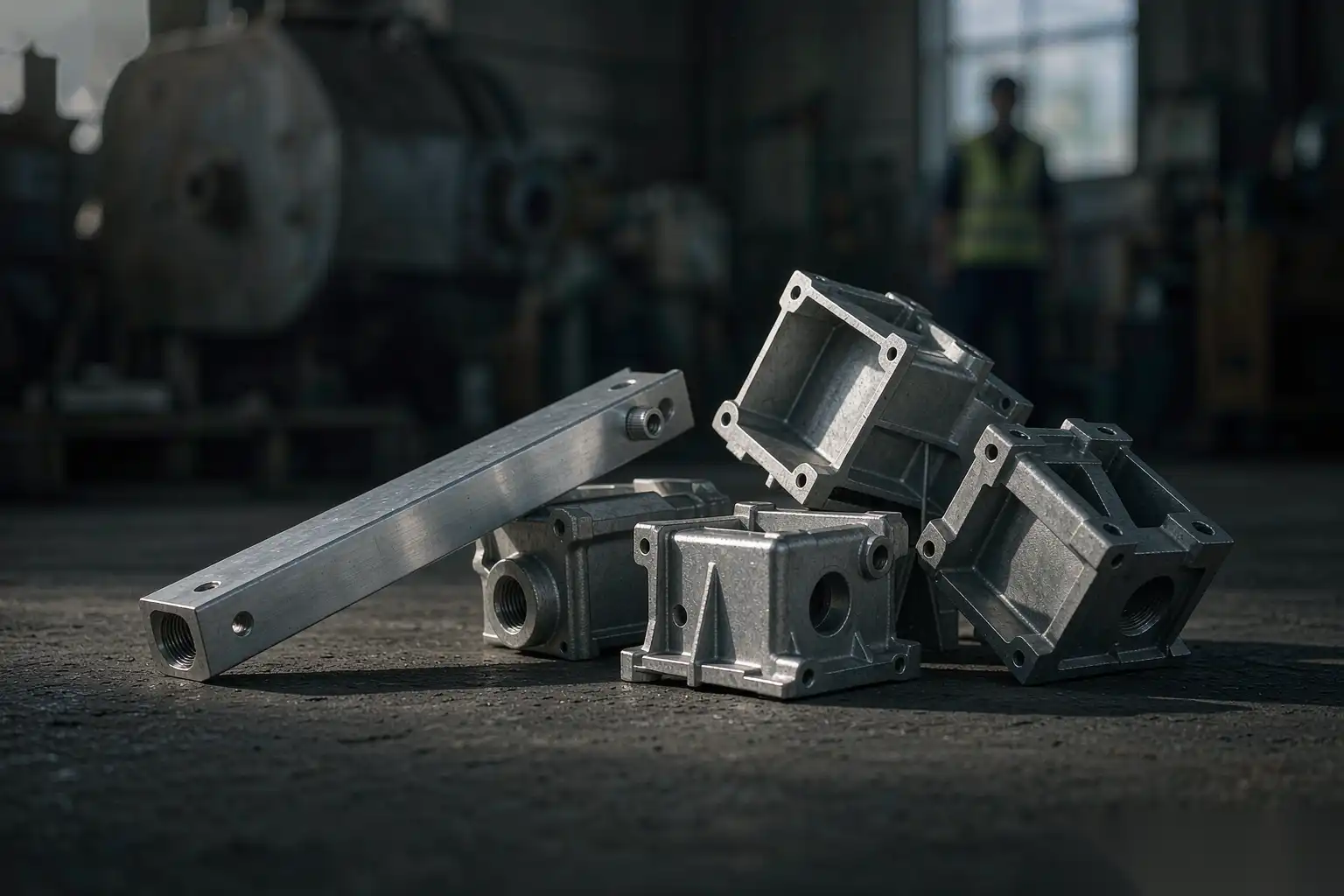
- Mounting brackets and rail clamps. These carry static and wind load, need consistent geometry across millions of units, and tolerate the dimensional band die casting delivers. A die cast bracket replaces a welded or stamped assembly with one net-shape part and fewer fasteners.
- Tracker joints and pivots. Single-axis trackers need a rotating joint that holds position under load for decades. Die cast housings and yokes give the stiffness and the bearing seat in one piece.
- Inverter and optimizer housings. The enclosure must shield, mount, and protect electronics. Die casting delivers the wall stiffness, the mounting bosses, and the gasket seat, and can integrate heat-sinking fins on the same shot.
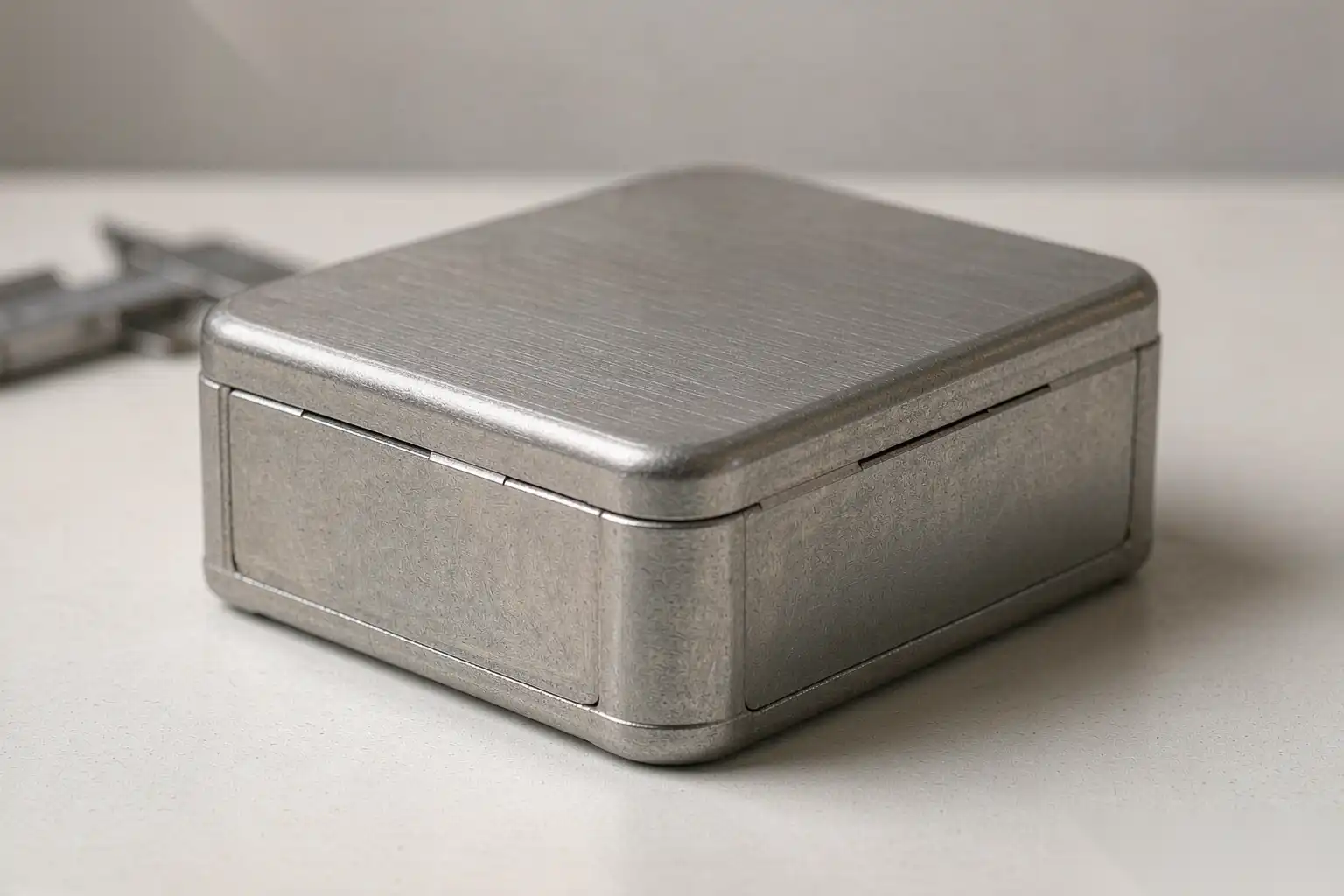
- Junction boxes and combiner enclosures. Weatherproof bodies with threaded inserts and cable entries are natural die cast parts, especially where the volume justifies the tool.
- Pole and foundation hardware. Anchor plates, adapter collars, and interface plates benefit from the isotropy and stiffness of a cast aluminum part over a fabricated one.
Parts that do not fit as well: things requiring hermetic密封 at the micron level without a gasket, thin busbars and conductive paths, and anything whose annual volume is too low to amortize tooling. For those, extrusion, stamping, or CNC from plate often stays cheaper. The aluminum die casting applications by industry reference lists where the process fits across sectors, and solar sits firmly in the structural-and-enclosure cluster.
Corrosion exposure drives alloy and coating choice

A solar bracket in a desert sees a different threat than one on a coastal roof, and the alloy and finish decision should start from the exposure class, not from a default material.
- Inland, low-pollution sites. Moderate humidity and UV. A standard cast alloy with a chromate-free conversion coating and a powder topcoat gives decades of life. The coating is doing the protection; the alloy choice is about castability and strength.
- Coastal and offshore sites. Salt-laden air drives pitting and galvanic corrosion, especially where the aluminum meets stainless hardware. Here the design must avoid crevices that trap salt, the coating system must be thicker and more defect-free, and the alloy selection weighs corrosion resistance alongside strength.
- Industrial and agricultural sites. Pollutants and fertilizers accelerate corrosion through a different chemistry, and the coating must resist chemical attack as well as salt.
- High-UV desert sites. UV alone is less corrosive to aluminum than salt, but it destroys organic coatings, so the topcoat must be UV-stable or the substrate pits where the coating cracks.
Alloy choice is a trade between castability, strength, and corrosion behavior. The common workhorse casting alloys give good fluidity and pressure tightness; variants with tighter chemistry control improve corrosion resistance and toughness for structural brackets. The choice is made per part: a non-load decorative cover can use the easier-flowing alloy, while a tracker yoke under cyclic load uses the grade that holds properties after decades of thermal cycling. The aluminum die casting cost factors guide shows how alloy premium and coating system flow into unit cost, and why the cheapest alloy is rarely the cheapest part over a 25-year life.
Galvanic care matters. Pairing cast aluminum with stainless or copper hardware at a coastal site invites galvanic corrosion of the aluminum. Design remedies include insulating washers, controlled coating continuity at the joint, and keeping the aluminum noble-path protected by the coating rather than relying on the metal itself.
Volume economics and repeatability
Solar is a volume game with brutal unit-cost pressure. Die casting earns its place on two axes: per-piece cost at scale, and repeatability across millions of identical units.
The economics break down as:
- Tooling amortized over volume. A die for a bracket family costs a fixed sum regardless of whether you make 50,000 or 5,000,000. At 2,000,000 pieces the tool cost per piece is a few cents; at 20,000 it is dollars. Solar volumes usually justify the tool many times over.
- Cycle time per piece. A bracket shot runs in 30 to 90 seconds depending on size, and a multi-cavity die doubles or triples output per cycle. The marginal cost of the metal plus the machine minute is low, which is what the solar market rewards.
- Scrap and yield. Die casting yield on a well-run bracket sits high because the process is near net shape; the cost of machining away excess is small. A disciplined yield and scrap-reduction program is what keeps the unit cost where the bid assumed it, because scrap is the silent budget killer on thin-margin solar parts.
- Repeatability. Every shot is the same geometry within the die’s wear band, so a tracker joint that fits on piece one fits on piece two million. This repeatability is what lets the installer use the same torque spec across a whole field without sorting parts.
The table below compares a die cast bracket against a fabricated stamped-and-welded equivalent at a representative solar volume, to show where the economics land.
| Factor | Die cast bracket | Fabricated bracket | Effect |
|---|---|---|---|
| Tooling cost | 18,000 to 40,000 USD | 3,000 to 8,000 USD (tooling plus fixtures) | Cast front-loads cost |
| Piece cost at 1,000,000/yr | 0.55 to 0.95 USD | 1.10 to 1.80 USD | Cast wins at volume |
| Fasteners and welds | 1 to 2 | 4 to 8 | Fewer failure points |
| Dimensional repeatability | High, die-controlled | Variable, weld-dependent | Cast more consistent |
| Secondary operations | Deburr, coat | Deburr, weld, coat, straighten | Cast fewer steps |
| Break-even volume | 80,000 to 150,000/yr | below that, fabricated leads | Volume is the switch |
The break-even is the number to watch. Below roughly 100,000 pieces per year a fabricated or extruded part often stays cheaper because it avoids tool amortization; above it, die casting pulls ahead and the gap widens with volume. Solar tracker and mounting programs routinely clear that bar, which is why cast brackets dominate large fields.
Finish for long outdoor life
The cast part is only as durable as its finish, and the finish system for solar is a stack, not a single coating. We specify it from the substrate out.
- Surface preparation. The casting is deburred and cleaned to remove flash, gate stubs, and die lube residue, because every contaminant becomes a coating defect that becomes a corrosion site. Robotic deburring gives the consistent edge that manual finishing cannot hold across a million pieces.
- Conversion coating. A chromate-free layer (commonly a zirconium or trivalent system) provides the adhesion base and a first corrosion barrier. The layer must be continuous; a skip at a sharp edge is the first place salt finds the aluminum.
- Topcoat. Powder coating is the default for solar because it gives a thick, UV-stable, defect-tolerant film. Film thickness is controlled to a band, typically 60 to 120 microns depending on exposure class, with coastal sites at the high end.
- Critical edges and threads. Edges and threaded inserts are the weak points. We design the coating process to build film at edges and mask threads so the coating does not fill them, because a coated thread that will not accept a bolt is a field failure.
- Verification. Coating thickness mapping, adhesion cross-cut, and salt-spray testing to a defined hour rating validate the system before production. The salt-spray hour target is set from the exposure class, not from a generic standard.
The finish is where the 25-year life is won or lost. A perfect casting under a porous coating corrodes; a modest casting under a continuous, thick, well-adhered coating survives. The engineering effort belongs in the coating stack and its verification, not just in the casting.
Robotic deburring for high-volume brackets
At solar volumes, finishing the bracket is a throughput problem. Manual deburring of a million brackets per year is a labor and consistency problem: a person cannot hold edge break to 0.2 mm across that count, and labor cost in most markets erodes the casting savings. Robotic deburring is how the cast part keeps its cost advantage at scale.
A DZ Machinery robotic deburring cell for solar brackets uses force-controlled floating spindles so the tool follows the casting variation instead of grinding a fixed path that either misses flash or cuts into the part. The relevant engineering points:
- Edge break consistency. The force feedback holds the contact pressure so every bracket leaves with the same edge radius, which matters because a sharp edge cuts the coating and a heavy edge wastes material. We hold edge break within a tight band part to part.
- Gate and parting-line removal. The gate stub and the parting-line flash are the two features that must disappear for coating to adhere and for the part to seat. The cell removes both without opening the substrate pit that would later corrode.
- Throughput matched to the casting line. A bracket cell is sized so its hourly output meets or exceeds the die output, avoiding a finishing bottleneck that forces inventory. Multi-station rotary tables let load and unload overlap the grind cycle.
- Consumable control. Belts and wheels are consumed predictably at volume; the cell tracks abrasive runtime and signals change before quality drifts, which is what keeps the millionth bracket identical to the first.
- Integration with coating. The deburred part feeds the conversion coat and powder line clean and consistent, so the coating step is not fighting residual flash. The how to deburr aluminum die castings with automation guide details the cell configuration and the force-control tuning we use.
The reason this matters for solar specifically is the volume and the exposure. A bracket with a missed flash spot looks fine at shipment and corrodes at year three on a roof where replacement costs more than the part. Robotic deburring removes the human variation that causes those misses, which is why we treat it as part of the corrosion strategy, not just a cost step.
Design rules that make solar castings succeed
A few design habits separate a solar casting that runs clean for decades from one that fights the process. We recommend these to customers at the quote stage, because changing them after tooling is expensive.
- Generous draft and radii. Draft lets the part eject without sticking; radii at brackets and bosses prevent stress cracks and coating thin-spots. The cost of a slightly larger radius is nothing; the cost of a corrosion crack is the whole field.
- Avoid crevices that trap salt. Coastal designs should shed water and not form pockets where brine sits against bare aluminum. This is a geometry decision made before the die is cut.
- Integrate features, do not append them. Mounting bosses, cable clamps, and heat fins belong in the shot rather than welded on after, because every weld is a coating discontinuity and a corrosion start.
- Size wall thickness for fill and stiffness together. Solar brackets need local stiffness at the bolt seat and lightness elsewhere; a uniform wall is heavier and harder to fill than a sectioned one, and a thin-wall design discipline covers how thin you can go while keeping the shot sound.
- Plan the coating datum. Design locating surfaces that survive through deburr and coat so the finished part seats predictably, rather than relying on a face that the coating changes.
These rules are not exotic; they are the discipline that turns a castable part into a 25-year part. Most solar field failures we are asked to diagnose trace back to one of them being skipped for a small upfront saving.
Building the part with DZ
Solar components reward the process that is cheap at volume, repeatable across millions, and durable for decades, and aluminum die casting meets all three when the alloy, the finish, and the deburring are engineered as one system. The decision to cast should be made against the exposure class and the annual volume, not against a default, and the finishing cell should be sized to the casting line so the bracket flows from die to coating without a bottleneck.
DZ Machinery builds the robotic deburring, grinding, and polishing cells that finish high-volume aluminum solar brackets and housings to a consistent edge and surface, and we integrate the cell with the casting and coating line so the part is clean and repeatable before it is protected. Talk to our engineering team about your solar bracket or housing drawings and we will scope the casting-to-finish sequence and the volume economics for your program.