

Die Casting Door Lock and Hardware: Appearance, Strength and Volume
Door locks and architectural hardware sit at the intersection of three demands that most components never face at once: the part is visible every day, it must resist forced entry, and it is consumed in very large volumes with tight cosmetic tolerance. Casting is the natural way to make complex, near-net-shape hardware, but the choice between zinc and aluminum, the surface route to a decorative finish, and the strength margin you design in all change depending on whether the part is a lever, a cylinder body, an escutcheon, a strike plate, or a multi-point locking shell. This article walks through how we at DZ Smart Manufacturing decide those trade-offs for lock and hardware producers running thousands to millions of pieces per year.
Which lock and hardware parts actually suit die casting
Not every part of a lockset should be die cast. The decision hinges on geometry complexity, load path, and whether the surface stays visible. We group hardware into three buckets.
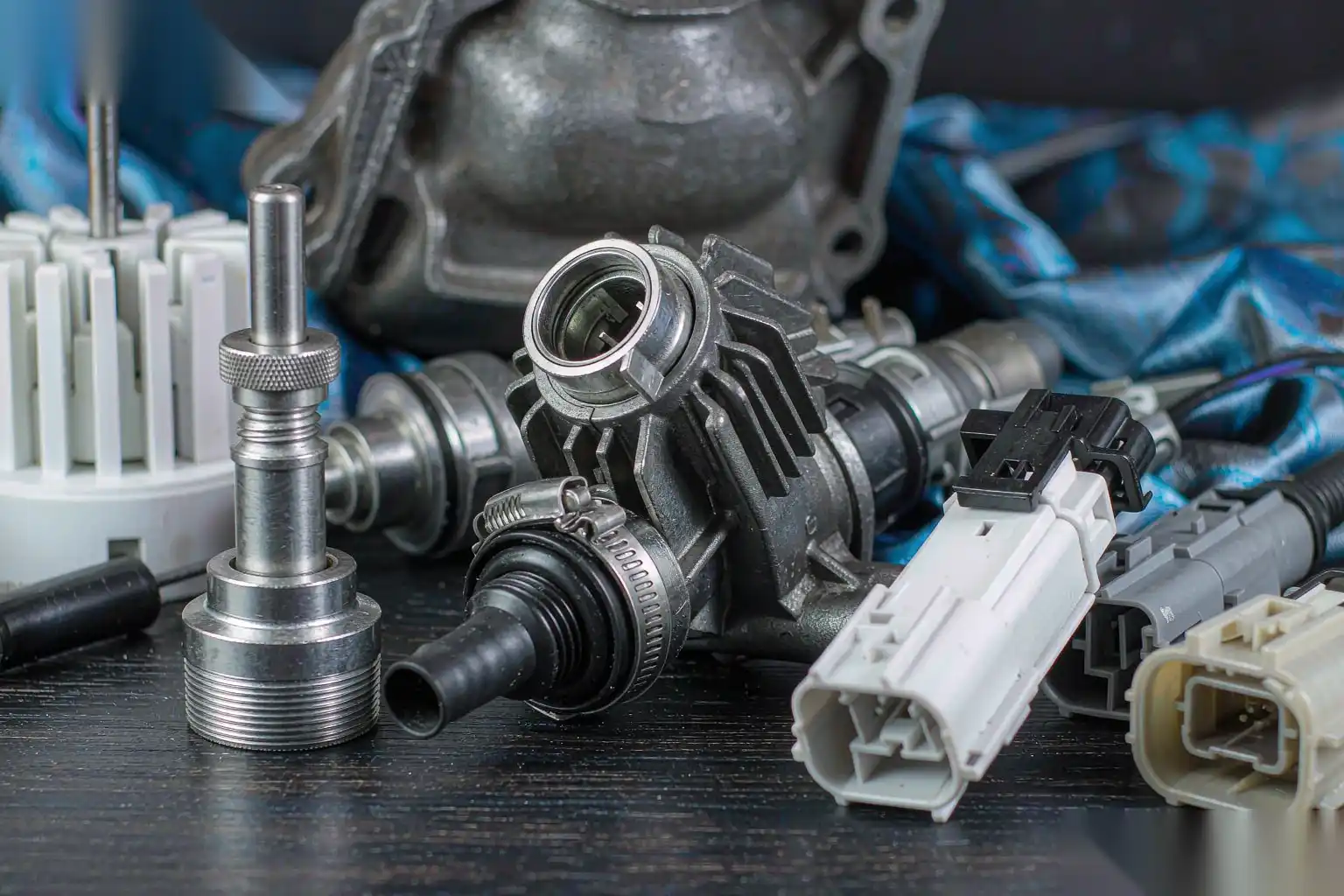
Visible decorative bodies are the strongest case for die casting. Escutcheons, lever handles, rosettes, pull handles, and decorative cylinder trims have organic shapes, thin sections, and raised logos that would be expensive to machine from bar stock. High-pressure die casting (HPDC) holds wall thickness around 1.5 to 2.5 mm on zinc and 2.0 to 3.0 mm on aluminum while reproducing fine surface detail straight from the die.
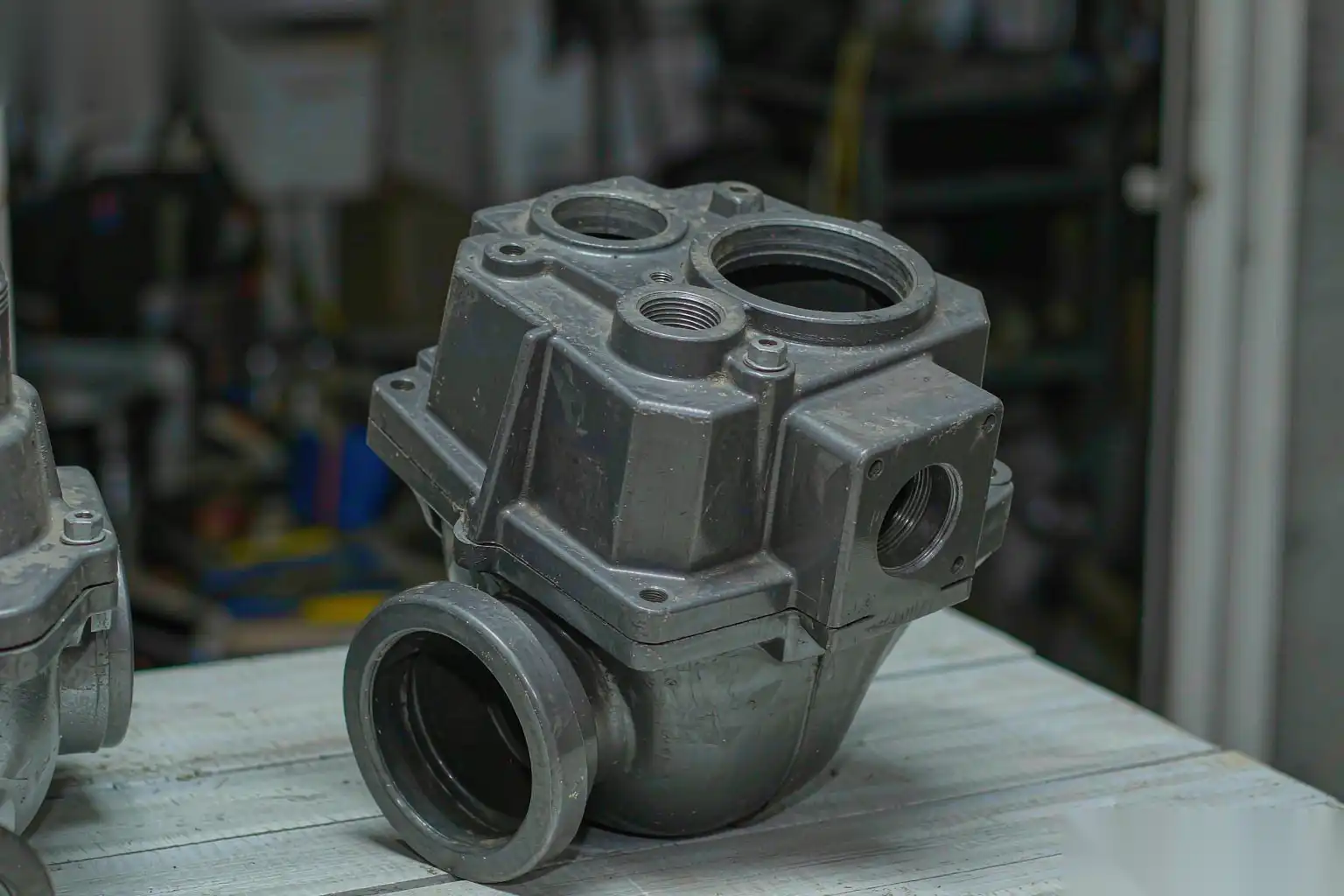
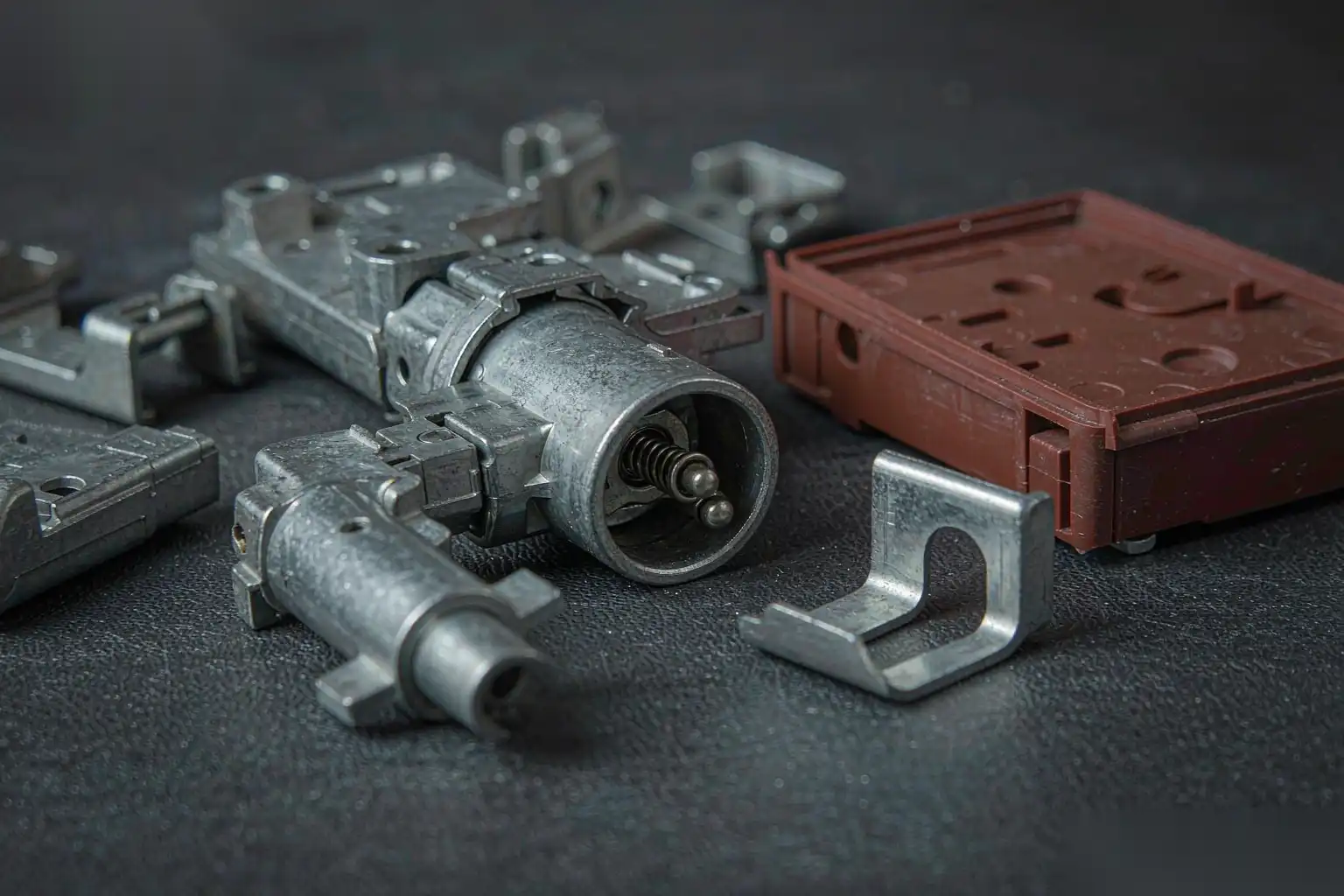
Structural load-bearing bodies are a qualified yes. Cylinder housings, deadbolt throws, mortise lock cases, and multi-point gearboxes benefit from cast rigidity and the ability to integrate bearing seats and screw bosses. The qualification is porosity control at the stress concentration points, which we manage through gating, vacuum assist where needed, and confirmed by sectioning during first article.
Plain flat or sheet-metal parts are usually a no. Strike plates, slim latch plates, and reinforcement boxes are often cheaper and stronger as stamped or bent steel with a plated or powder finish. Forcing them into a casting cell adds cost without benefit. A good DFM review early catches these so you do not tool a part that should have been a stamping.
The table below summarizes the typical call we make on common hardware families.
| Hardware part | Best process | Typical alloy | Visible finish | Key design note |
|---|---|---|---|---|
| Lever handle | Zinc HPDC | ZAMAK 3 / 5 | Polished + plated | 1.8 mm walls, full-radius transitions |
| Escutcheon / rosette | Zinc HPDC | ZAMAK 3 | Brushed or polished | Flatness of face within 0.15 mm |
| Cylinder body | Aluminum or brass-compatible zinc | ADC12 / ZAMAK 5 | Machined + anodized | Bore concentricity from die, not cut |
| Deadbolt throw | Steel insert or zinc | ZAMAK 5 | Plated | Hardened insert for wear face |
| Strike plate | Stamped steel | — | Plated or powder | Usually not cast |
| Multi-point gearbox shell | Aluminum HPDC | ADC12 | Powder coat | Ribs for torsional rigidity |
| Pull handle | Zinc or aluminum | ZAMAK / A380 | Polished + lacquer | Wall uniform to avoid sink |
Zinc versus aluminum for hardware
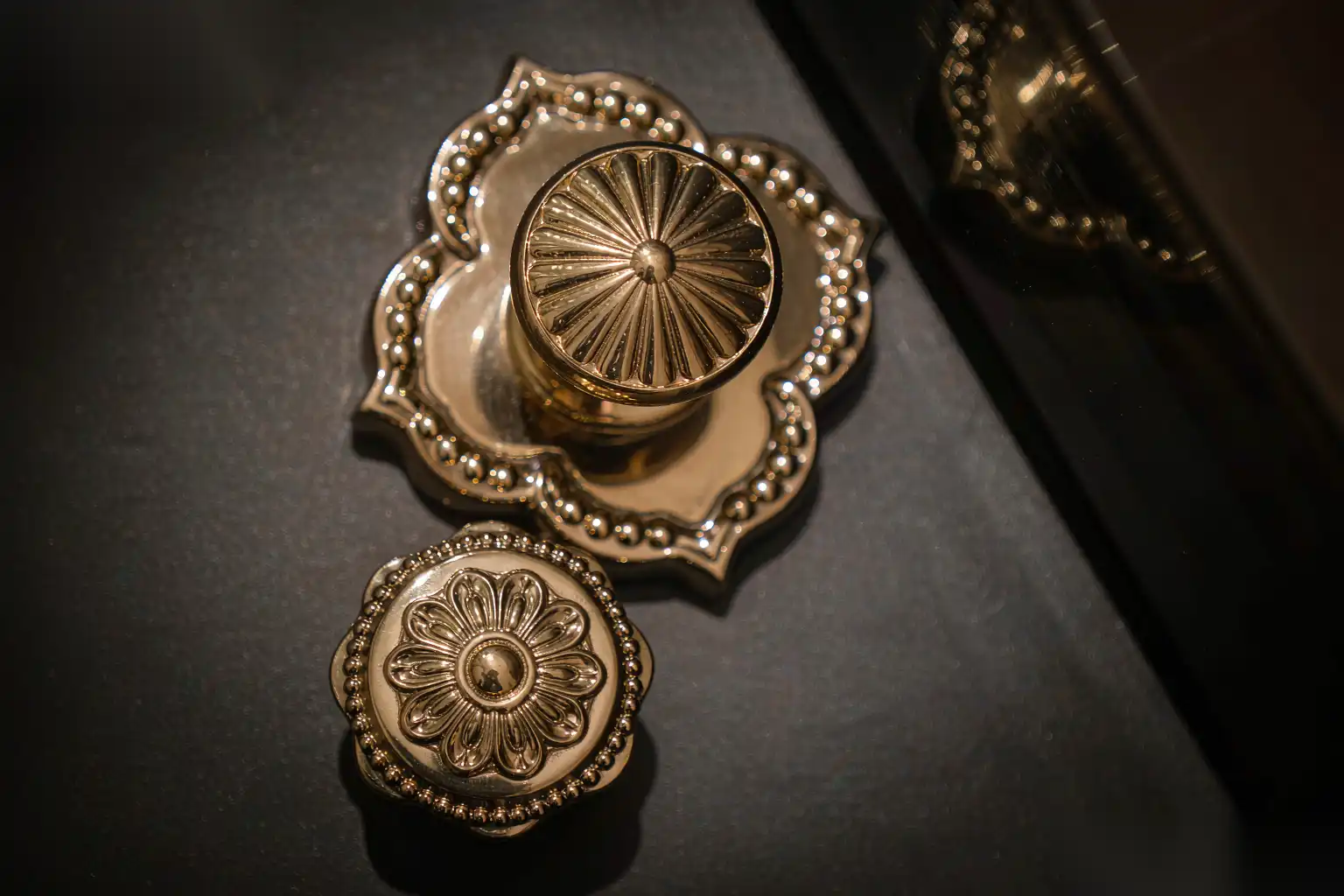
The zinc versus aluminum question dominates hardware material selection, and the answer is rarely “one is better.” It is about what the part must do.
Zinc (ZAMAK 3, ZAMAK 5, ZA8) wins on surface and tooling. Its casting temperature is roughly 390 to 420 degrees C against aluminum’s 640 to 680 degrees C, so dies last far longer and fine cosmetic detail is sharper. Zinc also plates beautifully: a standard copper-nickel-chrome stack bonds directly to the casting, which is why most polished chrome levers and handles are zinc. Impact strength at room temperature is high, so a dropped lever rarely cracks. The downside is density at about 6.6 to 6.7 g per cubic centimeter, which matters for large handles where weight feels wrong, and lower continuous-service temperature around 100 degrees C.
Aluminum (ADC12, A380, EN AC-46000) wins on weight, strength, and corrosion. At 2.7 g per cubic centimeter it is less than half the mass, which reads as “quality” on large levers and pull bars. Aluminum handles exterior and coastal environments without the galvanic worries of plated zinc, and anodizing gives a hard, abrasion-resistant, color-stable face that plating struggles to match outdoors. The cost is a hotter die, shorter tool life, and a surface that needs more work to reach a mirror or satin decorative look.
Our rule of thumb: interior decorative trim and small levers go zinc for finish and cost; exterior handles, coastal or humid-market hardware, and large levers go aluminum for weight and corrosion. We cover the material trade in detail in our zinc vs aluminum die casting guide.
Cosmetic surface expectations for visible hardware
Hardware fails in the market on appearance long before it fails in function. The visible face is judged at arm’s length under direct light, so surface spec must be defined numerically, not by adjectives.
Surface class drives the whole process chain. We grade hardware faces as:
- Class A: mirror or high-satin, no visible flow line, no pitting, used on levers and escutcheons in showrooms.
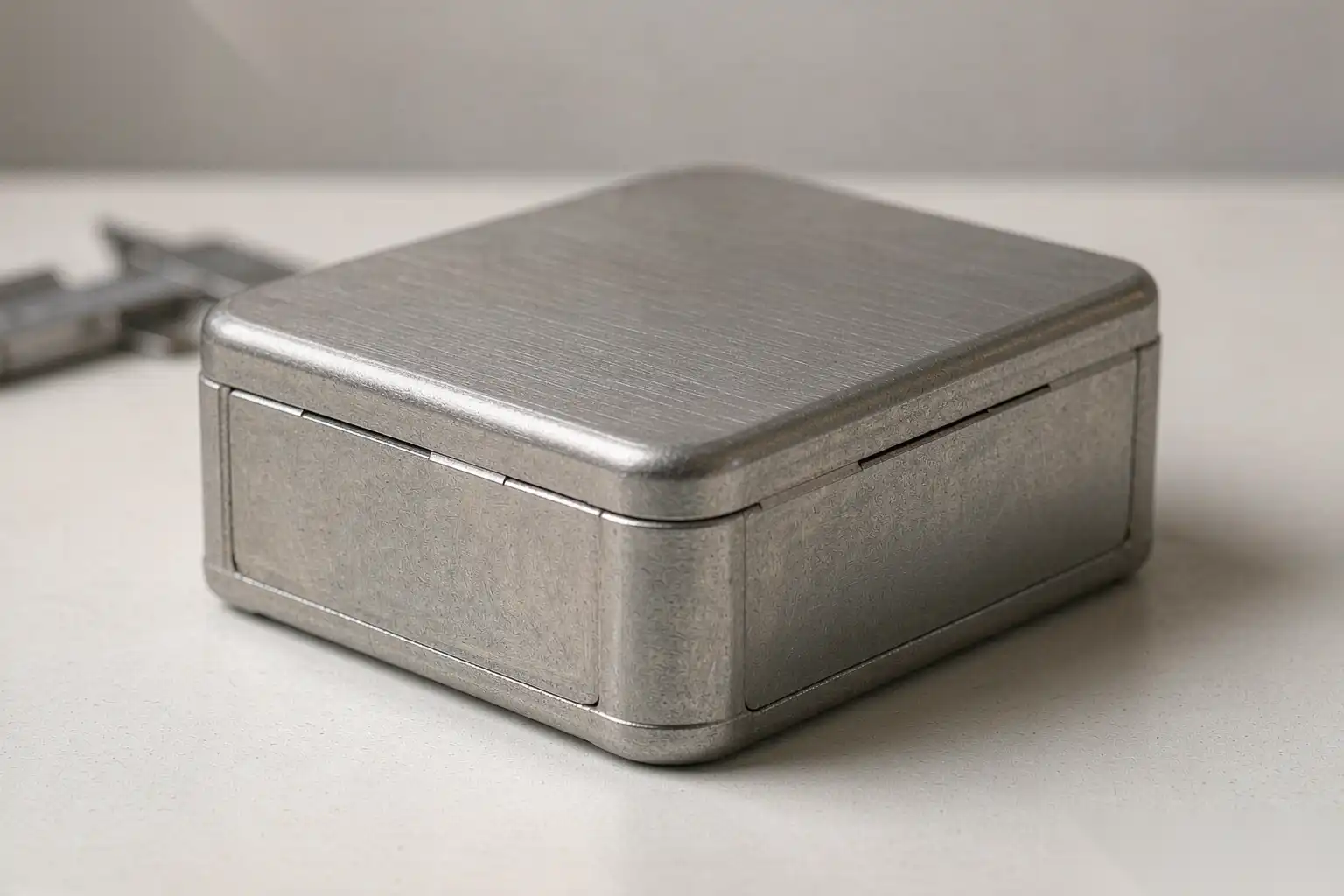
- Class B: uniform satin or brushed, minor flow lines acceptable under finish, used on cylinders and gearbox covers.
- Class C: hidden or textured, used on internal shells where only function counts.
Flow lines, cold shuts, and ejector marks are the three defects that kill Class A hardware. They come from poor gate balance, low fill velocity, or insufficient venting rather than from the alloy. Once the part is cast, removing them costs money in polishing, so the die design and shot profile are where the cosmetic battle is won. We routinely hold a die face roughness around Ra 0.8 to 1.6 micrometers straight from the tool, which gives the polishing cell a much smaller job.
Color and coating consistency across a production run is an acceptance criterion we write into the quality plan. A batch of levers that drifts half a shade between morning and afternoon is a reject at the assembly line, so finish parameters are locked and monitored, not tuned by eye.
Strength and tamper resistance
A lock is only as good as its weakest cast section. For hardware we design to two failure modes: forced-entry load and fatigue from daily actuation.
Forced entry loads concentrate at the cylinder retaining area, the bolt throw, and the screw bosses that hold the case to the door. We size these sections so that the cast material yields only well beyond the rated test load. For a residential deadbolt, the common test envelope is a 1.0 to 1.5 kN side load on the throw and a torque on the cylinder retaining screw near 8 to 12 Nm; the casting must show no crack or permanent set beyond a few tenths of a millimeter. Zinc reaches tensile strength around 280 to 330 MPa for ZAMAK 3 and a bit higher for ZAMAK 5, while aluminum ADC12 lands near 310 to 330 MPa with higher modulus, so the geometry and rib placement decide the margin more than the alloy pick.
Tamper resistance also comes from geometry. Integral walls around the cylinder, anti-drill plates inserted at the die or post-cast, and deep screw bosses that cannot be stripped at 10 Nm are designed in, not added later. We model the load path early and place material where the force actually travels, which is cheaper than thickening the whole part and adding mass.
Wear faces, such as the bolt slide and the cam contact, are the places where a cast surface is not enough. We specify either a localized hardened insert, a thicker plated layer, or a steel wear plate retained in the die cavity so the wear path is metal-to-metal against a hardened face, not against the softer casting.
Corrosion performance for exterior use
Exterior and coastal hardware lives in a hostile environment: salt spray, humidity cycling, and UV. The alloy and the finish must be chosen together, because a great alloy under a poor coating will still rust at a scratch.
Zinc plated hardware depends entirely on the plating stack. A well-run copper strike, bright nickel, and chrome layer passes 48 to 96 hours of neutral salt spray without red corrosion on most interior grades, but exterior coastal use needs either a thicker nickel or a conversion-coated base plus sealed lacquer. Aluminum exterior hardware leans on anodizing or powder coat. A 10 to 15 micrometer anodize layer gives good abrasion and corrosion resistance, while a 60 to 80 micrometer powder coat with proper pre-treatment survives 500 to 1000 hours of salt spray in our qualification samples.
Drainage and trap design in the part also matter. Pockets that hold water behind a decorative face accelerate crevice corrosion, so we design the casting with weep paths and avoid blind deep recesses on the exposed side. This is a die-casting geometry decision, not a finishing afterthought.
Galvanic isolation is the other watch item. Aluminum hardware mounted against steel doors with no barrier will pit at the contact. We specify nylon washers, isolating gaskets, or a powder coat that bridges the joint so the cast part is never the anode in the couple.
Robotic polishing for visible and decorative surfaces at volume
Once the alloy and die are set, the visible finish is produced at volume by automated polishing, and this is where DZ Smart Manufacturing cells earn their place in a hardware line. Hand polishing of levers and escutcheons does not scale: a skilled polisher handles a few hundred pieces per shift, consistency drifts with fatigue, and labor cost in markets like Germany or Japan makes the part uncompetitive.
A DZ robotic polishing cell runs a 6-axis robot with compliant spindles and a multi-station wheel arrangement, usually sisal or abrasive belt for cut-down, then cloth or sisal-cone wheels with compound for color, then a buffing stage. For zinc levers we typically start at a 120 to 240 grit equivalent cut, move to a Tripoli-style compound cut, then a white-finish coloring compound, holding a consistent surface roughness target around Ra 0.2 to 0.4 micrometers for a showroom mirror. Cycle time per lever commonly lands between 25 and 60 seconds depending on part size and finish class.
Consistency comes from force control, not from a fixed path. The robot maintains a set normal force against the part through a compliant head, so a casting that is 0.2 mm proud in one area does not gouge or miss. Compound is metered automatically so the wheel face stays loaded, and wheel wear is tracked so the program compensates dress cycles. The result is that batch 10,000 looks like batch 1, which is what a Class A hardware program requires.
For satin or brushed finishes we swap the wheel stack for a controlled abrasive belt or radial brush, where line direction and grit define the look. This is explainable in our aluminum die casting finishing options guide, and the automation side is covered in our surface finishing automation guide for foundries.
Tooling, volume and cost structure
Hardware runs are large, so the economics are driven by die life, cycle time, and scrap, not by piece price alone.
Tooling cost and die life differ sharply by alloy. A zinc die runs 500,000 to over 1,000,000 shots before recut in many hardware programs because of the low casting temperature. An aluminum die for the same geometry may see 100,000 to 300,000 shots before a cavity repair, and the steel grade and cooling design decide which end of that range you hit. For a program under roughly 200,000 pieces, zinc tooling amortizes better; above that, aluminum’s lower material mass can offset the shorter die life on large parts.
Cycle time sets throughput. Zinc lock trims often cycle in 25 to 45 seconds including solidification, while aluminum competitive hardware runs 40 to 70 seconds with more cooling. A multi-cavity die doubles or triples that throughput for small escutcheons, but only if the gating balances so every cavity fills identically.
Scrap and rework are the silent cost. A hardware line that ships 2 percent cosmetic scrap is throwing away finished plating and polishing labor on those pieces. We track first-pass yield by defect code and close the loop at the die and the robot cell, because a flow line caught at casting costs almost nothing, while the same defect caught after plating costs the full finish stack.
Volume also changes the finishing choice. Below a few thousand pieces, manual finishing is fine. From a few thousand upward, a DZ automated cell pays back through labor, consistency, and the ability to hold a cosmetic spec that manual work cannot sustain across a shift change.
Design checklist before you tool a hardware part
We close every hardware feasibility review with a short checklist so the program does not discover a problem after steel is cut:
- Define the visible surface class (A, B, or C) and the roughness target in micrometers, not in words.
- Pick alloy by environment and weight, not by habit: zinc for interior decorative, aluminum for exterior and large handles.
- Confirm wall thickness and uniform sections so sink and porosity stay out of load paths.
- Locate screw bosses and bolt throws, then model the forced-entry load path and add rib material there.
- Decide the wear-face strategy: insert, thick plate, or hardened coating at the slide and cam.
- Specify the finish stack and its salt-spray or UV target for the sales market.
- Plan the polishing route: manual below low volume, DZ robotic cell above it, with force control for consistency.
- Set first-pass yield and cosmetic scrap limits before the first production run.
Door lock and hardware die casting is an exercise in balancing a surface the customer sees against a structure the customer trusts. Done well, the casting delivers both at volume. DZ Machinery builds the robotic deburring, grinding, and polishing cells that turn raw zinc and aluminum hardware castings into consistent Class A finishes at production rate; if you are planning a lock or hardware program and want to review part drawings, gating, and a finishing cell layout with our engineering team, we can run a feasibility and cycle-time estimate on your actual components.