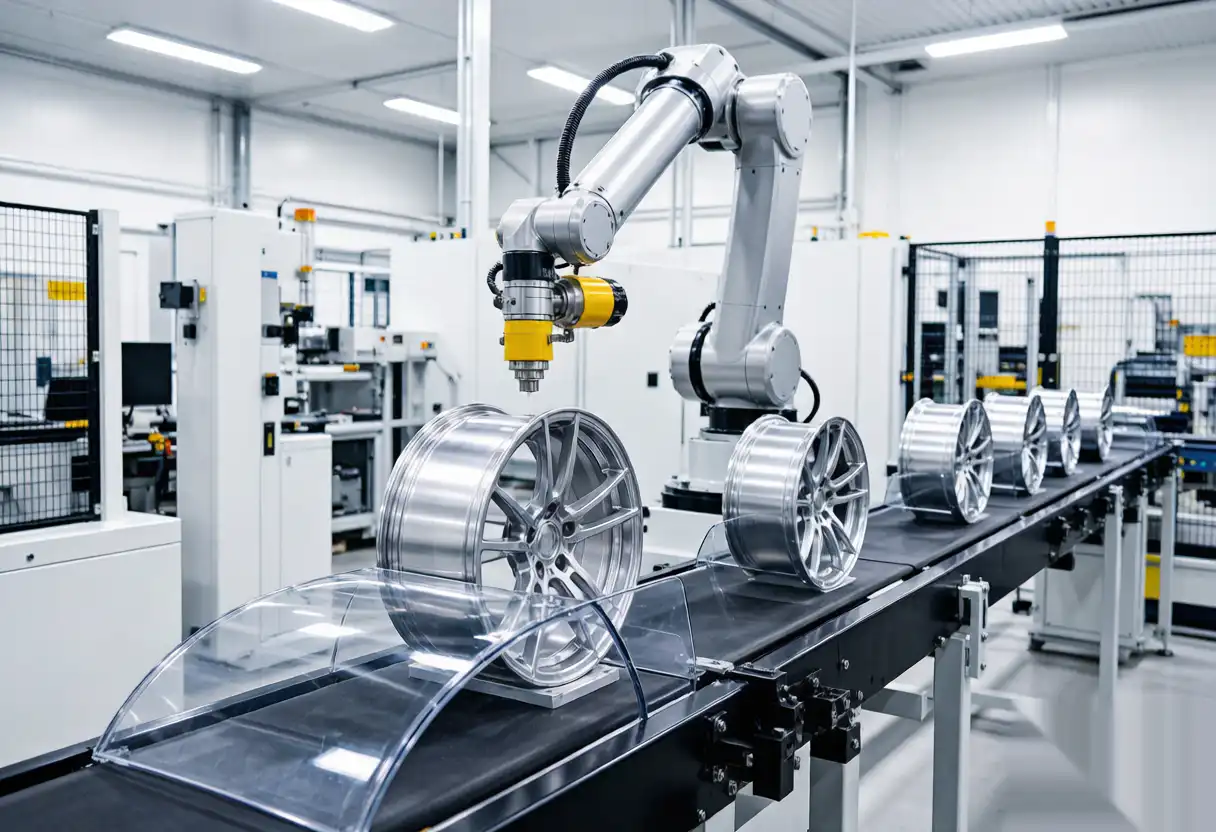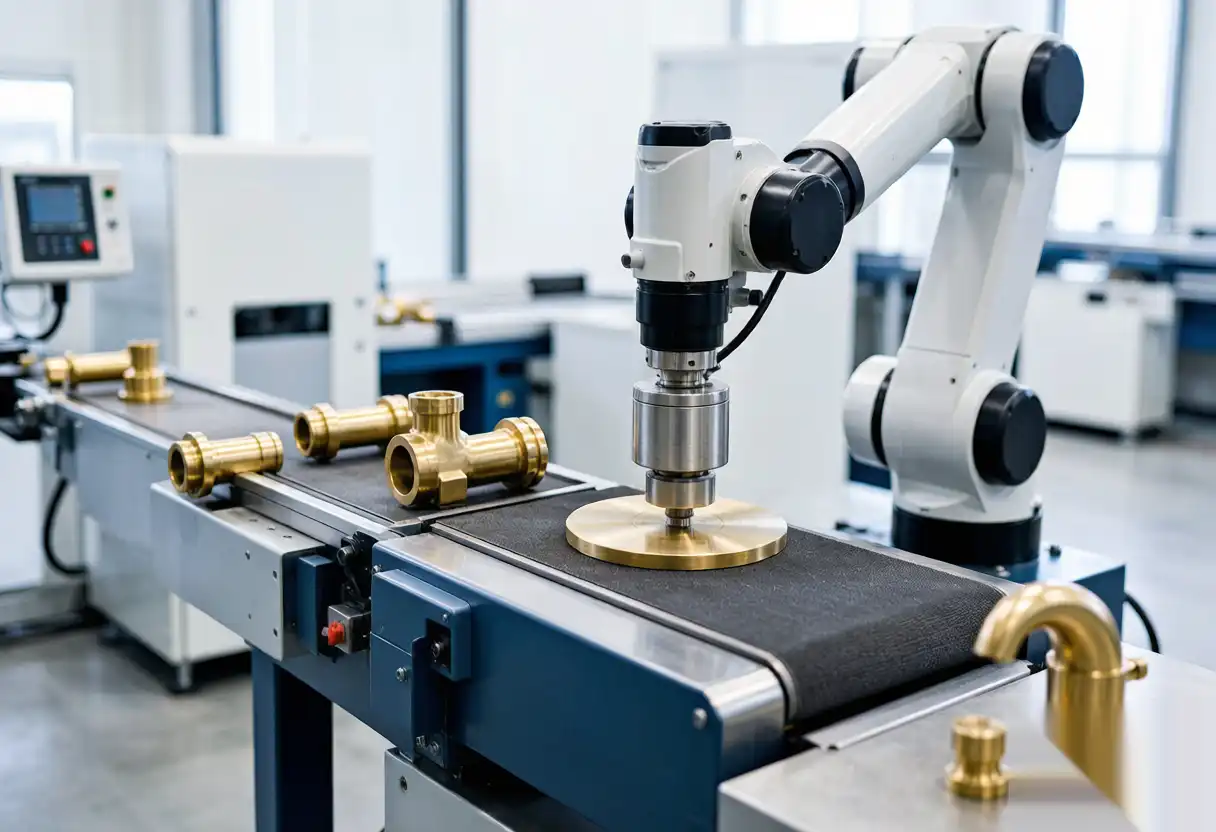


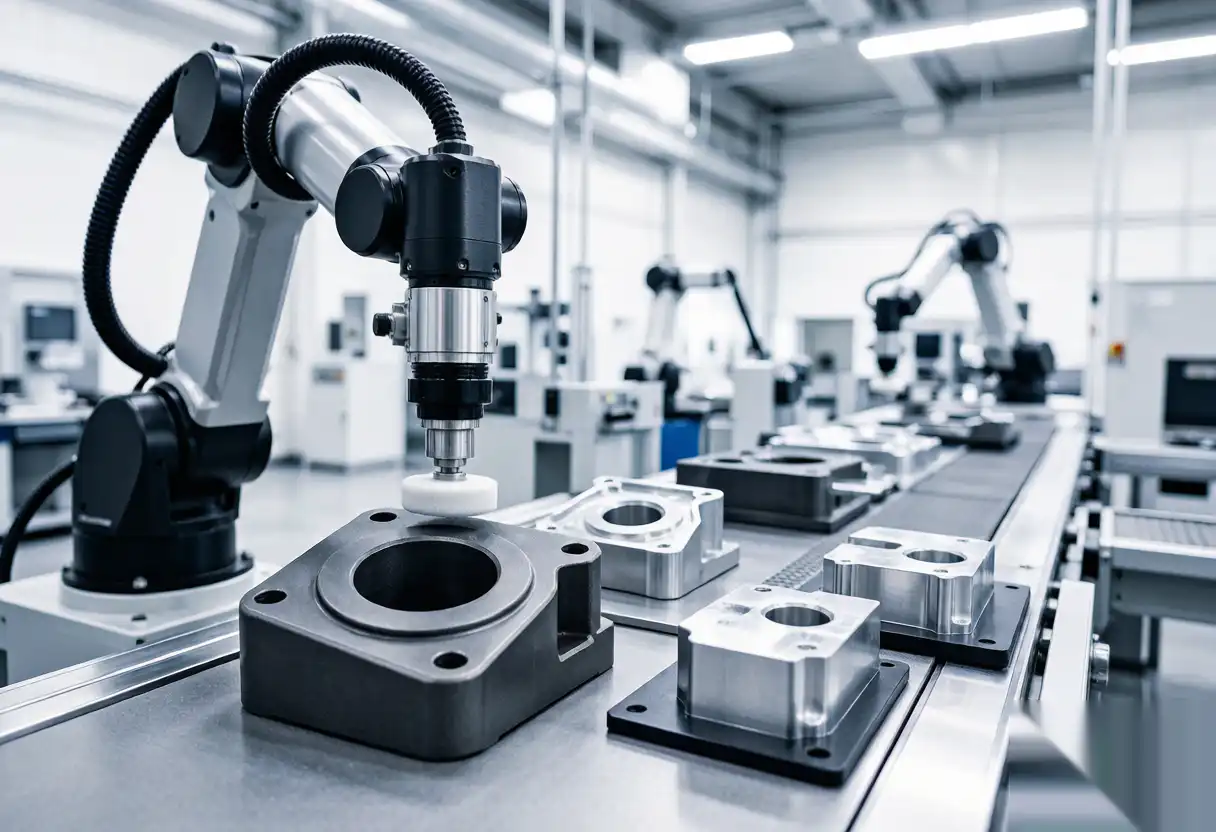
The best automatic polishing machine for die cast components is not the most powerful machine on the floor; it is the one that removes ejector pin marks, parting lines, and gate remnants without dragging the soft alloy or exposing the micro-porosity that sits just below the skin. Zinc, aluminum, and magnesium die castings are far softer and more defect-prone than bar stock, so the winning system pairs a force-compliant head with a progressive compound progression and a fixture that locates thin-wall parts without distorting them. Choosing correctly is the difference between a bright, saleable mirror and a pitted, rejected surface that costs more in rework than the machine saved in labor. The alloy discipline described in our automated deburring and grinding guide for die casting is the natural upstream companion to the polishing stage covered here.
Why Die Cast Surfaces Are Unforgiving
A die cast part leaves the die with three classes of surface defect that polishing must address. First are the macro features: the parting line where the two die halves meet, the vestige of the gate where metal entered, and the round witness marks left by ejector pins that push the part out of the tool. Second are the flow marks and cold shuts from fill imbalance. Third, and most dangerous for finishing, is subsurface micro-porosity: tiny gas or shrinkage voids that sit a few microns under the surface and erupt into pits the moment an aggressive wheel cuts too deep.
Because the alloy is soft, the polishing head must ride the contour with controlled force rather than grinding through it. Too much pressure drags the edge, rounds a crisp feature, or opens porosity; too little leaves the parting line proud and the ejector marks visible. A force-compliant automatic polishing machine for die cast components solves this by measuring contact force and backing off automatically as the surface rises, so the wheel removes only the defect layer and stops.
Core Selection Criteria for a Die Cast Polisher
When you shortlist equipment, weigh these factors in order rather than by price alone.
- Force compliance rated for soft alloys. Look for a head that holds 15 to 50 N with plus or minus 1 to 2 N control. This is what keeps zinc and aluminum safe.
- Progressive compound system. The machine should meter a cut compound first, then a color compound, so the surface closes in one load instead of two setups.
- Fixturing that locates without distortion. Thin-wall castings flex, so locating should be on rigid datum faces with light clamping, never a vise that bows the part.
- Dust extraction sized to your volume. Die cast polishing throws fine abrasive and metal dust; the collector must match parts per hour, not just peak wheel speed.
- Programmable pass plan. Ejector marks and parting lines need more passes than flat faces; a good controller varies pass count by zone.
- Quick-change tooling. Moving between a cut mop and a color mop should take seconds so you can qualify new alloys fast.
Zinc Versus Aluminum: Two Different Animals
Zinc die cast polishing is the more forgiving of the two. Zinc is dense, takes a bright shine at relatively low pressure, and hides minor porosity better because its skin is tougher. A typical zinc program runs a cut compound at 20 to 35 N and 1,800 to 2,800 RPM, then a color compound at 15 to 25 N to close the surface to 0.05 to 0.15 µm Ra. The result is a chrome-like mirror that needs no plating for many decorative applications.
Aluminum die cast polishing demands more care. The alloy is lighter and more porous, and aggressive cutting reveals a speckled pit field that no amount of coloring hides. The winning approach is very low pressure, 10 to 25 N, with a progressive compound that starts fine rather than coarse, and a wheel that conforms to the contour instead of digging. Aluminum programs often target 0.1 to 0.3 µm Ra with a bright but not necessarily mirror finish, and they benefit from a pre-impregnation or a richer alloy when a true mirror is required. Our deeper look at how robotic polishing improves quality for zinc alloy parts explains the alloy-specific mechanics in more detail.
Magnesium and leaded alloys sit further out on the specialty curve and need dedicated compounds and often inerted cells, so qualify them only after zinc and aluminum are stable.
Architecture Options and How They Scale
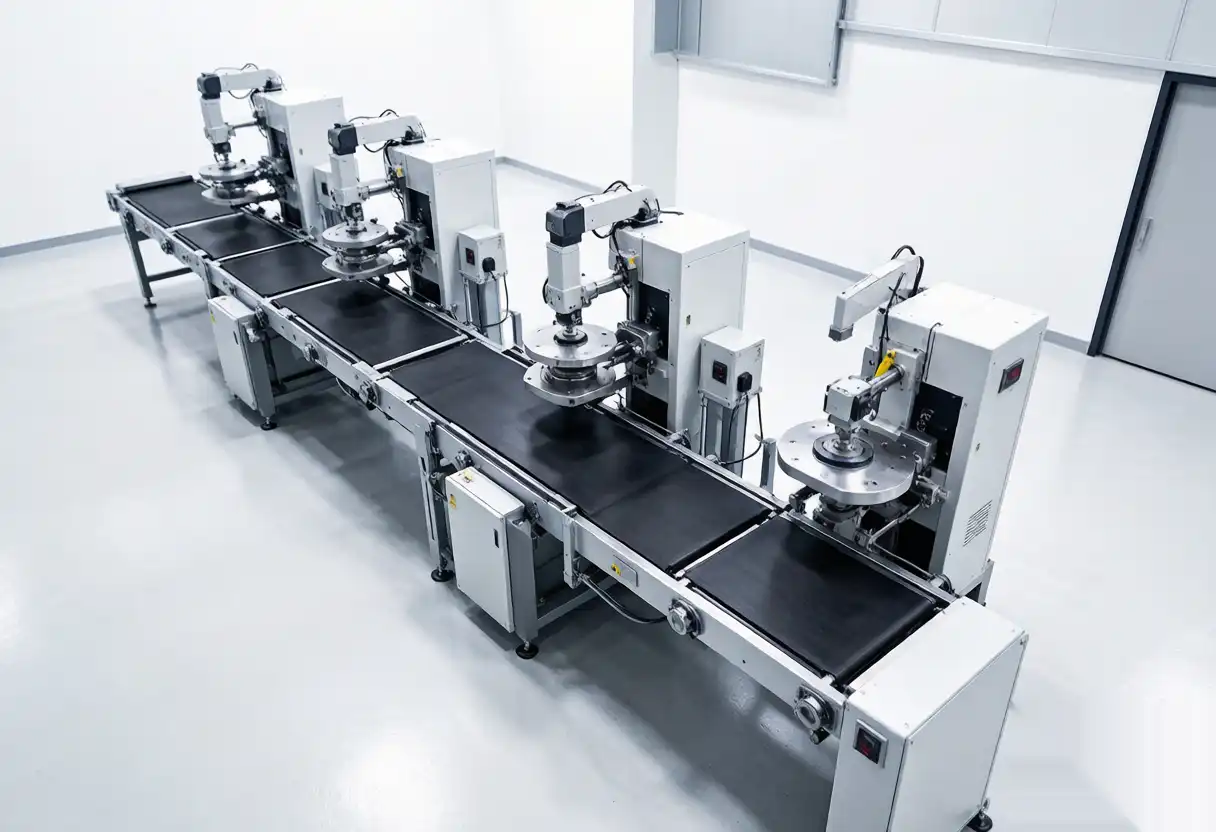
A single-head rotary table suits one high-volume zinc SKU where the part is round or radially symmetric. A 6-axis robot cell suits mixed SKUs and complex contours because it can reach fillets a rotary fixture cannot. A two-in-one cell that grinds and polishes in one load removes a handling step and is the most common choice for job shops serving several die casters. The robotic surface finishing solutions for the die casting industry overview compares these layouts against real cell footprints.
For a dedicated mirror line on a single faucet or handle SKU, a rotary or in-line automatic polishing machine for die cast components with two heads, cut then color, is hard to beat on cycle time. For a die caster running dozens of part numbers, the robot cell pays for its flexibility by eliminating changeover downtime.
Representative Process Parameters by Alloy
The table below is a starting envelope for feasibility, not a final process sheet. Confirm against your specific casting and finish spec.
| Alloy | Contact force | Wheel speed | Compound progression | Target Ra | Typical cycle |
|---|---|---|---|---|---|
| Zinc (Zamak) | 20–35 N | 1,800–2,800 RPM | Cut then color | 0.05–0.15 µm | 40–75 s |
| Aluminum (ADC12) | 10–25 N | 1,500–2,400 RPM | Fine progressive | 0.1–0.3 µm | 55–95 s |
| Magnesium | 15–30 N | 1,600–2,400 RPM | Specialized, low heat | 0.1–0.25 µm | 60–100 s |
| Lead-free brass cast | 25–45 N | 2,000–3,200 RPM | Cut then color | 0.04–0.12 µm | 45–80 s |
How to Qualify a New Part Without Wrecking It
The safest path is to ramp gently. Run the first 20 to 30 parts at the lowest force that still moves the parting line, then increase only until the marks clear; die casts punish aggression. Hold wheel speed in the lower part of the band while you learn the surface, and inspect under raking light after every five parts so you catch porosity before you have cut a whole batch. Once the finish is stable, lock the program and the compound lot so the result is reproducible shift to shift.
A practical target is to clear ejector pin marks in two to four cut passes and close the surface in one to two color passes. If you need more than that, the casting likely needs a better gate or ejector design upstream rather than a harder polish, and the complete guide to automatic polishing machines explains how to separate process issues from equipment limits.
Labor, Scrap, and Payback on Die Cast Polishing
Manual die cast polishing is slow because the operator must feel each part to avoid dragging it, and even skilled hands leave variation. An automatic polishing machine for die cast components typically cuts labor per part by 55 to 75 percent and drops rework from a manual 6 to 12 percent down to 1 to 4 percent once the program is locked. On a line running two shifts, the combination of saved labor and saved scrap usually reaches payback in 14 to 22 months, faster when the cell runs a third shift or replaces three or more manual stations.
The less obvious saving is in compound and wheel life. Metered, progressive compounds reduce waste by 20 to 35 percent versus hand application, and consistent force extends wheel life because the operator is no longer over-pressing to compensate for a dulling mop.
Integrate Polishing With Upstream Deburring and Grinding
The polishing cell performs best when it receives a part that has already had its gate, parting line, and gross flash removed by automated grinding, and its sharp edges broken by deburring. Handing a rough casting straight to the polisher wastes the compliant head on material removal it should spend building gloss. In practice, a three-stage sequence of deburr, grind, and polish, often on a single automated die cast finishing line, yields the lowest total cycle and the highest first-pass yield because each station works inside its optimal force and grit window.
This integration also simplifies quality. When deburr, grind, and polish share one controller and one part program, the Ra and gloss targets can be allocated across stages instead of dumped on the last machine. A typical split puts the parting line into the grind stage at 80 to 120 grit, transitions to a 150 to 240 grit polish cut, and closes with a color compound for the mirror, so no single head is asked to do everything at once.
Write the Finish Specification Down Before You Buy
A verbal instruction to “make it shiny” is not a specification. Before requesting quotes, document the target Ra in micrometers, the acceptable gloss range, the maximum allowable edge break, and the visual defect limit, ideally with a reference sample locked in a cabinet. Suppliers size force, wheel, and compound against that written number, and your incoming inspection uses the same number, which is what makes the result repeatable rather than negotiable from batch to batch.
Common Pitfalls When Buying
The biggest pitfall is specifying the machine around the best-looking casting in the bin instead of the worst one in the run. Porosity and gate variation are statistical, so qualify on the marginal part, not the hero part. The second pitfall is ignoring upstream grinding; if the gate and parting line are not cleaned first, the polisher spends its budget removing gross material instead of building gloss. The third is under-budgeting extraction, which lets dust recirculate and pit the very surface you are trying to perfect.
Frequently Asked Questions
Will an automatic polisher remove ejector pin marks?
Yes, with the correct cut compound and enough passes, typically two to four at controlled force. Very deep or mis-located pins may need a tooling change upstream first.
Should we qualify zinc or aluminum first?
Qualify zinc first. It is more forgiving, reaches a bright mirror at lower pressure, and lets you tune the cell before attempting the tighter aluminum window.
How many heads do we need for a true mirror?
Two heads, cut then color, are the practical minimum for a true mirror on die casts. A single head can satin-finish but struggles to both cut and close in one wheel.
Can one cell handle both zinc and aluminum?
Yes, with quick-change tooling and separate stored programs per alloy. Keep force and compound lots distinct so you never cross-contaminate the softer aluminum run.
What Ra should we target?
Zinc commonly reaches 0.05 to 0.15 µm Ra for a mirror; aluminum typically lands at 0.1 to 0.3 µm with a bright rather than fully mirror look unless the casting is dense.
Need the Right Automatic Polishing Machine for Your Die Cast Components?
If you are selecting the best automatic polishing machine for die cast components, the team at Xiamen Dingzhu Intelligent Equipment can help you match force-compliant heads, progressive compounds, and fixturing to your specific zinc, aluminum, or magnesium parts. We design die cast polishing cells that pair directly with upstream automated deburring and grinding so the whole line handles your castings, daily volume, and finish targets as one documented process, and we can qualify your marginal parts rather than just your best ones. To see how the polishing stage fits into a complete casting-to-finished workflow, review our automated deburring and grinding guide for die casting, then send us sample castings with your volume and Ra targets for a concrete cell recommendation.
References
- NADCA (North American Die Casting Association) — https://www.nadca.com
- American Foundry Society — https://www.afsinc.org
- ISO 9001 (quality management) — https://www.iso.org