

Somewhere in the first week of every product development project, the same question comes up in the meeting room: zinc or aluminum? Both are die castable, both are affordable at volume, and both are used for the exact same kind of parts — faucet handles, lock housings, brackets, fittings. But the two metals behave very differently in the die, at the plating line, and in the hands of your end customer. Getting this decision wrong costs you either money per part or customer complaints per year.
I have spent two decades finishing both materials — grinding and polishing zinc alloy faucets and aluminum die castings on the same production floors. This guide gives you the practical comparison table most websites skip, plus a decision path you can use at your next design review.
Zinc vs. Aluminum: The Head-to-Head
| Property | Zinc Alloy (Zamak 3/5) | Aluminum Alloy (A380/ADC12) |
|---|---|---|
| Tensile strength | ~283 MPa (Zamak 3) | ~320 MPa (A380) |
| Density | 6.6 g/cm³ (heavy) | 2.7 g/cm³ (light) |
| Minimum wall thickness | 0.5–0.8 mm (thinnest of any cast metal) | 0.8–1.5 mm |
| Dimensional tolerance | Excellent (±0.05 mm achievable) | Good (±0.1 mm typical) |
| Castability / detail | Outstanding — captures fine detail and threads | Good — but heavier sections need more care |
| Cost per part (small parts) | Low; molds last longer (lower melting point) | Moderate; higher die wear |
| Plating / finishing | Excellent — electroplates beautifully (chrome, nickel) | Good — needs pre-treatment; anodizing is a strong option |
| Corrosion resistance | Good after plating; vulnerable to white rust if bare | Good natural oxide layer; anodizing available |
| High-temperature use | Limited (melts ~390°C; creeps above 100°C) | Excellent (melts ~580°C; holds strength in heat) |
| Weight-sensitive parts | Poor (heavy) | Excellent (light) |
When to Choose Zinc Die Casting
Choose zinc when the part is small, intricate, cosmetic, or plated:
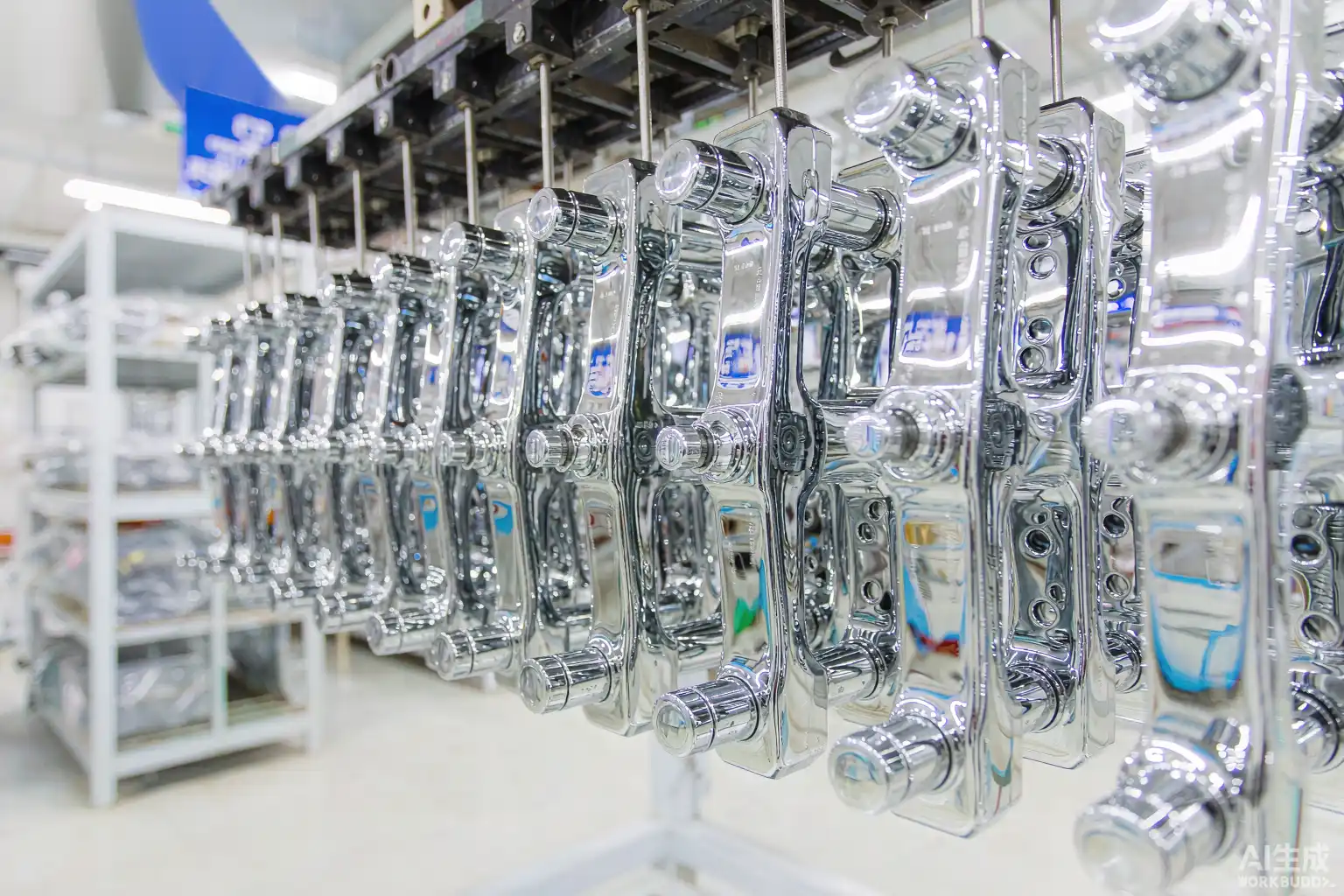
- Faucet handles and trim — zinc electroplates to a brilliant chrome finish that mirrors the brass look at a fraction of the cost.
- Door locks and hardware — fine detail, tight tolerances, and threads cast directly into the part.
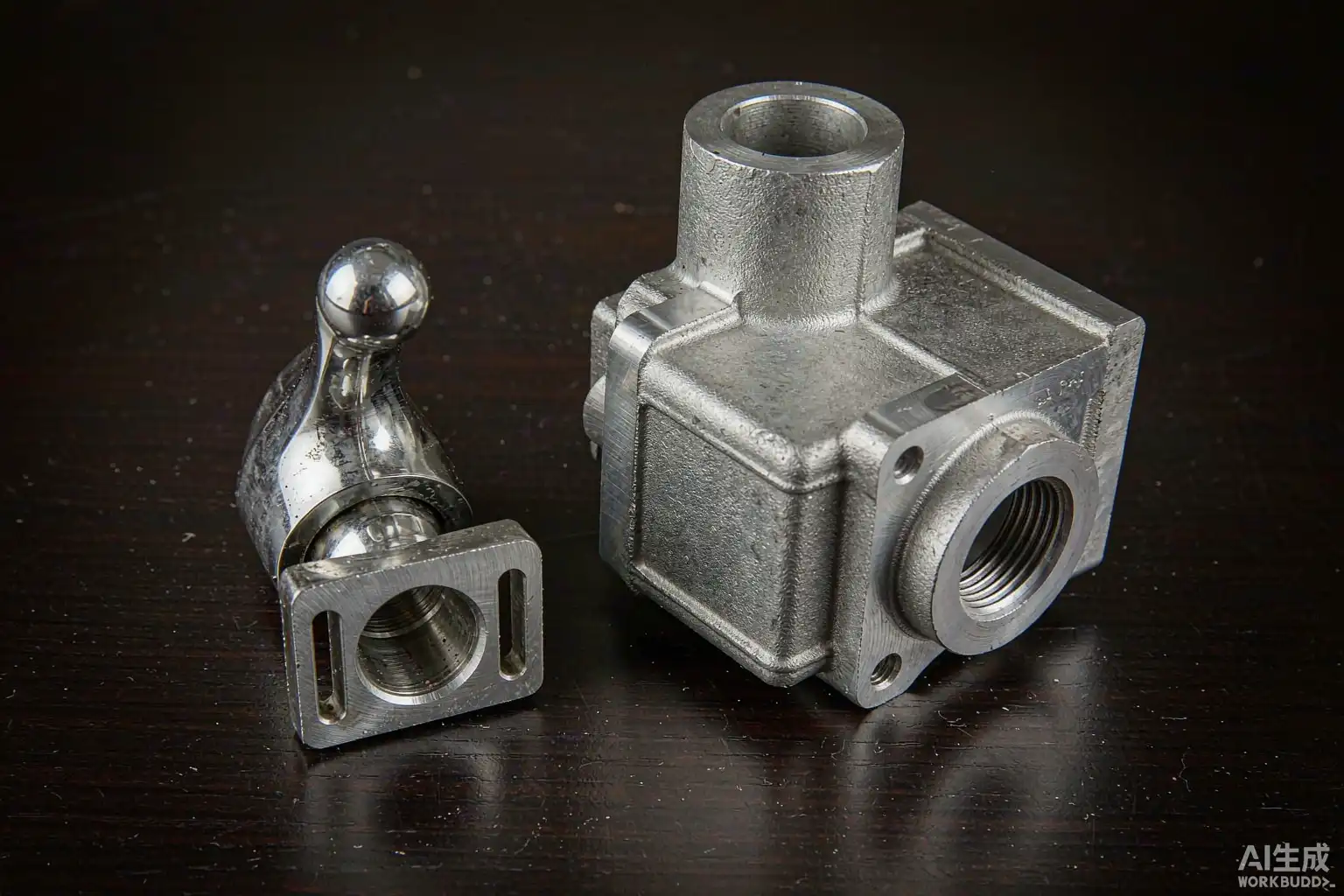
- Small mechanical parts — gears, levers, and fittings where thin walls (0.5 mm) and precision matter.
- Electronic housings — good EMI shielding and intricate ribbing.
Zinc’s Hidden Cost Advantage
Because zinc melts at a lower temperature, dies last significantly longer and cycle faster. For small parts, zinc can deliver the lowest cost-per-part of any casting process. And when it comes to finishing, zinc is the friendliest metal to plate — which is why so many bathroom and hardware products are zinc die castings under the chrome.
When to Choose Aluminum Die Casting
Choose aluminum when weight, strength, heat, or large size matters:
- Automotive and motorcycle components — brackets, housings, levers where every gram counts.
- Power tools and appliances — gearboxes, motor housings that see heat and vibration.
- Electronics heat sinks and enclosures — aluminum’s thermal conductivity is a design advantage.
- Large structural parts — where zinc would simply weigh too much.
Finishing: Where the Two Metals Really Diverge
Here is what 20 years on the finishing floor taught me. Both materials arrive at the finishing department covered in flash, gate remnants, and ejector marks. Both need deburring before any surface treatment. But after that, the paths split:
Zinc — Built for Plating
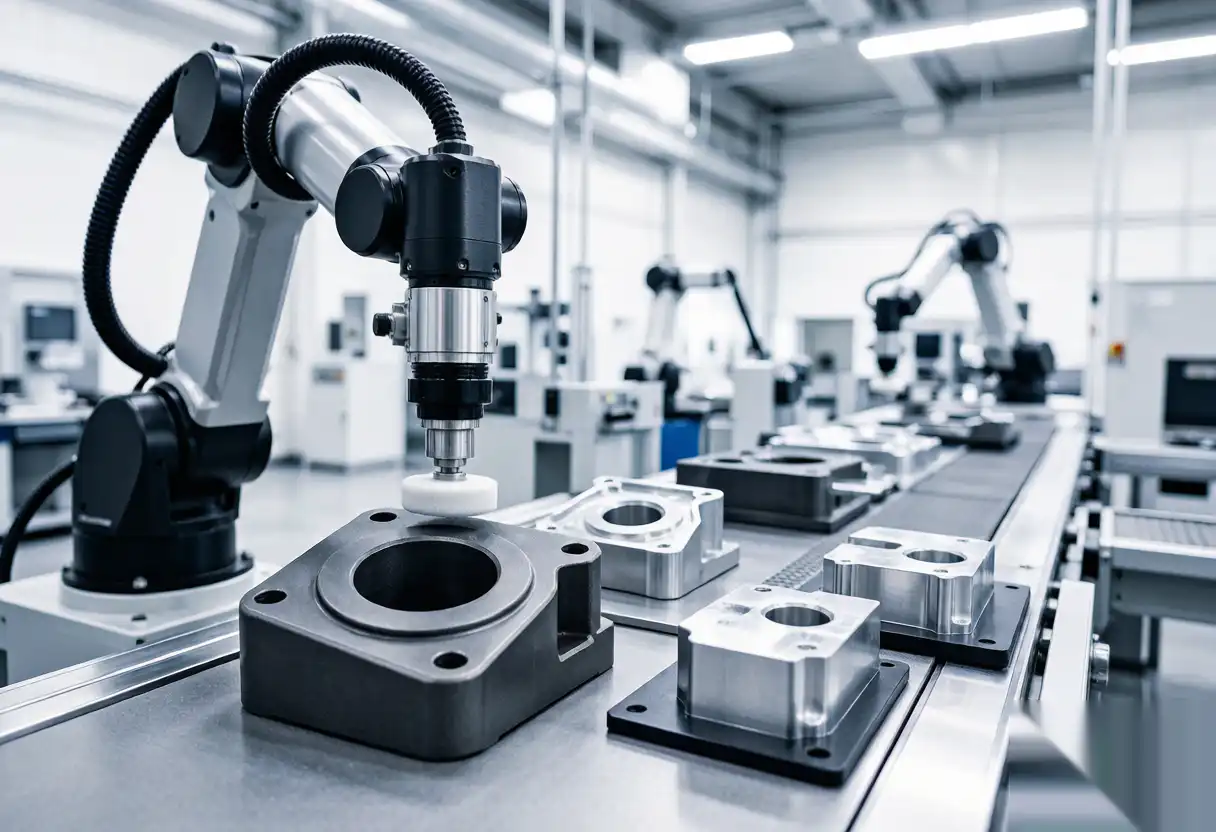
Zinc parts are usually plated: copper → nickel → chrome. The finishing quality requirement is brutal — plating magnifies every scratch, so any grinding mark must be polished to a mirror before the tank. Inconsistent manual polishing shows up immediately as cloudy, blotchy chrome, which is exactly the problem covered in our robotic polishing guide for zinc alloy parts. This is why zinc faucet manufacturers were among the first to adopt robotic polishing — see how automated deburring solutions handle zinc alloy die castings — the robot repeats the same polish pass on every part, and the plating line finally produces consistent mirrors.
Aluminum — Built for Anodizing and Paint
Aluminum parts are usually anodized, painted, or powder coated. Casting skin defects, cold shuts, and flow lines all become visible after anodizing, so grinding and polishing quality directly determines the anodizing acceptance rate. Automated cells remove the surface oxide consistently before coating — turning a 90% first-pass anodizing rate into a 99% one.
Zinc-Aluminum Hybrid? When You Need Both
Some products combine both: a zinc die cast internal mechanism with an aluminum housing, or vice versa. This is common in faucets (zinc handles + brass/aluminum bodies) and in door hardware — the same mix our faucet production equipment is built to finish. Design them as separate parts, and let each metal do what it does best — then finish them on a shared automated polishing line.
Real-World Cost Economics
The per-kg metal price tells you very little about the real cost per part. What actually drives your cost is cycle time, die life, finishing, and scrap.
Cycle time. Zinc solidifies faster and runs at lower temperatures, so small zinc parts cycle in 15–30 seconds versus 30–60 seconds for aluminum. On a part weighing 50 g, zinc’s faster cycle can make it 10–20% cheaper per part even when the alloy price is higher per kg.
Die life. A zinc die typically produces 300,000–1,000,000 shots before significant maintenance; an aluminum die produces 80,000–150,000. For long-running parts, zinc’s tooling amortization per part is a fraction of aluminum’s.
Finishing cost. This is where the biggest spread hides. A zinc part destined for decorative chrome needs flawless polishing before plating — the finishing cost can approach the casting cost. An aluminum part destined for anodizing needs consistent grinding but tolerates a wider finish window. Neither is cheap, but the failure costs differ: plating rejects are expensive, anodizing rejects slightly less so.
Scrap and rework. Both metals are 100% recyclable from runners and sprues, but finish-related rework is not recoverable — it is lost labor on parts that never ship.
The practical rule: for parts under ~200 g with decorative requirements, zinc usually wins on total cost. For parts over ~500 g, or any weight-sensitive part, aluminum wins regardless of the finishing cost. The zone between 200–500 g is where the decision path below earns its keep.
Common Alloy Selection Mistakes
After two decades of watching projects go wrong, these are the selection errors I see most often:
Choosing zinc for a heat-exposed part. Zinc creeps above 100 °C — a zinc part near a motor or in direct sun will lose shape over time. If the part gets hot, default to aluminum.
Choosing aluminum for ultra-thin walls. Aluminum struggles below 0.8 mm wall thickness. If your design needs 0.5 mm walls, zinc is the only realistic die casting option.
Comparing raw castings instead of finished samples. A raw zinc casting looks dull next to a raw aluminum one — and vice versa. The decision should be based on plated/coated samples, because that is what your customer sees.
Ignoring the plating process. If your product needs a brilliant chrome finish (faucets, bathroom hardware), zinc is dramatically easier to plate than aluminum. Aluminum plating exists but requires zincate pre-treatment and is more expensive. Match the metal to the finish before matching it to the geometry.
Assuming the same tooling works for both. A mold designed for zinc cannot simply be reused for aluminum — different shrinkage, different draft needs. If you might switch alloys later, say so before the die is built.
Quick Decision Path
- Is the part small, intricate, and destined for plating? → Zinc.
- Is weight or heat resistance a design constraint? → Aluminum.
- Is the part large? → Aluminum (zinc would be too heavy).
- Need the thinnest walls possible? → Zinc.
- Still unsure? → Prototype both and compare finished, plated/coated samples — never compare raw castings.
FAQ: Zinc vs Aluminum Die Casting
Is zinc die casting cheaper than aluminum?
For small, intricate parts, yes — zinc cycles faster and dies last longer. For large parts, aluminum wins because zinc’s weight penalty and higher per-kg price hurt.
Can you die cast threads in zinc?
Yes — zinc’s fluidity allows threads and fine details to be cast directly, eliminating secondary machining.
Which alloy is better for outdoor use?
Aluminum with anodizing or powder coating generally performs better outdoors due to its natural oxide layer and heat tolerance.
Do zinc and aluminum parts need the same finishing equipment?
Largely yes — robotic deburring, grinding, and polishing cells handle both; only the abrasive grit and program parameters change.
Which die casting alloy is strongest?
For structural strength at weight, aluminum A380 (~320 MPa) beats Zamak 3 (~283 MPa). For small precision parts, zinc’s ability to hold tighter tolerances can matter more than raw tensile strength.
Is zinc die casting suitable for food contact products?
Zamak alloys are used in some food-handling applications, but regulations differ by market (e.g., EU and FDA rules). Verify compliance with your target market’s requirements before selecting any casting alloy for food contact.
Can I zinc plate an aluminum die casting?
Yes, but it requires a zincate pre-treatment and careful process control, and the result is generally less durable than plating on zinc castings. If the final look is decorative chrome, zinc is the lower-risk base metal.
Conclusion
Zinc wins for small, intricate, plated parts. Aluminum wins for large, light, heat-bearing parts. And in both cases, the finishing line — not the casting machine — decides whether your parts ship at the quality your customer expects.
Xiamen Dingzhu has automated the grinding and polishing of both zinc and aluminum die castings for over a decade — faucets, locks, hardware, and automotive parts. Send us samples of both candidate designs, and we will show you the finishing comparison before you commit to tooling.