

You have a drawing, a target price, and a deadline. Now you are comparing quotes from five different aluminum die casting manufacturers — and they all look similar on paper. As someone who has spent 20 years inside casting plants and their finishing departments, I can tell you that the quote is the least reliable document in the entire process. The real differences live in the factory, not the spreadsheet.
This guide is written for purchasing directors, product managers, and founders sourcing custom aluminum die casting parts — especially from China. Use it as your due-diligence checklist before you commit tooling money.
Why the Choice of Manufacturer Matters
A die casting project is a long-term commitment. The mold is yours; the process is theirs. Switching manufacturers later means new tooling validation, new samples, and weeks of delay. In our experience at Xiamen Dingzhu, the manufacturers who fail their customers almost never fail on casting itself — they fail on consistency, on finishing, and on communication.
The 10-Point Evaluation Checklist
1. Certifications That Match Your Market
ISO 9001 is the baseline. If you sell into Europe, ask about CE-relevant documentation; for medical or food-contact parts, ask about specific compliance. Certificates on the website are marketing — request the actual current certificate and its audit scope.
2. In-House Mold Capability
Does the manufacturer design and maintain their own molds, or do they outsource? In-house tooling means faster iteration when you request design changes, and it is a strong signal of technical depth. Ask who owns the mold design files (many buyers later regret not owning them).
3. Machine Capacity and Process Type
Ask which processes they run: high-pressure (HPDC), gravity (GDC), or low-pressure (LPDC). Then ask about machine tonnage range and how old the machines are. A manufacturer running only HPDC may push your pressure-tested part into the wrong process to win the order.
4. Quality Control System
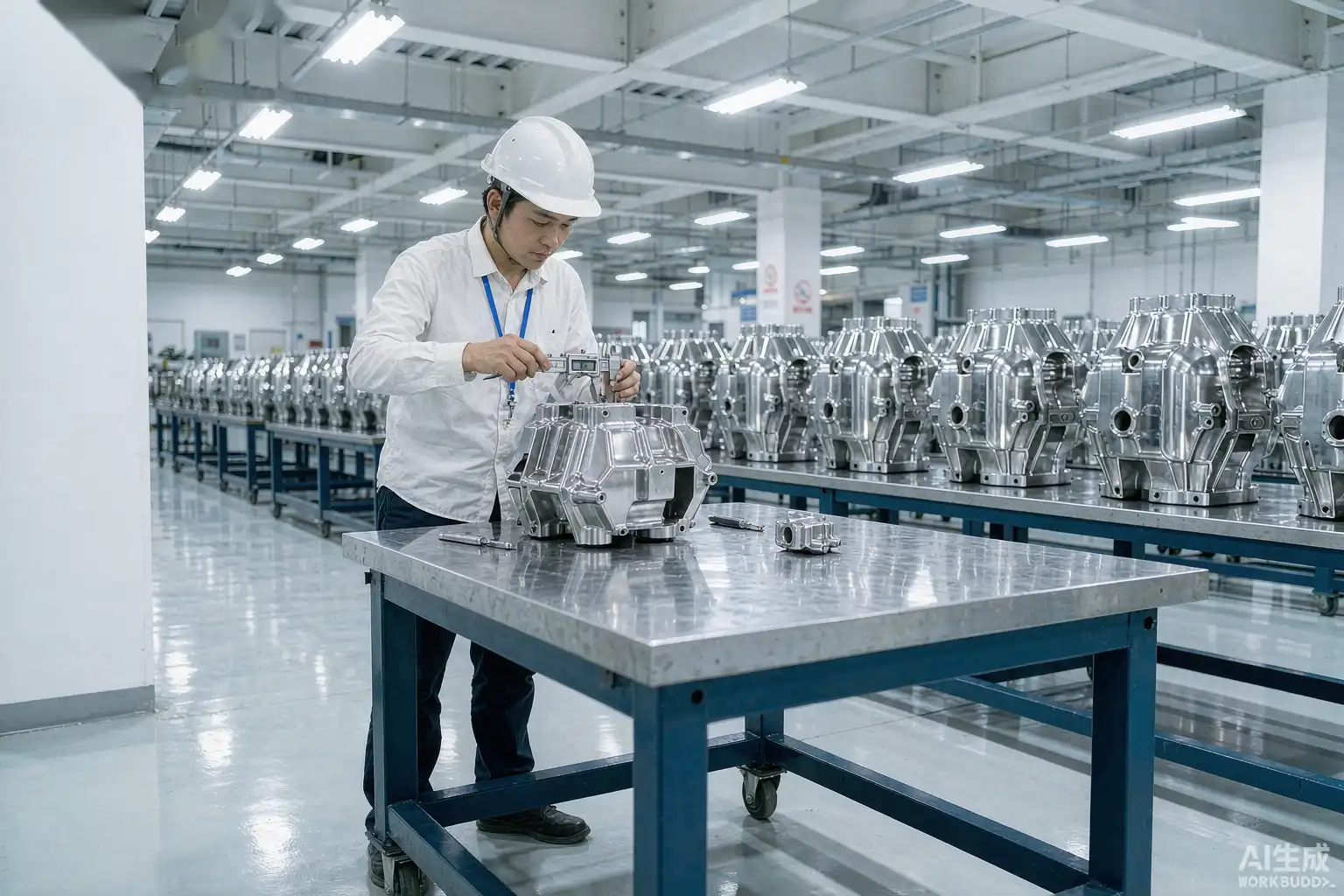
Dig into specifics: Do they run first-article inspection (FAI)? What measuring equipment do they own — CMM, X-ray, leak testing? How do they handle in-process inspection frequency? Written QC plans matter less than the equipment and routines behind them.
5. Surface Finishing Capability — The Hidden Differentiator
This is the question most RFQs miss. A raw casting is not a shippable part: burrs must be removed, gates cut, surfaces polished before plating, anodizing, or PVD. Ask specifically:
- How do they deburr? Manual or automated?
- Do they have in-house grinding and polishing, or do they subcontract it?
- What is their finish-related reject rate?
Manufacturers using robotic deburring and polishing cells deliver far more consistent surface quality than those relying on hand labor — and consistency, not the sample part, is what you are actually buying at scale.
6. Secondary Operations and Supply Chain
CNC machining, tapping, anodizing, powder coating, plating, assembly — the more processes happen under one roof, the fewer handoffs and the lower your risk. Ask which steps are in-house and which are outsourced, and how they qualify their outsourced partners.
7. MOQ and Setup Fees That Make Sense
Beware of the “any MOQ accepted” quote. Every mold needs setup, warm-up cycles, and scrap on start. A realistic manufacturer will quote MOQs that reflect their process economics. If the MOQ is suspiciously low, quality control is likely thin.
8. Realistic Lead Times
Ask for their current workload, not their standard brochure lead time. A manufacturer running at 90% capacity will miss your delivery. Ask who their current bottleneck is — casting, machining, or finishing — because the bottleneck reveals the real lead time.
9. Communication and Engineering Support
Request a DFM (Design for Manufacturing) review. The best manufacturers will come back with suggestions that save you money: draft angles, wall thickness adjustments, gate placement changes. The speed and quality of that feedback is the single best predictor of how the project will feel.
10. References You Can Actually Call
Ask for 2–3 references in industries similar to yours, and call them. Ask about delivery reliability, quality issues found after shipment, and how the manufacturer handled them. One honest reference conversation is worth a hundred website testimonials.
Red Flags to Walk Away From
- No finishing process disclosure — if they cannot explain how parts are deburred and finished, expect rejects later.
- Price 30% below the market — usually means skipped inspection or manual finishing shortcuts.
- No DFM feedback — a manufacturer that accepts your drawing without questions is not reviewing it.
- Vague on tooling ownership — clarify ownership and file rights before signing.
Sourcing From China: What Changes
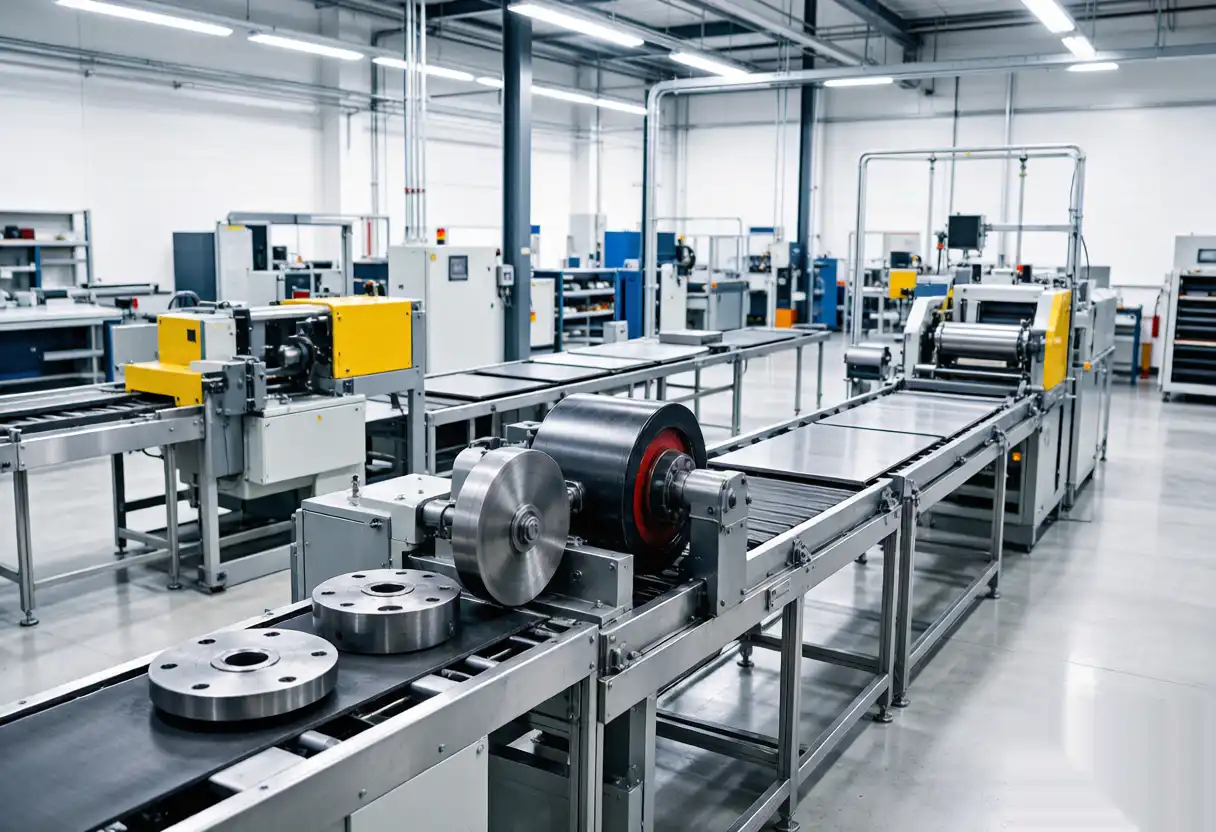
China remains the global center for aluminum die casting, and Chinese manufacturers — including those in Fujian, Guangdong, and Zhejiang — now operate world-class HPDC and gravity casting lines. The risk is not technology; it is distance. You cannot walk into the factory weekly — take a virtual tour of our facility for a sense of what a well-run plant looks like — so your selection criteria must be stricter:
- Demand video audits: production floor, finishing department, QC room, on camera.
- Require FAI reports per batch until quality stabilizes.
- Insist on third-party inspection for the first several shipments.
- Ask how they will handle post-shipment quality issues — and get it in writing.
How to Compare Quotes Like a Professional
Most buyers compare the bottom-line number. Professionals compare three things that the quote sheet does not tell you:
The quote assumptions. Ask every shortlisted manufacturer to quote on an identical, written specification — same alloy, same tolerance, same finishing requirement, same packaging. Manufacturers will quietly quote on different specs to make their price look better. When the three quotes arrive on identical specs, the differences become meaningful.
The finishing cost line. Some manufacturers include finishing in the piece price; others list it separately or leave it out entirely, intending to charge you later. If finishing is not itemized, ask for it explicitly. In our experience, finishing accounts for 20–30% of total die casting cost — it is too large to leave unquoted. A manufacturer with automated deburring and polishing will quote finishing confidently; one relying on hand labor will hedge.
The failure cost, not just the piece price. A part that costs $0.05 more but arrives consistently on spec is cheaper than a part that is $0.05 less but causes a rejected shipment. When comparing quotes, add a penalty assumption: estimate your cost of a rejected batch (rework, expedited freight, customer downtime) and apply it to the quote with the weaker QC story. The “cheapest” quote often stops being the cheapest after that exercise.
Contract Terms Worth Negotiating
Beyond price, four clauses deserve your attention before you sign a die casting supply agreement:
- Tooling ownership and storage. Ensure the contract states that the mold, its CAD files, and its maintenance history belong to you. Also agree on who stores the tool — and who pays if it is damaged.
- Process change notification. Require the supplier to notify you in writing before any process change that could affect quality: new alloy batch, new machine, new finishing method. This single clause prevents the most common cause of “suddenly different” parts.
- First-article and batch inspection. Define FAI requirements and in-process inspection frequency in the contract, and your right to third-party inspection during production runs.
- Finishing standards. Specify surface finish acceptance criteria (Ra values, no-burn rules, polish direction) in the contract, not just the drawing. When finishing is specified in writing, disputes over surface quality almost disappear.
These terms cost nothing to ask for and protect you for the lifetime of the tooling. A manufacturer who resists process-change notification is a manufacturer who plans to change things without telling you.
Conclusion: The Checklist in One Paragraph
Choose an aluminum die casting manufacturer the way you would hire a long-term partner: verify certifications and in-house tooling, check QC equipment and finishing automation, demand DFM feedback, confirm MOQ and honest lead times, and call their references. The factory that answers the finishing question confidently is the factory that will ship you consistent parts — learn how surface finishing automation transforms foundry output.
At Xiamen Dingzhu, we do not cast parts — we build the automated deburring, grinding, and polishing systems that make casting manufacturers consistent. If you are auditing a supplier and want an independent view of their finishing capability, send us their finishing line video — we will tell you exactly what to look for.
Frequently Asked Questions
What is the difference between a die casting company and a die casting manufacturer?
Nothing technical — “company” and “manufacturer” are used interchangeably. What matters is whether they actually operate casting machines in-house or resell from other factories. Ask for a production video and visit if possible.
How long does tooling take for a new aluminum die casting?
Typically 4–8 weeks for a production mold, depending on complexity, plus 1–3 rounds of sampling. Add another 1–2 weeks if the design requires significant DFM changes.
Should I use a trading company or a factory directly?
Buying from the factory gives you control over quality and cost; a trading company adds a middle layer. If you buy directly from a factory, use third-party inspection and a written process-change clause to protect yourself.
What certification should a casting supplier have for European markets?
Start with ISO 9001. For EU sales, ask about material certificates, RoHS/REACH compliance, and any specific declarations your product requires (e.g., food-contact or drinking-water approvals for sanitary products).