

Spindle Polishing Machine: Buyer’s Guide for Metal Parts
Mirror polishing is where margins disappear. Hand buffing a hundred faucet bodies or handle castings produces a hundred slightly different finishes, and the operator who can do it well is increasingly hard to hire. A spindle polishing machine fixes both problems by mounting parts on rotating spindles that carry them past buffing wheels in a programmed path, so every part receives the same pressure, speed, and compound. The result is a repeatable cosmetic surface at production rate. This guide explains how spindle polishing works, how it compares with robotic cells, and what to specify before you buy.
What Is a Spindle Polishing Machine?
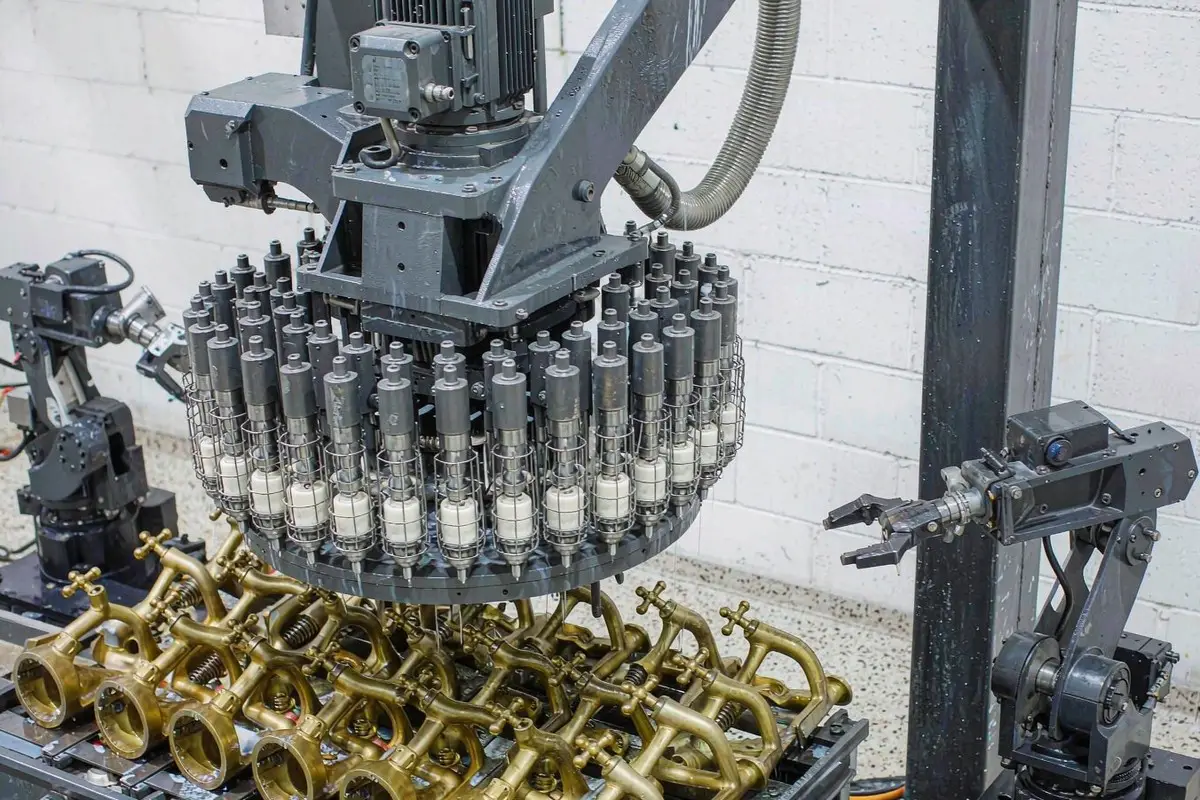
A spindle polishing machine is an automated buffing system in which parts are clamped onto rotating spindles and presented to one or more polishing wheels. The spindle rotates the part while the head applies a buff at controlled pressure, so the entire surface — including curved and recessed areas — is worked uniformly. Multi-spindle designs index several parts through a sequence of buffs, multiplying throughput without adding operators.
These machines are the standard for sanitary ware, door hardware, cookware, and automotive trim, where appearance is the product. They sit downstream of deburring and mass finishing and upstream of plating, PVD, or lacquer.
How Spindle Polishing Works
The sequence is straightforward but highly tunable:
- Load parts onto spindles. Fixtures hold each part in a repeatable orientation.
- Index to the first station. The turret or conveyor moves parts to a coarse buff for cut-down.
- Apply buff and compound. The wheel contacts the part at programmed pressure while compound is fed automatically.
- Progress through stations. Successive heads use finer compounds until the target gloss is reached.
- Unload and inspect. Parts are removed, cleaned, and checked against a gloss or comparator standard.
Spindle speed, wheel speed, contact pressure, compound type, and dwell time are the five variables that determine finish. Changing any one of them changes the result, which is why program recipes must be locked and documented.
Spindle Polishing vs Robotic Polishing Cells
Both automate buffing, but they suit different production profiles:
| Criterion | Spindle Polishing Machine | Robotic Polishing Cell |
|---|---|---|
| Best for | High-volume, similar parts | Varied or complex geometry |
| Changeover | Fixture and recipe change | Reprogram path |
| Cycle time | Very fast per part | Moderate, path-dependent |
| Flexibility | Lower | High |
| Footprint | Compact | Larger cell with guarding |
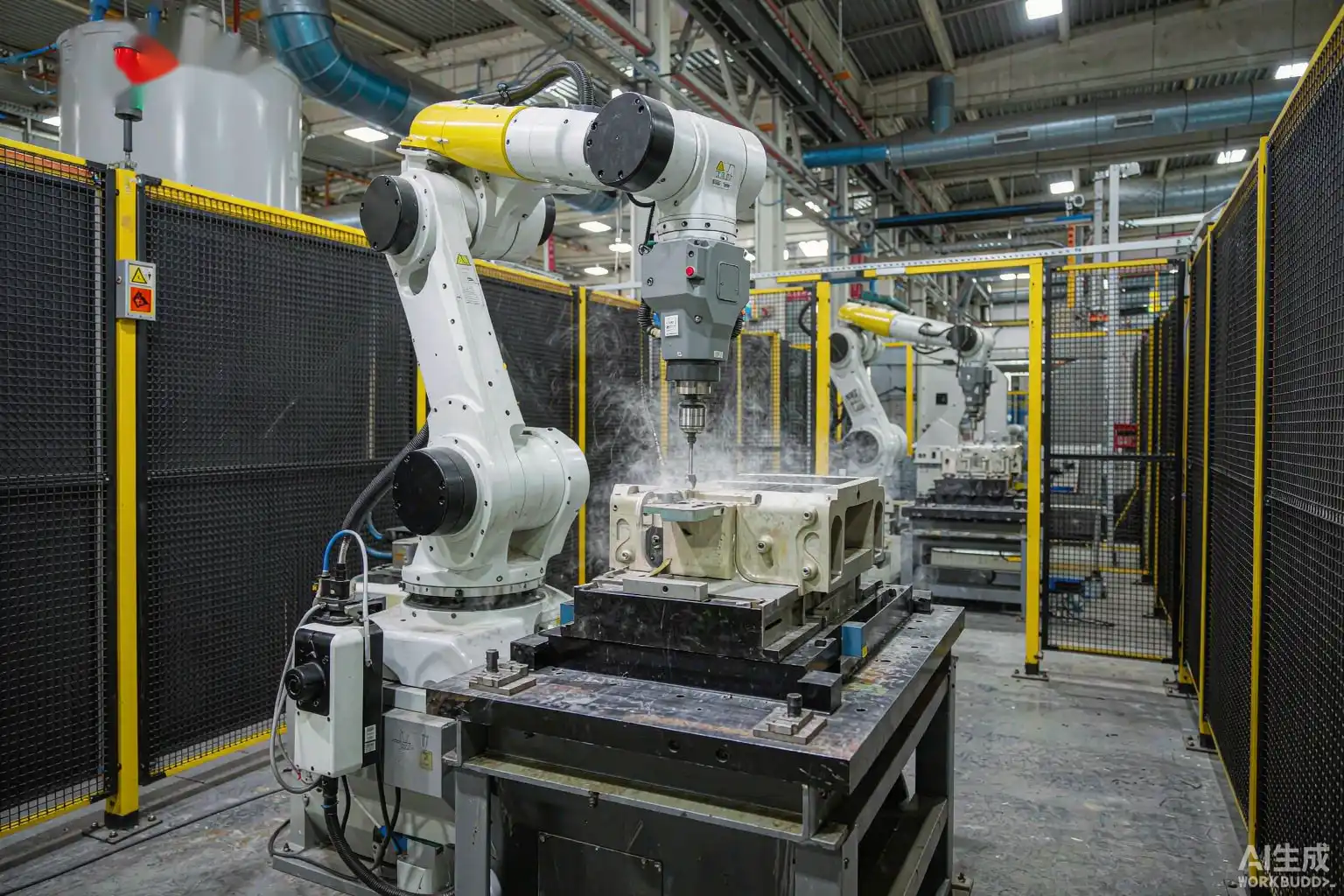
For a single product family at volume, spindle machines win on cycle time and cost per part. For mixed low-volume work, a robot is more economical. Many factories run both — a spindle line for the flagship product and a robotic cell for variants. Our polishing and buffing automation buyer’s guide compares the economics in detail.
Types of Spindle Polishing Machines
- Single-spindle buffing machine — one part at a time, ideal for large or low-volume components.
- Multi-spindle rotary machine — several spindles on a turret indexing through stations; the volume workhorse.
- Continuous conveyor machine — parts travel on a chain through multiple heads for very high output.
- CNC spindle polisher — servo-controlled axes that follow complex contours with programmable pressure.
CNC control is what separates modern machines from older fixed-head designs. Servo axes let you vary pressure along a contour, which is essential for parts with tight radii and flat faces on the same component. Our CNC polishing machine feature guide covers the control options worth paying for. Spindle tooling logic also overlaps with robotic deburring spindle tooling, where the same quick-change interface thinking applies.
Choosing Buffs, Compounds, and Spindle Speed
Consumables determine gloss and cycle time:
- Sisal buffs — aggressive cut for removing scratches and heavy orange peel.
- Spiral sewn cotton buffs — medium cut and blending; the general-purpose choice.
- Loose cotton buffs — final colour and high gloss.
- Emery compound — coarse cut on stainless and steel.
- White and green rouge — colouring and brightening on brass, aluminium, and chrome.
Spindle speed typically runs 50–300 rpm while wheel surface speed runs far higher. Too much spindle speed smears compound; too little leaves swirl marks. Set both from a trial, not from a chart. Our automatic buffing machine technology guide covers head design and compound delivery in more detail.
Workholding and Fixturing
Fixtures are the least glamorous and most consequential part of the project. A good fixture locates the part on a machined feature, clamps without marking the cosmetic surface, and allows quick load and unload. Plan for one fixture per part family, with quick-change mounting so changeover takes minutes rather than hours. Soft jaws, vacuum chucks, and purpose-built nests are all common. If the fixture marks the part, you have created a new defect while removing an old one.
Setting Cycle Times and Finish Targets
Define the finish before you define the machine. A practical specification table:
| Finish Level | Typical Ra | Stages Required |
|---|---|---|
| Satin / brushed | 0.4 – 0.8 µm | Single blending head |
| Bright polish | 0.1 – 0.2 µm | Cut plus colour |
| Mirror finish | < 0.05 µm | Cut, blend, colour, final rouge |
Each additional stage adds cycle time and consumable cost. Agree the target with your customer using a physical sample, because “mirror” means different things to different buyers.
Applications Across Industries
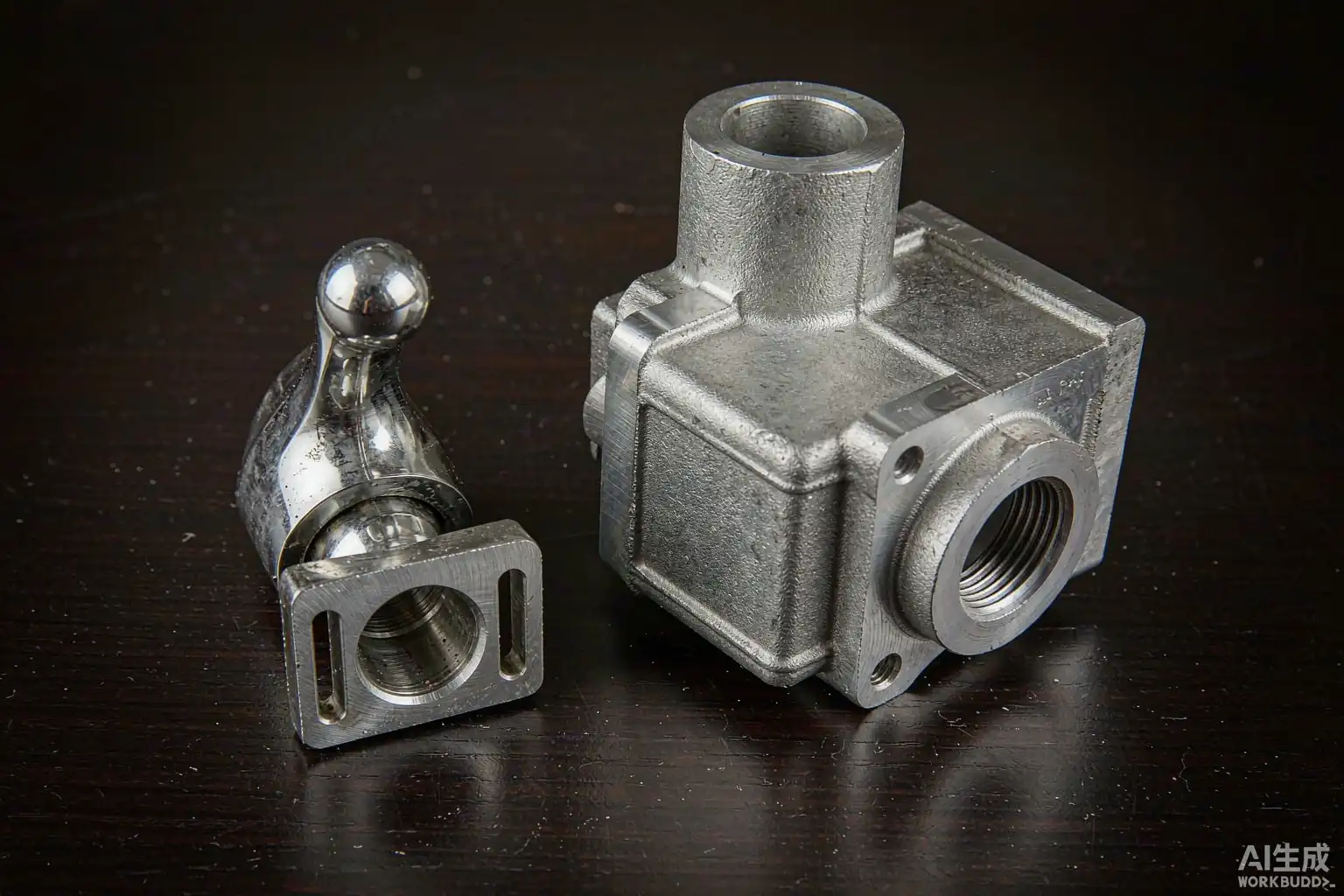
- Sanitary ware. Faucet bodies, handles, and shower components polished before chrome plating.
- Door and furniture hardware. Levers, rosettes, and hinges with a uniform mirror or satin look.
- Cookware. Pots, pans, and lids finished to a food-safe cosmetic standard.
- Automotive trim. Emblems, grilles, and interior accents polished before PVD or lacquer.
- Medical and dental instruments. Smooth, cleanable surfaces with controlled roughness.
Benefits of Automated Spindle Polishing
- Repeatability — identical pressure and path on every part removes operator variance.
- Labour leverage — one operator can tend multiple machines and load in batches.
- Consumable control — automatic compound feed stops over-application and cuts cost.
- Throughput — multi-spindle indexing multiplies output per square metre of floor.
- Traceability — locked recipes make quality auditable and repeatable across shifts.
How to Select the Right Machine
- Part family and volume. Count parts per shift and how many variants share fixtures.
- Finish target. Number of stages follows directly from the Ra requirement.
- Geometry. Complex contours need CNC axes; simple rounds suit fixed heads.
- Fixturing plan. Budget for one fixture per family and quick-change mounts.
- Compound and extraction. Confirm dust and mist extraction and compound recycling.
- Sample trial. Never buy without polishing your own parts to your own standard.
Integrating With Deburring and Plating
Spindle polishing performs best when the incoming surface is already uniform. Mass finishing or a automatic polishing machine upstream removes casting skin and heavy scratches so the buffing stages only need to refine, not repair. Downstream, a clean and dry part is essential before plating — residual compound causes adhesion failures. Our automated mirror polishing guide maps the full stage sequence.
Safety, Extraction, and Operator Protection
Buffing generates fine lint, compound mist, and metal dust, all of which become health hazards if allowed to accumulate. Effective extraction at the wheel guard is not optional — it protects operators and prevents dust settling on freshly polished surfaces, which causes rework. Enclose moving spindles and wheels with interlocked guarding, and ensure emergency stops are reachable from the load position.
Operators should wear eye protection, gloves rated for rotating contact, and respiratory protection where mist is present. Noise from high-speed wheels is easily underestimated; measure it and provide hearing protection where levels demand it. A machine that is safe to operate is also a machine that runs predictably, because guarding and extraction failures are usually the same maintenance items that cause finish defects.
Maintenance Tips
Check spindle runout weekly, because a worn bearing shows up as an uneven finish long before it fails. Inspect buff condition and replace before glazing, keep compound lines clear, and verify head pressure calibration monthly. Guarding and interlocks must be tested on the same schedule — buffing generates mist and fine dust that demand effective extraction.
Common Mistakes to Avoid
- Skipping the sample trial. Buying on catalogue gloss photos is the most expensive mistake in this category.
- Under-budgeting fixtures. Fixtures are half the project; poor ones cause marks and misloads.
- Over-speeding the spindle. Excess speed burns compound and produces swirl rather than gloss.
- Ignoring incoming surface quality. Buffing cannot economically fix a rough casting.
- No recipe control. Without locked programs, shifts drift and rejects creep up.
Frequently Asked Questions
How many parts per hour can a spindle polishing machine process?
It depends on part size and stage count. A multi-spindle machine often runs several hundred small parts per hour, while large components may run 30–60 per hour.
Can a spindle polishing machine achieve a mirror finish?
Yes, with a cut, blend, colour, and final rouge sequence. Mirror typically means Ra below 0.05 µm, verified against an agreed physical sample.
What is the difference between spindle and robotic polishing?
Spindle machines index similar parts through fixed stations for high throughput. Robotic cells follow programmed paths and suit varied or complex geometry.
Does spindle polishing work on aluminium?
Yes, but aluminium requires lower pressure and softer buffs to avoid smearing and heat marking. Dedicated compounds prevent loading.
How often should buffs be replaced?
Replace when the buff glazes, loses shape, or the finish drops below standard. Track buff hours per part family rather than replacing on a calendar.
Conclusion
A spindle polishing machine converts an artisanal buffing skill into a controlled, repeatable process. Define the finish, plan the fixtures, and prove the cycle on your own parts before committing. If you are polishing sanitary ware, hardware, or cookware at volume, send us samples and our team will return a stage sequence, a measured gloss result, and a machine configuration sized to your output.