

Polishing and Buffing Automation
Manual polishing and buffing are rapidly becoming critical bottlenecks for modern manufacturing facilities. Rising labor costs, severe skilled technician shortages, stringent safety standards regarding airborne particulate exposure, and quality variances force plant managers to re-evaluate their surface finishing operations. Transitioning to automated finishing addresses these operational risks while increasing throughput and consistency.
1. Fundamentals of Finishing Automation
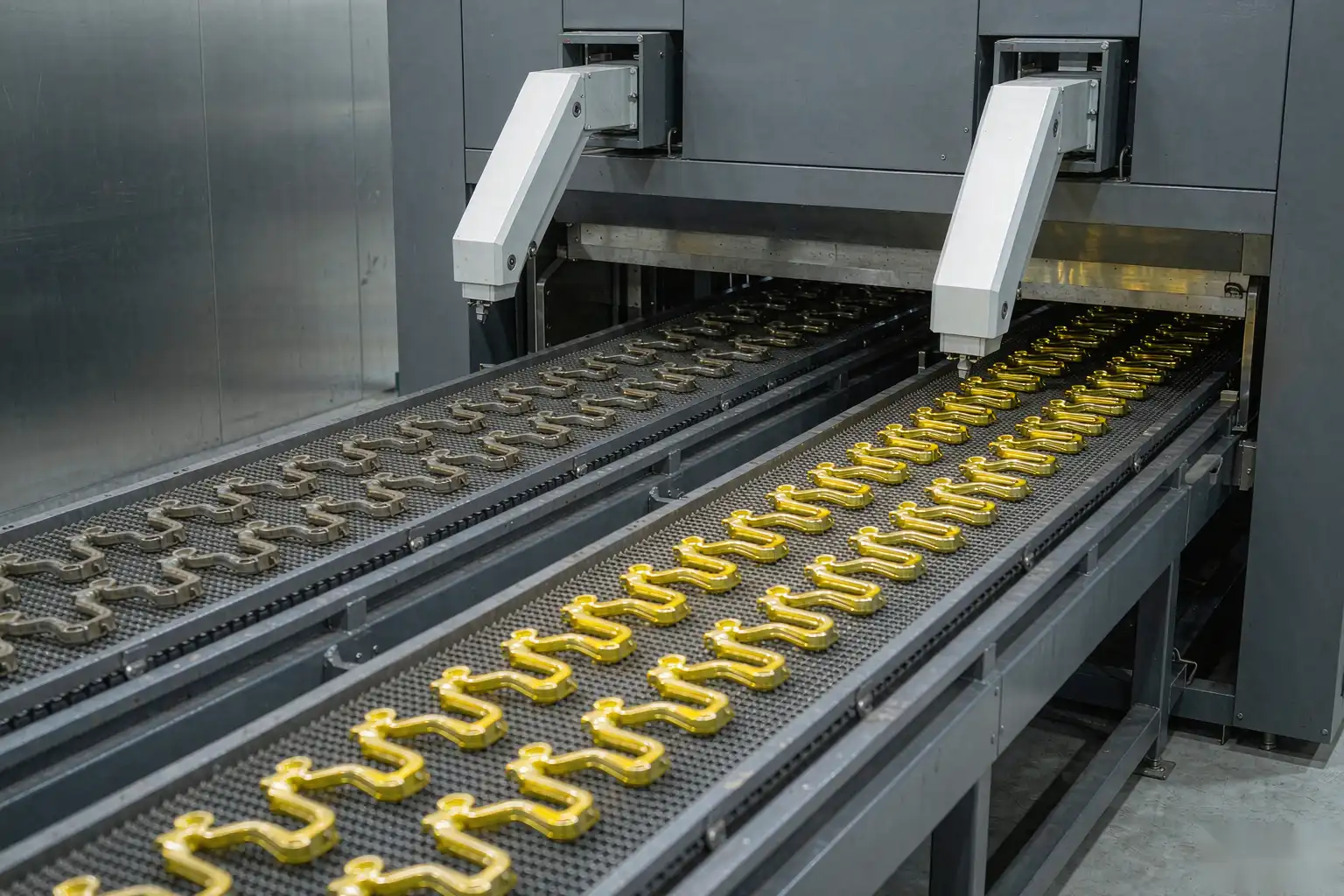
Automated surface finishing replaces manual grinding and buffing with robotic articulators or dedicated multi-axis CNC machines to achieve target surface finishes
(Ra /
Rz).
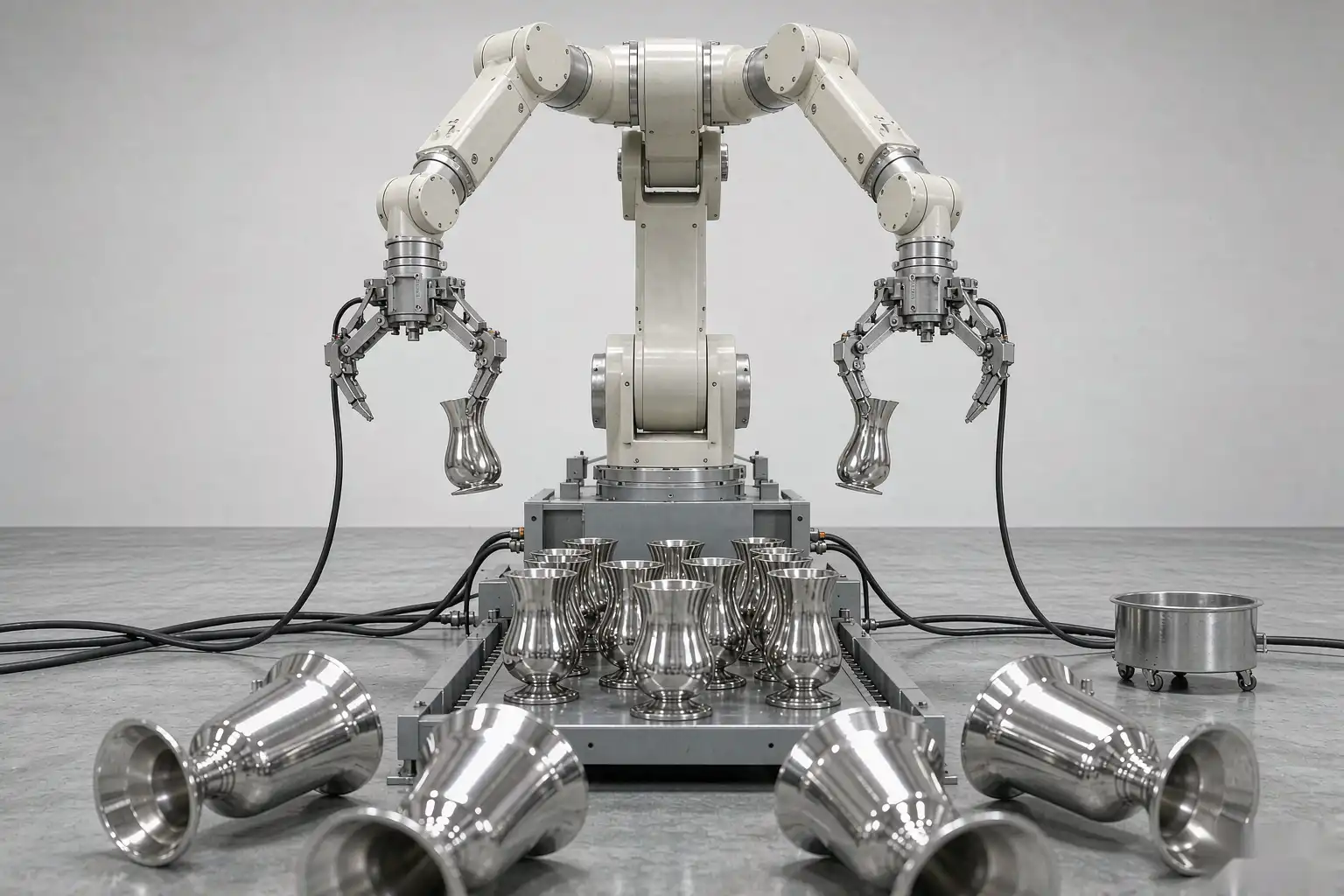
- Robotic Articulated Arms: Versatile 6-axis articulated robots equipped with active force-feedback sensors and multi-head end-effectors designed to process complex 3D contours.
- Dedicated Finishing Machines: Fixed rotary indexing machines engineered for high-volume, repetitive, symmetrical components.
- Substrate Compatibility: Suitable for aluminum alloys, stainless steel, titanium, brass, engineering ceramics, and advanced composites across automotive, aerospace, medical, and consumer hardware sectors.
2. Strategic Benefits & ROI Alignment
Upgrading to an automated surface finishing cell offers key measurable advantages:
- Repeatable Surface Integrity: Robots follow exact toolpaths with real-time force adjustment, eliminating operator-induced variance and reducing scrap rates by up to 85%.
- OpEx Reduction: Systems operate across multiple shifts with minimal direct supervision, significantly reducing unit manufacturing costs.
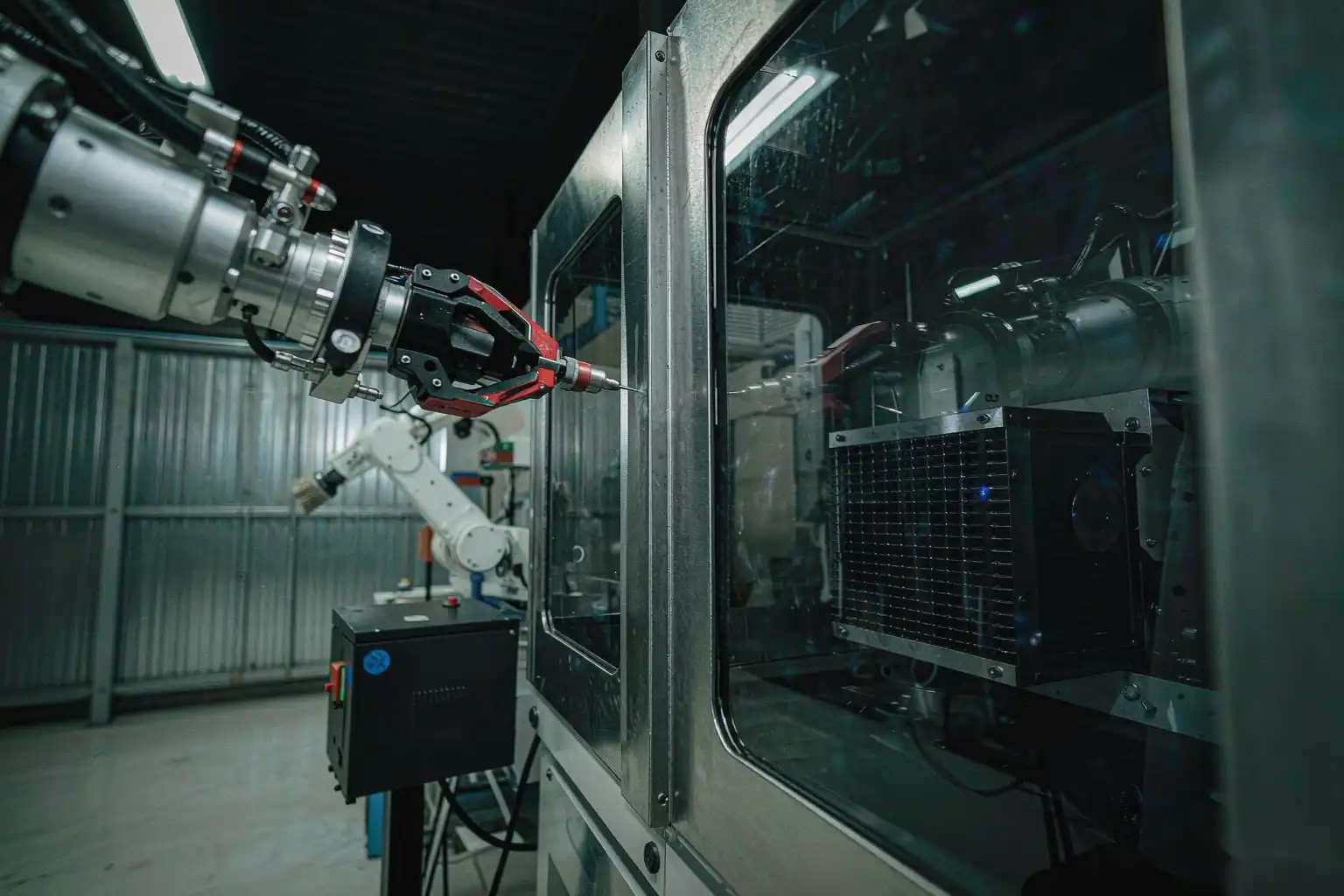
- EHS & Regulatory Compliance: Fully enclosed work cells equipped with localized high-efficiency dust collection isolate operators from hazardous respirable dust (e.g., aluminum or titanium particulates) and ergonomic strain.
3. Key Technical Considerations for Buyers
Evaluating automated finishing equipment requires an understanding of core technical modules:
| Feature Module | Technical Architecture | Strategic Value & Function |
|---|---|---|
| Force Control | Active pneumatic/electric force-compliance units | Prevents over-grinding, maintains precise pressure over variable geometric profiles. |
| Tooling & Abrasives | Automatic tool changers & wheel wear compensation | Extends uninterrupted operations by automatically adjusting positions as abrasives wear. |
| Vision & Programming | 3D vision scanning & Offline Programming (OLP) | Enables rapid product changeover and compensates for incoming casting/forging variances. |
4. Step-by-Step Buyer’s Procurement Roadmap
5. Future Trends in Surface Finishing
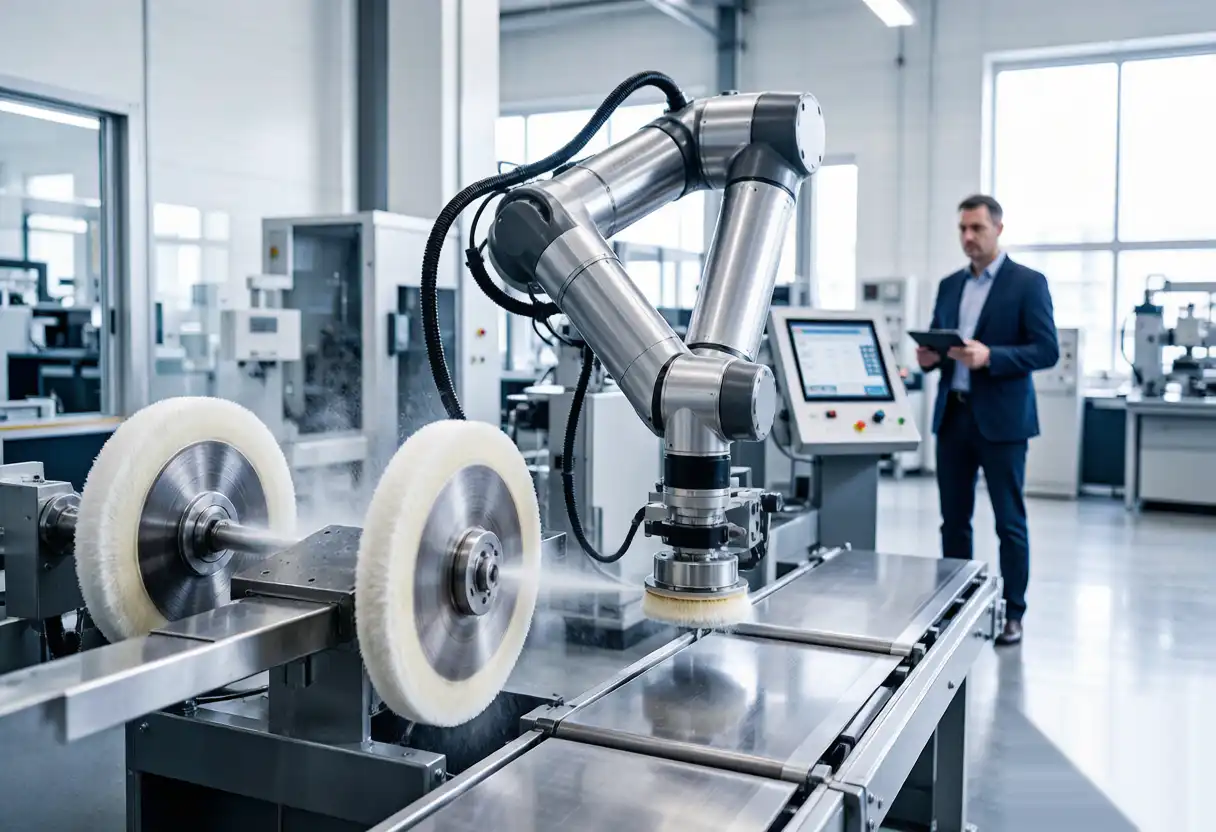
The industry is transitioning toward Autonomous Tool Path Generation, where integrated AI vision systems scan individual workpieces and dynamically correct robotic toolpaths to compensate for upstream manufacturing anomalies. Furthermore, flexible Collaborative Robots (Cobots) equipped with precise force-sensing units are lowering adoption barriers for mid-sized job shops needing quick deployment.
Ready to automate your finishing line? Begin by conducting a part family assessment on your highest-volume components.