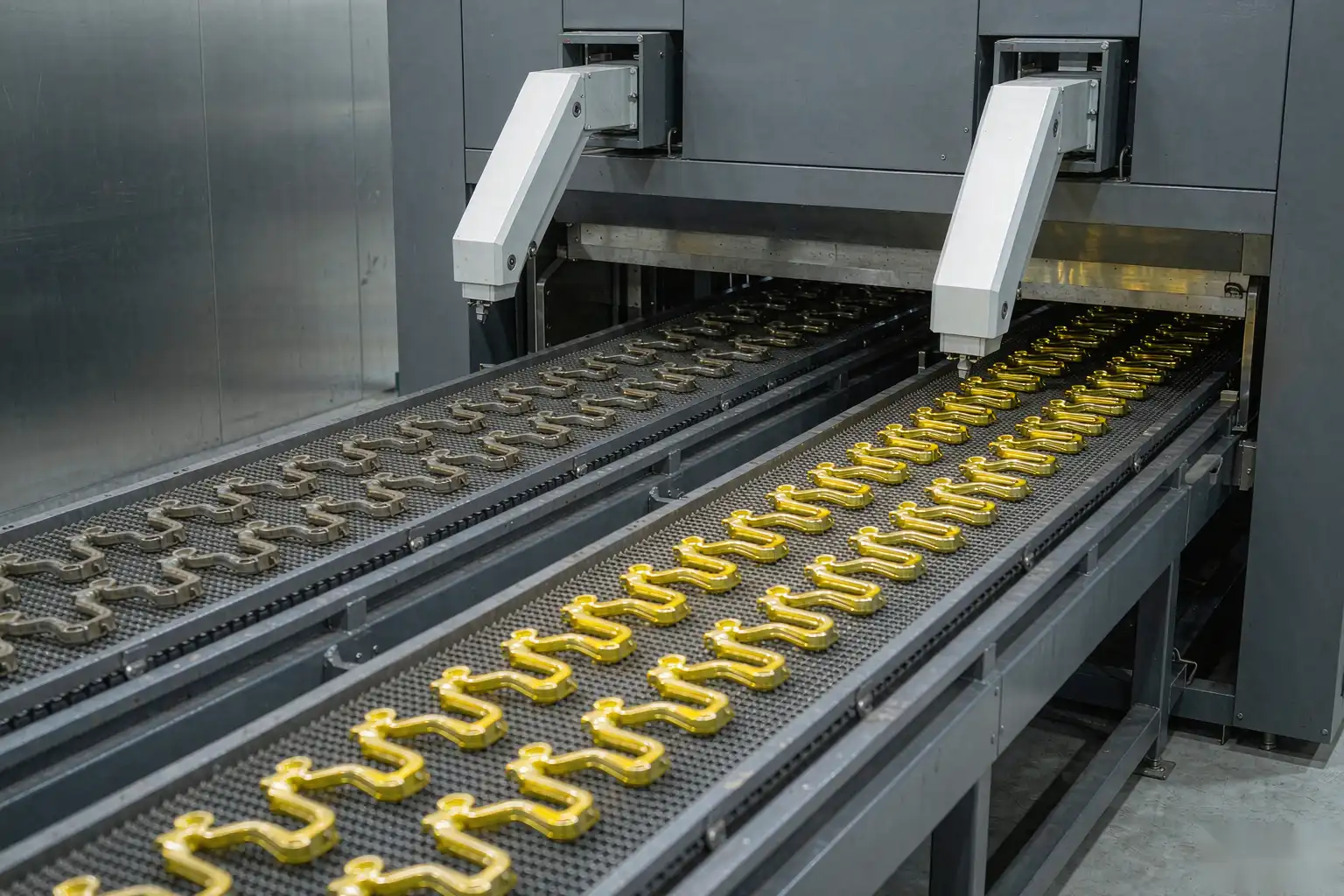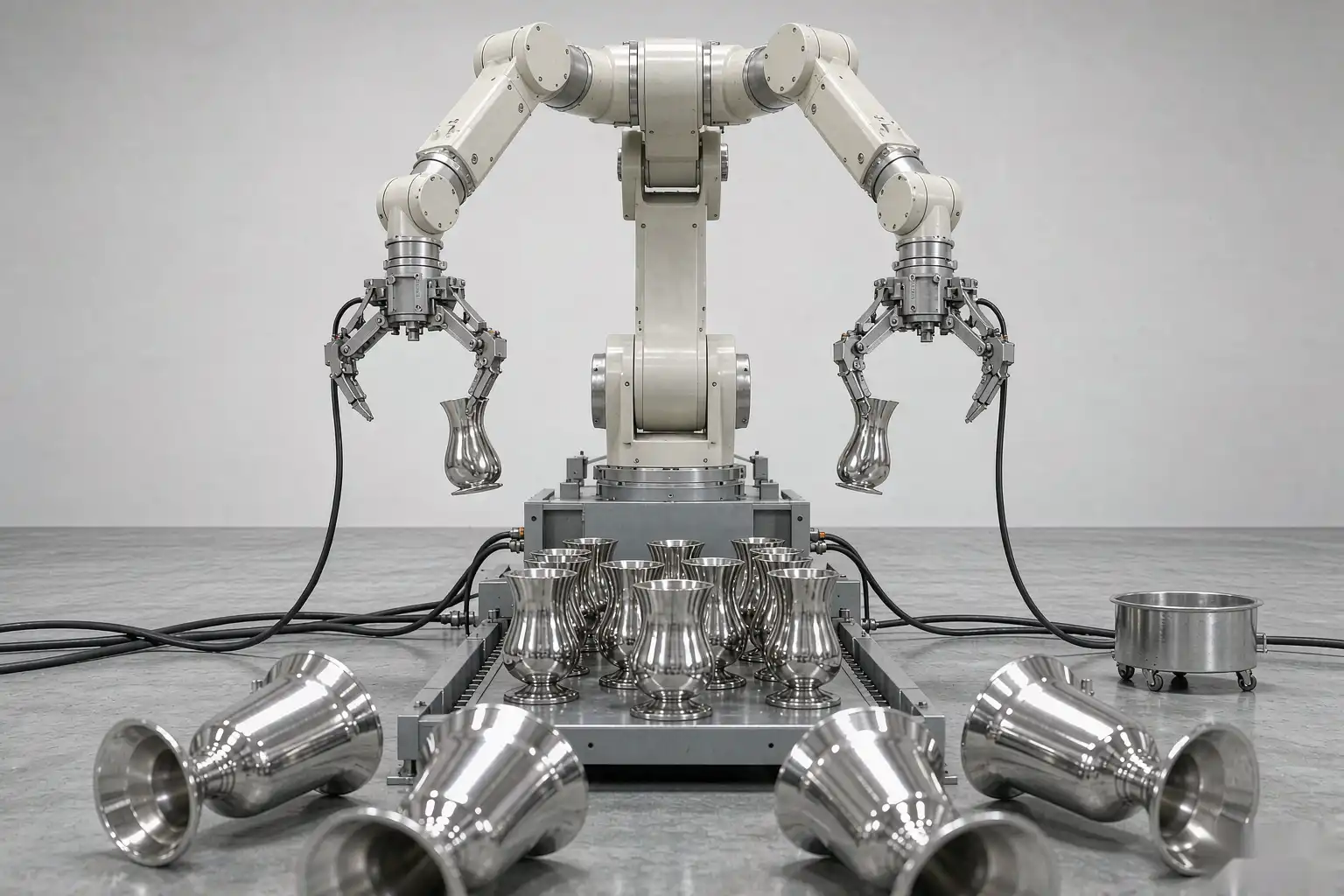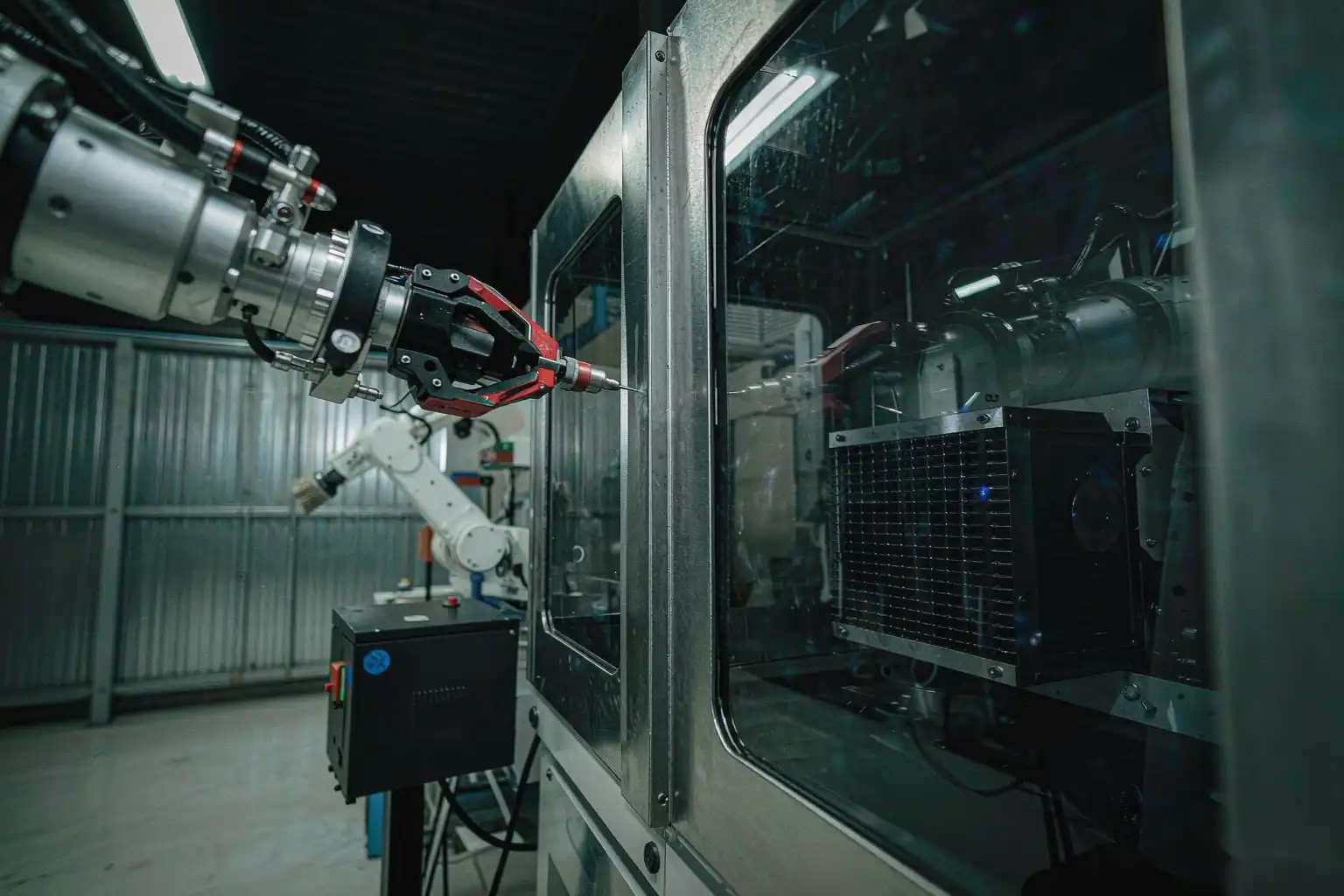


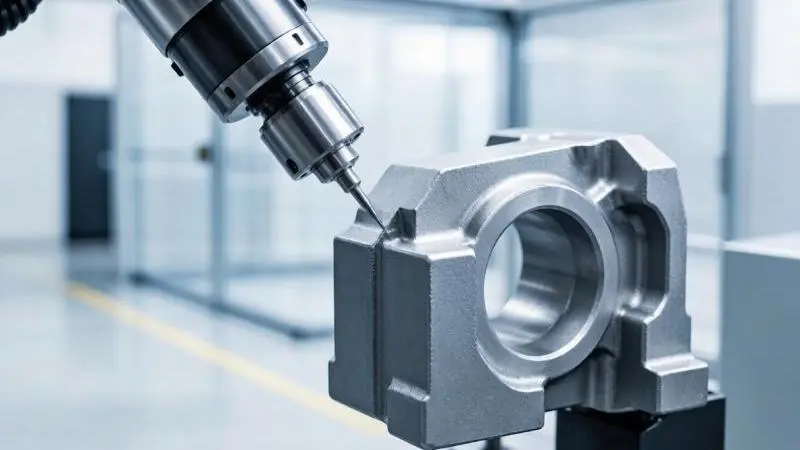
Choosing industrial deburring equipment is rarely about buying the biggest or fastest machine — it is about the five capabilities that decide whether your investment actually removes burrs, hits cycle time, and pays for itself. Finishing operations account for 15–30% of total casting cost, with deburring alone representing 5–12% depending on part complexity (American Foundry Society). The right feature set is what turns that cost center into a competitive advantage.
This guide breaks down the top five features every buyer should evaluate before signing a purchase order, drawn from real foundry and die-casting installations. If you are still deciding between technologies, pair this with our foundry deburring machine selection guide and the overview of how automatic deburring works.
If you are short on time, prioritize Feature 1 (adaptive control) and Feature 4 (process monitoring). Together they determine whether the machine handles real-world casting variation and whether you can prove ROI to management.
1. Adaptive Force and Vision Control
The single most important feature on modern industrial deburring equipment is the ability to adapt to parts that are never identical. As-cast burrs vary in thickness, location, and hardness within a single batch because of mold wear, pouring temperature, and sand variability. Rigid automation that assumes a fixed path will over-cut good material on one part and miss flash on the next.
Look for:
- Force-torque sensing — the tool head adjusts pressure hundreds of times per second, compensating for burr variation in real time.
- Machine vision guidance — cameras locate flash on the fly, so robot paths are generated per part rather than programmed per nominal drawing.
- Compliant tooling — spring-loaded or pneumatic compliance keeps the tool in contact without gouging the parent surface.
Systems that combine vision and force control reduce programming time by up to 80% for mixed-model production and are the foundation of modern robotic deburring cells.
2. Quick Changeover and Flexible Tooling
Most workshops run dozens of part numbers, not one. A machine that takes two hours to re-fixture is a machine you will avoid using. The second feature to look for is changeover speed and tooling flexibility.
Key capabilities:
- Automatic tool changers — switch between carbide burrs, abrasive wheels, and brushes without manual intervention.
- Program library — store and recall deburring paths by part number; ideal for high-mix, low-volume runs.
- Modular fixtures — quick-release locating points that an operator can swap in under five minutes.
This is exactly where robotic deburring outperforms manual work: once programs exist, changeover is a software action, not a re-tooling project.
3. Integrated Dust Extraction and Safety Enclosure
Deburring generates abrasive dust and — with some alloys — combustible fines. A compliant, guarded cell is not optional; it is a baseline requirement under ISO 12100 machinery safety standards.
Evaluate:
- Enclosed cell with interlocked access doors that halt motion on opening.
- Local exhaust ventilation (LEV) sized to the material — steel and iron dust need different capture than magnesium or aluminum.
- Spark and thermal detection for alloys where dust ignition is a risk.
A properly enclosed cell also protects nearby operators and keeps your floor within occupational exposure limits — a point auditors check first.
4. Real-Time Process Monitoring and Data Export
You cannot improve what you cannot measure. The fourth feature is the machine’s ability to report what it actually did, not what it was supposed to do.
What to require:
- Per-part traceability — cycle time, tool used, force profile, and pass/fail status logged by serial or batch.
- OEE dashboards — availability, performance, and quality at a glance for the finishing cell.
- Open data export — CSV, OPC-UA, or REST APIs so the data reaches your MES or ERP without a custom integration project.
This data is what makes automated deburring for zinc die castings defensible to management: you can show scrap dropped from 4% to 0.3% with numbers, not anecdotes.
5. Scalable Footprint and Line Integration
The fifth feature is forward compatibility. Your volume will grow, and your equipment should grow with it rather than becoming a bottleneck you rip out in two years.
Look for:
- Modular cells — add a second robot or a through-feed module without redesigning the layout.
- Conveyor and loader readiness — standardized infeed/outfeed heights and protocols for upstream/downstream automation.
- Compact footprint — six-axis cells that tuck into the space of two manual stations.
Feature Comparison at a Glance
| Feature | Manual station | Through-feed belt | Robotic cell |
|---|---|---|---|
| Adaptive force/vision | Operator-dependent | None | Standard |
| Changeover speed | Instant | 5–30 min | Software recall |
| Dust & safety | High exposure | Guarded line | Enclosed cell |
| Process data | None | Basic counter | Full traceability |
| Scalability | Add stations | Line extension | Modular add-on |
Score each shortlisted machine against these five features with weights based on your mix of volume, geometry, and quality requirements. A vendor who cannot demo adaptive control on your actual castings is a vendor to drop from the list.
Frequently Asked Questions
- Q: Which feature matters most for a high-mix shop?
A: Adaptive force/vision control and quick changeover. Without them, a robotic cell becomes a single-part machine and you revert to manual for everything else. - Q: Can I retrofit these features onto existing equipment?
A: Partially. Force control and vision can be added to many six-axis robots, but enclosure and extraction usually require a cell rebuild. Factor that into your total cost of ownership. - Q: Do I need all five features for low volume?
A: Not necessarily. Under 10,000 parts/year, manual or small vibratory may still win; above that, Features 1 and 4 are where automation starts paying back.
Conclusion: Your Feature Checklist
The right industrial deburring equipment is the one that adapts to your real parts, changes over fast, keeps your team safe, proves its results with data, and scales with your volume. Use the five features above as your evaluation scorecard, send sample castings for a trial, and model the five-year cost per part before you buy.
References and Further Reading
-
- American Foundry Society, “Finishing Cost Benchmarking Survey” (2024).
- ISO 12100:2010 — Safety of machinery. General principles for design.
- NADCA, “Cost Estimating Guidelines for Die Casting,” 2023.
- Dingzhu — Intelligent robotic deburring equipment specifications and case studies.