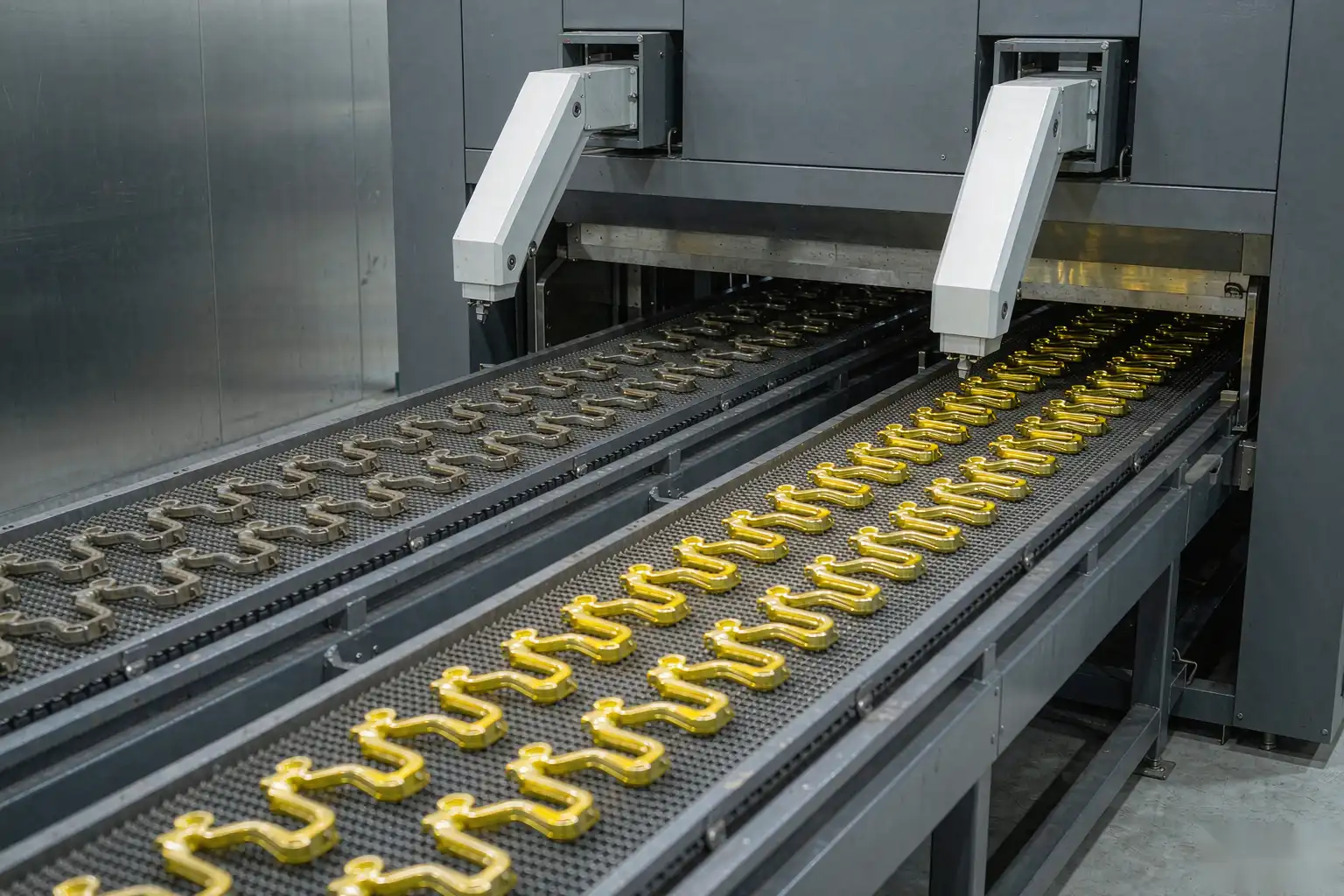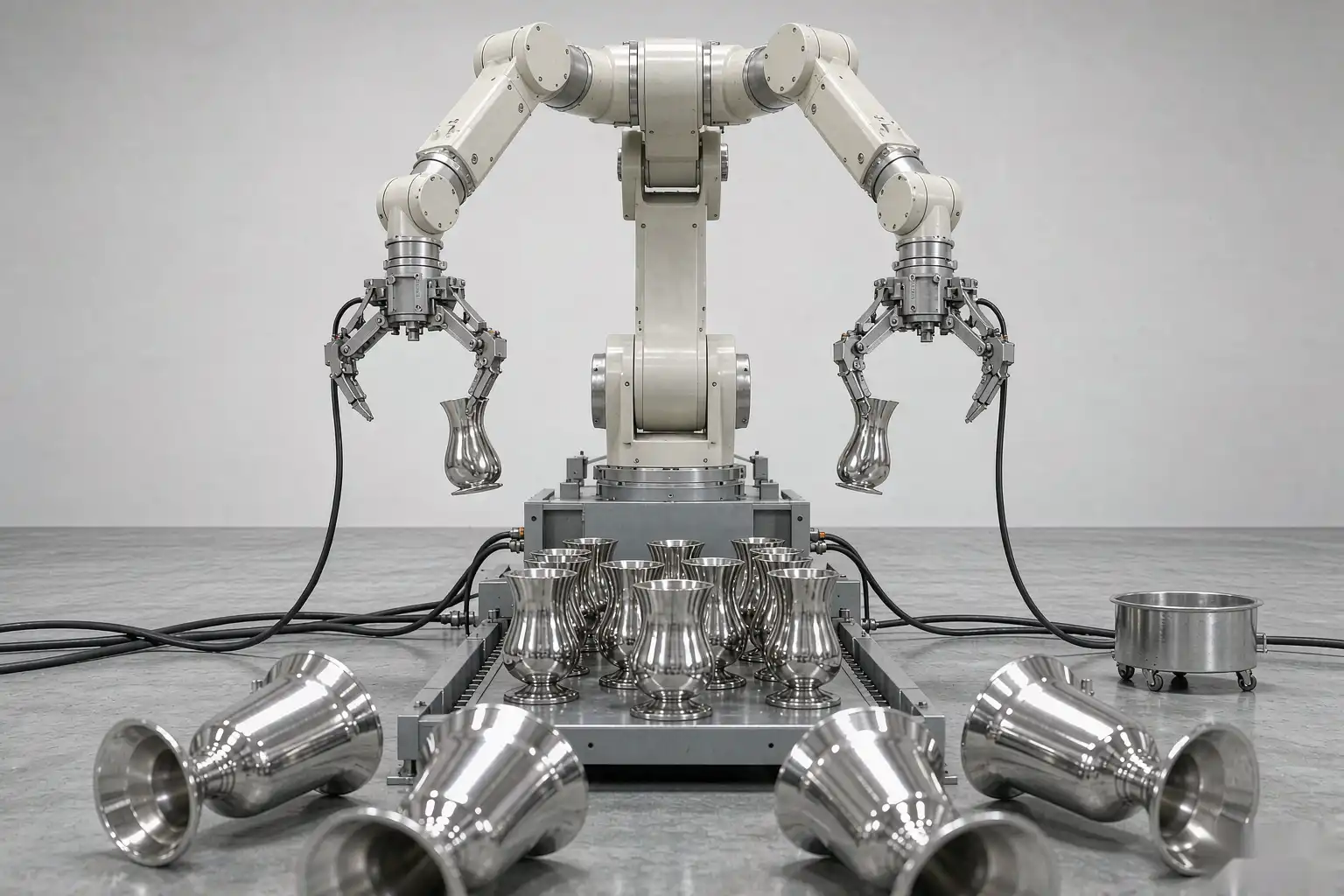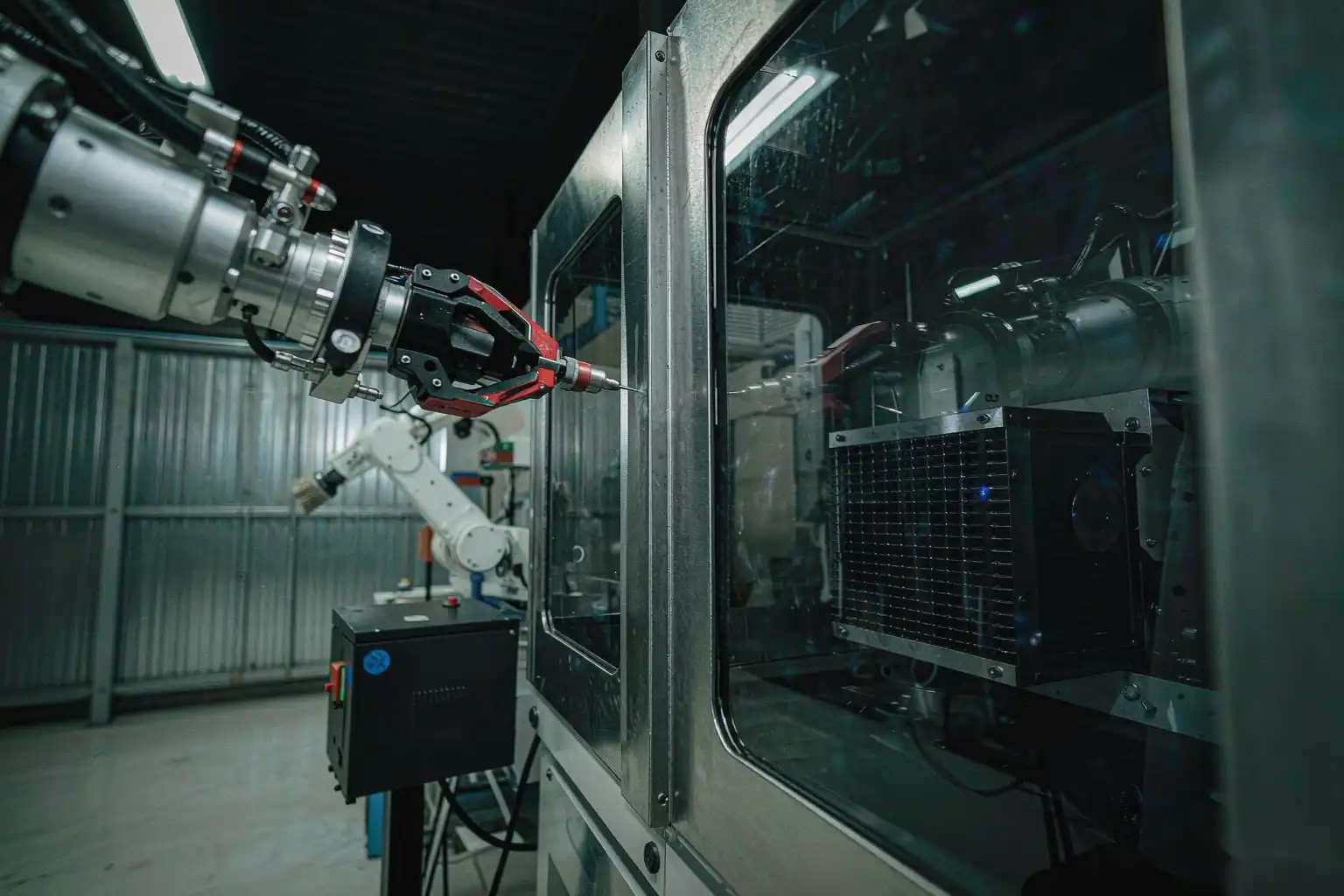


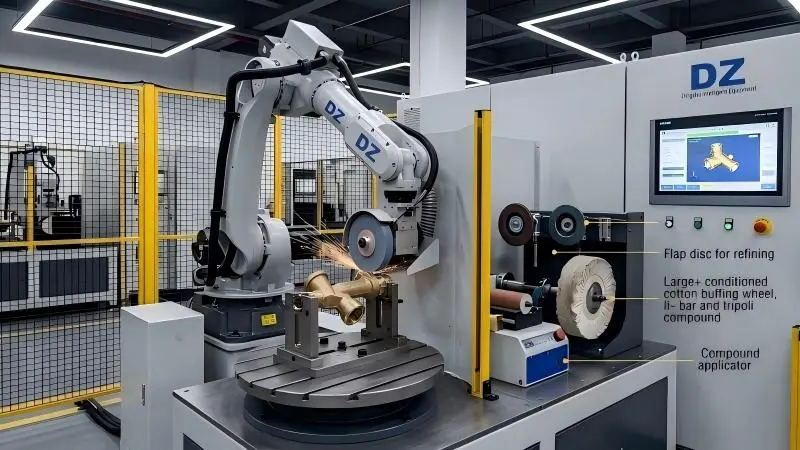
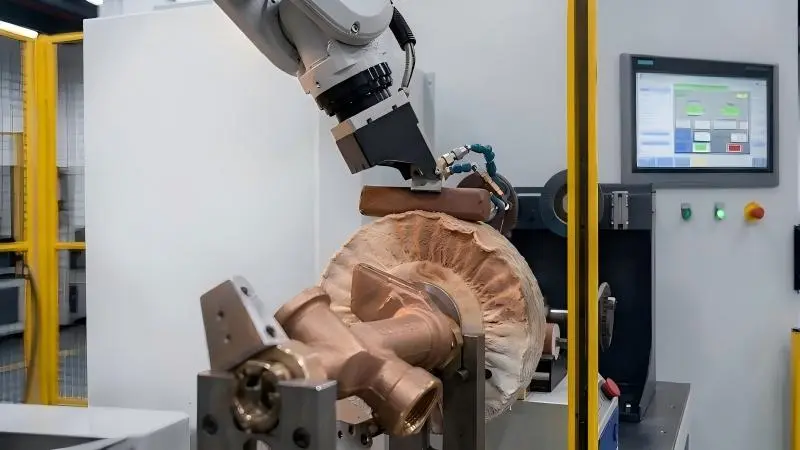
A grinding-and-polishing two-in-one machine performs rough stock removal and fine surface finishing on the same fixture and controller, eliminating the part-handling loss between a separate grinder and a polisher. For foundries shipping visible or sealed components, combining the two operations typically removes one full touch-labor step and tightens total throughput by 20–30% (NADCA die casting process data). Our full robotic grinding guide covers the grinding stage in isolation, while this guide focuses on why and how to merge the two.
Why Combine Grinding and Polishing
Moving a part from a grinder to a polisher means unclamping, transporting, re-fixturing, and re-registering—each step adds tolerance stack-up and labor. A combined machine keeps the part in one nest while the robot swaps tools: a bonded wheel for gate removal, then a flap disc, then a buffing wheel with compound. The result is a single controlled process with one quality gate instead of two, and the registration error between operations drops to zero because the part never moves. For a foundry, that means fewer handling dents and a finish that is uniform part to part.
These machines suit parts where the as-cast surface must reach a specified Ra before plating, anodizing, or chrome. See our aluminum casting finishing best practices for alloy-specific notes on what finish is achievable.
How the Combined Process Works
- Stage 1 — grind: a 36–80 grit ceramic wheel removes gates and flash to the base material, targeting ±0.2 mm edge tolerance and leaving a uniform scratch pattern.
- Stage 2 — refine: a flap disc or non-woven abrasive brings the surface to Ra 0.8–1.6 µm, removing the coarse grind marks that plating would otherwise amplify.
- Stage 3 — polish: a sisal or cotton buff with compound cuts to Ra 0.2–0.4 µm, suitable for sanitary or decorative use where a near-mirror look is required.
- Stage 4 — verify: a surface roughness check or vision pass confirms the finish before the part releases to the next station.
Tool changing is automatic. The robot parks the grinder in a dresser station and picks the polisher from a tool rack, so the cycle stays continuous and the operator only loads and unloads.
Two-in-One vs. Separate Machines
| Factor | Combined grind + polish | Separate grinder + polisher |
|---|---|---|
| Floor space | 1 cell | 2 cells + buffer |
| Part handling steps | 1 fixture | 2–3 re-fixtures |
| Finish consistency | Single registration | Stack-up risk |
| Capital cost | Higher upfront | Lower per unit |
| Best for | Finished-surface parts | Rough-only output |
Tool Change and Buff Conditioning Detail
The polish head needs as much attention as the grinder. The buff must be dressed to a true face and conditioned with compound at a metered rate; an under-conditioned buff glazes and leaves streaks, an over-conditioned one slings compound onto the grind zone. Most cells mount a separate compound applicator roller and a buff dresser, and both run on timers tied to part count. If you skip this, the polish stage becomes the source of rejects rather than the finish enhancer.
For a complementary view on polishing chemistry, read our polishing compound guide, which explains when to use sisal versus cotton and tripoli versus chrome oxide.
Key Design Considerations
Compound management is the make-or-break factor. Liquid or greaseless compound must be metered and the buff kept dressed; otherwise the wheel loads and leaves streaks that fail visual inspection. Dust and compound also need segregated extraction—metal dust is collected dry in an NFPA 484-rated unit, while compound mist needs a filtered wet capture. Plan the cell envelope so the grinder’s sparks never contaminate the polish zone, and physically separate the two tool stands.
When NOT to Combine
If your customer accepts a ground, non-reflective surface, the polish head is pure overhead. Likewise, if volumes are low and batches change daily, the extra changeover for compound and buff conditioning may not pay. In those cases a grind-only cell with optional future retrofit is the smarter first step. A grinding cell setup guide covers that base configuration.
QUICK DECISION TIP
If your customer accepts a ground (non-reflective) surface, skip the polish head—adding it only pays off when Ra under 0.4 µm or a mirror look is in the spec.
ROI SNAPSHOT
Combining operations on a faucet fitting line eliminated one re-fixture operator and lifted first-pass finish yield from 82% to 96%, recovering the premium machine cost in roughly 19 months.
Frequently Asked Questions
Can one wheel do both grind and polish?
A. No. Grinding and polishing need different abrasives and speeds; the value of the machine is automatic tool swap, not a single universal wheel.
Does polishing slow the grind cycle?
A. It extends total cycle by the polish duration (often 8–15 s), but you save more by removing the separate polish handling step.
What Ra can I reach?
A. A well-tuned combined cell reaches Ra 0.2–0.4 µm (near-mirror) on stainless and brass with the right compound.
Is it harder to maintain?
A. Marginally—you manage both wheel dressing and buff conditioning. Our maintenance tips apply to the grind side.
Need help specifying the right machine?
Contact Xiamen Dingzhu Intelligent Equipment — we size deburring and grinding cells to your castings, volume, and tolerances. Talk to our application engineers.
References
- American Foundry Society — afsinc.org
- NADCA — nadca.com
- ISO 9001 — iso.org
This article is for general guidance only and does not constitute a specification or quote. Confirm process parameters with the equipment supplier for your parts.
[/fusion_text][/fusion_builder_column][/fusion_builder_row][/fusion_builder_container]