

Faucet Production Line: How to Automate All Key Stations
A faucet factory in Vietnam invited us to walk their floor last year. The polishing section ran twelve people shoulder to shoulder, the CNC cell ran two, and the casting area ran four. The bottleneck was obvious and painful: the hand polishing couldn’t keep up with the machines upstream, so finished castings piled up waiting for a human with a wheel. “We bought automation station by station,” the manager admitted, “but the line still moves at the speed of the slowest hands.” That’s the trap. A faucet line is only as fast as its slowest manual step.
This guide lays out the key stations in a modern faucet line and what it takes to automate each one.
The Stations in a Faucet Line
Most brass and zinc faucet lines run the same shape, in order:
- Casting / core shooting — make the raw body
- Gate and flash removal — cut off the runner and clean the parting line
- CNC machining — drill, thread, and face the sealing seats
- Grinding — remove tool marks and blend radii
- Buffing and polishing — build the cosmetic finish
- Electroplating — plate the surface
- Assembly and test — put it together and pressure-check
Automating one station and leaving the next manual just moves the queue, not the throughput. The line has to be balanced.
Automating the First Step
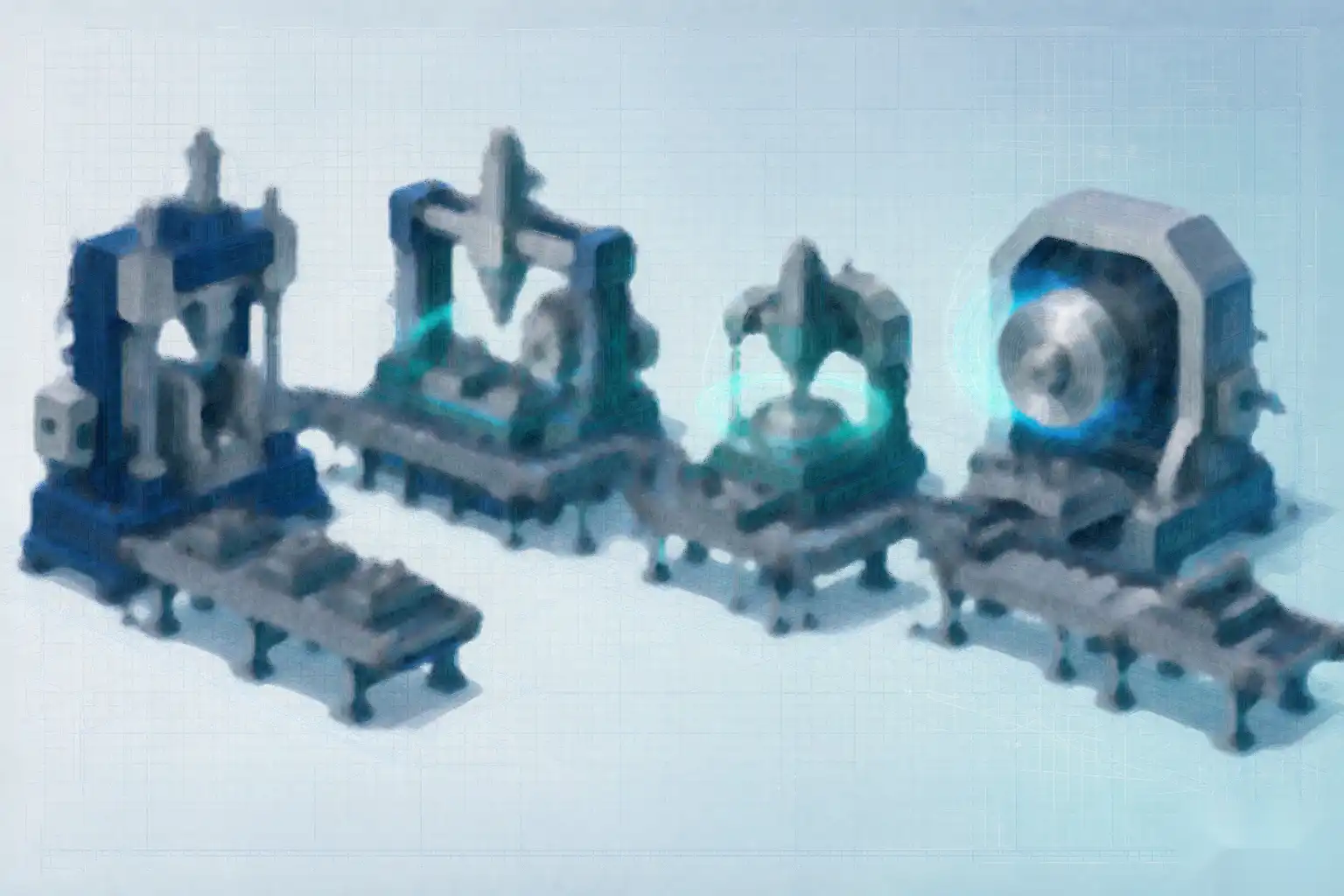
Casting is where most lines start, and automating core shooting is the highest-leverage first move because it feeds every station after it with consistent, clean bodies. A shooter that holds dimensions means less grinding and fewer rejects downstream — the benefit compounds as the part moves down the line.
Balancing Machining, Grinding, and Buffing
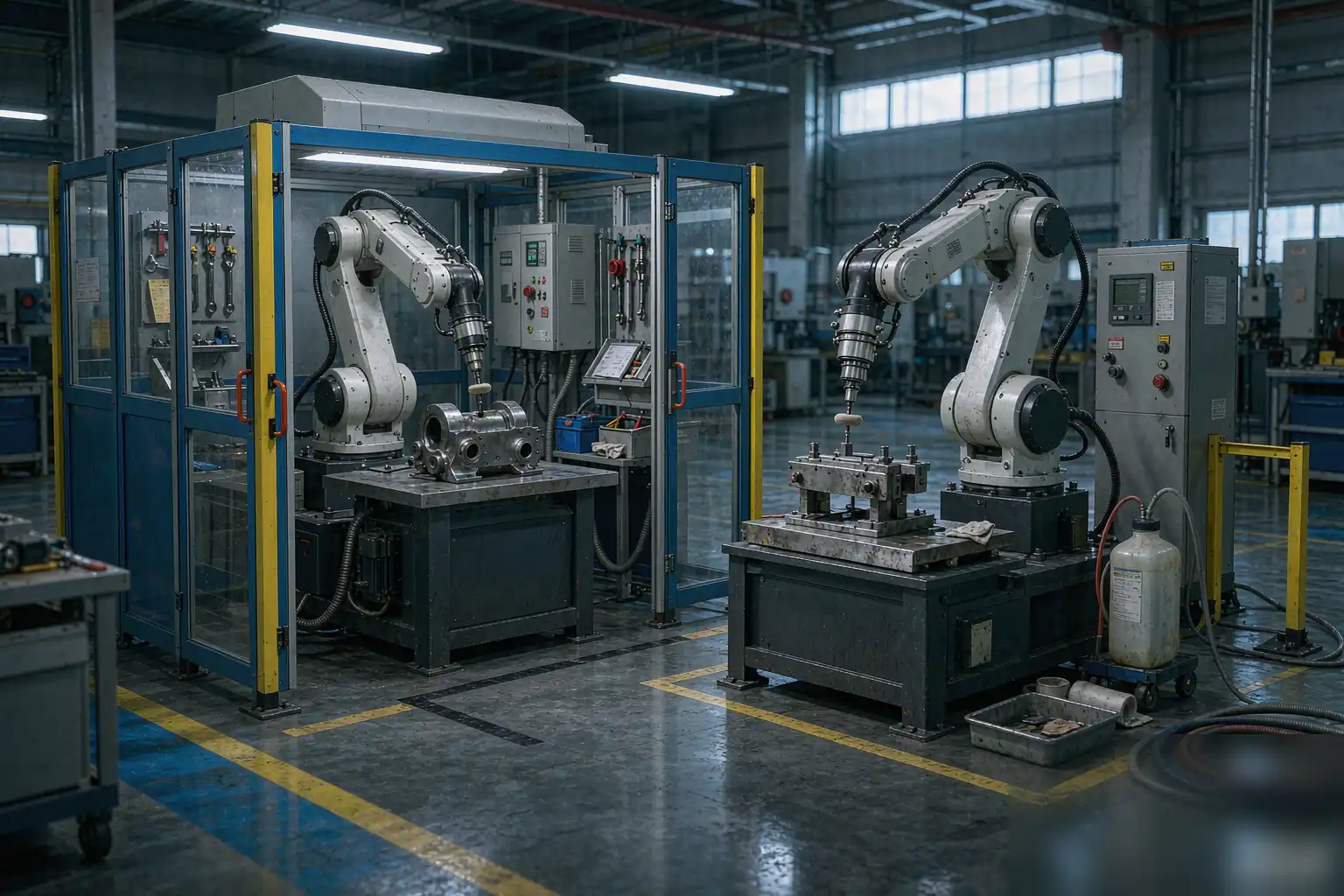
The CNC cell is usually the easy one to automate and the grinding cell the overlooked one. But the real capacity killer is buffing. A robotic buffing cell can hold a mirror finish at a rate no hand team matches, and a dedicated grinding cell keeps the parts flowing into it without a pile. Balance these three and the line stops stalling at cosmetics.
Integrating Plating and Finishing
Electroplating is often the last manual-heavy island. You can’t fully robotize the chemistry, but you can automate rack loading, transfer, and unracking so the line feeds the plating bath at a steady rate instead of in batches that idle the tank. How to tie it together is covered in our electroplating integration guide.
Three Mistakes in Line Automation
1. Automating the wrong bottleneck. Measure where parts actually wait. If it’s polishing, a robot grinder pays back faster than a second CNC.
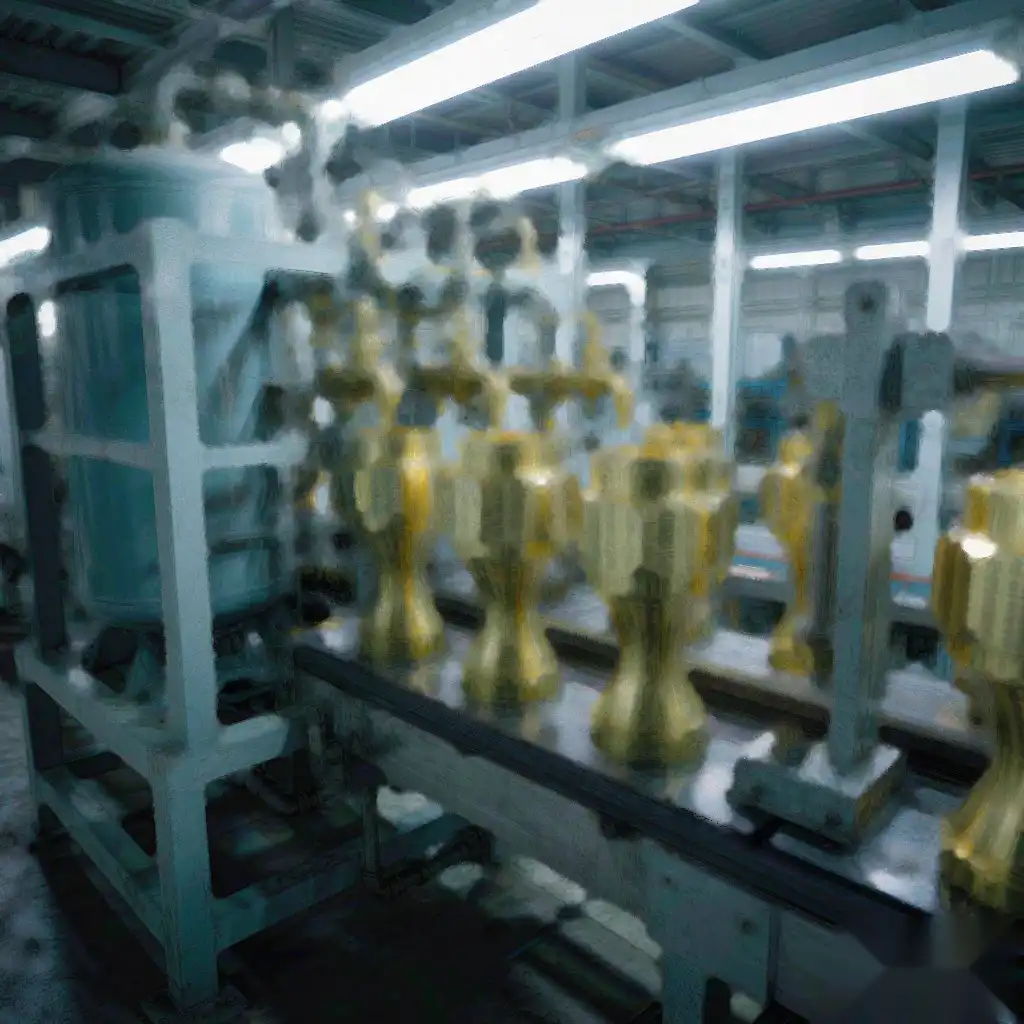
2. Forgetting part handling. The automation between stations — fixtures, conveyors, robots handing off — is half the project. Underspec it and the cells sit idle waiting for a part.
3. Ignoring changeover. Faucet lines run many SKUs. If switching a model takes an hour, your “automated” line loses a shift a week to setup. Design for quick changeover from day one.
Frequently Asked Questions
Which faucet line station should I automate first?
The one where parts physically wait — usually grinding or buffing. Casting and CNC are often already faster. Automating the slowest manual step gives the biggest immediate throughput gain.
Can I automate an existing line piece by piece?
Yes, and it’s the common path. Add one balanced cell at a time — typically grinding or buffing first — and redesign part handling between stations so the new cell isn’t starved or blocked.
How do I size the line for mixed SKUs?
Design fixtures and robot programs for quick changeover, and size each station to the highest-volume part. A line balanced for your top SKU, with fast swaps for the rest, avoids losing time to setup.
This guide was prepared by the application engineering team at Xiamen Dingzhu Intelligent Equipment Co., Ltd. (DZ Machinery), which designs and commissions deburring, grinding, polishing, and die-casting lines for manufacturers across more than a dozen countries. Station layouts reflect typical faucet production practice; confirm exact configuration against your parts and supplier before purchase.
Tags: faucet, faucet production line, faucet manufacturing, automatic faucet production, automation, machine selection