

Edge Rounding Machine: How to Automate Deburring Safely
Sharp edges are the quiet cost centre of sheet-metal and machined-part production. They cut gloves, fail inspection, chip paint, and create stress risers that crack in service. Hand filing fixes them slowly and inconsistently. An edge rounding machine removes burrs and rolls a controlled radius along the part perimeter in a single automated pass, so every piece leaves with the same safe, paint-ready edge. This guide covers how these machines work, the main configurations, how to specify a radius, and how to choose a system that keeps pace with your cutting and bending operations.
What Is an Edge Rounding Machine?
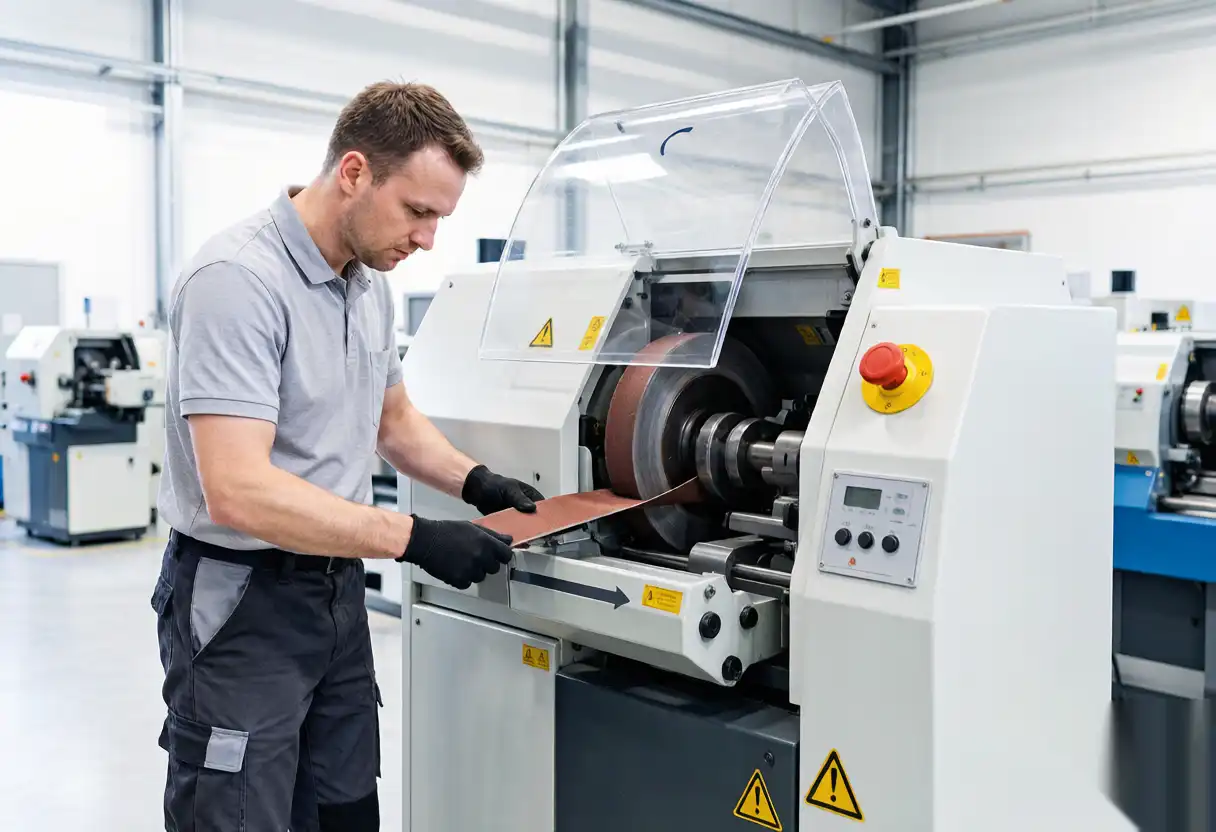
An edge rounding machine is a finishing system that deburrs the cut perimeter of a part and simultaneously forms a small radius on the edge. It is distinct from a simple deburring machine: deburring removes the burr, while edge rounding deliberately removes a controlled amount of material to create a rounded profile. That radius is what prevents coating failure at the edge, reduces handling injuries, and improves fatigue performance.
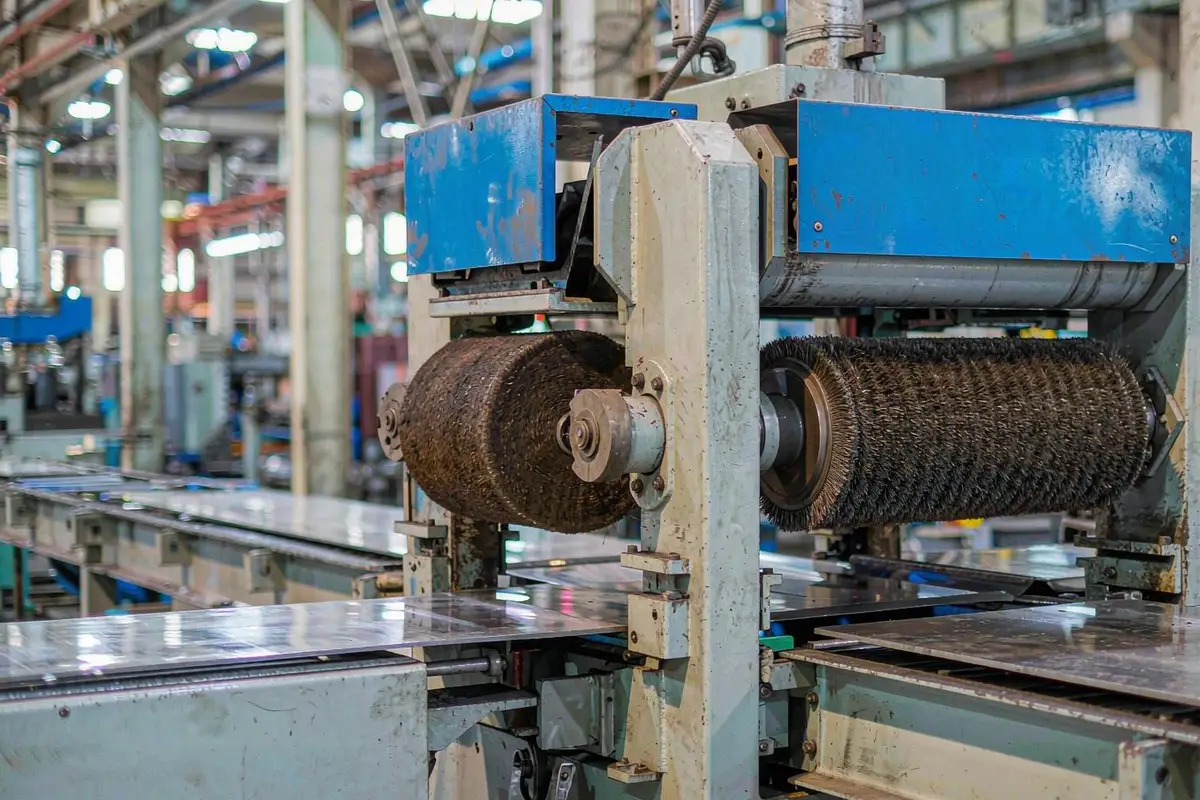
Most machines process flat or formed parts on a conveyor, passing them beneath rotating abrasive brushes, belts, or combination heads. The result is a uniform edge condition that hand work cannot match at production speed.
Why Edge Rounding Matters
Edge condition drives quality in ways that are easy to underestimate:
- Safety and handling. Rounded edges stop cuts and glove tears on the line and in the field.
- Coating adhesion. Powder coat and paint pull back from a sharp edge, leaving a thin film that chips. A 0.5–1.0 mm radius dramatically improves coverage.
- Fatigue life. Sharp corners concentrate stress. A controlled radius spreads load and delays crack initiation.
- Inspection and fit. Consistent radii make assembly predictable and eliminate the “sharp edge” reject note.
- Corrosion. Burrs trap moisture and create crevices; rounding removes the trap.
How Edge Rounding Machines Work
A typical cycle follows a simple sequence:
- Load. Parts are placed on a conveyor, either manually or by a feeder.
- Deburr. A first head — often a cross-belt or drum — knocks down the heavy burr left by laser, plasma, or punching.
- Round. Rotating abrasive brushes or oscillating heads roll the edge to the target radius on top and bottom faces.
- Finish. An optional fine head blends the surface and removes scratch patterns.
- Unload and inspect. Parts exit deburred and radiused, ready for forming, coating, or welding.
Feed speed and head pressure set the aggressiveness. Faster feed means less material removal; slower feed and higher pressure mean a larger radius but more consumable wear.
Edge Rounding Machine Types
Four configurations dominate production floors:
| Type | Method | Typical Radius | Best For |
|---|---|---|---|
| Brush deburring machine | Rotating abrasive-filled brushes | 0.2 – 1.0 mm | Laser-cut sheet, oxide removal, light rounding |
| Belt & brush combo | Cross-belt plus brush heads | 0.5 – 2.0 mm | Heavy burrs with a controlled radius |
| Oscillating head machine | Oscillating abrasive blocks | 0.5 – 2.0 mm | Thick plate, consistent radius on all edges |
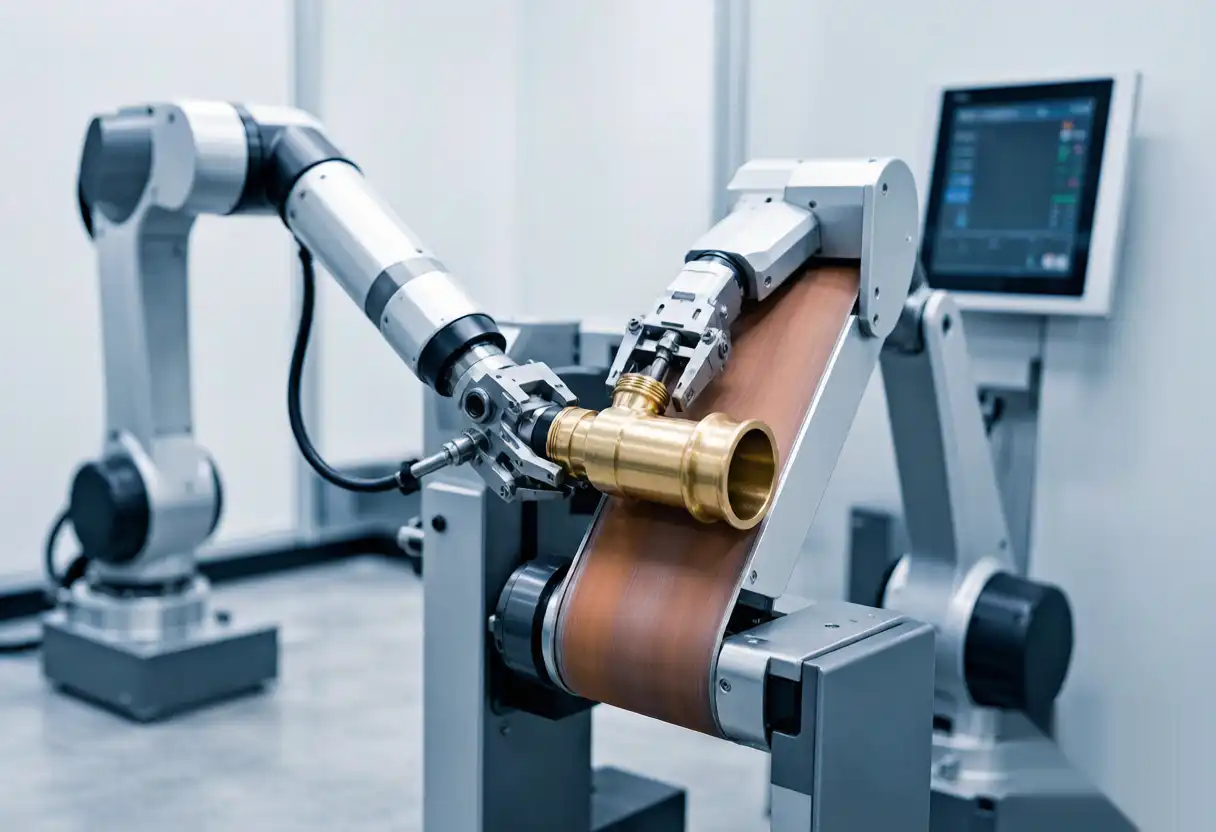
| Robotic edge rounding | Robot with brush or belt tool | 0.5 – 3.0 mm | 3D formed parts, complex geometry |
Brush machines are the most common for flat laser-cut parts. Combination machines add a cross-belt station when burrs are heavy. Robotic cells handle formed and welded assemblies that cannot pass on a conveyor; our deburring and grinding machine comparison explains where each tool fits. For line-level quality control, see our automated edge deburring and quality guide.
Choosing Abrasive Brushes and Belts
Consumables decide the result. Match the abrasive to the material and the radius target:
- Ceramic filament brushes — aggressive cut with long life; the workhorse for steel and stainless.
- Nylon abrasive brushes — gentler, cooler cutting for aluminium and thin sheet.
- Silicon carbide brushes — fine finishing and blending after coarser heads.
- Zirconia belts — heavy stock removal where burrs are large.
- Non-woven wheels — cosmetic blending and satin preparation.
Brush diameter, filament density, and grit all change the cut rate. Maintain a consumable log: most inconsistent edge quality traces back to worn brushes that were run past their useful life. If you grind before brushing, the grinding wheel selection guide explains grade and bond choices that keep the incoming surface consistent.
Setting Edge Radius Specifications
A radius spec must be measurable, or it will not be enforced. Typical targets by application:
| Application | Target Radius | Reason |
|---|---|---|
| Powder-coated sheet | 0.5 – 1.0 mm | Coating coverage and chip resistance |
| Structural weldments | 1.0 – 2.0 mm | Fatigue life and coating adhesion |
| Food equipment | 1.0 – 2.0 mm | Hygienic cleaning, no crevices |
| Cosmetic visible parts | 0.5 – 1.5 mm | Hand-feel and uniform appearance |
Specify the radius with a tolerance band and verify it with a radius gauge or profile projector. A drawing note of “deburr all edges” is not a radius specification.
Edge Rounding vs Manual Deburring
The comparison is not close at production volume:
| Criterion | Manual | Edge Rounding Machine |
|---|---|---|
| Consistency | Operator-dependent | Uniform across the batch |
| Throughput | Minutes per part | Seconds per part |
| Labour | Skilled, fatiguing | One operator, low skill |
| Cost per edge | High and rising | Low and predictable |
Manual deburring still has a role for one-off parts and rework, but it should not be the primary process on any recurring order. Where burrs are heavy, a dedicated automatic deburring machine upstream removes the bulk before rounding, which protects brushes and shortens the rounding cycle.
Applications by Industry
- Sheet-metal fabrication. Laser and plasma cut parts get de-slagged and rounded before forming.
- HVAC and enclosures. Safe edges for installers and better powder-coat coverage.
- Automotive stampings. Consistent radii on brackets and structural panels.
- Appliances and cookware. Handle edges that feel smooth and resist coating wear.
- Architectural metalwork. Visible edges with a uniform brushed or satin look.
Measuring and Verifying Edge Quality
An edge specification is only useful if it can be checked. Three methods cover most shop-floor needs. A radius gauge is fast and adequate for visual acceptance. A profile projector or optical comparator gives a numeric radius and reveals asymmetry between top and bottom edges. For critical coating work, a destructive cross-section under a microscope confirms the true radius and the coating coverage achieved at the edge.
Record the measurement method on the drawing or inspection plan, and sample at a defined frequency — typically first-off plus a set interval per shift. Trend the results rather than only reacting to failures, because a slow drift caused by brush wear is easy to catch early and expensive to discover at final inspection.
Traceability improves when edge condition is recorded alongside upstream process parameters. Linking radius results to brush hours and feed speed turns edge quality into a predictable process rather than a lucky outcome, and it feeds directly into the wider end-to-end surface finishing workflow.
How to Choose an Edge Rounding Machine
- Part thickness and size. Confirm the machine handles your thinnest and widest parts without jamming.
- Burr type and size. Laser oxide, plasma dross, and punching burrs need different first heads.
- Radius target. A 2 mm radius on thick plate needs more head power than a 0.5 mm cosmetic edge.
- Throughput. Match feed speed to your cutting rate so deburring never becomes the bottleneck.
- Automation level. Consider loading robots or return conveyors if you run high volume.
- Consumable cost. Ask for brush life data and cost per part, not just machine price.
Integrating With Cutting and Bending
Edge rounding belongs directly after cutting and before forming or coating. Placing it in-line with a laser or punch press eliminates a handling step and prevents burrs from being bent into the part. For a broader view of line architecture, our automated finishing line design guide covers buffer sizing and part flow. When rounding feeds a coating line, the primer or powder stage should follow within the same shift to avoid oxide regrowth.
Maintenance Tips
Keep the conveyor belt tracking true, dress or replace brushes on a measured interval, clean dust extraction daily, and check head pressure calibration monthly. Dust build-up on the extraction duct is the most common cause of overheating and fire risk, so treat extraction as a safety system rather than an accessory.
Common Mistakes to Avoid
- Running worn brushes. A glazed brush polishes instead of cutting, and the radius quietly drifts below spec.
- Specifying “deburr only”. Without a radius target, you cannot verify or improve the process.
- Ignoring oxide removal. Laser oxide must be removed before coating, or adhesion fails regardless of radius.
- Mismatching feed speed. Running too fast leaves burrs; running too slow burns consumables and distorts thin parts.
- No dust extraction. Fine metal dust is a health and fire hazard, not just a housekeeping issue.
Frequently Asked Questions
What radius can an edge rounding machine achieve?
Most brush machines produce 0.2–1.0 mm, while belt-combination and oscillating-head machines reach 0.5–2.0 mm. Robotic cells can go to 3 mm on formed parts.
Can one machine deburr both sides of a part?
Yes. Most conveyor machines have top and bottom heads, so both faces are processed in a single pass. Confirm the configuration matches your part thickness.
Does edge rounding remove laser oxide?
A brush head removes oxide as it deburrs, but heavy oxide may need a dedicated descaling head. Verify the result before painting or powder coating.
Is edge rounding suitable for aluminium?
Yes, with nylon abrasive brushes and lower pressure. Aluminium cuts easily, so aggressive ceramic brushes can over-round or smear the edge.
How fast does an edge rounding machine run?
Feed speeds typically range from 1 to 10 m/min depending on burr size, thickness, and radius target. Thin parts run faster; heavy plate runs slower.
Conclusion
An edge rounding machine turns a variable manual task into a controlled, verifiable process. Specify the radius, match the brush to the alloy, and place the machine directly in line with cutting so burrs never reach the next operation. If you want to confirm the result on your own parts, send us a sample batch and we will return a measured radius, a cycle time, and a machine recommendation.