

Bearing Housing Finishing: How to Improve Roundness
A motor plant was eating bearings at warranty because the housing bore ran a few microns out of round — a hand finished bore varied with the operator, and the bearing seated on a crescent instead of a circle. “The bearing is rated for the load,” the maintenance chief said, “the bore is not rated for the bearing.” Bearing housing finishing is a roundness job: the bore and seat have to be true so the bearing lives.
This guide covers how to finish bearing housings to the roundness the bearing needs to survive.
Why Roundness Decides Bearing Life
A bearing presses into a round bore and seats on a circle. If the bore is out of round, the load concentrates on the high spot, the race cracks, and the bearing fails early. Hand finishing drifts. The bore has to be round and repeatable, not just smooth.
How Robotic Finishing Holds Roundness

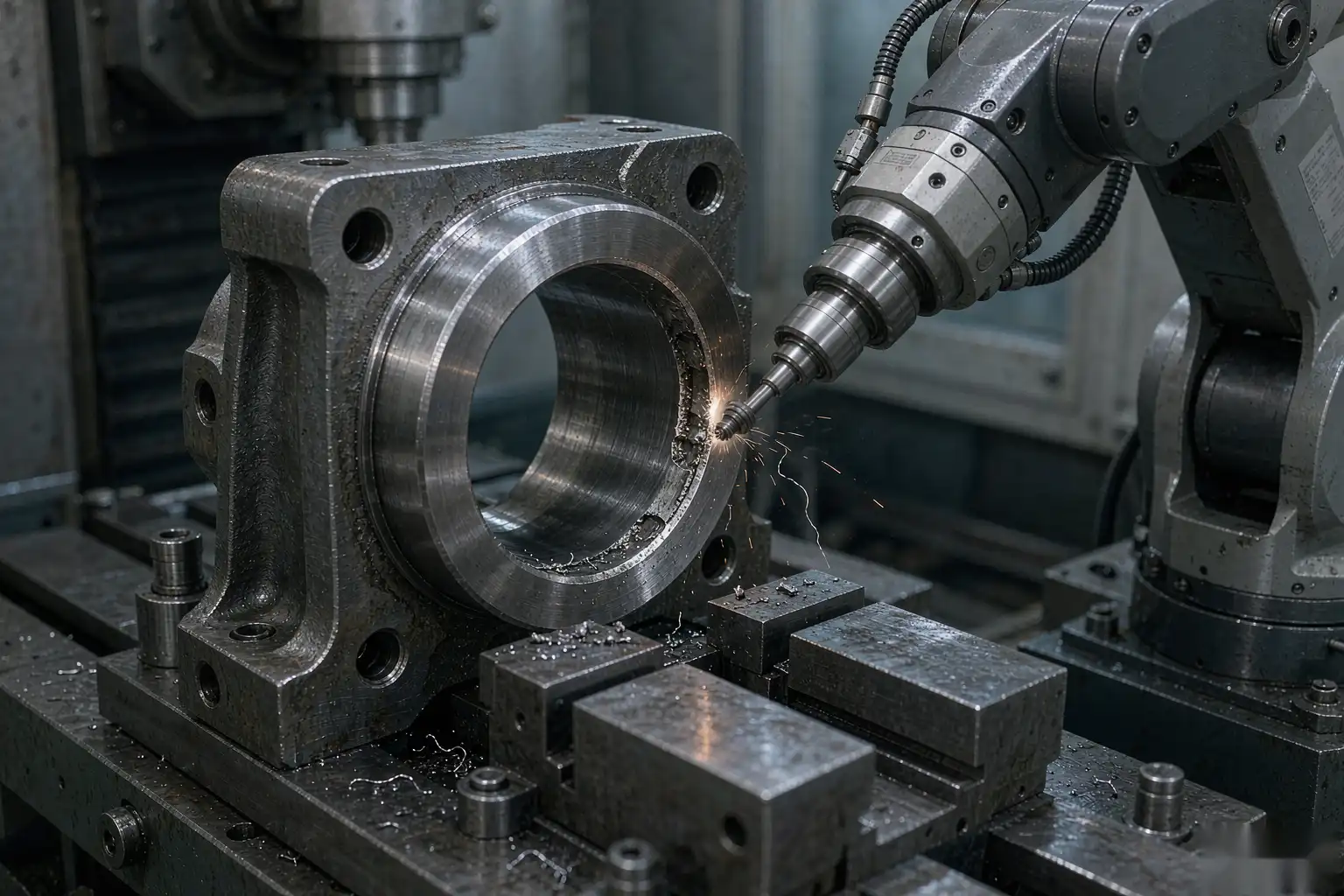
A robotic cell locates the housing on a fixed datum and presents the bore to a rotating tool at locked force, tracking the true axis every cycle. Force control is what keeps the bore round instead of barrel-shaped under hand pressure. Every housing leaves matched, which is what the bearing needs. The round-bore logic is the same one we use on ball valve grinding for a round seal.
An even seat face is the same discipline we apply on flange finishing for a uniform surface.
What Has to Be True First
Fixed Datum
Locate the housing on its true center so the robot finishes the bore concentric. A shifted datum finishes one side harder than the other and the bore goes out of round.
True Axis Path
The tool must track the bore axis, not the casting’s outer drift. Program to the bore, not the blank.
Measured Roundness
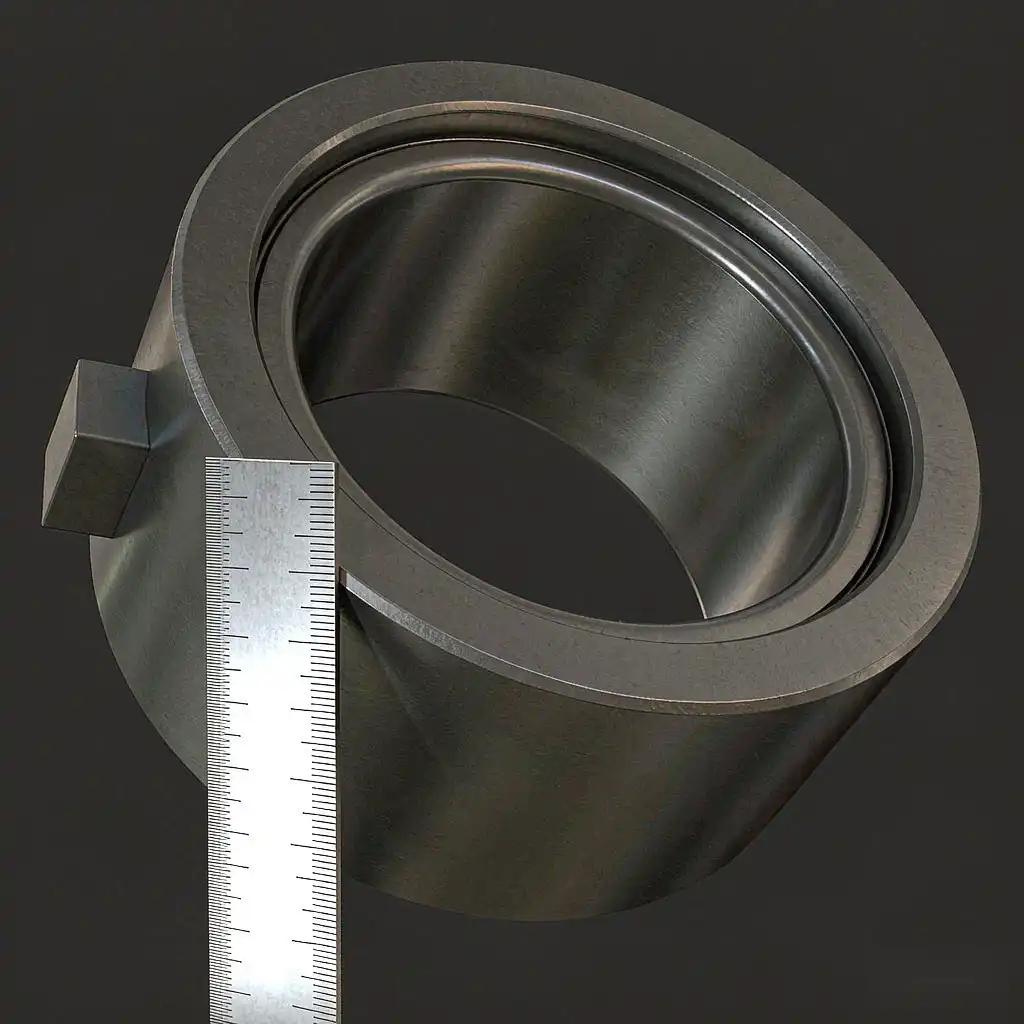
Roundness is not visible. Measure it on the way out so the cell holds the spec, not just the first housing.
Three Mistakes Buyers Make
1. Finishing inconsistent castings. Automation exposes a drifting bore. Fix the source first.
2. Skipping force control. Fixed-path without force feedback leaves the bore out of round. Force control holds it true.
3. Not measuring roundness. A smooth bore can still be out of round. Measure on the way out.
Frequently Asked Questions
Can a robot hold bore roundness better than a hand finisher?
It holds it across the run. A hand finisher peaks on one bore; a cell matches every bore, which is what bearing life depends on.
Which housings suit automated finishing?
Motor, pump, and gearbox housings with a round bore and seat. Mixed sizes run with quick-change fixtures.
How many housings fit one cell?
Several, with quick-change fixtures and stored programs. Design changeover in so mixed-SKU runs do not stall the cell.
This guide was prepared by the application engineering team at Xiamen Dingzhu Intelligent Equipment Co., Ltd. (DZ Machinery), which designs and commissions deburring, grinding, polishing, and die-casting lines for manufacturers across more than a dozen countries. Finish notes reflect typical bearing housing outcomes; confirm against your alloy and roundness spec before purchase.
Tags: robotic finishing, surface finishing, surface finish, polishing, robotic polishing, Metal Casting