

Aluminum Die Casting vs Sand Casting: Process, Cost, and When to Choose Each
Why the Choice Between Die Casting and Sand Casting Matters
Aluminum parts are made by many different casting processes, but the two most common are die casting and sand casting. They are very different in their economics, capabilities, and ideal applications.
Choosing the wrong process means either:
- Overpaying for a process that exceeds your requirements (e.g., die casting a low-volume prototype)
- Specifying an unattainable capability from a process that cannot deliver (e.g., expecting tight tolerances from sand casting)
This article walks through the decision framework so you can make the right choice for your project.
Process Overview
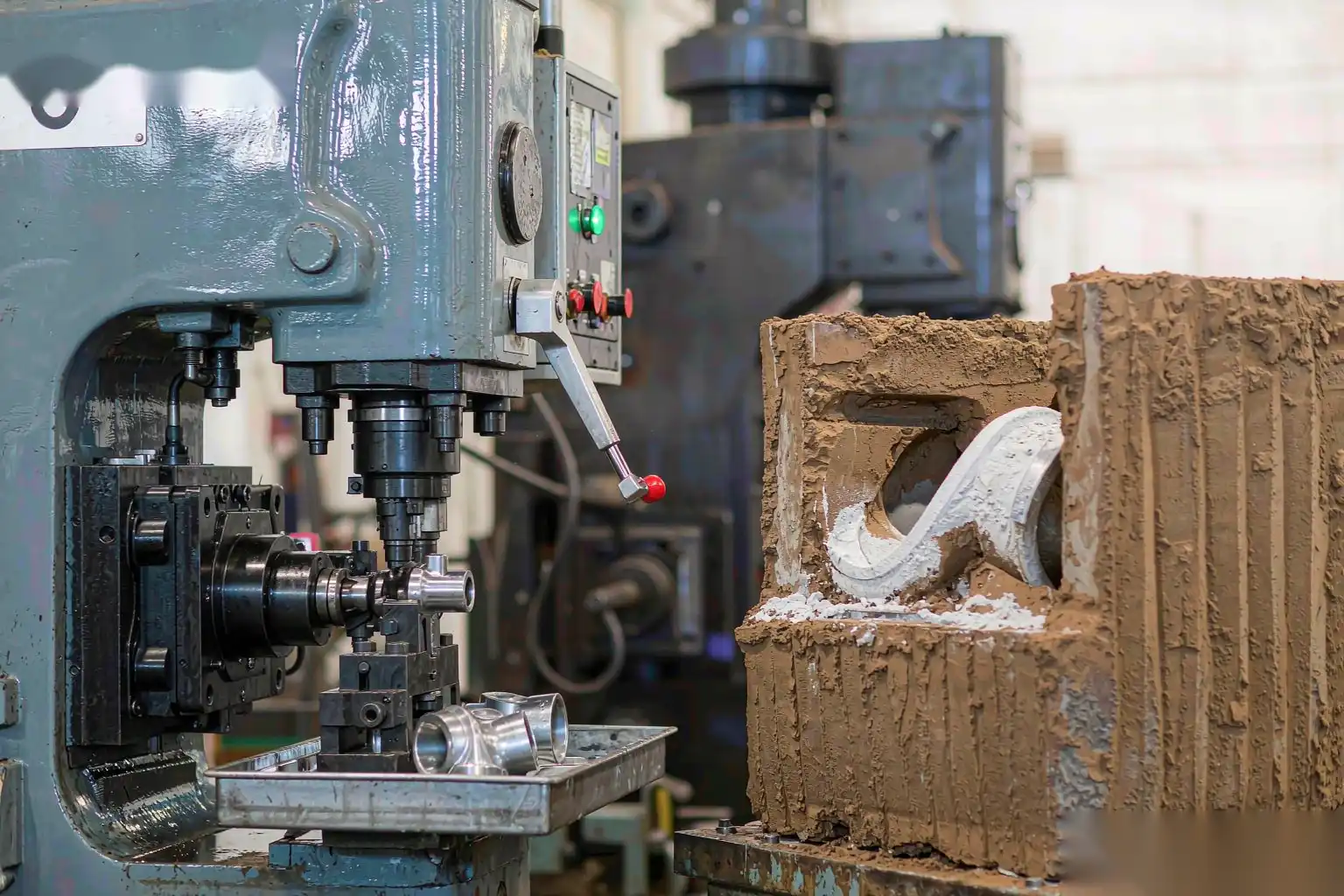
Die Casting
Molten aluminum is injected into a reusable steel die under high pressure (30-100 MPa) and high speed. The die is water-cooled internally. Cycle times are 30 seconds to 5 minutes.
Key characteristics:
- High production rate (best for high volume)
- Thin walls possible (1.0-1.5 mm minimum)
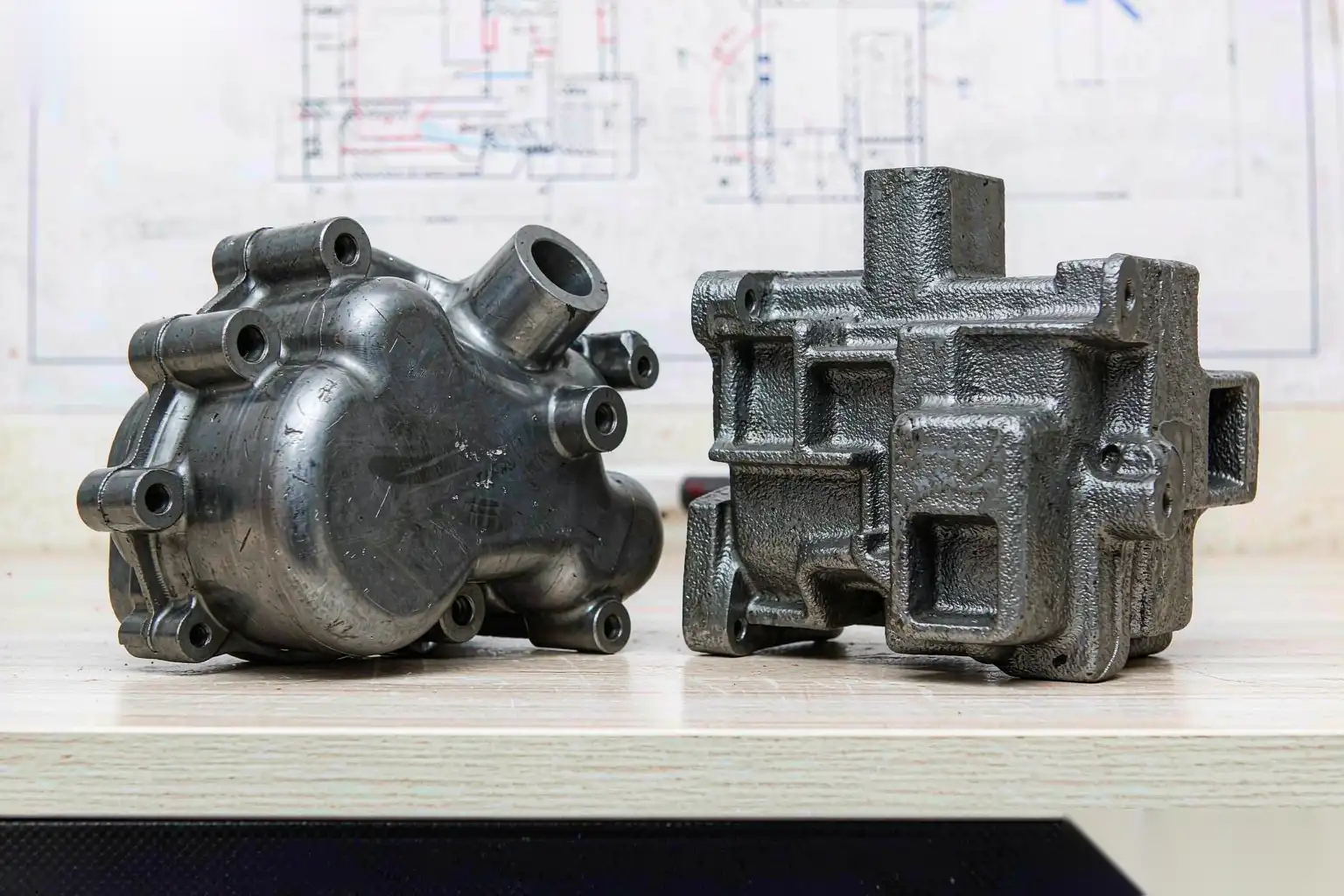
- Excellent surface finish (Ra 3.2-6.3 µm as-cast)
- Tight tolerances (±0.10 mm per 25 mm)
- High tooling cost ($15,000-100,000+)
- Limited to non-heat-treatable alloys (in standard HPDC)
Sand Casting
Molten aluminum is poured into a one-time-use sand mold. The mold is broken away to release the part. The sand is recycled for the next mold. Cycle times are 1-4 hours per mold, but multiple molds can be produced in parallel.
Key characteristics:
- Lower production rate (best for low-to-medium volume)
- Thicker walls required (3-5 mm minimum, often thicker)
- Rougher surface finish (Ra 6.3-25 µm as-cast)
- Looser tolerances (±0.5-1.5 mm)
- Low tooling cost ($1,000-5,000 for a simple pattern)
- Any aluminum alloy can be used, including heat-treatable grades
Comparison Table
| Factor | Die Casting | Sand Casting |
|---|---|---|
| Cycle time per part | 30s-5min | 10min-2hr |
| Minimum wall thickness | 1.0-1.5 mm | 3-5 mm (often 5-8 mm) |
| Maximum part weight | typically <20 kg | 100+ kg possible |
| Tolerance (linear) | ±0.10-0.20 mm | ±0.50-1.50 mm |
| Surface finish (as-cast) | Ra 3.2-6.3 µm | Ra 6.3-25 µm |
| Draft angle required | 1-3° | 1-3° (more critical due to mold rigidity) |
| Internal porosity | higher (gas) | lower (gravity fill) |
| Mechanical strength (as-cast) | moderate | good to excellent (heat treatable) |
| Heat treatable | no (A380 blisters) | yes (T6, T5) |
| Tooling cost | $15,000-100,000+ | $1,000-5,000 (pattern only) |
| Per-part cost (at scale) | $2-10 (high volume) | $10-50 (low volume) |
| Production volume | high (1,000+/year) | low to medium (1-5,000/year) |
| Suitable alloys | A380, A383, A384, A390, A413 | any aluminum alloy |
| Typical applications | consumer electronics, automotive brackets, lighting | large structural, prototypes, low volume |
When to Choose Die Casting
Die casting is the right choice when:
- Production volume is high (5,000+ parts/year, with breakeven at 1,000-3,000)
- Part is complex with internal features or intricate geometry
- Tight tolerances are required on as-cast features
- Cosmetic surface finish is required
- Cycle time matters (production rate is critical)
- Heat treatment is NOT required for the application
Die casting dominates consumer electronics, lighting, automotive brackets, and most high-volume industrial castings.
When to Choose Sand Casting
Sand casting is the right choice when:
- Production volume is low (under 5,000 parts/year, often 1-1,000)
- Part is large (over 20 kg or over 500 mm in any dimension)
- Heat treatment is required (T6 for high strength)
- Looser tolerances are acceptable (as-cast dimensions only, finish machining later)
- Alloy choice is critical (specialty alloys not available in die casting)
- Low upfront tooling investment is required
- Prototype or pre-production volumes
Sand casting is common for aerospace structural parts, large pump housings, prototype parts, and any application where the volume does not justify die casting tooling.
Cost Comparison
For a hypothetical aluminum part weighing 5 kg:
Die Casting Cost Estimate
- Tooling: $40,000 (single-cavity die)
- Per-part cost: $15-30 (material + casting + trim + simple finishing)
- Tooling amortization (at 10,000 parts/year): $4.00/part
- Total per-part: $19-34
Sand Casting Cost Estimate
- Tooling: $3,000 (wooden or resin pattern)
- Per-part cost: $30-80 (material + casting + cleaning + heat treatment if needed)
- Tooling amortization (at 1,000 parts/year): $3.00/part
- Total per-part: $33-83
The cost crossover depends heavily on volume. For very low volume (1-100 parts), sand casting is far cheaper despite higher per-part cost. For very high volume (100,000+ parts), die casting wins on cycle time economy.
When the Cost Calculation Tips Toward Die Casting
For most aluminum parts, die casting becomes the cheaper option at around 2,000-5,000 parts/year. Above this volume:
- Tooling amortization becomes manageable
- Cycle time savings accumulate
- Per-part quality and consistency improve
- Material utilization is better (less scrap per part)
For parts where the volume will remain below 1,000 parts/year, sand casting is almost always cheaper. For parts where the volume will exceed 10,000 parts/year, die casting is almost always cheaper.
Tolerances and Surface Finish
The two processes differ dramatically here:
Die Casting Tolerances
- Linear dimensions: ±0.10 mm per 25 mm typical
- Flatness: 0.10-0.30 mm per 100 mm
- Surface finish: Ra 3.2-6.3 µm as-cast
- Draft angle: 1-3° (mandatory for ejection)
Sand Casting Tolerances
- Linear dimensions: ±0.50-1.50 mm (typical for green sand), ±0.30-0.80 mm (for resin-bonded sand)
- Flatness: 1.0-3.0 mm per 100 mm
- Surface finish: Ra 6.3-25 µm as-cast
- Draft angle: 1-3° (still required)
If your part requires machined tolerances, both processes can deliver (machining is done after casting). But the casting tolerance matters for features that are not machined.
Surface Treatment Compatibility
Both processes can accept the same surface treatments:
- Anodizing (Type II and III): both compatible
- Powder coating: both compatible
- Wet paint: both compatible
- Plating: more common on sand cast parts historically, but both can be plated
The as-cast surface finish affects the appearance after finishing. Die cast parts have a smoother starting surface, which can reduce finishing cost.
Mechanical Properties
Die Cast A380 (As-Cast)
- Tensile strength: 320-360 MPa
- Yield strength: 160-180 MPa
- Elongation: 3-3.5%
- Hardness: 75-85 HB
- Heat treatment: not applicable
Sand Cast A356-T6 (Heat Treated)
- Tensile strength: 260-310 MPa
- Yield strength: 180-240 MPa
- Elongation: 6-10%
- Hardness: 80-95 HB
- Heat treatment: T6 standard
Sand cast parts with T6 heat treatment have significantly better ductility and elongation than die cast A380. For structural or safety-critical parts where ductility matters, sand casting with T6 is the better choice.
A Decision Framework
Use this framework to choose:
- What is the production volume?
– Under 1,000/year → sand casting (likely)
– 1,000-5,000/year → depends on other factors
– Over 5,000/year → die casting (likely)
– Continue to step 2 if uncertain
- Is heat treatment required?
– Yes → sand casting (or vacuum HPDC)
– No → continue
- Is the part over 20 kg or over 500 mm?
– Yes → sand casting (likely)
– No → continue
- Are tight tolerances required on as-cast features?
– Yes → die casting
– No → continue
- Is the part complex with internal features?
– Yes → die casting
– No → either process can work
- What is the total program cost over the product life?
– Calculate and compare
The framework covers most cases. The final decision should involve DFM reviews with both die casting and sand casting suppliers.
Cost Optimization Opportunities
For Die Casting Projects
- Increase volume to amortize tooling
- Reduce cycle time through better die cooling
- Improve yield through better process control
- Optimize alloy choice to use the cheapest acceptable alloy
For Sand Casting Projects
- Use a no-bake or resin-bonded mold for tighter tolerances (when needed)
- Heat treat strategically to reduce alloy cost
- Use cores for internal features to reduce machining
- Optimize pouring and riser design to reduce defects
Quality Verification Differences
The two processes also differ in how quality is verified in production. Die casting quality control relies heavily on process monitoring: shot profile data, cavity pressure traces, and die temperature are logged every cycle, and statistical process control (SPC) is applied to critical dimensions across a production run. X-ray or CT inspection is used for parts where internal porosity matters, typically on a sampling basis.
Sand casting quality control places more weight on material certification and destructive testing, because each mold is unique and process drift is harder to detect automatically. Test bars cast alongside the parts are tensile tested to verify mechanical properties, and radiographic inspection is more commonly applied as a routine gate rather than a sampling check. For critical sand cast parts, 100% radiography of high-stress areas is standard practice in aerospace and pressure-containing applications.
For buyers, this means the qualification package differs: die casting programs emphasize process capability studies (Cpk) and cycle-by-cycle monitoring data, while sand casting programs emphasize material test reports, radiographic film, and weld repair documentation.
When Both Processes Live in the Same Program
The die casting versus sand casting question is usually framed as either-or, but mature hardware programs frequently run both processes side by side — deliberately. The common pattern: die casting carries the high-volume core parts where cycle economics dominate, while sand casting carries the low-volume variants, oversized structural members, and every engineering-change iteration that would otherwise strand a steel die. A product family with one high-runner and twelve long-tail variants is a textbook case: die cast the runner, sand cast the tail, and neither process is asked to do the other’s job.
The same logic governs the program lifecycle. Sand casting prototypes validate the design through early production; when volume crosses the few-thousand-a-year line and the design has stabilized through its second or third revision, the die is ordered and the part migrates. Companies that skip the migration because the sand cast part works end up paying sand casting prices forever on parts whose volume long ago justified a die.
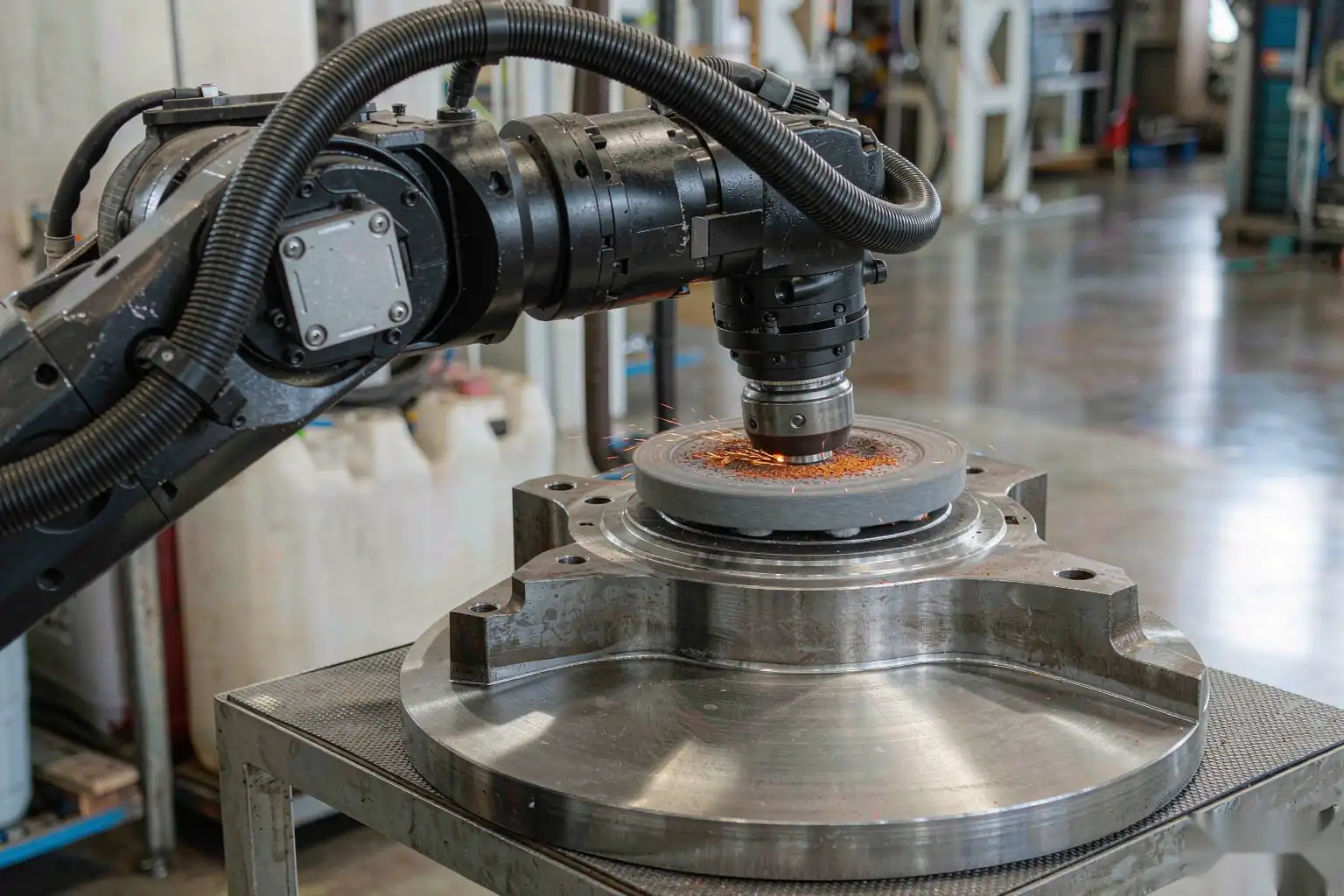
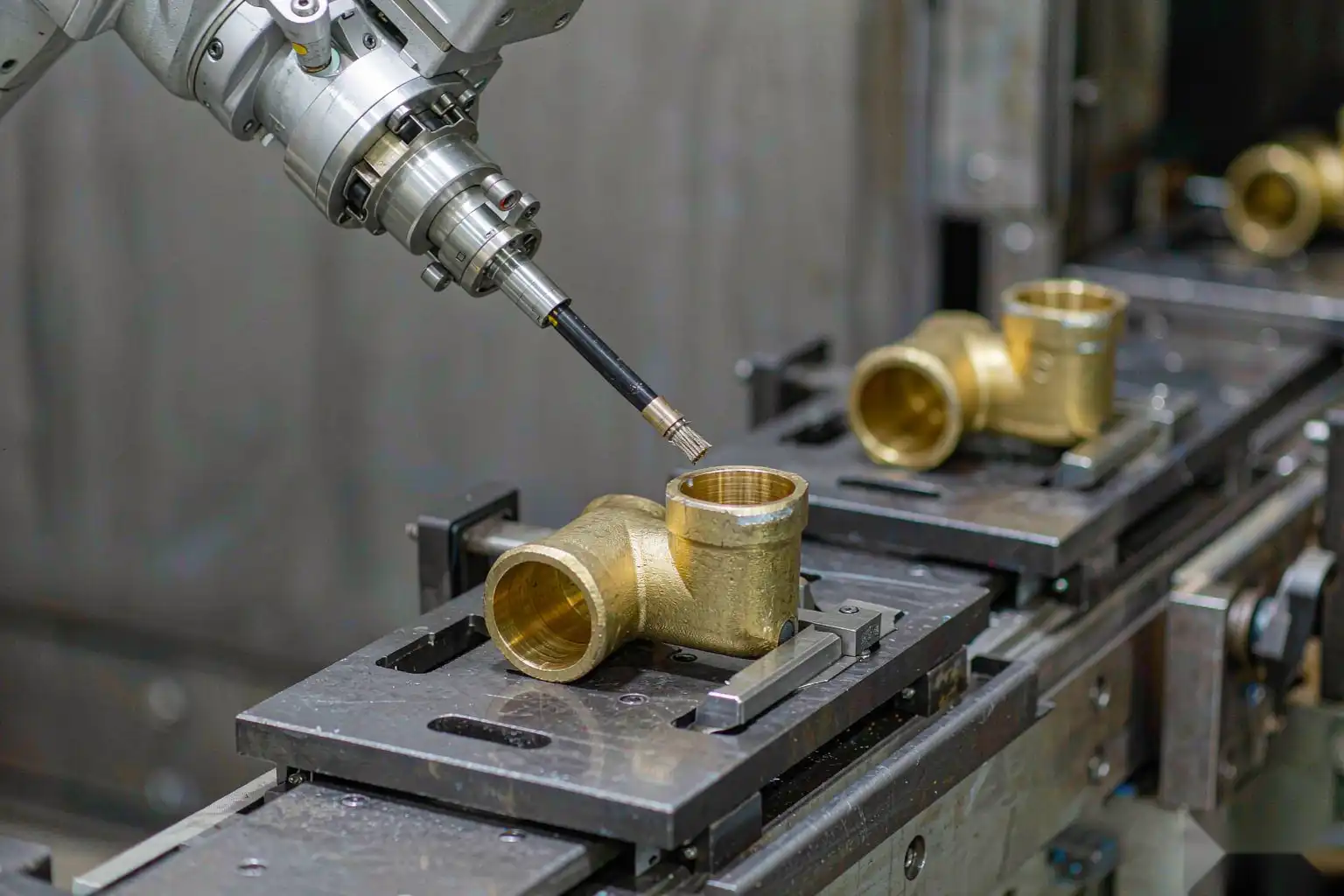
Finishing strategy should migrate with the part. Sand cast surfaces arrive rougher and need heavier cleanup, while die cast parts from a healthy die need light deburring and targeted polishing — and the robotic cell configured for one is not automatically right for the other. DZ Machinery programs finishing cells for customers at exactly this crossover: when a part graduates from sand to die casting, we rework the deburring and polishing programs against the new flash pattern and surface, usually reusing the same cell hardware and fixtures. The migration then costs a programming project, not a new capital line — one more reason to choose a finishing partner who plans for your volumes to change rather than one who quotes only the part you have today.
FAQ About Die Casting vs Sand Casting
Can die castings be made in any aluminum alloy?
No. Standard HPDC works with A380, A383, A384, A390, and A413. Sand casting works with all aluminum alloys, including heat-treatable grades like A356, A357, and A201.
Can sand castings be made as thin as die castings?
No. Sand casting minimum wall thickness is typically 3-5 mm, often 5-8 mm for robust production. Die casting can go as thin as 1.0-1.5 mm.
Which process is faster for prototyping?
Sand casting is faster for prototyping because the tooling (a wooden or resin pattern) takes days, not weeks. A die for die casting takes 6-10 weeks.
Can sand castings be made in the same finish as die castings?
The as-cast finish is rougher in sand casting, but after machining and surface treatment, the final finish can be similar. However, sand castings typically require more finishing work to achieve the same surface quality as die castings.
A Practical Recommendation
For a new aluminum part, get quotes from at least one die caster and one sand caster during the DFM phase. Each will give you different design recommendations and cost estimates. The right choice often becomes clear after these conversations.
At DZ Smart Manufacturing, our robotic finishing cells work with both die cast and sand cast aluminum parts. The finishing process is similar but the abrasive selection and cycle parameters differ. If you are choosing between die casting and sand casting and want a second opinion, our engineering team can review your drawings and provide a process comparison with cost estimates.