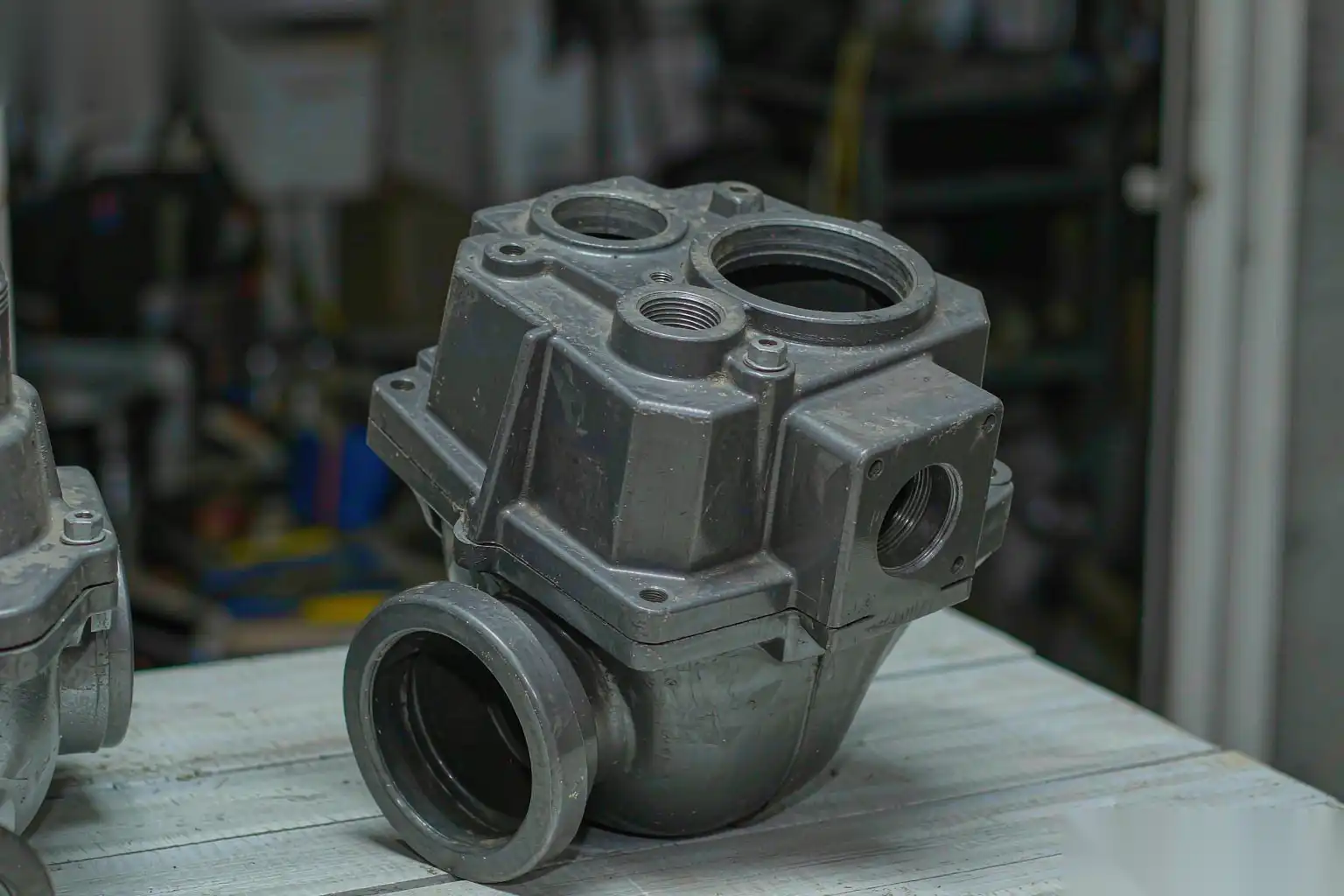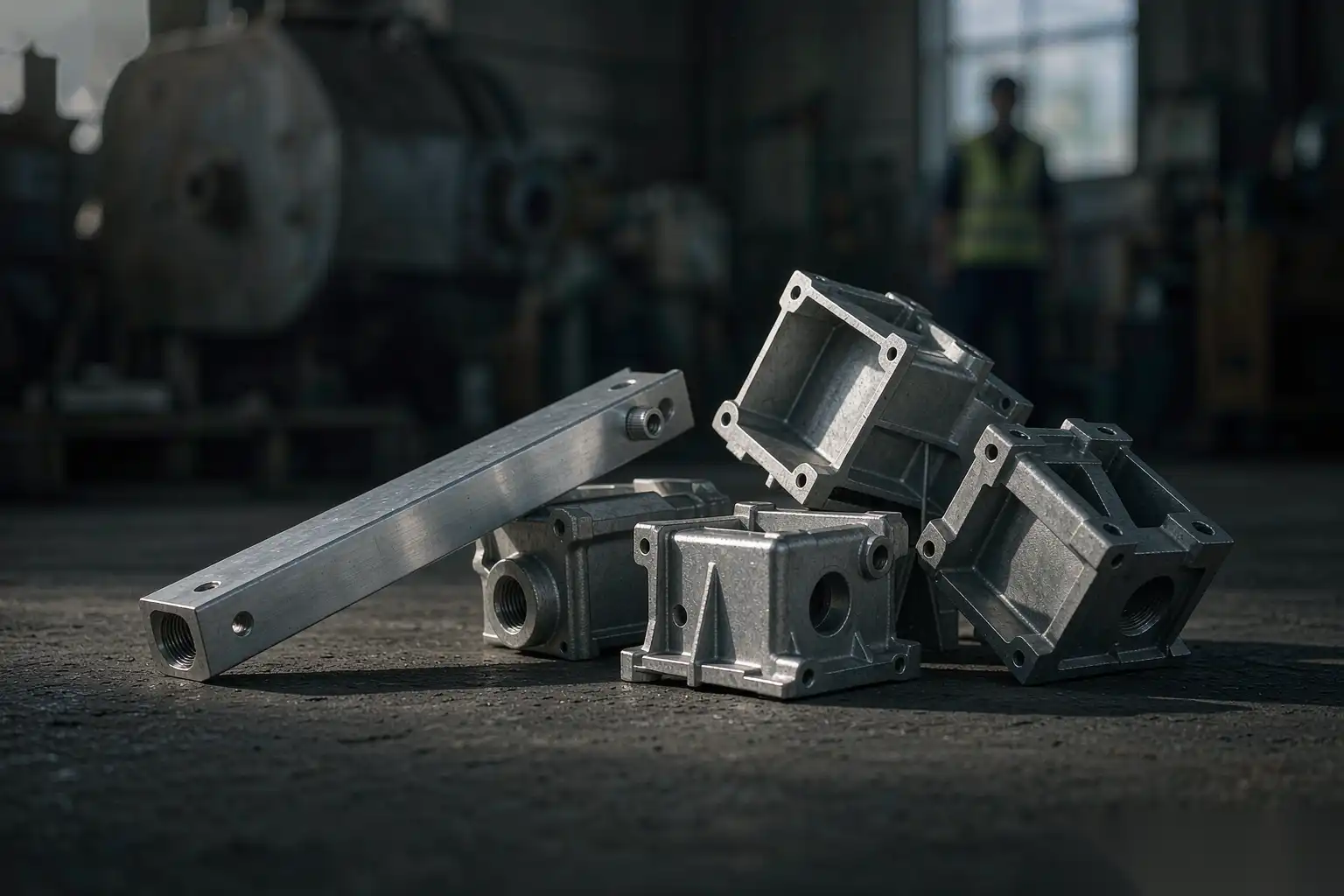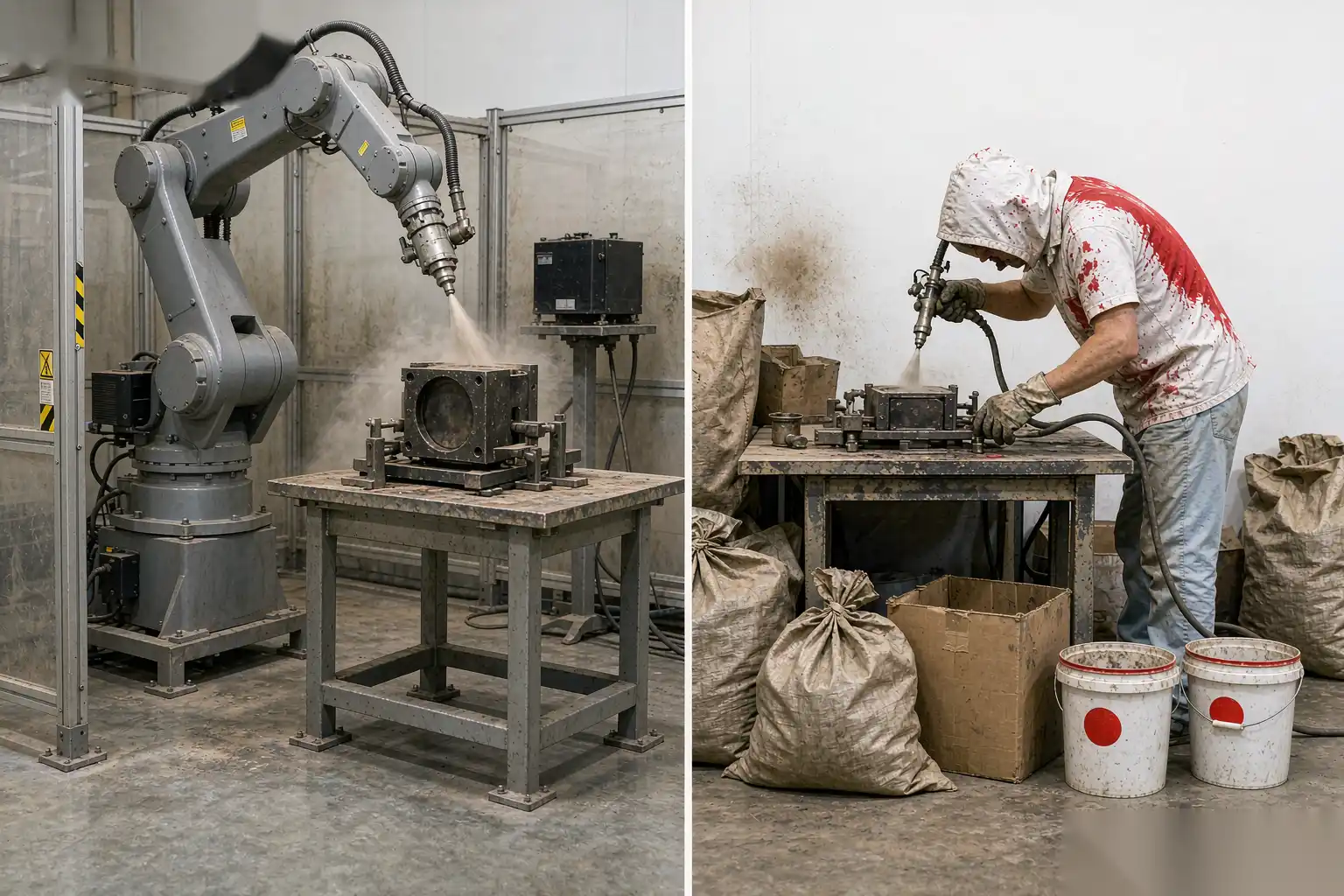


Aluminum Die Casting Applications: Industries, Parts, and Case Examples
The Breadth of Aluminum Die Casting Applications
Aluminum die casting produces parts for nearly every major industry:
- Automotive: 35-40% of aluminum die casting volume globally
- Consumer electronics: 15-20%
- Industrial equipment: 10-15%
- Lighting: 8-10%
- Sanitary ware and plumbing: 5-8%
- Aerospace and defense: 3-5%
- Medical devices: 2-3%
- Other (appliances, furniture, hardware, toys): 10-15%
The global market for aluminum die castings is approximately $35-40 billion annually and growing at 4-6% per year, driven by automotive lightweighting, consumer electronics growth, and the global transition to LED lighting.
Automotive Applications
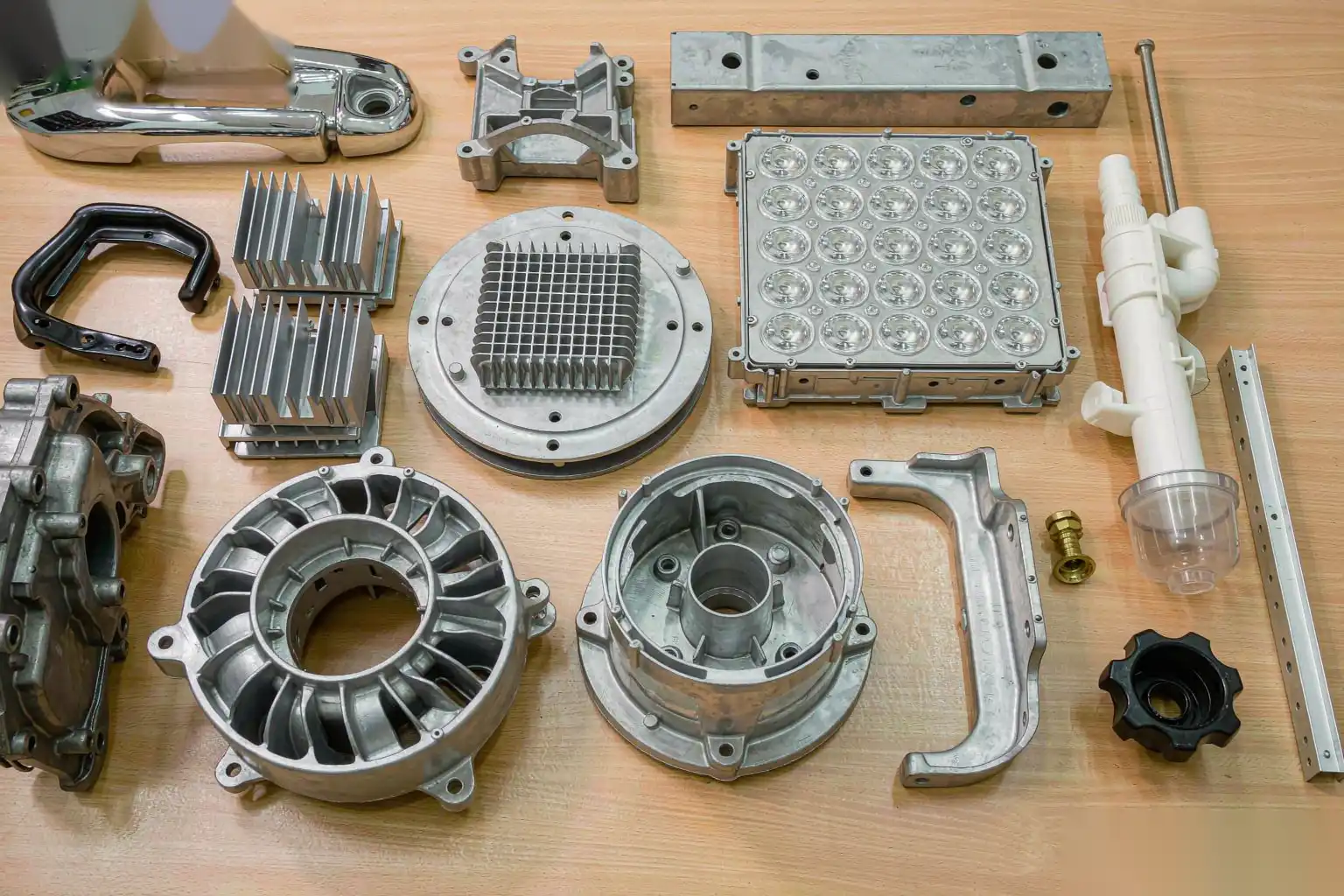
Automotive is the largest market for aluminum die casting, driven by lightweighting, electrification, and the increasing use of aluminum in vehicle structures.
Engine and Powertrain
- Engine blocks (mostly A390 for wear resistance, some A380 for non-wear surfaces)
- Cylinder heads (A380, A390)
- Transmission cases and housings (A380, A384)
- Intake manifolds (A380, A384)
- Oil pans (A380)
- Engine brackets and covers (A380)
Structural and Body
- Shock towers (A380, increasingly high-strength alloys)
- Subframes (high-vacuum HPDC with Magsimal or similar)
- A-pillars and B-pillars (high-vacuum HPDC, heat treatable alloys)
- Battery trays (electric vehicles, high-vacuum HPDC)
- Motor housings (electric vehicles, A380 with thermal management features)
- Inverter housings (electric vehicles, A380 with EMC shielding)
- Suspension components (control arms, knuckles — high-vacuum HPDC)
Interior and Exterior
- Steering column housings (A380)
- Pedal brackets (A380)
- Door handles (A380 with surface finishing)
- Mirror brackets (A380)
- Wheel center caps (A380 with finishing)
- Decorative trim (A380 or A384 with anodized or painted finish)
The automotive shift to electric vehicles is creating new applications (battery trays, motor housings, inverter housings) that are some of the fastest-growing die casting segments.
Consumer Electronics Applications
Consumer electronics enclosures and structural parts are a major market for premium die casting.
Smartphones and Tablets
- Laptop chassis (A380, A384 — premium feel, structural rigidity)
- Tablet frames (A380 with cosmetic finish)
- Premium phone chassis (limited use, mostly CNC machined)
- Smart watch cases (A380 or A384, often anodized)
- Headphone and earphone housings (A380 with finishing)
Computers and Peripherals
- Laptop bottom cases (A380 with cosmetic finish)
- Heat sinks for CPUs and GPUs (A380 or A384 with black anodizing)
- Server chassis components (A380, often with EMC features)
- Display bezels (A380 with finishing)
- Stand and mount components (A380)
Audio and Video
- Speaker housings (A380)
- Camera bodies and frames (A380, A384)
- Drone frames and arms (A380, often with cosmetic finish)
- Projector housings (A380, often with thermal management)
Consumer electronics values the premium feel, structural rigidity, and thermal performance of die cast aluminum. The cost is acceptable because the product price point is high.
Lighting Applications
LED lighting has transformed the lighting industry, and die cast aluminum is the standard for high-quality LED fixtures.
Indoor Lighting
- LED downlight heat sinks (A380, A384 with black anodizing)
- Track light housings (A380 with finishing)
- Ceiling light housings (A380 with finishing)
- Pendant light housings (A380 with finishing)
- Bathroom light fixtures (A380 with moisture-resistant finishing)
Outdoor Lighting
- Street light housings (A380 with powder coating or anodizing)
- Floodlight housings (A380, often with integral heat sink)
- Wall pack housings (A380 with IP65 rating)
- Garden light housings (A380 with corrosion-resistant finishing)
- High-bay light housings (A380 for industrial applications)
- Tunnel light housings (A380 with IP66 rating)
Specialty Lighting
- Stage and event lighting (A380 with high-power LED heat management)
- Studio lighting (A380 with high CRI and thermal management)
- Horticultural lighting (A380 with specific spectrum heat management)
- Automotive headlamp housings (A380 with high cosmetic requirements)
The shift to LED has been a major growth driver for aluminum die casting, since LEDs require heat management that aluminum provides naturally.
Sanitary Ware and Plumbing Applications
Bathroom and kitchen fixtures are a major market for both aluminum and zinc die casting.
Bathroom Fixtures
- Faucet bodies and handles (zinc die casting dominates, aluminum for some premium lines)
- Shower heads and arms (zinc or aluminum depending on design)
- Drain assemblies (zinc or aluminum)
- Soap dispensers and accessories (zinc or aluminum)
- Towel bars and hooks (zinc or aluminum)
Kitchen Fixtures
- Faucet bodies and handles (zinc or aluminum)
- Sprayer heads (zinc or aluminum)
- Pot fillers (zinc or aluminum)
- Instant hot water dispensers (zinc or aluminum)
The sanitary ware industry uses die casting because the parts are high-volume, complex geometry, and require cosmetic finishing (typically chrome plating). Zinc die casting is more common than aluminum for these applications due to better plating response and lower cost for the small to medium parts.
Industrial Equipment Applications
Industrial equipment uses die cast aluminum for housings, brackets, and structural components.
Motors and Pumps
- Electric motor housings (A380, A384)
- Pump bodies and housings (A413 for pressure tightness)
- Gear boxes and gear housings (A380)
- Compressor housings (A380)
- Valve bodies (A413 for pressure tightness)
Power Tools
- Drill and driver housings (A380 with finishing)
- Saw housings (A380 with finishing)
- Grinder housings (A380)
- Battery pack housings (A380 with EMC features)
- Tool mounting brackets (A380)
Industrial Controls
- Control panel enclosures (A380 with finishing)
- Sensor housings (A380 with sealing)
- Actuator housings (A380)
- Junction boxes (A380)
- Cable management components (A380)
Material Handling
- Forklift components (A380 for non-structural, high-strength alloys for structural)
- Conveyor components (A380)
- Pallet rack components (A380)
- AGV (automated guided vehicle) frames (A380, increasingly high-strength)
Aerospace and Defense Applications
Aerospace and defense use die cast aluminum for non-critical structural parts and many internal components.
Interior and Non-Structural
- Cabin interior brackets (A380)
- Seat frames and components (A380, increasingly high-strength)
- Galley and lavatory components (A380)
- Avionics housings (A380 with EMC features)
- Lighting fixtures (A380, A384)
Defense and Military
- Weapon components (A380, A390 for wear surfaces)
- Optical equipment housings (A380 with precision finishing)
- Communication equipment housings (A380 with EMC features)
- Vehicle components (A380, high-strength alloys for structural)
- Drone and UAV components (A380, A384)
Aerospace structural parts typically use permanent mold or investment casting, not HPDC, because of the porosity and mechanical property limitations.
Medical Device Applications
Medical devices use die cast aluminum for equipment housings and some non-implant components.
Imaging Equipment
- MRI component housings (A380 with non-magnetic alloy requirements)
- CT scanner components (A380 with EMI shielding)
- X-ray equipment components (A380 with high-density shielding)
- Ultrasound housings (A380)
Patient Monitoring
- Monitor housings (A380 with finishing)
- Pump housings (A413 for medical fluid handling)
- Bedside equipment (A380)
- Handheld device housings (A380)
Surgical and Diagnostic
- Equipment bases and frames (A380)
- Light housings (A380)
- Stand components (A380)
Medical applications require biocompatible alloys and validated surface treatments. A380 and A413 are both FDA-compliant for non-implant applications.
Appliance and Hardware Applications
Appliances and hardware use die cast aluminum for visible and structural components.
Appliances
- Refrigerator handles and trim (A380 with finishing)
- Oven door handles (A380)
- Washing machine components (A380)
- Dishwasher components (A380 with corrosion-resistant finishing)
- Microwave oven housings (A380)
- Coffee machine components (A380)
Hardware
- Door handles and locks (zinc or aluminum)
- Cabinet hardware (zinc or aluminum)
- Window hardware (zinc or aluminum)
- Furniture hardware (zinc or aluminum)
- Tool handles (aluminum)
Emerging Applications
Several emerging applications are growing rapidly:
Electric Vehicles
- Battery trays and enclosures — the single fastest-growing die casting application
- Motor housings — large, complex, with thermal management
- Inverter housings — with EMC features
- On-board charger housings — with thermal management
5G and Telecom
- Base station housings — with thermal management and EMC features
- Antenna components — precision die casting for RF performance
- Filter housings — with precision machining
- Heat sinks for power amplifiers — high thermal conductivity alloys
Renewable Energy
- Solar inverter housings — with thermal management
- Wind turbine components — large structural parts
- Battery energy storage housings — large enclosures
- Hydrogen fuel cell components — emerging application
What Makes a Part Suitable for Aluminum Die Casting
A part is well-suited for aluminum die casting if it meets most of these criteria:
- High volume (5,000+ parts/year, with breakeven at 1,000-3,000)
- Complex geometry that would be expensive to machine
- Wall thickness 1.5-4.0 mm (uniform walls preferred)
- Tolerance requirements achievable in die casting (not sub-millimeter precision)
- Cosmetic finish required or surface treatment specified
- Structural or semi-structural function (not pure aesthetic)
- Weight savings desired compared to steel or zinc
If a part meets 4 or more of these criteria, die casting is likely the right manufacturing process.
Volume and Economics by Application
| Application | Typical Annual Volume | Per-Part Cost Range |
|---|---|---|
| Automotive engine block | 50,000-500,000 | $20-80 (large, complex) |
| Automotive bracket | 100,000-1,000,000 | $1-5 |
| LED heat sink | 50,000-500,000 | $2-10 |
| Consumer electronics enclosure | 100,000-5,000,000 | $3-15 |
| Bathroom faucet | 50,000-500,000 | $2-8 (zinc, often less) |
| Industrial pump housing | 1,000-50,000 | $10-50 |
| Medical device housing | 1,000-50,000 | $5-30 |
| Street light housing | 5,000-100,000 | $15-50 |
| Aerospace component | 500-10,000 | $20-200 |
The wide ranges reflect the wide range of part sizes, complexity, and finishing requirements within each application.
Pattern Worth Noticing Across Industries
Looking across these industries, one pattern repeats: the parts that migrate to die casting are rarely the parts anyone planned to move. They arrive by drift. An aluminum die cast bracket proves so reliable that the product team specifies die cast parts for the next model entirely. A lighting housing die cast for one fixture family gets reused across three product lines because the tooling already exists. A pump body that historically was sand cast crosses over when its volume quietly doubles across two catalog years.
That drift has a practical implication for anyone planning capacity: the die cast share of a product line tends to grow on its own, and the finishing capacity behind it should be planned for growth, not sized to today. Companies that install a robotic finishing cell sized to a fixed part count typically find the cell approaching saturation within two years, not because the forecast was wrong but because die casting keeps winning parts nobody assigned to it. Cells built with modular fixtures and program capacity for additional part families absorb that growth as a scheduling exercise rather than a capital project, which is exactly how DZ Machinery configures the systems we deliver.
FAQ About Aluminum Die Casting Applications
What is the largest aluminum die casting ever made?
The largest single-cavity die cast aluminum parts are around 50-100 kg, used for automotive structural components. The trend toward larger die castings (gigacasting) is enabling single-piece structural parts that previously required assembly of multiple stamped or cast pieces.
What is the smallest aluminum die casting produced?
Very small die castings (under 10 g) are possible but unusual. Zinc die casting is preferred for very small parts because the hot-chamber process is more efficient. The smallest aluminum die castings are typically precision components for electronics, aerospace, or medical applications.
Which industry uses the most aluminum die casting?
The automotive industry is the largest consumer of aluminum die castings globally, accounting for 35-40% of total volume. The trend toward electric vehicles is accelerating this, as EV battery trays, motor housings, and structural components are increasingly made by large die castings.
Are die cast aluminum parts used in safety-critical applications?
Yes, increasingly. High-vacuum HPDC and high-strength alloys are enabling safety-critical structural applications in automotive (battery trays, suspension components) and aerospace (cabin interior brackets). The development of non-destructive testing (X-ray, CT) ensures the parts meet reliability requirements.
Choosing the Right Application for Die Casting
The right application for die casting is one where:
- The part geometry benefits from die casting — complex, 3D, with internal features
- The volume justifies the tooling investment — typically 5,000+ parts/year
- The function matches die casting capabilities — not requiring machined precision
- The finishing can be handled — either in-house at the supplier or by a finishing partner
- The supply chain is manageable — reasonable lead times, quality can be verified
If these conditions are met, die casting is almost certainly the right choice.
At DZ Smart Manufacturing, our robotic finishing cells handle aluminum die castings across consumer, industrial, automotive, lighting, and sanitary applications. If you are evaluating aluminum die casting for a new application and want feedback on the design, finishing, or cost, our engineering team can review your part spec and provide practical recommendations.
See our industry applications and automated finishing solutions