

QUICK FACTS
| Typical cycle | 20–120 s/part |
| Spindle range | 6,000–18,000 RPM |
| Force control | Active compliance ±5 N |
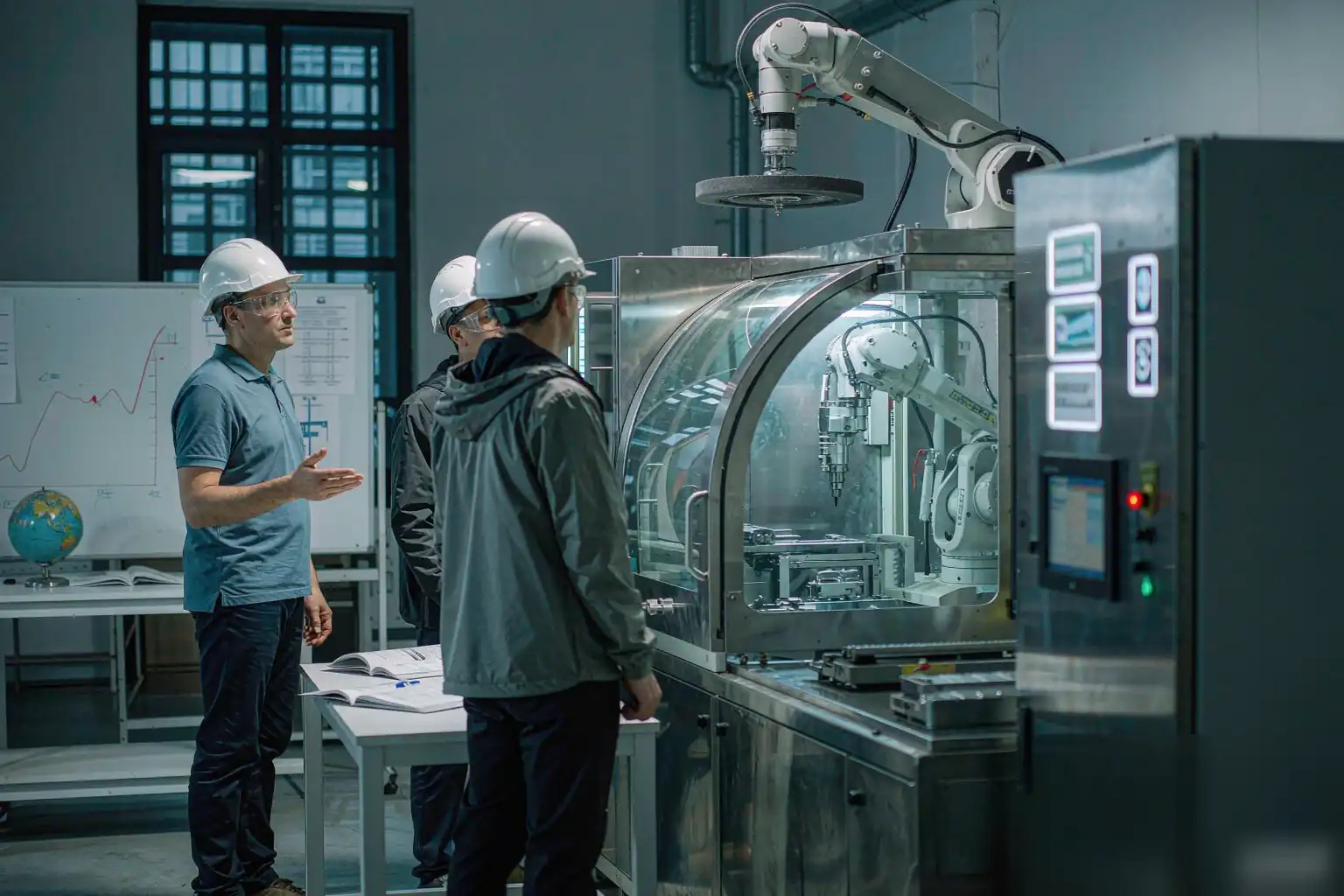
Automated grinding and polishing cells rarely fail because the robot is unreliable. They stall because the people beside the cell were never trained to run it. If you want consistent surface finish, high uptime, and a safe shop floor, you must train operators automated polishing with the same discipline you apply to the machine itself. This guide gives you a complete, copy-ready training plan you can deploy in one quarter.
Why Operator Training Determines Cell Uptime
Every minute a robotic cell sits idle costs you labor and throughput. Most unplanned stops trace back to operator error: wrong fixture, missed alarm, incorrect media, or a rushed recipe change. Therefore, training is not a soft onboarding step. It is the single largest lever you control over cell availability. A well-trained operator prevents faults before they happen and recovers fast when they do.
Define the Operator Competency Map
Before you teach anyone, write down exactly what “competent” means for your cell. Break the role into observable skills rather than vague traits. Then attach a proficiency level to each skill so progress is measurable. This map becomes your syllabus, your checklist, and your audit trail.
A simple competency map keeps everyone aligned. Use the structure below as a starting template, then adapt it to your abrasives, parts, and tolerances.
| Skill Area | Training Method | Target Duration |
|---|---|---|
| Cell safety and e-stop response | Classroom + supervised drill | 1 day |
| Loading and fixturing parts | Shadowing + hands-on task | 3 days |
| Recipe selection and recall | Simulated run + quiz | 2 days |
| Abrasive and media changeover | Guided repetition | 2 days |
| In-process quality inspection | Mentored sampling | 4 days |
| Fault diagnosis and recovery | Scenario tabletop | 5 days |
Next, sequence these skills into phases so operators build confidence without being overwhelmed. Each phase should end with a demonstrable task, not a lecture.
Phase 1 — Safety and Cell Awareness
Safety comes first because it protects people and sets the tone for everything else. Operators must locate every e-stop, light curtain, and interlock before they touch a part. They should also learn the noise, vibration, and dust signatures that signal a healthy versus a struggling cell. Train this on the floor with the cell powered but idle.
TRAINING TIP — Run a timed e-stop drill on day one. An operator who can halt the cell in under three seconds is safer than one who memorized the manual.
Phase 2 — Loading, Fixturing, and Workholding
Surface finish lives or dies at the fixture. Teach operators to seat parts squarely, confirm clamp pressure, and detect a misloaded workpiece before the cycle starts. Small gaps and twist errors cause chatter, burn marks, and rework. Consequently, this phase deserves more repetition than managers expect.
Use a short checklist at the load station so nothing is skipped under production pressure. Pair each new operator with a certified mentor for at least three full shifts.
Phase 3 — Program Selection and Recipe Recall
Modern cells store multiple finishing recipes for different alloys and geometries. Operators must match the part to the correct program without guessing. Train them to read the traveler, confirm the recipe name on the HMI, and verify the first piece against the standard. A wrong recipe wastes abrasives and can scar the part.
Reinforce this with a quick recall quiz after each simulated run. Accuracy here directly protects your finish quality and your consumable budget.
Phase 4 — Abrasive and Media Changeover
Abrasive belts, wheels, and polishing media wear out on a predictable curve. Teach operators to recognize glazing, loading, and edge wear before finish drift appears. They should also perform changeover cleanly to avoid cross-contaminating grit grades. Moreover, proper tensioning extends belt life and stabilizes the finish.
Document the correct media for each recipe in plain language at the cell. This removes judgment calls and speeds up handoffs between shifts.
Phase 5 — In-Process Quality Inspection
Inspection is not only the quality lab’s job. Operators who spot a dulling finish early prevent a whole batch from drifting out of spec. Train them to use the roughness gauge, visual standards board, and edge-light technique consistently. Additionally, teach them to log readings so trends become visible.
Set a sampling rule, such as one part per lot or every tenth piece. Consistent sampling catches tool wear long before it becomes scrap.
Phase 6 — Basic Fault Diagnosis and Recovery
Even well-run cells throw alarms. The difference between a five-minute recovery and a two-hour stop is operator confidence. Teach a simple triage: read the alarm, check the obvious cause, then escalate if unclear. Never let an operator bypass a safety interlock to “clear” a fault.
Build a fault deck of the ten most common alarms with the correct first response for each. Review one card every morning until recall is automatic.
Build a Tiered Certification Ladder
People stay engaged when they can see the next rung. Create three tiers — Operator, Senior Operator, and Cell Lead — each with explicit skills and a small pay or recognition step. This turns training from a chore into a career path. It also gives you a clear bench when someone is absent.
- Tier 1 Operator — loads, runs approved recipes, performs basic inspection, and responds to standard alarms.
- Tier 2 Senior Operator — executes changeovers, tunes minor process parameters, and mentors new hires.
- Tier 3 Cell Lead — owns the cell KPIs, manages shift handover, and drives continuous improvement tasks.
Certify at each tier with a practical assessment, not just a signature. The assessment should mirror real production conditions as closely as possible.
Use Digital Instructions, Drills, and Micro-Sessions
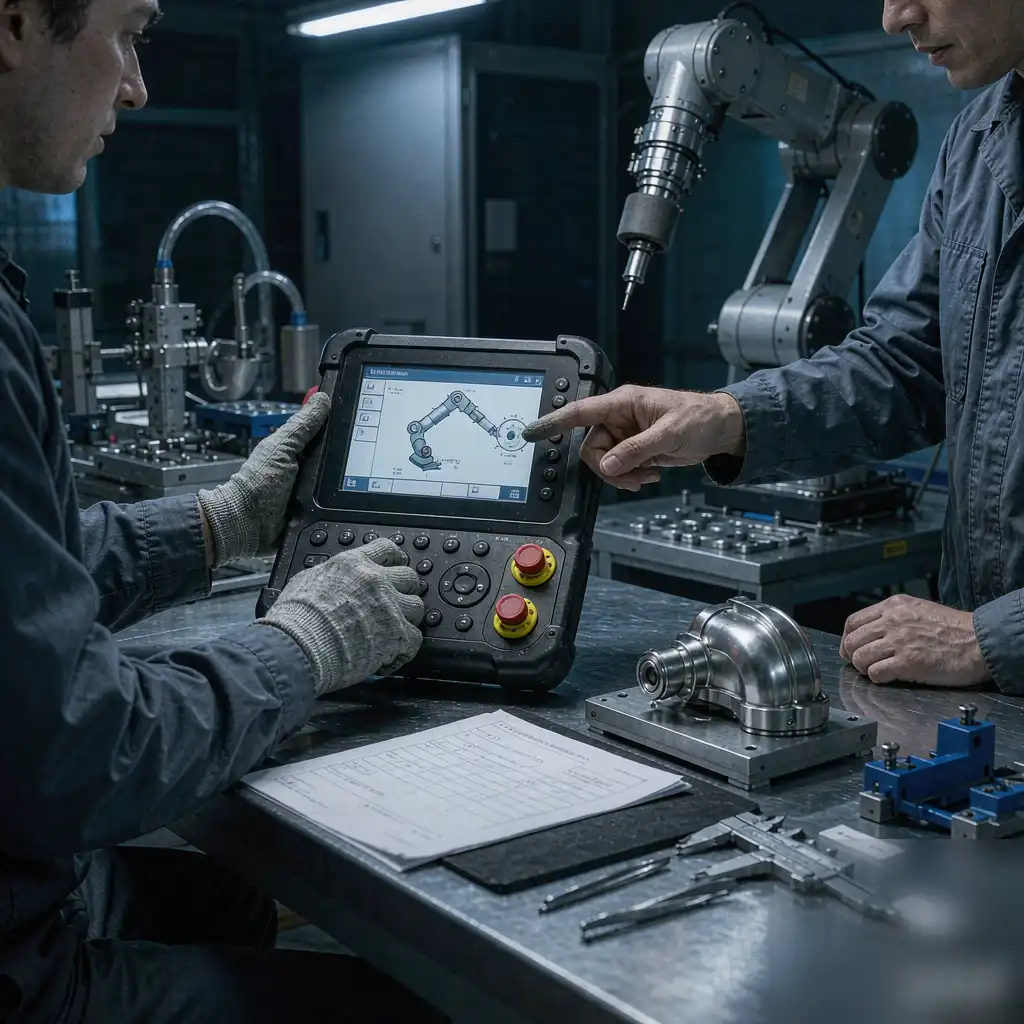
Paper SOPs rot in a binder. Replace them with point-of-use digital instructions on a tablet or pendant screen so the right step appears at the right moment. This is especially powerful for train operators automated polishing because the steps are visual and repeatable. Short videos beat long text for changeover tasks. Update instructions whenever the recipe changes, and version-control them so operators trust a screen that matches the machine in front of them.
Skills fade without use, and many faults happen rarely. Therefore, schedule a fifteen-minute drill each week on a single topic: a specific alarm, a media swap, or a fixture trick. These micro-sessions keep muscle memory fresh without pulling people off the line for a full day, and they surface gaps before a real emergency exposes them.
Measure Training Effectiveness with KPIs
If you cannot measure it, you cannot improve it. Track a small set of training-linked KPIs so you see whether the plan works. Focus on leading indicators that operators can influence directly, not just lagging quality numbers.
| KPI | Why It Matters | Good Target |
|---|---|---|
| Mean time to recover (MTTR) | Reflects fault-handling skill | Under 10 min |
| First-piece pass rate | Shows recipe and load discipline | Above 95% |
| Changeover time | Signals changeover fluency | Within standard |
| Open Safety observations | Indicates hazard awareness | Zero high-risk |
Review these numbers monthly with the cell leads. Celebrate movement in the right direction, and coach the tiers that lag.
Cross-Train and Avoid Common Mistakes
A cell with only one competent operator is a risk waiting to happen. Cross-train at least two people per shift on every critical task so vacations and sick days do not stall production. This also reduces the pressure on any single expert, spreads institutional knowledge, and reveals who has hidden aptitude for leadership. At the same time, watch the mistakes that stall operator growth: dumping too much theory before hands-on time, skipping the assessment, or promoting on tenure instead of skill. Another common error is letting experienced operators “just show the new guy” with no standard, which produces as many methods as people. Avoid these traps by following the phased plan and certifying on proof.
Link Training to Continuous Improvement
Training should feed your improvement loop, not sit apart from it. When an operator finds a faster, safer changeover, capture it in the digital instructions the same week. Encourage them to log improvement ideas at the cell. Over a year, these small operator-driven gains compound into major throughput. If you are planning a broader transformation, start by reviewing how to automate your surface finishing workshop so training aligns with your automation roadmap.
Adapt the Plan for Smaller Foundries
Small and medium foundries often run lean teams with no dedicated trainer. In that case, compress the phases and lean on digital instructions plus one strong cell lead. The competency map still applies; you simply spread it across fewer people. Notably, the return on training is often higher here because each operator touches more of the process. To see a sized example, read about automated finishing solutions for small and medium foundries and map its recommendations onto your tiers.
Prepare Operators for Flexible Cells
The next generation of equipment handles mixed parts with rapid recipe switching. Operators for these cells need broader judgment, not just one fixed routine. Train them to think in families of parts and to anticipate changeover needs. This mindset scales as your business grows. Explore the design philosophy in our flexible finishing cell for metal surface treatment article to brief your team on where the work is heading.
A 90-Day Rollout Plan You Can Copy
Finally, here is a timeline that works in most shops. Days 1 to 15 cover safety, competency mapping, and Phase 1 through Phase 2 with mentors. Days 16 to 45 add recipe, media, and inspection training, then certify Tier 1. Days 46 to 75 build fault recovery and cross-training while you install digital instructions. Days 76 to 90 launch weekly drills, set KPIs, and certify your first Senior Operators. After ninety days, the cell should run with confidence and a clear bench.
WHAT GOOD LOOKS LIKE
Within one quarter you should see fewer unplanned stops, faster changeovers, and a first-piece pass rate above 95%. More importantly, your team will own the cell instead of fearing it. That ownership is what turns a capital purchase into a reliable competitive advantage.
Training operators for automated grinding and polishing is a discipline, not a one-time event. Map the competencies, phase the skills, certify on proof, and keep the loop running. Do that, and your robotic cell will deliver the finish, uptime, and peace of mind your customers expect.
Always validate finish and tolerance on a sample run before moving to full production.