

What Is a Grinding and Polishing Machine?
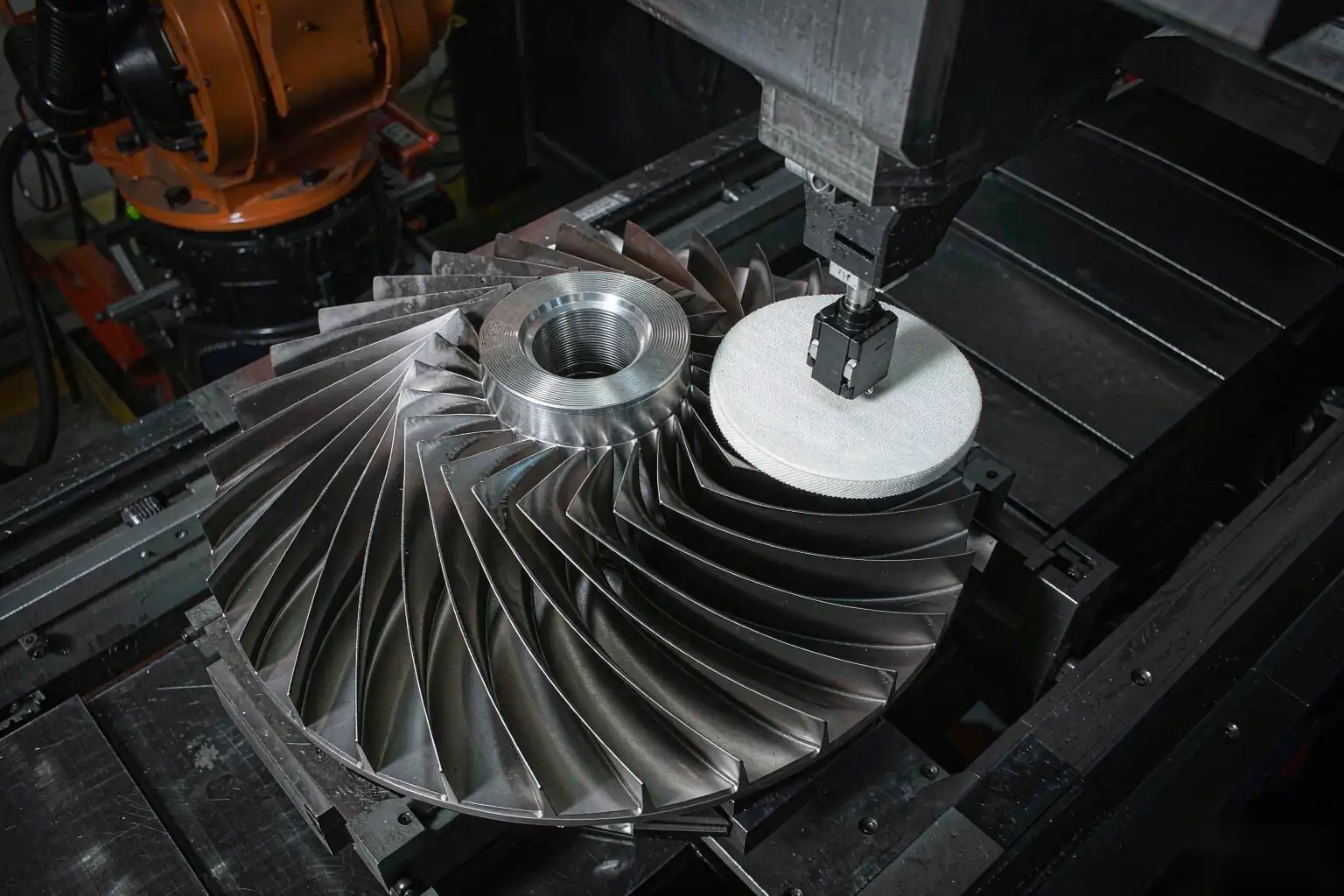
A grinding and polishing machine is a metal surface-finishing system that performs two operations on the same part in one continuous workflow. Grinding removes excess material, weld marks, parting lines, and burrs while bringing the surface to a uniform plane. Polishing then refines that plane into a specified finish, from a satin look to a near-mirror brightness. Keeping both stages on a single platform matters because the part never leaves the cell between operations, which cuts handling, reduces re-fixturing errors, and keeps tolerances stable.
These machines sit at the end of the metal manufacturing chain. A casting, forging, or machined blank arrives rough, and the machine turns it into a component that meets both dimensional and cosmetic requirements. In foundries, hardware plants, and cookware factories the same cell often handles thousands of similar parts per shift, which is why consistency matters more than raw speed.
How a Grinding and Polishing Machine Works
The working principle is straightforward, even though the engineering behind it is not. A part is held securely, an abrasive medium contacts the surface under controlled force, and material is removed in thin layers until the target geometry and finish are reached. Most cells follow the same sequence:
- Loading and fixturing. The workpiece is clamped or placed on a fixture so it cannot move during contact. Poor fixturing is the single most common cause of uneven results.
- Rough grinding. A coarse wheel or belt removes the bulk of the material: gates, sprues, flashes, and heavy burrs. This stage sets the geometry.
- Fine grinding. A finer abrasive smooths the scratches left by the rough stage. Without this transitional step, polishing compounds cannot reach a clean surface.
- Polishing and buffing. Loose compound or a soft buffing wheel burnsishes the surface to the required gloss or roughness value.
- In-process measurement and cleaning. Many cells blow off debris or rinse the part so the next stage is not contaminated.
- Unloading. The finished part is released, often onto a conveyor that feeds inspection or packing.
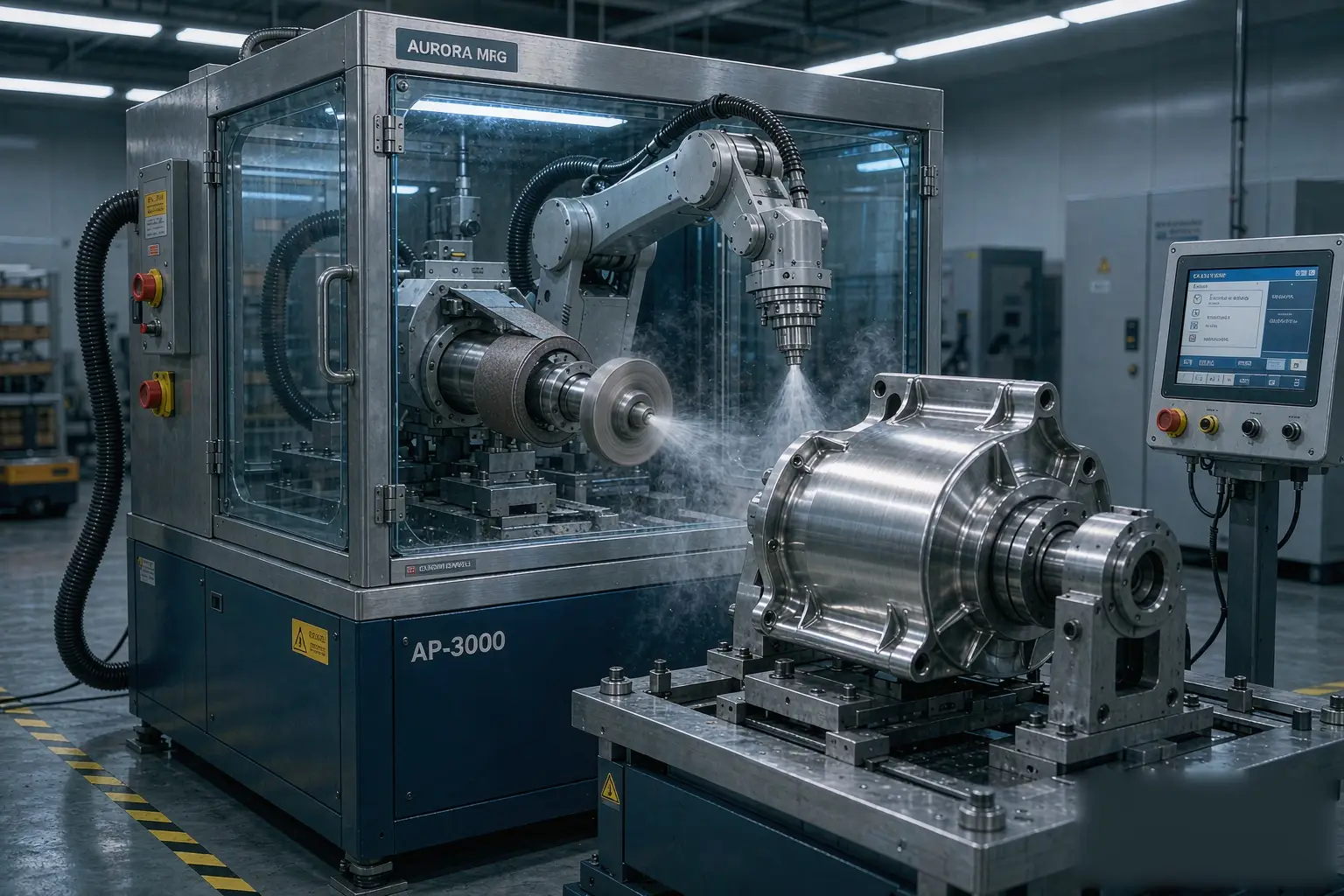
The contact between abrasive and metal is where the real work happens. The wheel or belt spins at a set speed, the part is pressed against it with a defined force, and coolant carries heat and swarf away. Modern systems control all three variables programmatically, which is what lets them repeat the same result on part number ten thousand that they achieved on part number one.
Core Technologies Inside Modern Machines
A basic grinder is a spinning wheel and a steady hand. A modern automated grinding and polishing cell is closer to a small factory. The components that separate the two are worth understanding before you buy:
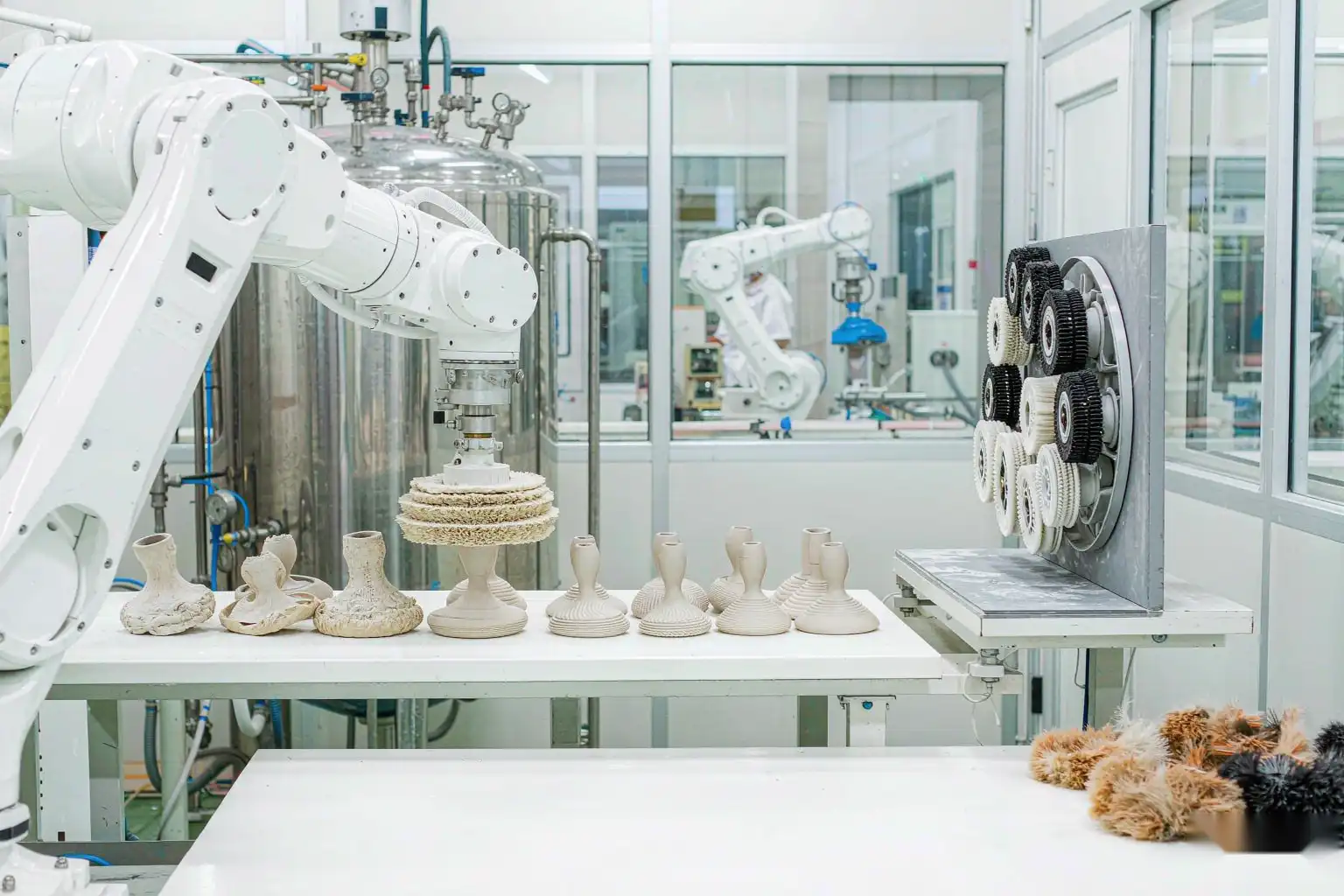
- Abrasive media. Grinding wheels, fiber discs, flap wheels, and buffing compounds each suit a different stage. Matching grit size to the job is the difference between a clean finish and a surface full of marks.
- CNC and robotic motion. A robot or multi-axis arm moves the part (or the tool) along a programmed path, holding the contact angle and pressure far more steadily than a person can.
- Force and torque control. Rather than driving the tool at fixed speed, the controller senses resistance and adjusts pressure in real time. This is what keeps thin or delicate parts from being crushed.
- Machine vision and metrology. Cameras locate the part, check for defects, and confirm the finish, closing the loop between making and measuring.
- Programmable recipes. Each part number stores its own speed, pressure, and cycle profile, so switching products is a software change rather than a mechanical rebuild.
When these pieces are tied together through proper robot integration, the cell stops being a single machine and becomes a reproducible process.
Key Process Parameters
Finish quality is the sum of several adjustable variables. The table below lists the ones operators tune most often:
| Parameter | What it controls | Typical effect |
|---|---|---|
| Wheel / belt speed | Surface cut rate | Higher speed removes material faster but raises heat and risk of marks |
| Contact pressure | Material removal and finish | Too low leaves stock; too high burns or distorts the part |
| Abrasive grit progression | Scratch depth between stages | Finer steps give a cleaner final polish |
| Feed rate | Time per surface | Slower feed improves consistency on complex shapes |
| Coolant flow | Heat and debris removal | Adequate flow prevents warping and loading of the abrasive |
| Cycle time per part | Throughput | Set by finish spec and part geometry, not by machine alone |
None of these values is universal. A die-cast aluminum housing needs a different profile than a stainless faucet body, which is why recipe storage matters more than a high headline spindle speed.
Grinding vs Polishing: Where Each Fits
The two words are often used together, but they solve different problems. Grinding is about geometry and cleanliness: it takes a part that is too big, too rough, or too inconsistent and makes it dimensionally correct. Polishing is about appearance and surface quality: it takes a correct part and makes it presentable or functionally smooth. Running a polishing step before grinding is wasted effort, because the coarse wheel would simply erase the polish. The correct order is always grind first, polish second, with a fine-grind bridge in between.
Industrial Applications
Almost any metal part that must look good or fit tightly passes through grinding and polishing at some point. A few sectors use these machines heavily:
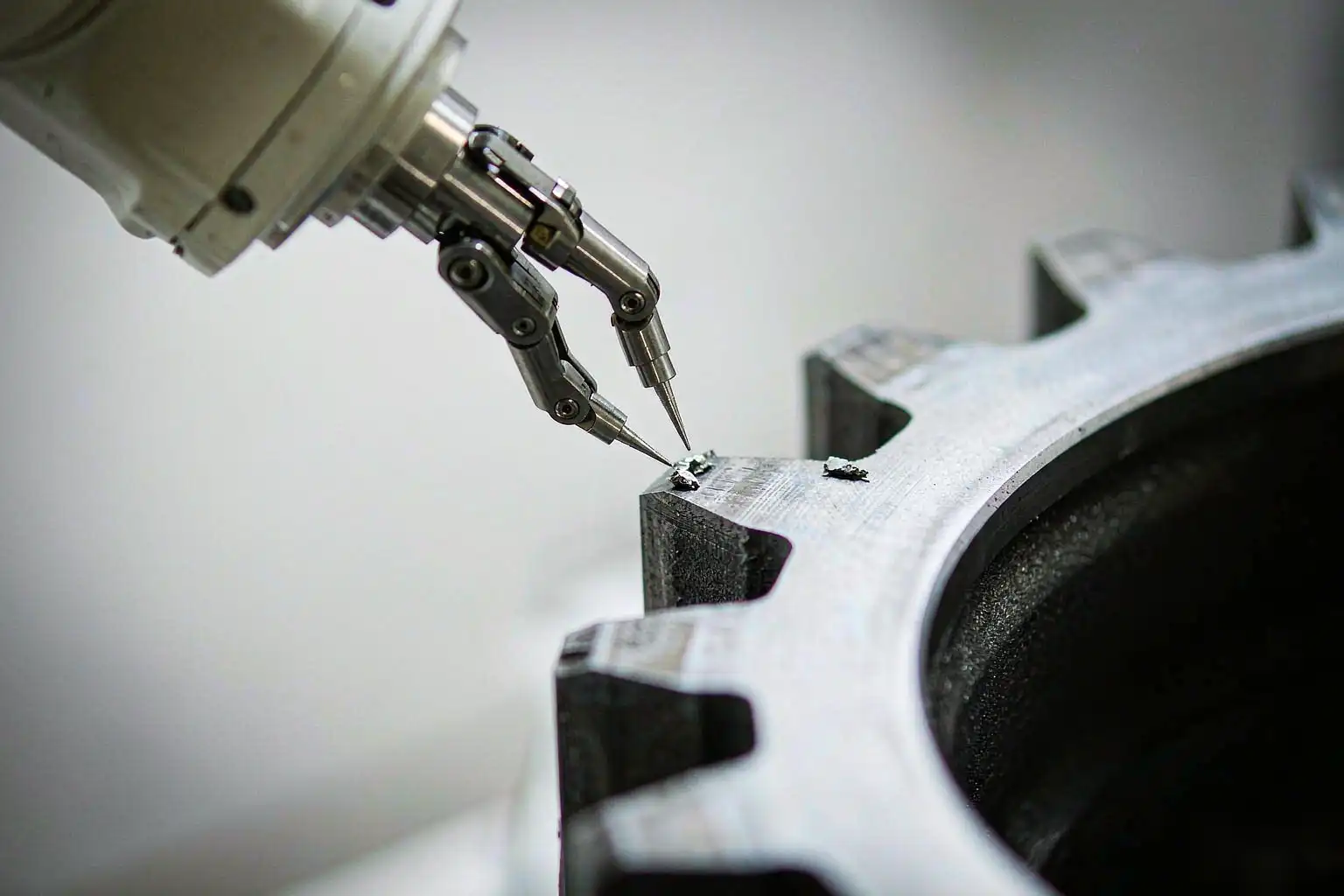
- Automotive. Brake components, brackets, and trim are deburred and finished at volume, where robotic deburring solutions keep defect rates low.
- Aerospace. Castings for flight parts need precise, documented finishing so every edge meets specification.
- Cookware and kitchenware. Pots, pans, and utensils need a consistent satin or mirror finish that customers see every day, which is why cookware polishing automation has become standard in larger plants.
- Hardware and locks. Door handles and lock bodies are finished by the thousands, with appearance driving much of the value.
- Faucets and fixtures. Chrome and brushed finishes depend on a flawless base surface before plating.
- Die casting. Automated deburring of aluminum die castings removes parting-line flash that manual work struggles to reach consistently.
- Medical and electronics. Small, high-value parts need burr-free edges for safety and function.
Manual vs Automated Finishing: Consistency and ROI
A skilled operator with a handheld grinder can produce a beautiful part. The problem is the second part, and the two thousandth. Human finish quality drifts with fatigue, mood, and training, while a programmed cell repeats the same path indefinitely. Automation also reclaims hours: parts that took minutes by hand move through a cell in a fraction of the time, and the labor shifts from doing the work to supervising it. For shops weighing the step up, a turnkey finishing line that covers casting to finished product can remove several manual stations at once.
How to Choose the Right Configuration
Buying the wrong cell is expensive, so the selection should start from the part, not the machine. Ask:
- What is the part geometry? Complex curves favor robots; flat or round parts may suit simpler dedicated units.
- What material and hardness? Aluminum, steel, and stainless each load abrasives differently.
- What volume? Low mix with high volume justifies full automation; high mix with low volume favors a flexible cell.
- What finish spec? A roughness target or gloss level sets the number of stages you need.
- What footprint is available?Inline, rotary, and gantry layouts occupy very different floor space.
A flexible finishing cell is often the safest first investment because it absorbs new part numbers without a rebuild.
Maintenance Best Practices
These machines are robust but not self-sufficient. Keeping them productive depends on routine care:
- Dress and balance grinding wheels so they cut true and do not vibrate.
- Manage coolant by filtering swarf and checking concentration; dirty coolant ruins finishes and clogs lines.
- Calibrate force and vision systems on a schedule so the cell trusts its own sensors.
- Inspect fixtures for wear, because a loose fixture silently degrades every part it holds.
Common Mistakes to Avoid
- Skipping the fine-grind stage and expecting polish to hide coarse scratches.
- Using one pressure setting for every part, regardless of material.
- Letting coolant go cloudy, then blaming the abrasive for poor finish.
- Fixturing parts loosely to save setup time, which guarantees inconsistency.
- Treating the machine as a grinder only and outsourcing polishing, which breaks the single-cell advantage.
Frequently Asked Questions
Can one machine really do both grinding and polishing?
Yes. In a combined cell the part stays fixtured while different wheels, belts, or compounds are presented in sequence, so both operations run without moving the workpiece to another station.
What abrasives are typically used?
Coarse wheels or belts for rough grinding, finer abrasives for the transitional stage, and compounds with buffing wheels for polishing. The progression of grit size determines the final scratch pattern.
How long does a cycle take?
It depends on part size, material, and the required finish. Simple deburring may take seconds per part, while a full grind-to-mirror finish on a large component can run several minutes. Cycle time is set by the spec, not by the machine alone.
Is robotic finishing better than manual?
For volume and consistency, yes. A robot repeats the same path and pressure every time, which manual work cannot match across a full shift. For one-off or highly variable parts, manual still has a place.
What surface finish can I expect?
Anything from a matte satin to a bright mirror, defined by roughness or gloss targets. The achievable result is limited mainly by the number of stages and the quality of the abrasive progression.
Conclusion
A grinding and polishing machine is less a single tool than a controlled process for turning rough metal into finished components. Understanding how it works, which parameters drive the result, and where it fits in your production line is what separates a cell that merely runs from one that pays for itself. Whether you start with a dedicated unit or a flexible cell, the fundamentals stay the same: secure the part, control force and speed, progress the abrasive logically, and keep the system maintained.