


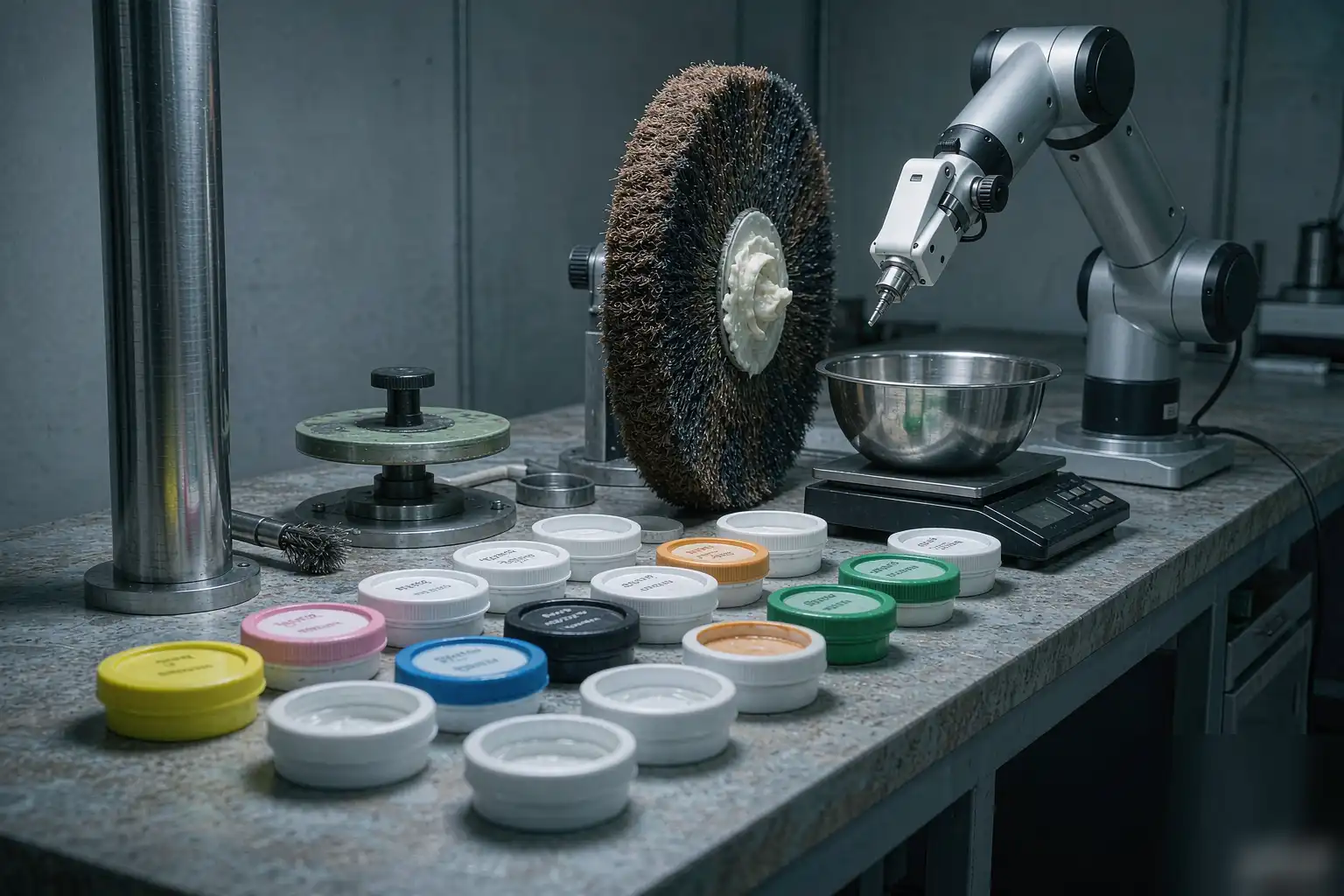
AT A GLANCE · Most finishing supervisors blame the robot when surface quality drifts, yet the compound is usually the real variable on the line. A robotic arm only repeats what the process gives it, so the wrong bar, paste, or liquid silently changes cut rate, haze, and rework within a single shift. Therefore, choosing the right polishing compound for robots is the single highest-leverage decision you make during cell commissioning. This guide gives you decision criteria and a checklist, not a vendor catalog to scroll through.
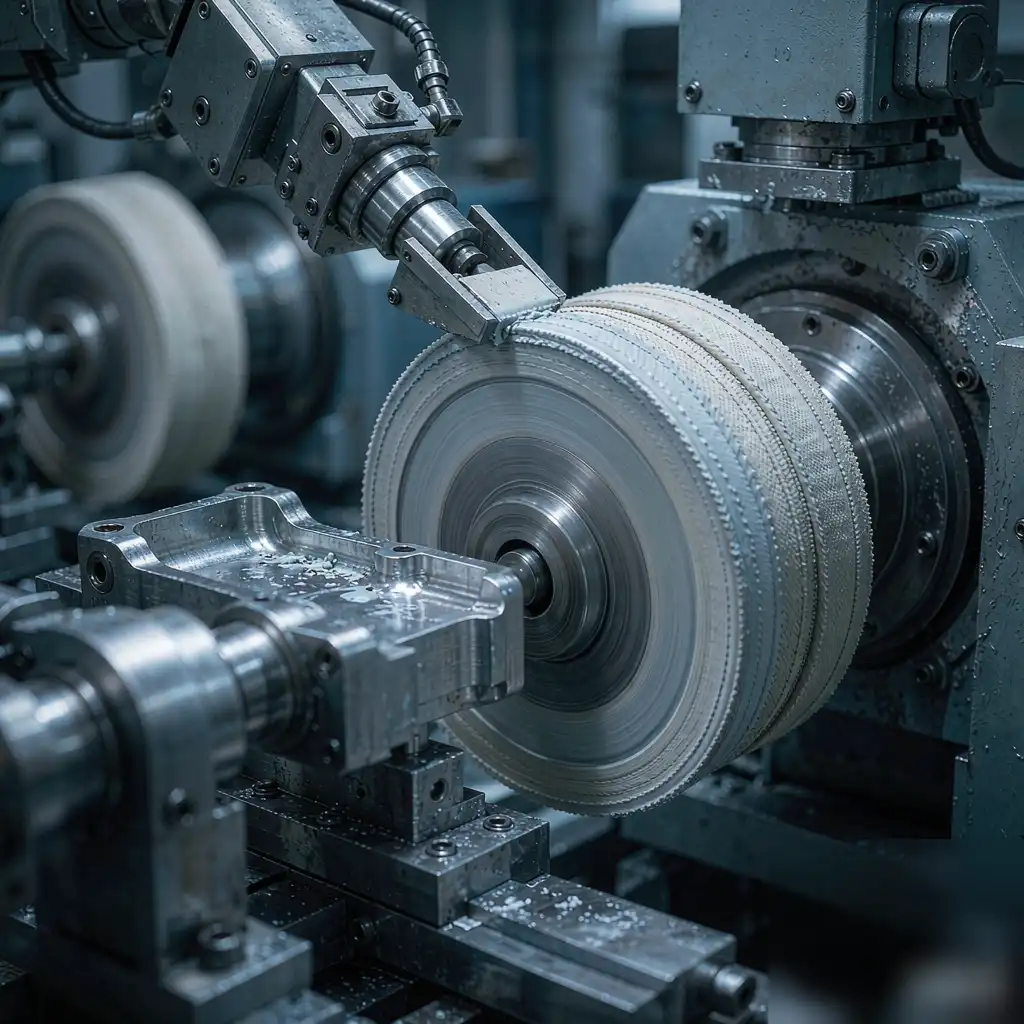
What a Polishing Compound Actually Does
A compound is a carrier system loaded with abrasives and lubricants that together control heat, cut, and final color on the part. The abrasive removes stock while the binder and grease manage friction at the contact zone between wheel and surface. Furthermore, the same abrasive behaves differently on a robot than by hand because dwell and pressure stay constant instead of wandering. Understanding this balance prevents the common mistake of swapping grit size when the carrier chemistry is actually the problem. You should treat compound as a tuned subsystem, not a commodity you grab from the shelf.
Match the Compound to the Material First
Steel, aluminum, brass, zinc, and stainless each react in distinctly different ways to abrasive chemistry and process heat. Soft metals load and smear under pressure, while hard alloys need aggressive cutting without burning the visible surface. Consequently, you should lock the base material before you touch grit size, brand, or delivery method at all. Our work on robotic polishing quality for zinc alloy parts shows how easily zinc smears without the correct binder and cooling balance. Start material-first and the rest of your compound decision becomes far simpler to defend.
Compound Type vs Finish and Material
Use the table below as your first-pass filter when specifying a new or re-qualified cell. It maps common compound families to the materials and finish grades they suit best in robotic duty.
| Compound type | Best material | Target finish | Robot note |
|---|---|---|---|
| Aluminum oxide (fused) | Carbon steel, stainless | Cut / satin | High cut rate, low loading |
| Silicon carbide | Hard alloys, ceramics | Pre-polish | Sharp, cools fast |
| Chrome / green chromium | Stainless, brass | Mirror | Final coloring pass |
| Tripoli / lime | Brass, aluminum | Cut + color | Avoid on stainless |
| Diamond slurry | Tungsten, hard tooling | Ultra-finish | Precise dosing needed |
Solid, Liquid, or Paste Delivery
Robots deliver compound three main ways: pressed bars riding a spinning wheel, pumped liquid through a nozzle, or dabbed paste applied at intervals. Liquid systems give the most consistent film and the easiest closed-loop control, which is why high-volume cells prefer them over manual bar contact. However, bars remain cheaper and simpler for low-mix, low-volume work where dosing precision matters less. Choose delivery based on cycle time and part value, not on what your team used last year.
Abrasive Grain Size and Finish Grade
Grit defines stock removal and resulting surface roughness along a predictable ladder you can plan around. Coarse 80 to 120 cuts fast for deburring, while 400 to 800 refines the surface, and 1000 plus colors toward a true mirror. Nevertheless, pushing a finer grit too early wastes cycles and can burn the wheel or the part. Sequence your compound steps instead of relying on one miracle grade to do every job at once. Document the grit ladder so operators cannot quietly skip a stage.
Heat, Load, and Dwell Control
Because robots hold steady pressure, heat builds faster than in manual work and compounds must lubricate accordingly to survive. Insufficient binder causes loading, where abrasive packs with metal and stops cutting effectively on the wheel face. In addition, excess lubricant washes the film away and drops cut rate below your quoted target. Tune dwell and feed together with the compound, never against it, and watch the contact zone temperature during the trial run.
REMEMBER — the robot repeats the process exactly, so a compound that loads on pass ten will load on pass ten thousand. Validate load behavior during the first trial, not after you have already shipped defective parts to the customer.
Building a Multi-Stage Compound Sequence
Few parts reach spec on a single compound, so you should design a staged ladder from cut through to color. A typical stainless sequence runs aluminum oxide cut, silicon carbide refine, then chromium oxide mirror as a final coloring pass. Moreover, each stage needs its own wheel or buff to avoid cross-contamination that ruins the previous work. Plan the ladder before you size the cell footprint, because stage count drives both floor space and takt time.
Compound and Wheel Compatibility
The compound and the buff or flap wheel are a working pair, not two separate purchases you source independently. A sticky tripoli needs a loose cotton buff, while liquid systems favor sisal or synthetic pads for controlled film transfer. Otherwise, the wrong wheel wastes compound and ruins finish regardless of how perfectly the robot is tuned. Always qualify the wheel and compound together on a real sample part before committing the program.
From Deburring to Mirror in One Cell
An integrated cell can run the entire ladder without manual transfer between separate stations or shifts. This removes handling marks and keeps traceability intact from first cut to final color on every serial number. Our end-to-end surface finishing from deburring to mirror polish framework shows how compound sequencing drives that continuity across the whole process. Fewer handoffs means fewer excuses when a finish comes back out of tolerance.
Application Example: Brass Faucets
Brass is soft, tarnish-prone, and unforgiving on color, which makes compound choice critical for visible plumbing parts. Tripoli cuts and colors in one stage, then a light chromium pass seals the look and protects against fingerprint oxidation. In practice, the polishing machine for brass faucets guide details the wheel and compound pairing we recommend for consistent lustre at production volume. Mirror brass is won or lost at the compound stage, not at the robot joint.
Common Compound Mistakes to Avoid
- Buying on price per kilo instead of cost per good finished part.
- Skipping the refine stage and forcing mirror too early in the ladder.
- Mixing compounds on one wheel and cross-contaminating the finish.
- Ignoring ambient temperature, which changes binder viscosity and film.
- Assuming a manual compound works unchanged when mounted on a robot.
- Running the same grit after the wheel has already loaded and gone dull.
Checklist: Specifying Your Robot Compound
Use this decision checklist when you commission or re-qualify a finishing cell for production. Walk it top to bottom and document the answer for each line so the process stays repeatable across operators.
- Confirm base material and its hardness or smear risk up front.
- Define target Ra and finish appearance together with the customer.
- Select abrasive family and opening grit from the comparison table.
- Choose delivery method matched to your real cycle volume.
- Pair each compound stage with a dedicated, labeled wheel.
- Run a fifty-part trial and measure load, haze, and rework.
- Lock the sequence in the robot program and the operator SOP.
Compound Cost vs Throughput Trade-off
Premium liquid compounds cost more per liter yet cut rework and boost uptime through consistent, metered dosing every cycle. Cheap bars save on the consumable line but add labor and scrap when finish drifts between shifts. Therefore, evaluate compound on total cell economics, not on the purchase price printed on the invoice. A small consumable premium is cheap insurance against a customer rejection.
Compound ROI Snapshot
Switching from bars to dosed liquid on a two-shift cell typically cuts rework from eight percent to under two percent and recovers the consumable premium within the first quarter. The bigger win is stable cycle time, which lets you quote tighter lead times with real confidence. Compound is a throughput lever, not just a supplies line item on the budget.
Storage, Shelf Life, and Batch Control
Compounds degrade with heat and contamination, so store them away from direct sun and source them by batch lot for traceability. A binder that has separated will not lay an even film, and your robot cannot compensate for a bad chemistry. Furthermore, log the lot number against the parts it ran so a future finish complaint is easy to trace. Good batch control turns compound from a mystery into a managed variable you control.
Validating and Locking the Process
Once the ladder passes trial, freeze it in the robot program and the operator SOP so nothing drifts between shifts or weekends. Keep a reference part and re-measure Ra weekly to catch binder or wheel wear before it becomes scrap. Finally, train operators to read load and haze so they flag compound issues before defective parts accumulate in the bin. With the right polishing compound for robots locked in, your cell delivers the same finish on part one and part one million without drama.
Compound Selection for Zinc vs Aluminum
Zinc and aluminum polish very differently, so a compound that shines on one can smear the other. Zinc tolerates a greased compound pass that keeps the surface bright, while aluminum needs a cooler, less aggressive blend to avoid loading the wheel. Therefore, define a separate ladder for each alloy family and label the wheels so operators never cross them. That small discipline prevents the most common cosmetic rejects on plated hardware.
When to Revisit Your Compound Choice
A compound that worked last year may no longer fit your mix as volumes and alloys shift. Revisit the selection whenever you add a new part family, change a plating spec, or see finish drift across a shift. Furthermore, a quarterly review with your supplier catches binder or abrasive changes before they reach the customer. Treat compound selection as a living decision rather than a one-time setup, and your cell stays consistent as the business grows.
Tooling and compound choices should be confirmed against your alloy and finish target.