

Pipe Fitting Deburring: How to Speed Up Batch Production
A plumbing fittings buyer in Egypt watched his team hand-deburr elbows one at a time and miss the inside burr every time. “The outside looks great,” he said, “and the water still catches on the inside lip.” Pipe fitting deburring is mostly about the hidden edge — and batch speed lives or dies there.
This guide covers how to automate pipe fitting deburring so batches move fast and the inside edge is actually clean.
Why Pipe Fittings Need Deburring
After machining, every fitting has a cutting burr on the bore edge and the thread roots. Left on, it restricts flow, snags seals, and fails inspection. Hand deburring is slow and misses the internal lip, which is exactly where the problem hides.
How Robotic Deburring Speeds Batches
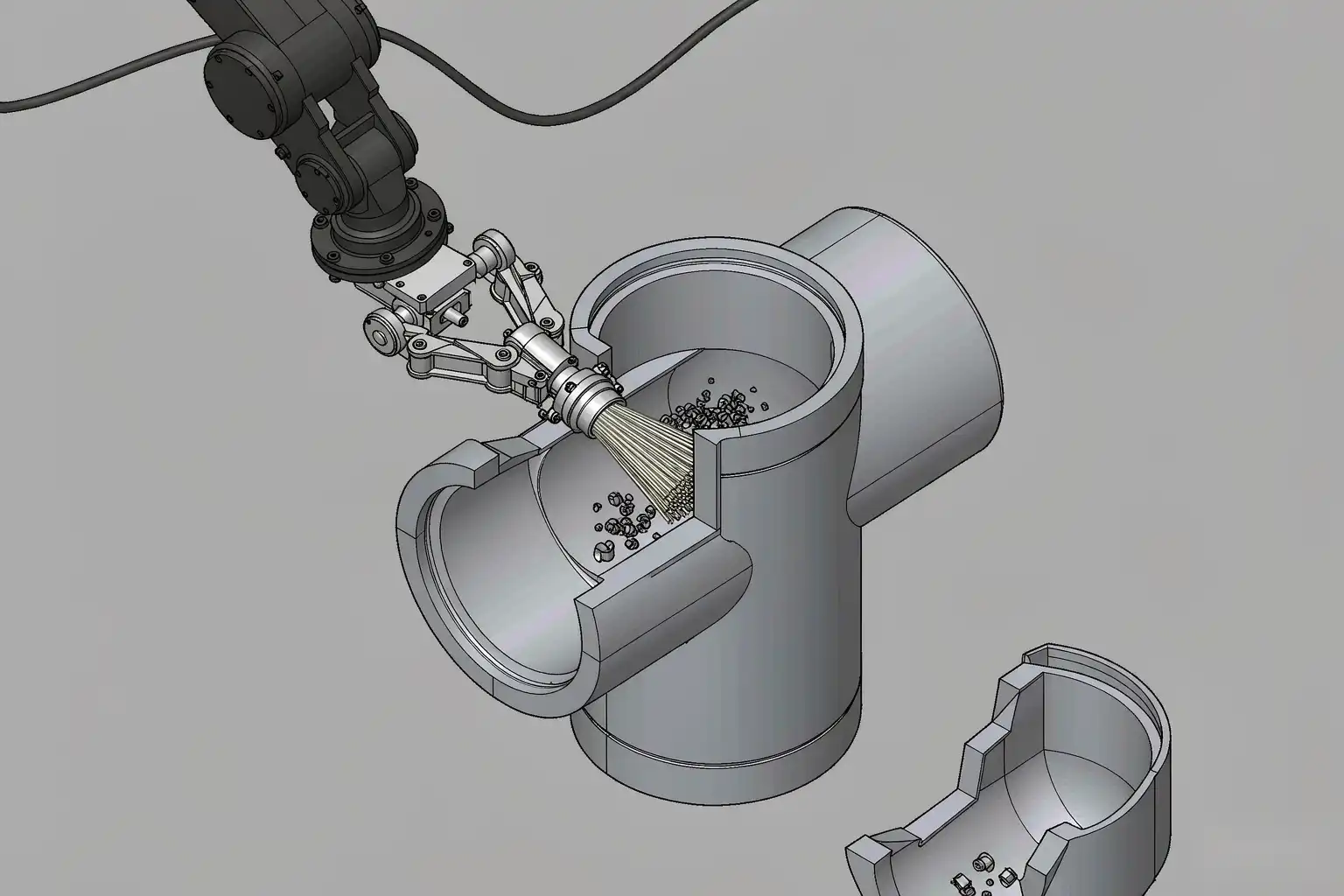
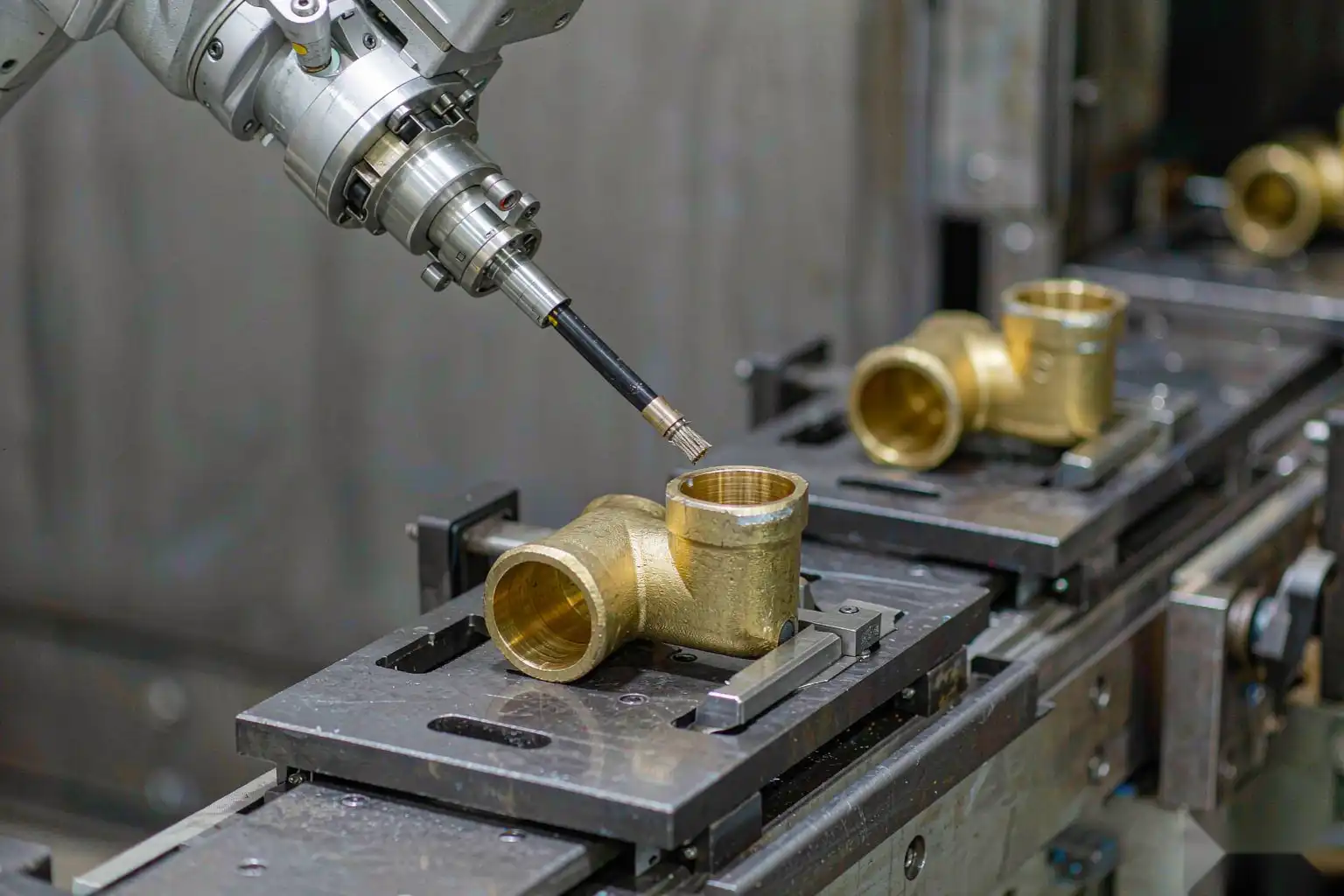
A robotic cell locates the fitting on a fixed datum and drives a compliant brush or blade into the bore and thread roots at locked force, clearing the inside burr every cycle. It doesn’t tire, so batch rate stays flat across the shift. Force control is what reaches the inside lip without gouging the bore.
The same reach-and-clear logic we use on grinding cells applies to deburring, just with a smaller tool.
What Has to Be True First
Consistent Fitting
Deburring only clears what’s there. If the machined bore varies, the burr varies and the cell chases it. Stable machining first.
Right Tool and Force
A compliant brush reaches the inside radius; a stiff blade gouges. Match the tool to the burr and lock the force so it clears without cutting the wall.
Datum and Feed
Locate the fitting on the same bore every time and feed it at takt. A loose fixture or a stalled conveyor strands the cell’s speed.
Three Mistakes Buyers Make
1. Deburing only the outside. The inside lip is the flow and seal problem. Program the cell to reach the bore.
2. Skipping force control. Fixed-path without force feedback either misses the inside burr or cuts the wall. Force control clears the edge.
3. No in-line check. Sample the bore edge on the line so a drift in the cell shows up before a batch ships bad.
Frequently Asked Questions
Can a robot deburr the inside of a fitting?
Yes, with a compliant brush or blade on a fixed datum and locked force. The inside radius is reachable; program the tool path to the bore edge, not just the face.
Does automated deburring beat hand speed?
On batches, clearly. A cell clears hundreds per hour at flat quality; hand deburring slows with fatigue and misses the hidden edge. Batch rate is where the gap shows.
How many fitting types fit one cell?
Several, with quick-change fixtures and stored programs. Design changeover in so mixed-SKU batches don’t stall the cell.
This guide was prepared by the application engineering team at Xiamen Dingzhu Intelligent Equipment Co., Ltd. (DZ Machinery), which designs and commissions deburring, grinding, polishing, and die-casting lines for manufacturers across more than a dozen countries. Rate notes reflect typical fitting batches; confirm against your sizes and volumes before purchase.
Tags: deburring, plumbing fittings, robotic deburring, brass, Robotic Deburring Cell, surface finishing