

Impeller Polishing: How to Finish Curved Turbine Blades
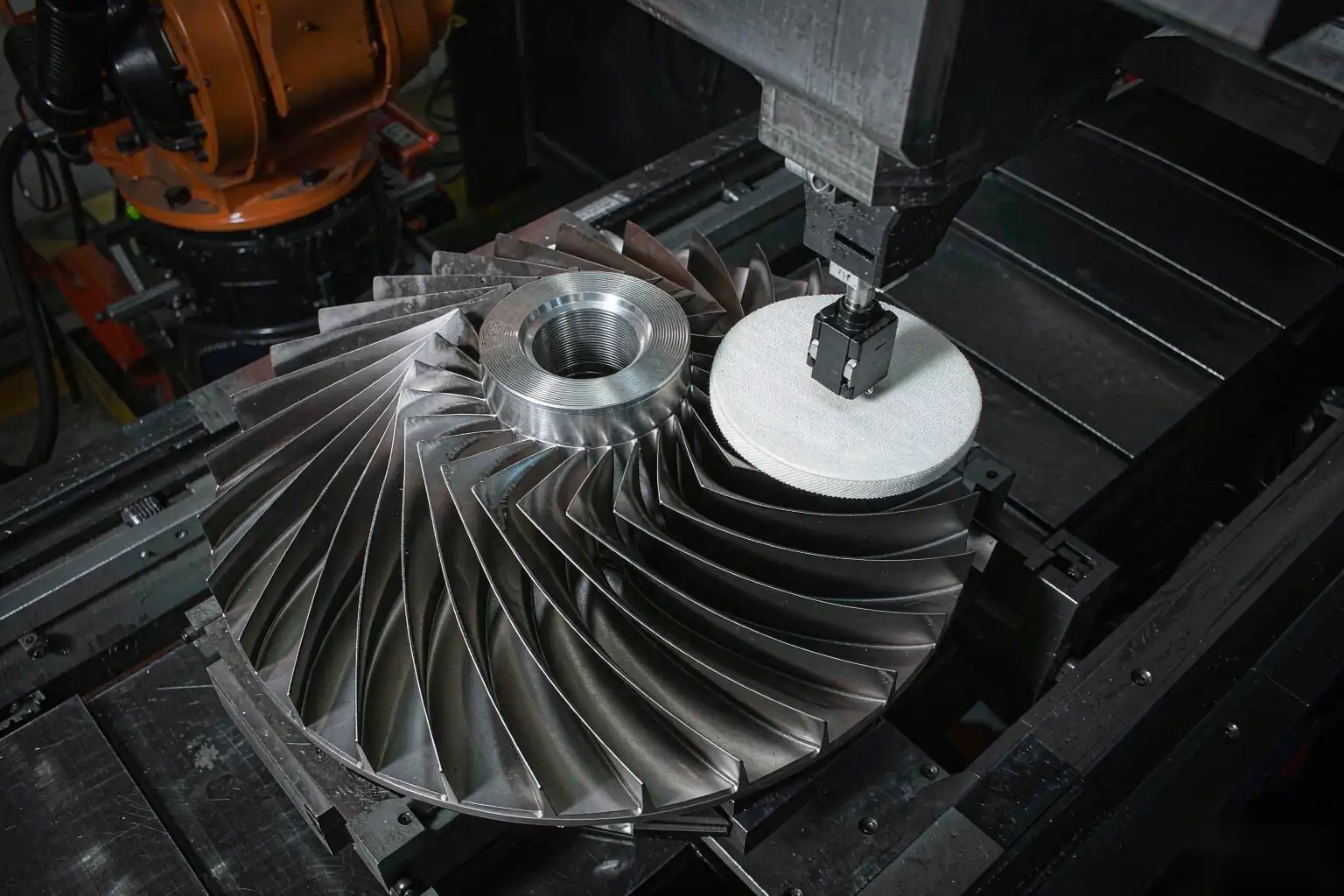
A pump impeller has no flat face and no straight edge — just curved blades that twist from hub to rim. An impeller buyer in France said his hand polishers could do one blade beautifully and the next one differently. “The curve defeats the hand,” he said. Impeller polishing is a path-following problem, and that’s what robots do best.
This guide covers how to polish impeller blades to a smooth, repeatable curve.
Why Impeller Blades Are Hard to Polish
Each blade is a 3D curved surface with a tight hub radius and a thin rim. Hand polishing leaves streaks where the curve changes, and every blade ends up slightly different. For a pump, that means uneven flow and vibration. The finish has to follow the curve, not fight it.
How Robotic Polishing Follows the Curve
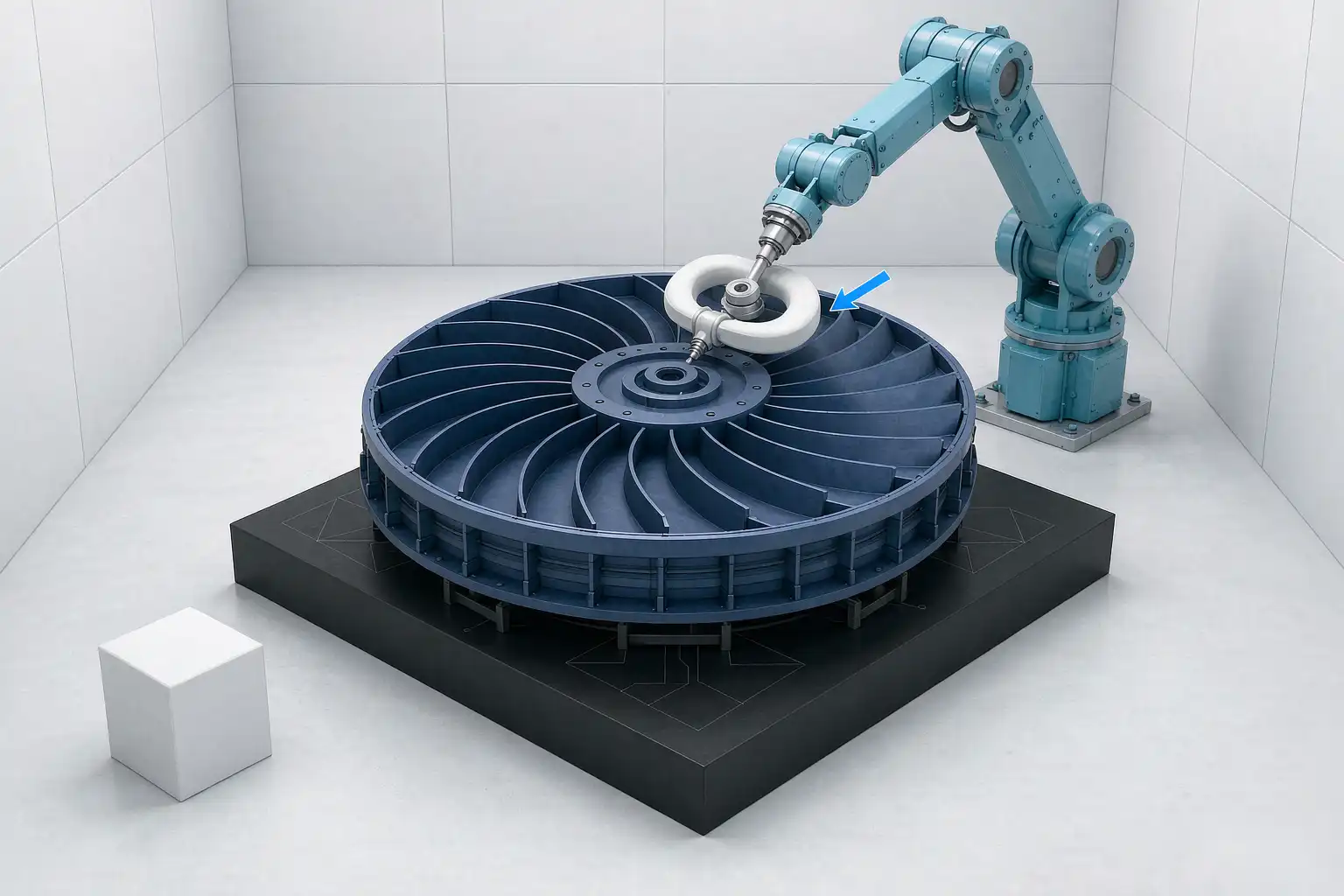
A robotic cell locates the impeller on a fixed datum and sweeps a compliant wheel along each blade from hub to rim at locked force, holding the same path every blade. Force control lets the wheel stay on the curve instead of digging into the hub or skipping the rim. Every blade leaves matched.
The curve-following principle is the same one we use on flange finishing, just on a 3D surface instead of a flat face.
What Has to Be True First
Consistent Casting
Polishing only evens what it’s given. If the core drifts, the blade varies and the robot chases it. Stable casting first.
Fixed Datum
Locate the impeller on its bore and face so the robot knows each blade’s start and end. A shifted datum polishes one blade harder than the next.
Wheel and Force
A compliant wheel follows the curve; locked force keeps the finish even from hub to rim. Match the wheel to the alloy and the Ra you sell.
Three Mistakes Buyers Make
1. Polishing inconsistent castings. Automation exposes a drifting blade, it doesn’t hide it. Fix the source first.
2. Skipping force control. Fixed-path without force feedback digs at the hub and skips the rim. Force control holds the whole curve even.
3. Ignoring blade-to-blade match. On an impeller, all blades must match or the pump vibrates. Check blade-to-blade Ra, not just one hero blade.
Frequently Asked Questions
Can a robot polish the tight hub radius?
Yes, with a small compliant wheel and a fixed datum. The hub is the hardest spot; make the supplier prove it, not just the open rim.
Does robotic polishing match hand shine on curves?
It matches and holds it across all blades. A hand finisher peaks on one blade; a cell matches every blade, which is what pump balance needs.
How many impeller sizes fit one cell?
Several, with quick-change fixtures and stored blade paths. Design changeover in so mixed-size runs don’t stall the cell.
This guide was prepared by the application engineering team at Xiamen Dingzhu Intelligent Equipment Co., Ltd. (DZ Machinery), which designs and commissions deburring, grinding, polishing, and die-casting lines for manufacturers across more than a dozen countries. Finish notes reflect typical impeller outcomes; confirm Ra and balance spec against your pump class before purchase.
Tags: polishing, robotic polishing, surface finishing, surface finish, Metal Casting, robotic finishing