

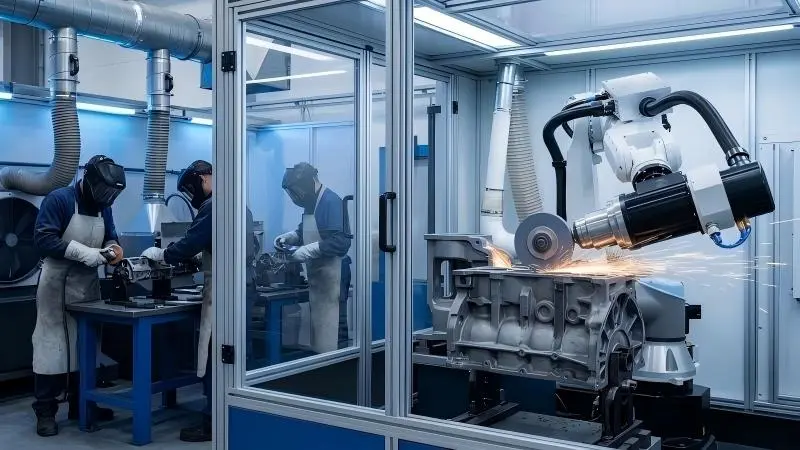
In post-casting and metal fabrication operations, grinding and deburring remain among the most labor-intensive, hazardous, and costly bottlenecks on the factory floor. As raw material prices fluctuate and skilled foundry labor becomes increasingly scarce, industrial manufacturers face mounting pressure to protect margins without sacrificing part quality. Implementing automated grinding solutions—such as robotic deburring cells, CNC grinding machines, and automated force-controlled systems—offers a direct, proven strategy to drastically lower operational overhead.
Below, we analyze the primary mechanisms through which automation cuts grinding costs, how it compares to manual finishing, and how you can evaluate the return on investment (ROI) for your manufacturing facility.
Key Drivers of Cost Reduction in Automated Grinding
1. Reduced Direct Labor Expenditure and Skill Dependency
Manual grinding requires physically demanding, highly repetitive labor that often leads to high turnover and steep training expenses. Automated grinding cells operate continuously with minimal operator intervention, allowing facilities to reallocate skilled labor toward higher-value tasks such as quality control, programming, and maintenance.
By transitioning from manual operators to automated cells, foundries can shift to 24/7 continuous production (lights-out manufacturing), dramatically lowering direct labor costs per finished component.
2. Extended Abrasive Media and Tool Life
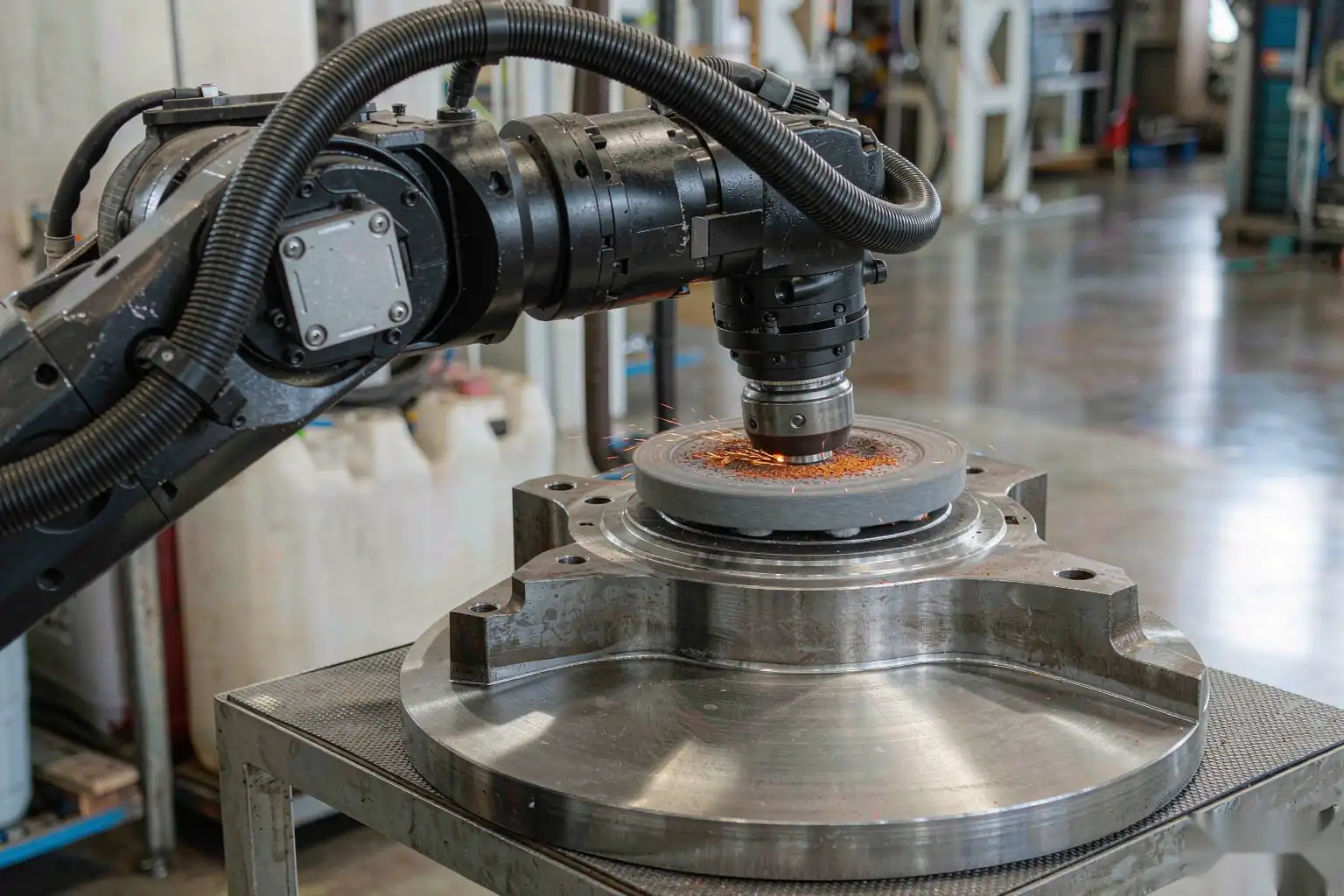
Human operators inherently apply variable pressure, angle, and contact speed, causing uneven wear, premature clogging, or glazing of grinding wheels and belt abrasives. Automated systems utilize closed-loop force compliance and precise force-torque sensors to maintain a constant, optimal contact pressure across complex contours.
This consistent pressure distribution optimizes abrasive wear rates, extending grinding wheel and belt lifespan by 30% to 50% and significantly reducing recurring consumable expenses.
3. Lower Scrap Rates and Elimination of Rework
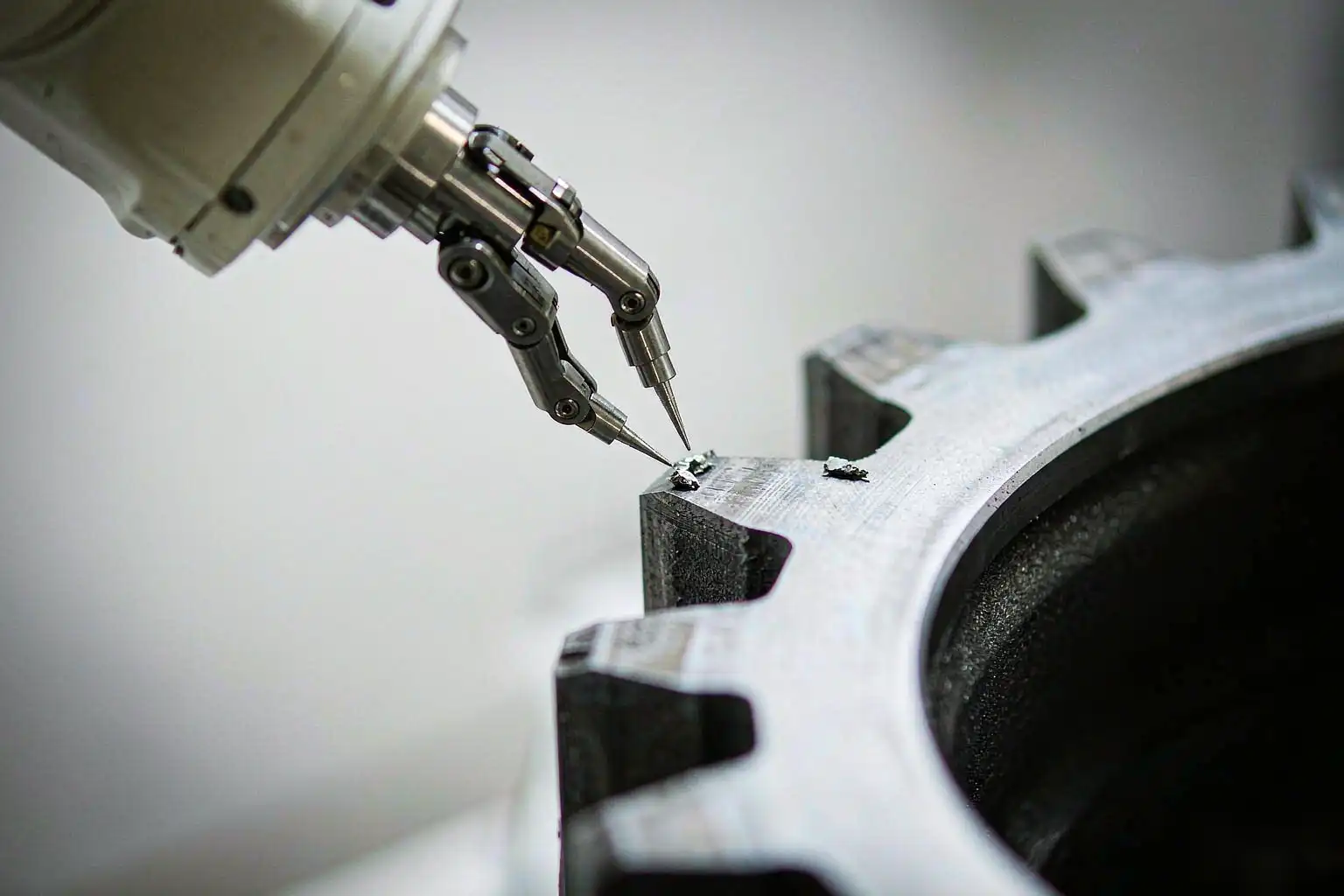
Over-grinding, gouging, and dimensional inconsistency are common pitfalls of manual surface finishing, frequently resulting in rejected castings or expensive secondary rework. Robotic grinding automation ensures sub-millimeter repeatable accuracy across thousands of cycles.
Maintaining strict dimensional tolerances virtually eliminates scrap caused by human error, ensuring high first-pass yield (FPY) rates and preventing valuable raw material waste.
4. Reduced Energy Consumption and Faster Cycle Times
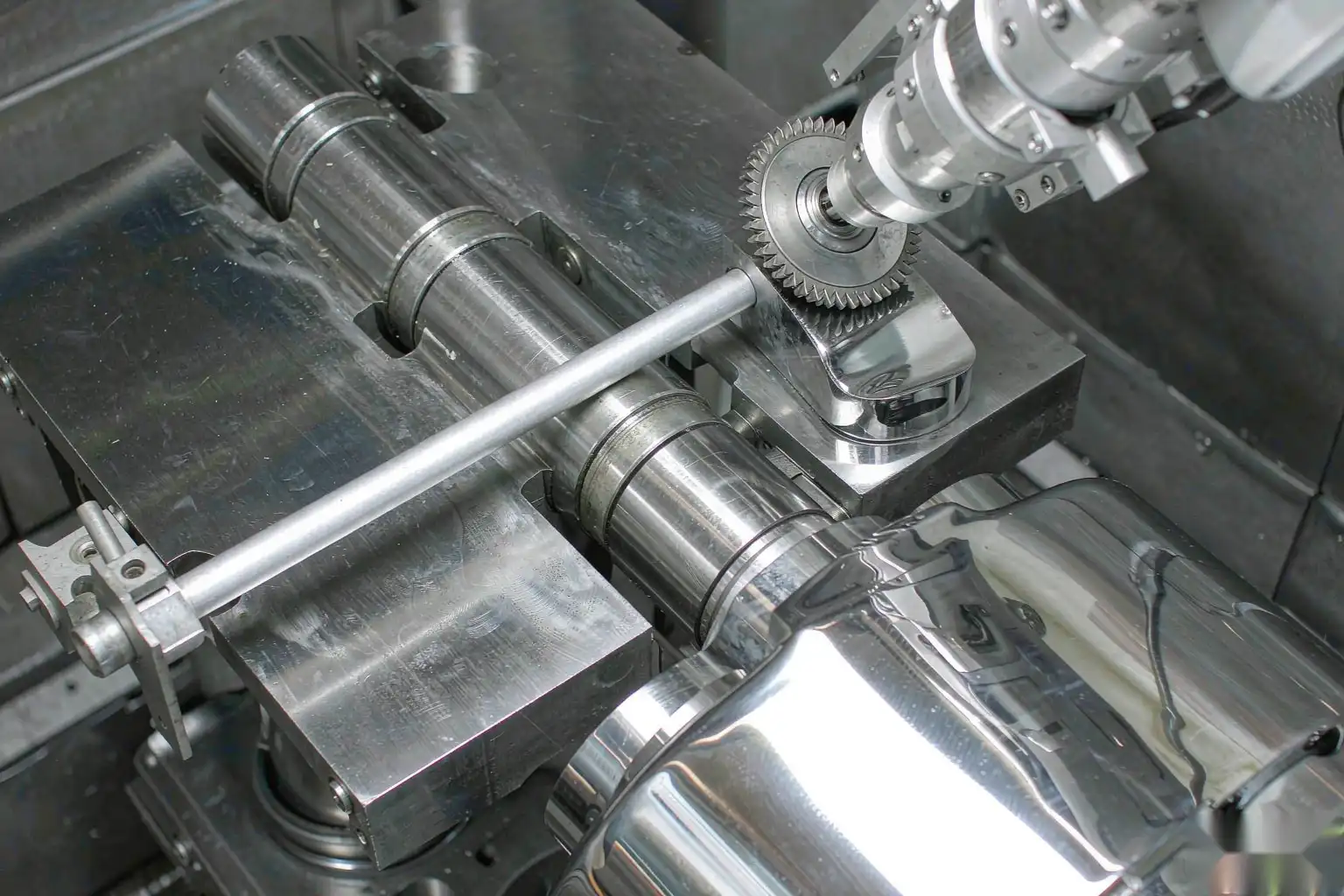
Automated grinding systems optimize tool paths using advanced offline programming and path-planning algorithms, eliminating redundant passes and idle air-cutting time. Furthermore, continuous, high-speed material removal reduces floor-to-floor cycle times per part by up to 60% compared to manual methods, translating directly into lower electrical energy usage per unit produced.
5. Enhanced Workplace Safety and Lower Liability Overhead
Grinding operations generate high noise, airborne metallic dust, and intense vibration, exposing workers to health hazards such as Vibration White Finger (VWF) and respiratory issues. Enclosing the grinding process within automated robotic cells insulates human operators from severe hazard zones, helping facilities comply with stringent OSHA/ISO safety standards while reducing workers’ compensation claims and insurance premiums.
Cost Comparison: Manual Grinding vs. Automated Grinding
Manual Finishing: Characterized by high variable labor costs, inconsistent tool consumption, high scrap rates (often 5%–10%), and frequent downtime due to fatigue and safety regulations.
Automated Solution: Higher upfront capital expenditure (CapEx) balanced by drastically lower operational expenditure (OpEx), consistent cycle times, extended media life, and scrap rates routinely under 1%.
Partner with Experts to Optimize Your Finishing Line
Calculating the true ROI of grinding automation extends beyond simple labor savings—it encompasses material yield, energy efficiency, abrasive longevity, and consistent quality delivery to your customers. Choosing the right automation integrator ensures a seamless transition with minimal disruption to your ongoing production schedule.
Ready to eliminate grinding bottlenecks and boost your profit margins? Contact our automation engineering team today for a Free Grinding Cost & Process Optimization Audit. Send us your CAD models or sample castings, and our experts will provide a detailed payback analysis and customized robotic finishing proposal.