

Choosing an aluminum die casting supplier is the decision that quietly decides the next five years of a project. Tooling is paid up front, parts are qualified for months, and switching suppliers after PPAP is brutal. Most buyers do the audit backwards: they visit a factory for a day, ask about tonnage and price, and sign. Six months later they discover that the gate scrap was twice what the sample showed, the porosity was held with a hand-welded repair, and the audit checklist missed every risk that mattered.
This guide gives buyers a 12-question audit that focuses on what actually drives reject rate and on-time delivery, not on what looks impressive in a slide deck. The questions are grouped by the four things that decide if a supplier is worth the tooling check: process capability, quality system, finishing capability, and commercial discipline.
Mr. Lai Dingren, general manager of DZ Smart Manufacturing with more than twenty years on the foundry floor, has watched the same audit mistakes repeat in plants from Shenyang to Chennai. The 12 questions below are the ones he would ask if he were the buyer.
Group 1: Process Capability (4 Questions)

These four questions tell you whether the supplier can actually cast your part at the rate you need.
1. What tonnage range and locking force do you operate?
A supplier running a 200-tonne cold chamber machine cannot reliably cast a 1.5 kg structural part. A supplier running only 800-tonne machines will price a 200 g enclosure out of the market. Get the tonnage list and mark each part on it. If your part sits at the extreme of every machine they own, you will pay for it in flash and porosity.
2. What is your typical shot-to-shot cycle time, and what drives it?
A well-tooled 600-tonne cell running a 400 g aluminum part should hit 45 to 90 second cycles. If the supplier quotes 120 seconds for the same part, the cooling or ejection is the bottleneck and that bottleneck shows up in your OEE. Ask for the cycle time on a part with the same projected area and wall thickness as yours, not on a generic sample.
3. How do you handle vacuum and assist gas?
Vacuum-assisted die casting (VADC) is the standard for porosity-critical parts above 2 mm wall thickness. If the supplier does not run vacuum on at least one machine, they cannot serve structural, hydraulic, or safety-critical parts. Ask which parts in their lineup use vacuum and which do not. If the answer is “we use it on demand,” the cell setup is casual.
4. What alloy families do you cast, and what is your scrap segregation discipline?
A foundry that runs A380, A383, and ADC12 in the same bay without strict scrap segregation will deliver parts with inconsistent silicon content and unpredictable anodizing response. Ask how the scrap is sorted, what the alloy verification looks like, and how often they run a spectrometer check.
Group 2: Quality System (3 Questions)
The quality questions reveal whether the supplier has a system or just a person.
5. Show me your PPAP package from the last similar part.
A serious supplier will pull a real PPAP from the last comparable part: initial sample inspection report, dimensional layout, CMM data, material certification, and a process capability summary. If they show you a one-page CPK chart, the rest of the package is shallow. A real PPAP is 30 to 80 pages and follows AIAG or VDA standards.
6. What is your Cpk on the critical dimensions of the last three similar parts?
Capability indices below 1.33 on a critical dimension are a red flag. Below 1.0 is a stop-ship signal. Ask for the data on parts with the same critical tolerances as yours, not on a sample with loose tolerances. A supplier who cannot produce the data is either not measuring or not willing to share.
7. How do you handle non-conforming material: rework, repair, scrap, or concession?
Hand-welded repair of die cast parts is common in some markets and banned in others. If your part is structural or pressure-tight, hand welding must be zero tolerance. If it is decorative, hand welding with full traceability may be acceptable. Ask the supplier to show you their NCR log from the last six months and how each NCR was resolved.
Group 3: Finishing Capability (3 Questions)
Finishing is where most die casting suppliers fail. They can cast the part; they cannot finish it.
8. Do you finish parts in-house, or do you ship to a separate finishing house?
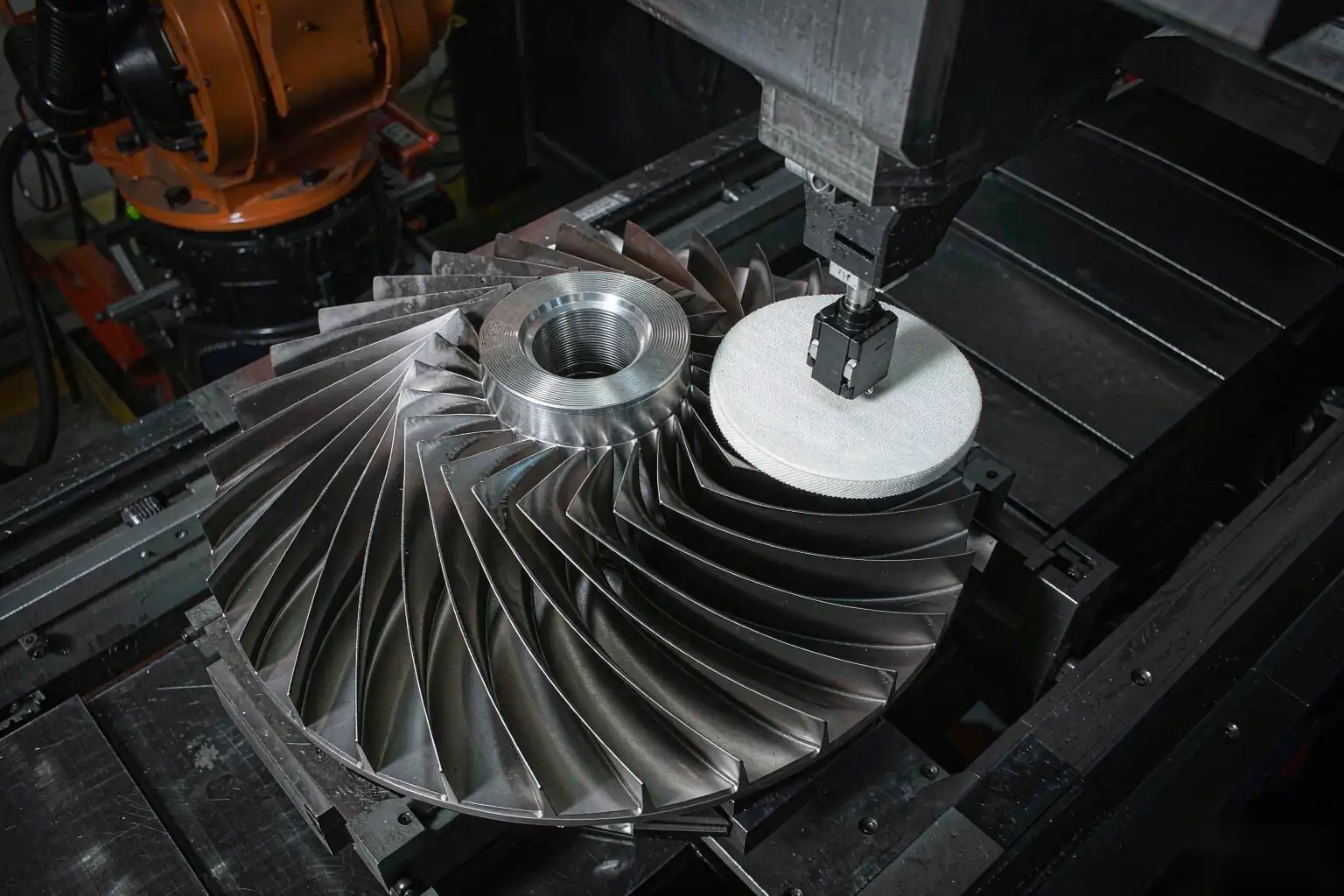
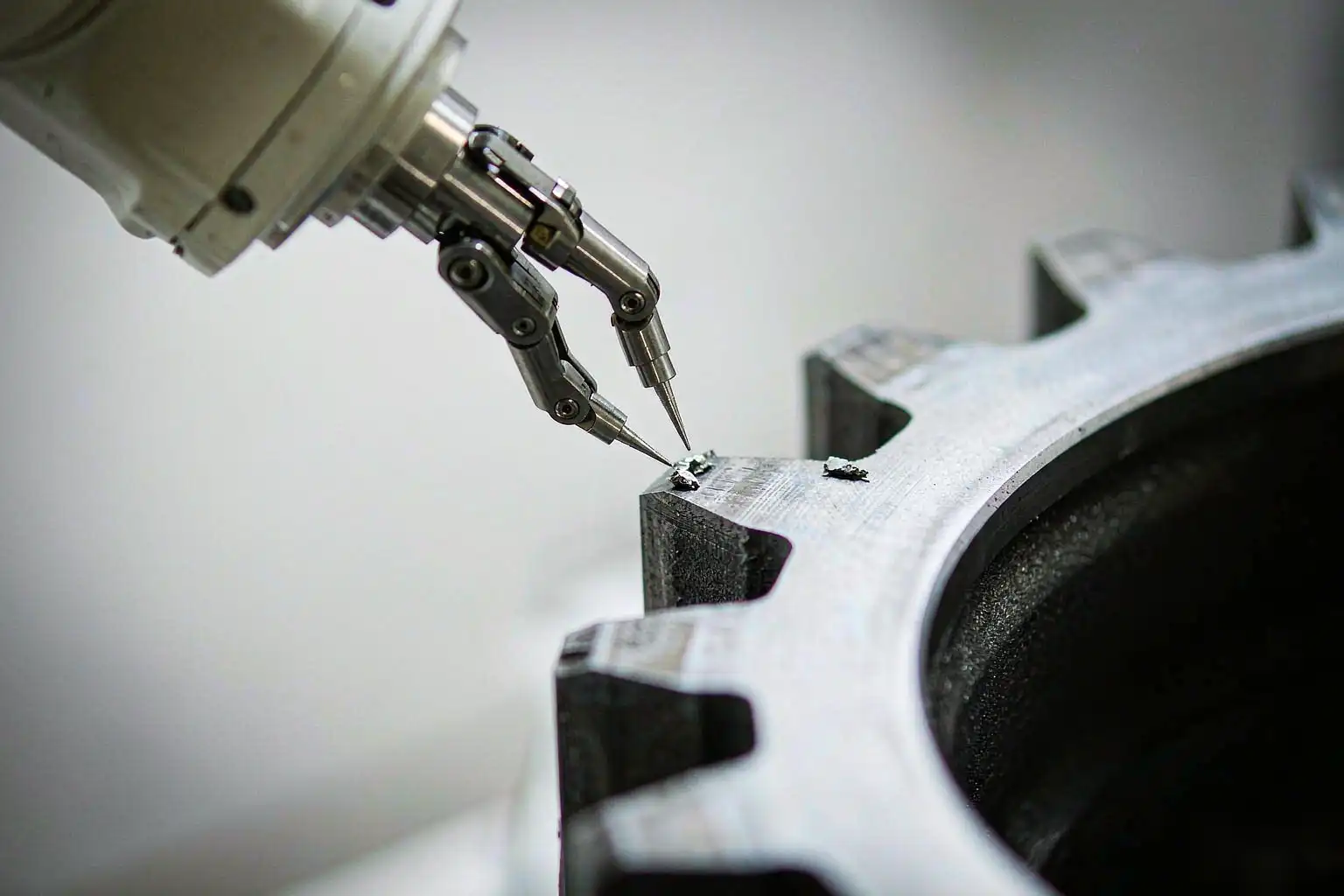
If the supplier ships parts to an external finisher, you lose control of two things: the finishing scrap rate (which adds to your cost) and the finishing throughput (which becomes a bottleneck). The best die casting suppliers either run a robotic finishing cell in-house or own a sister-company finishing operation. Either is fine. A supplier with no finishing capability and no relationship with a robotic finisher will eventually strand your parts between two factories.
9. What is your finishing reject rate on similar parts?
A robotic finishing cell on a high-volume part should run 0.5 to 2 percent reject. A manual finishing line on the same part typically runs 3 to 6 percent. If the supplier does not know their finishing reject rate, they are not measuring it. If they say it is “below 1 percent” for a hand buffing line, the data is unreliable. Ask to see the last three months of finishing NCRs by defect type.
10. Can you handle plating, anodizing, powder coating, or sub-assemble?
If your part requires plating, anodizing, or painting, the supplier needs a relationship with a qualified surface finisher and a logistics chain that protects parts in transit. The best suppliers coordinate the whole chain and own the reject rate end to end. The worst suppliers ship parts in bulk to a generic plating house and shrug when the plating fails.
Group 4: Commercial Discipline (2 Questions)
Commercial discipline is the part that costs the most money when it is missing.
11. What is your on-time delivery performance on the last six months, and how do you measure it?
A serious supplier measures OTD by line item, by customer-request date, and on confirmed orders. The number should be 95 percent or higher for a well-run foundry. If the supplier cannot produce the number, the commercial discipline is weak. If the number is below 90 percent, plan for safety stock.
12. What happens when a shipment is late, when a lot fails inspection, or when a part fails in the field?
The supplier’s answer to this question reveals their culture. The best answer is concrete: who calls whom, what credit is issued, what the corrective action looks like, and how the preventive action is verified. The worst answer is vague: “we will take care of it.” Put the answer in writing before you issue the tooling check.
How to Use the Audit in Practice
A real supplier audit takes one full day on the floor. Walk the foundry with the 12 questions on a clipboard. Spend time at the gate saw (watch three parts get gated and weighed), at the CMM (ask to see the program for a part similar to yours), and at the finishing line (count the parts in queue and the parts in reject).
The audit is not a pass/fail. It is a benchmark. The supplier that scores 8 of 12 with strong process capability and weak commercial discipline is a better choice for a structural part than a supplier that scores 12 of 12 with strong commercials and weak process. Match the score to your part risk.
For buyers sourcing globally, the audit applies equally to a Chinese, Indian, Turkish, or Mexican supplier. The risk profile differs (logistics, IP protection, communication lag), but the production-side questions are identical. A good foundry answers the questions the same way regardless of geography.
When a Supplier Is Worth a Second Visit
If the supplier scores 7 or higher on the audit and your part is medium-to-high volume, invest in a second visit with a specific agenda: a sample run on your tooling, a CMM study on your tolerances, and a finishing trial on a small lot. The second visit answers the questions the first visit cannot.
If the supplier scores below 5, the second visit is usually wasted. Move on.
How DZ Smart Manufacturing Approaches Supplier-Buyer Relationships
DZ Smart Manufacturing runs an integrated cell for casting, deburring, grinding, and polishing. We can act as a primary supplier for new projects, a second-source supplier for capacity, or a finishing partner for foundries that need a robotic cell downstream of their cast shop. If you are evaluating suppliers and want a benchmark, request a sample run or a finishing trial on your part.
Author: Mr. Lai Dingren, General Manager, DZ Smart Manufacturing (厦门鼎铸智能设备有限公司). 20+ years in die casting and automated post-processing. LinkedIn: linkedin.com/in/dzivy
About this article: Educational content. The numbers and workflows are typical industry ranges. Always validate with your own samples before issuing a tooling check.
Need help evaluating a supplier or running a finishing trial on a candidate part? Contact DZ for a sample run.
For plants building an internal scorecard, the same 12 questions can be weighted by part risk: structural or pressure-tight parts weight cooling, vacuum, and Cpk more heavily; cosmetic parts weight finishing capability and surface inspection more heavily. A weighted scorecard removes the politics from supplier selection and turns the audit into a repeatable process rather than a one-off opinion.
Before issuing any tooling check, run the audit on at least three suppliers in the same geography. A side-by-side comparison reveals which suppliers are actually competitive and which are quoting low to win the tool. The cheapest tooling quote almost always belongs to the supplier that will cost the most over the program life.