

Flange Finishing: How to Achieve Uniform Surface Quality
A flange buyer in Germany rejected a shipment because half the faces looked bright and half looked dull. “Same drawing, same price,” he said, “but not the same part.” Flange finishing is about uniformity across the run, not a hero face on the first one. That’s where manual finishing fails and automation wins.
This guide covers how to finish flanges to a uniform, repeatable surface quality.
Why Flange Surface Uniformity Matters
A flange seals on its face. An uneven finish means uneven gasket contact, uneven bolt load, and leak risk. Buyers spec a surface finish, not a look. Hand finishing drifts with the operator, so uniformity is the hard part.
How Robotic Finishing Holds Uniformity
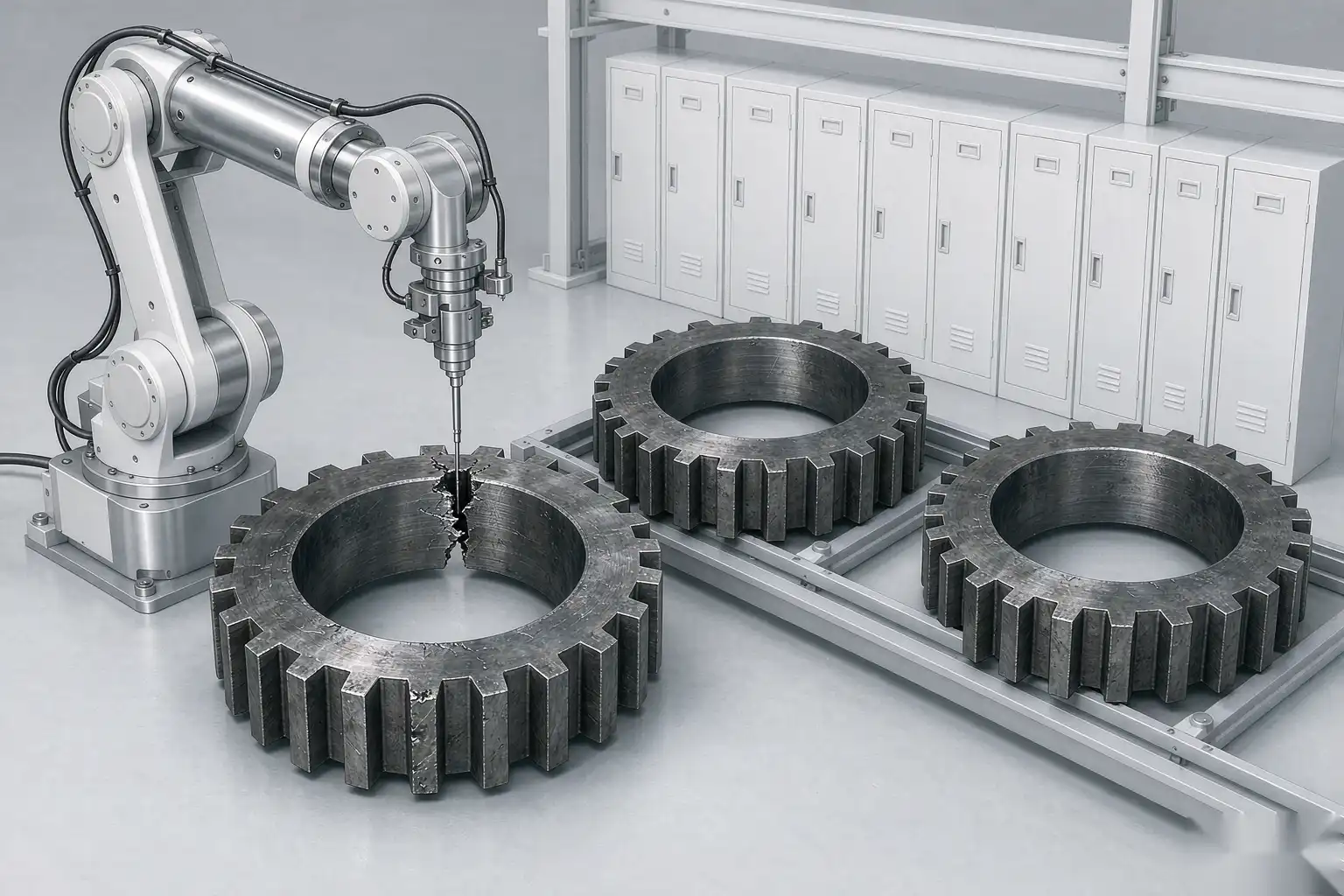
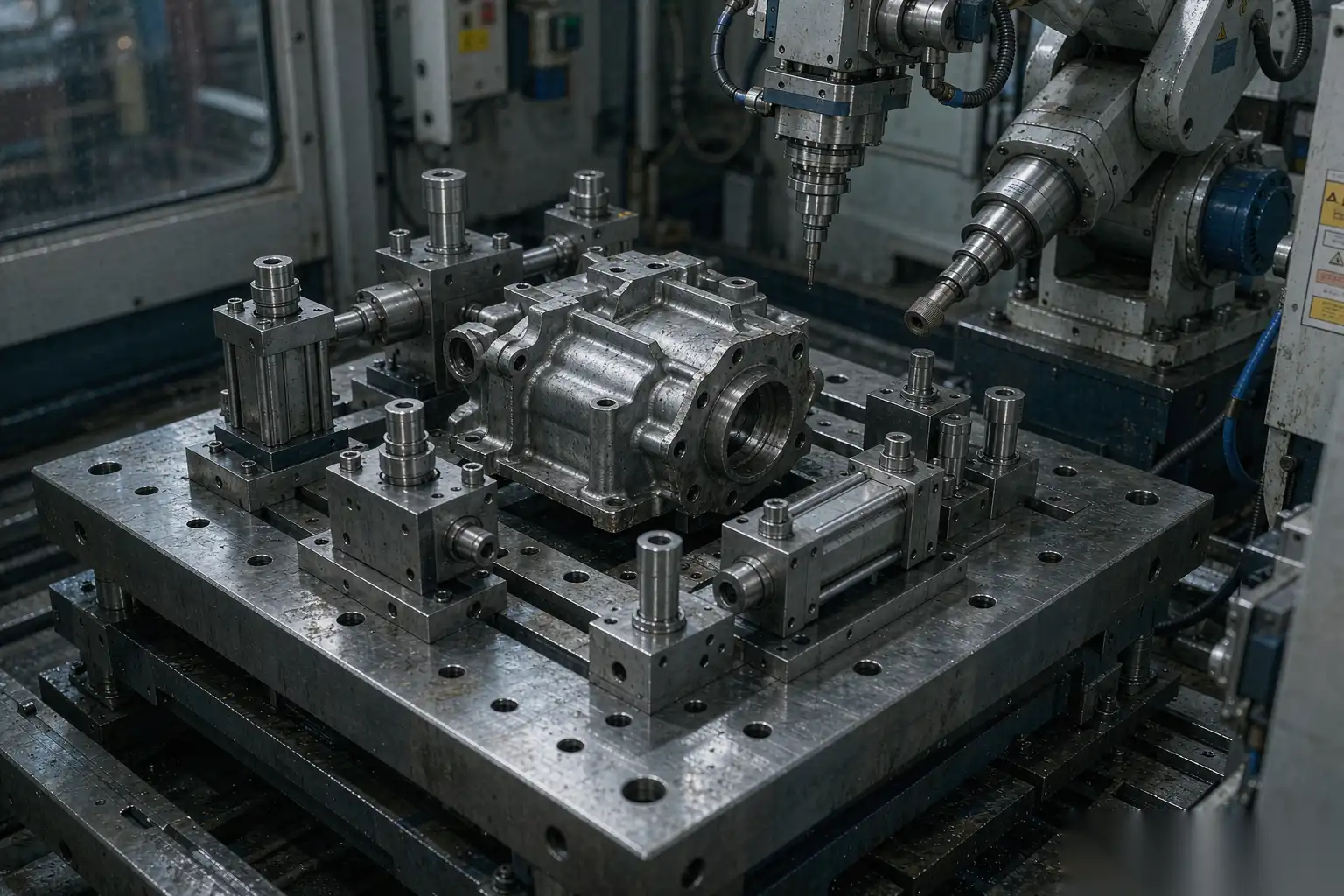
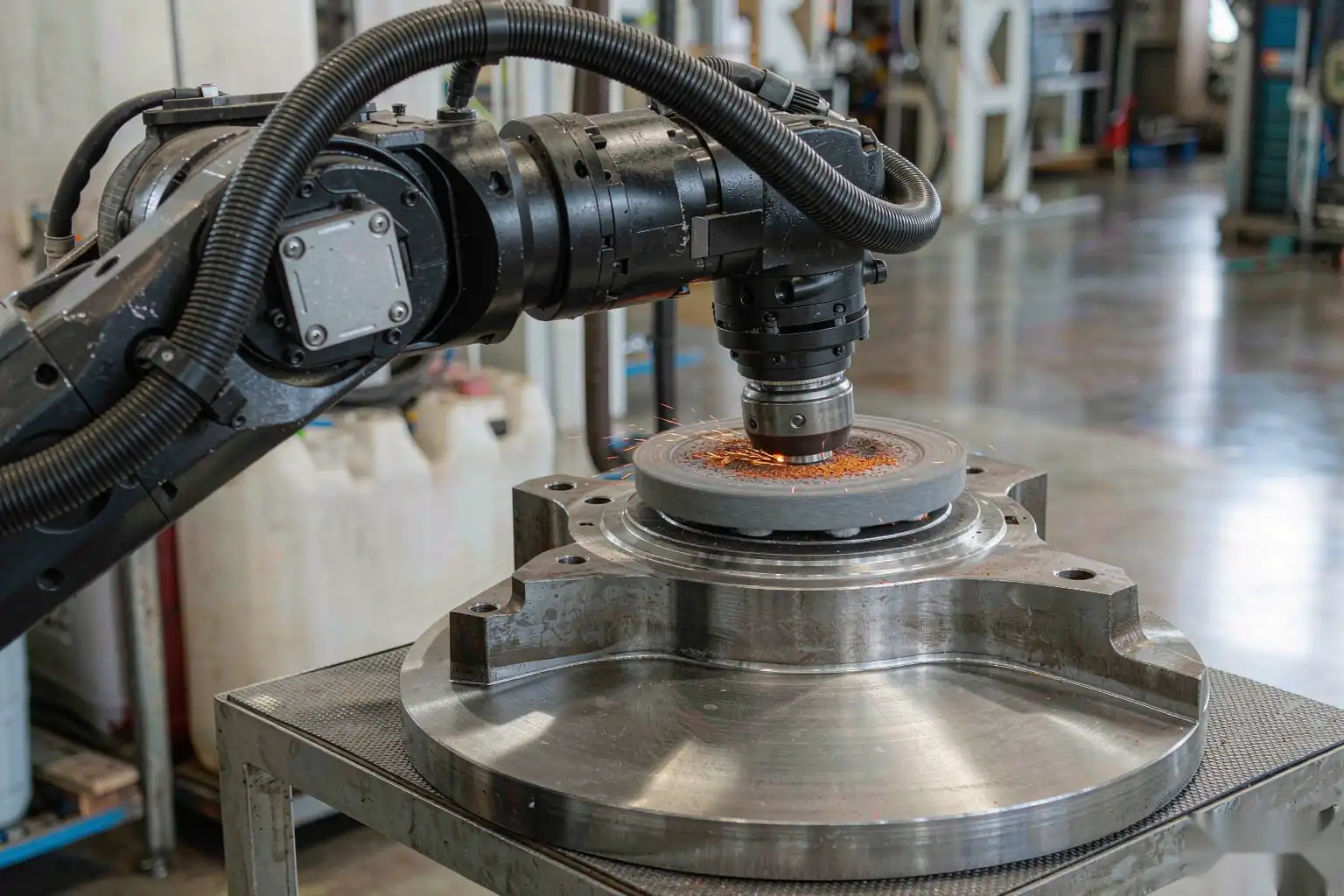
A robotic cell locates the flange on a fixed datum and presents the face to a rotating pad or belt at locked force, sweeping an even path every cycle. The finish doesn’t depend on who runs it. Force control is what keeps the whole face at one Ra instead of bright-in-the-middle, dull-at-the-edge.
The consistency logic is the same one behind our robotic polishing cells, applied to a flat sealing face.
What Has to Be True First
Flat Starting Face
Finishing only evens what it’s given. If the casting or cut face warps, the cell spends its budget chasing flatness instead of finish. Stable source first. Where that source sits in the process changes what you get — see gravity vs low pressure die casting
Fixed Datum
Locate the flange on its true center and face plane so the robot sweeps an even path. A shifted datum finishes one side harder than the other.
Measured Finish
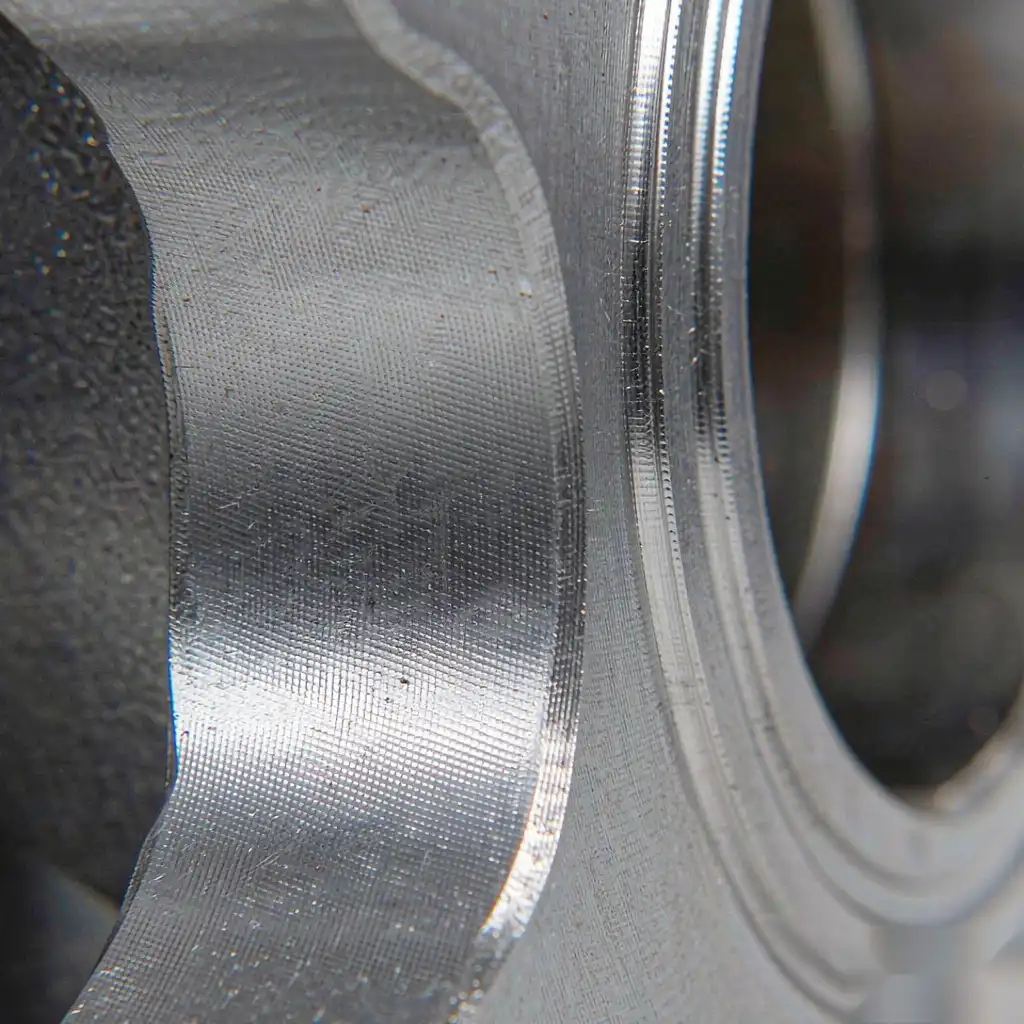
Finish to a target Ra and check it with a profilometer on the first bodies. “Looks even” isn’t a spec; the number is.
Three Mistakes Buyers Make
1. Specifying only appearance. Write the Ra and the sweep, not “looks bright.” Uniformity is a measured feature.
2. Skipping force control. Fixed-path without force feedback finishes the center harder than the rim. Force control holds the whole face even.
3. No in-line finish check. Sample the Ra on the line so a drift shows before a batch ships mixed-bright and mixed-dull.
Frequently Asked Questions
Can a robot finish large flanges uniformly?
Yes, with a fixed datum and a swept path at locked force. The challenge is holding the rim equal to the center; force control is what delivers it across the whole face.
Does automated finishing beat hand uniformity?
Decisively on a run. A hand finisher can match one face; a cell holds the same Ra across thousands, which is what a flange order is judged on.
Should I grind or polish the flange face?
It depends on the seal spec. Grind to flatness, then finish to the target Ra. Pick the last step to the gasket’s need, not to habit.
This guide was prepared by the application engineering team at Xiamen Dingzhu Intelligent Equipment Co., Ltd. (DZ Machinery), which designs and commissions deburring, grinding, polishing, and die-casting lines for manufacturers across more than a dozen countries. Finish notes reflect typical flange outcomes; confirm Ra and flatness against your gasket spec before purchase.
Tags: finishing, surface finishing, surface quality, surface finish, robotic finishing, Metal Casting