

Faucet Grinding Cell: How to Boost Line Throughput
A faucet line lives or dies at the step nobody shows in the brochure. At a brass faucet plant in Italy, the CNC and casting cells ran fine, but finished bodies piled up in front of a row of hand grinders. The grinders set the line’s true speed, and they were slow, inconsistent, and short-staffed. “We automated everything except the bottleneck,” the owner said — and that’s the most common faucet line mistake we see. A grinding cell is often the highest-leverage automation you can add.
This guide covers how a robotic grinding cell actually lifts throughput, and what has to be true before it will.
Why Grinding Is Usually the Bottleneck
After casting and CNC, every faucet body has a parting line, gate nub, and tool marks that have to come off before buffing. That’s grinding, and it’s tedious, dusty, and skilled. Hand grinding is slow per part and varies per operator, so it queues the line behind the cosmetics. Automate it and the whole line speeds up — not just the grind station.
What a Grinding Cell Does
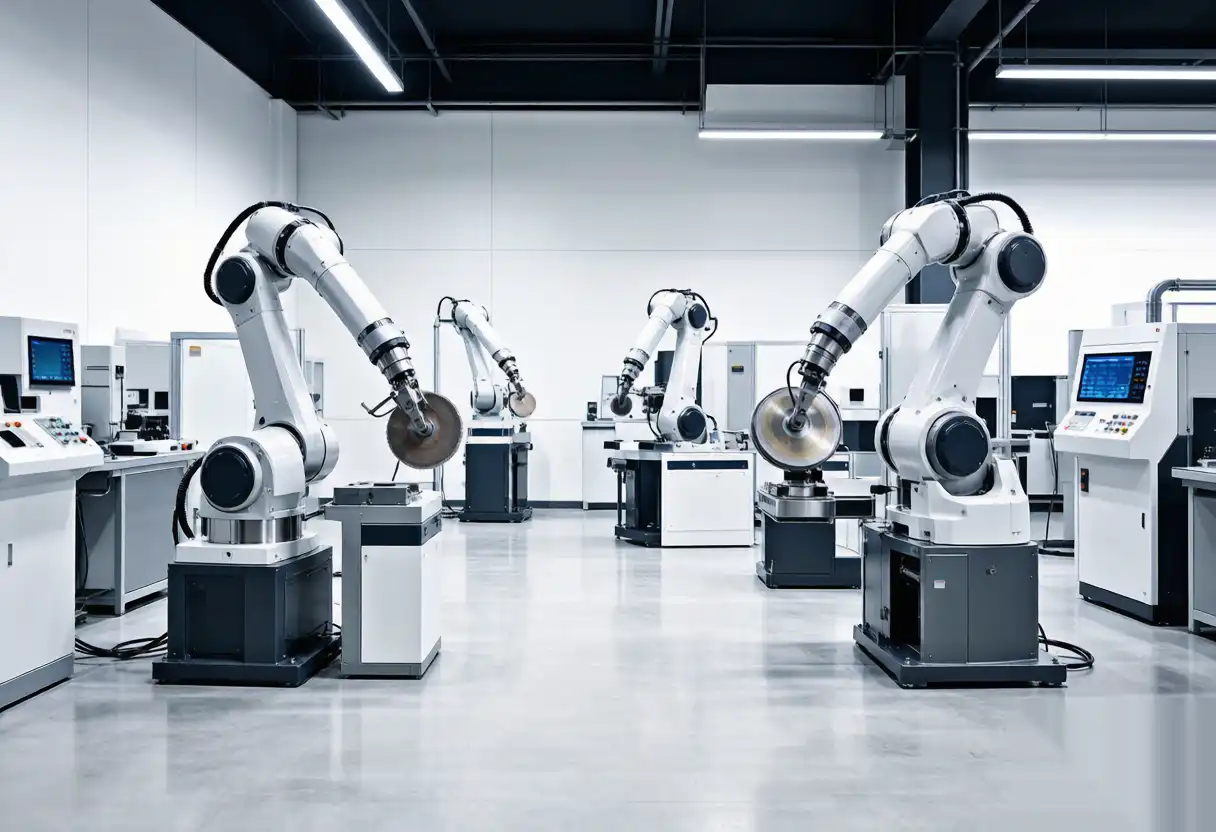
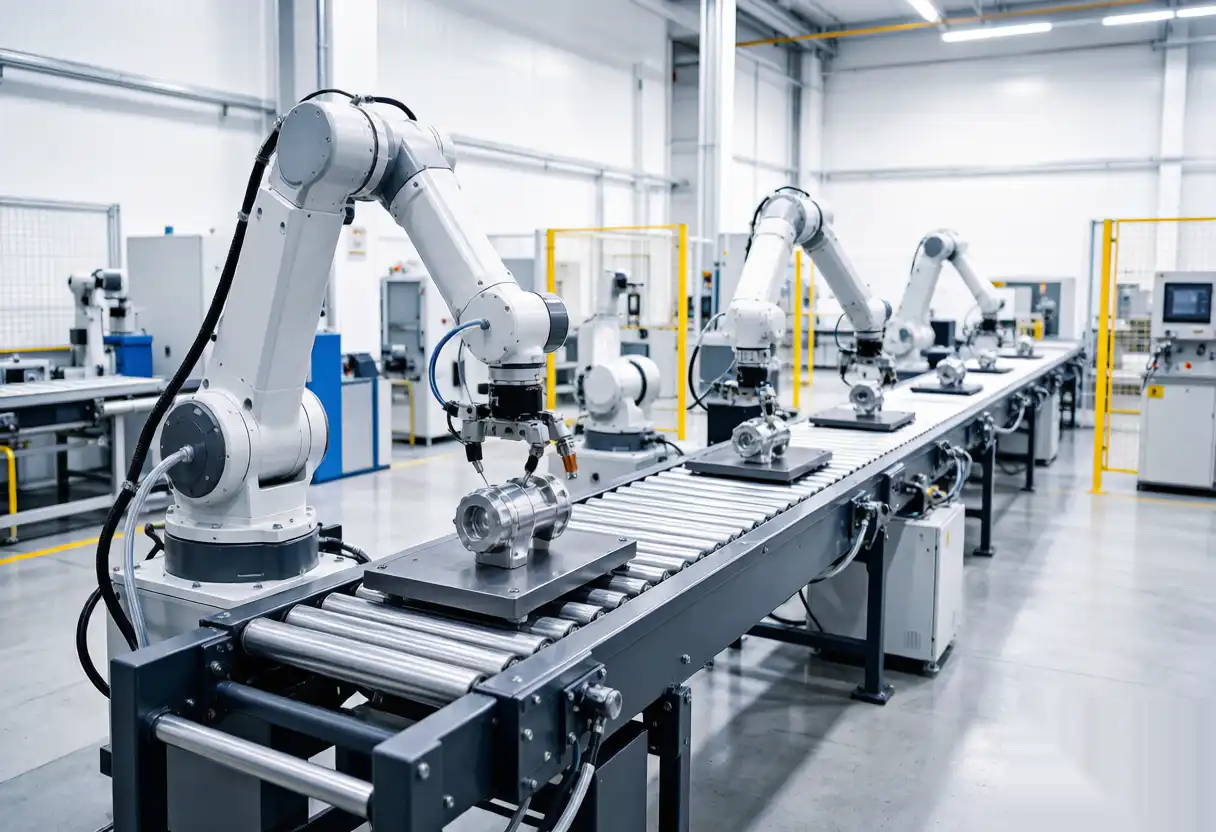
A robotic grinding cell locates the body on a fixed datum, presents it to a belt or spindle, and removes the parting line, gate, and tool marks at a locked force and path. Every body gets the same blend, every cycle. The robot doesn’t tire on the second shift, so the queue in front of it disappears and the buffing cell downstream finally gets a steady, consistent feed.
Where the grind sits in the whole flow is laid out in our faucet line station guide.
What Has to Be True First
Consistent Starting Part
The cell can only grind what it’s given. If castings vary because the core drifts, the robot chases a moving parting line and slows to cope. Consistency upstream is what lets the cell run fast.
Fixed Datum and Fixture
Locate the body on the same bore the core set, so the robot knows exactly where the parting line is. A sloppy fixture forces the robot to search, and searching is slow.
Right Abrasives and Dust Control
Brass loads belts fast. The cell needs belt management and dust extraction, or it grinds poorly and the shop fails air rules. Dust handling is part of the cell, not an option.
Three Mistakes Buyers Make
1. Buying the grind cell before fixing the core. An inconsistent casting makes any grinder slow. Stabilize the source first.
2. Under-specifying force control. Fixed-path without force feedback either misses the line or gouges the body. Force control is what holds the blend.
3. Forgetting dust and changeover. Skip extraction and you fail compliance; skip quick changeover and mixed SKUs stall the cell.
Frequently Asked Questions
Why automate grinding before buffing?
Because grinding is usually the true bottleneck — the queue forms there. Automating it removes the line’s slowest manual step and feeds the buffing cell steadily. Buffing can’t run at rate if grinding can’t supply it.
Can a grinding cell handle many faucet shapes?
Yes, with quick-change fixtures and programs. Design changeover in from the start; if swapping a model takes an hour, the cell loses time to setup that eats the throughput gain.
Does robotic grinding replace the polisher?
No. Grinding removes parting line, gate, and tool marks; buffing builds the mirror after. They’re sequential. A good grind gives the buffer a consistent starting surface, which is exactly what the mirror finish needs.
This guide was prepared by the application engineering team at Xiamen Dingzhu Intelligent Equipment Co., Ltd. (DZ Machinery), which designs and commissions deburring, grinding, polishing, and die-casting lines for manufacturers across more than a dozen countries. Throughput notes reflect typical faucet line outcomes; confirm exact gains against your parts, volumes, and supplier before purchase.
Tags: faucet, Faucet Grinding and Polishing System, faucet manufacturing, faucet production line, machine selection