

Die Casting vs Injection Molding: How to Choose the Right Process
Why the Material Choice Is So Important
The choice between die cast metal and injection molded plastic is one of the most consequential decisions in product design. The two materials behave very differently in use:
- Mechanical strength: metal is 5-10x stronger than plastic
- Weight: plastic is 3-5x lighter than aluminum, 5-7x lighter than zinc
- Thermal conductivity: aluminum die casting is 100-200x more conductive than plastic
- Cost: plastic tooling is often cheaper, but per-part cost can be similar
- Recyclability: both are recyclable, but metals retain value better
Choosing wrong means either overpaying for capability you do not need, or under-specifying and getting parts that fail in service.
Process Overview
Die Casting (Metal)
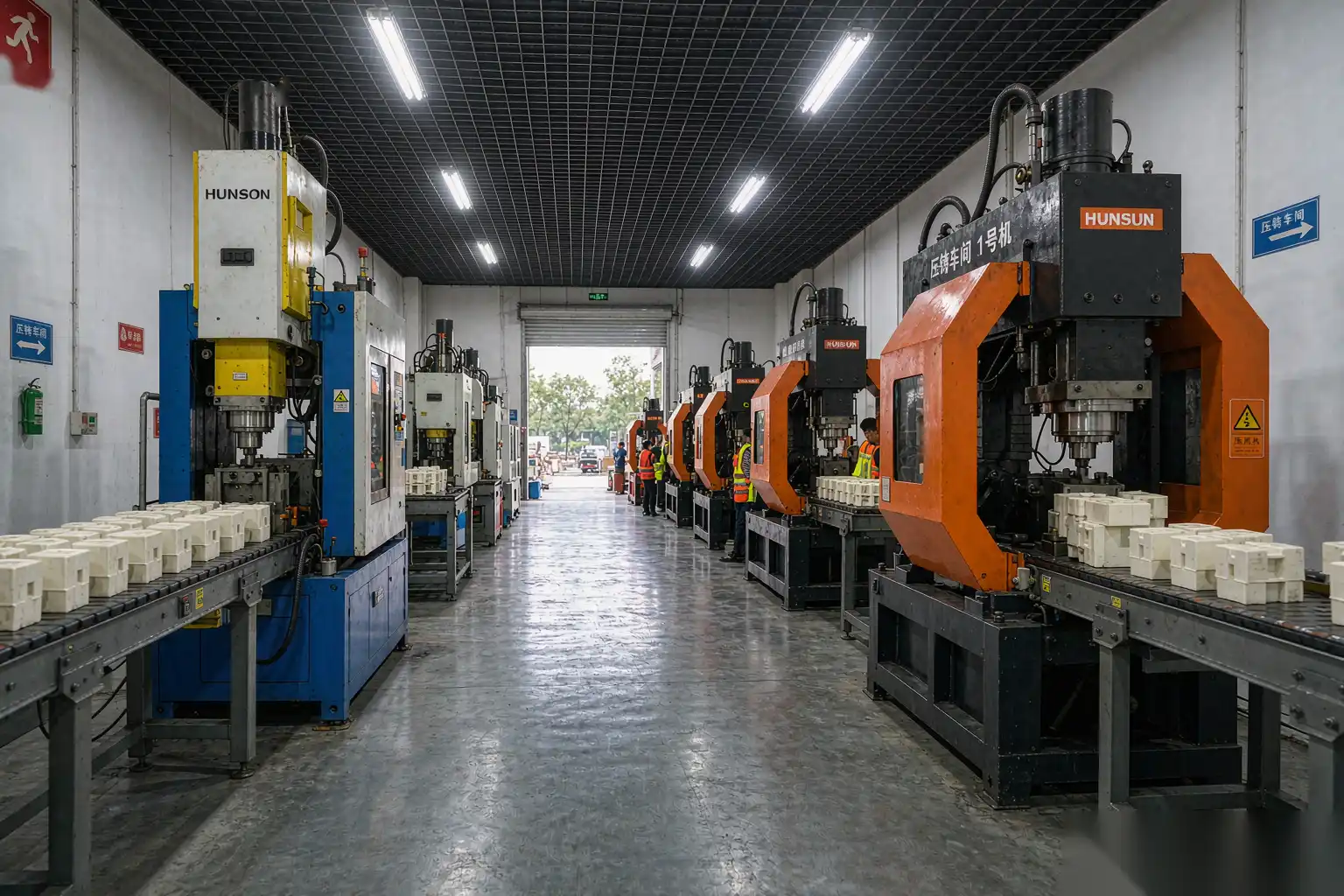
Molten aluminum or zinc is injected into a reusable steel die under high pressure. Cycle times are 30 seconds to 5 minutes for aluminum, 10-30 seconds for zinc. The die is water-cooled internally.
Key characteristics:
- Materials: aluminum alloys (A380, A384, A413, A390), zinc alloys (Zamak 3, 5, 7)
- Strength: 200-450 MPa tensile
- Weight: 2.7 g/cm³ (aluminum), 6.6 g/cm³ (zinc)
- Surface finish: Ra 1.6-3.2 µm achievable
- Tolerance: ±0.10 mm per 25 mm
- Tooling cost: $15,000-100,000+ for aluminum, $5,000-30,000 for zinc
Injection Molding (Plastic)
Plastic pellets are melted and injected into a reusable steel die under high pressure. Cycle times are 10 seconds to 2 minutes. The die is water-cooled internally.
Key characteristics:
- Materials: ABS, polycarbonate, nylon, polypropylene, PEEK, and hundreds of others
- Strength: 30-100 MPa tensile (for glass-filled, higher)
- Weight: 0.9-1.5 g/cm³
- Surface finish: Ra 0.4-1.6 µm achievable
- Tolerance: ±0.05-0.10 mm
- Tooling cost: $10,000-100,000+ (varies with part complexity)
Comparison Table
| Factor | Die Casting | Injection Molding |
|---|---|---|
| Materials | aluminum, zinc alloys | hundreds of plastics |
| Tensile strength | 200-450 MPa | 30-100 MPa |
| Density | 2.7-7.1 g/cm³ | 0.9-1.5 g/cm³ |
| Elastic modulus | 70 GPa (aluminum), 85 GPa (zinc) | 1-10 GPa |
| Thermal conductivity | 90-200 W/m·K | 0.1-0.5 W/m·K |
| Continuous service temp | 150-300°C | 80-200°C (varies with material) |
| Surface finish (as-cast/molded) | Ra 1.6-3.2 µm | Ra 0.4-1.6 µm |
| Tolerance | ±0.10 mm per 25 mm | ±0.05-0.10 mm |
| Tooling cost (typical) | $20,000-100,000 | $10,000-100,000 |
| Cycle time | 30s-5min (aluminum) | 10s-2min |
| Recyclability | high (retains value) | moderate (downcycled) |
| Per-part cost (high volume) | $1-15 | $0.10-5 |
| Production volume | 5,000-1,000,000+/year | 5,000-10,000,000+/year |
When to Choose Die Casting
Die casting is the right choice when:
The Part Needs Structural Strength
Parts that bear mechanical loads (brackets, housings under stress, structural components) typically need metal. The strength of die cast aluminum (200-450 MPa) is 5-10x that of glass-filled nylon (50-100 MPa).
The Part Needs Heat Dissipation
LED heat sinks, motor housings, electronics enclosures with internal heat sources — all benefit from metal’s thermal conductivity. Aluminum die cast heat sinks can dissipate 50-200 W of heat with proper design; plastic cannot compete.
The Part Needs Electromagnetic Shielding
Electronics enclosures often need EMI/RFI shielding. Die cast aluminum provides natural shielding (60-100 dB attenuation depending on design). Plastic enclosures need conductive coatings or metal inserts to achieve the same.
The Part Needs Premium Feel and Durability
Metal parts look and feel premium. Die cast aluminum with proper finishing (anodizing, powder coating, polishing) is perceived as higher quality than plastic by most consumers. The durability is also much higher.
The Part Will See High Temperatures
Die cast aluminum can handle continuous service at 150-200°C. Engineering plastics (PEEK, PPS) can handle 200-250°C, but commodity plastics (ABS, PP) fail at much lower temperatures.
When to Choose Injection Molding
Injection molding is the right choice when:
The Part Needs to Be Lightweight
Plastic is 3-5x lighter than aluminum, 5-7x lighter than zinc. For weight-sensitive applications (portable electronics, automotive, aerospace, drones), plastic is the better choice.
The Part Needs Electrical Insulation
Plastic is an excellent electrical insulator. Die cast metal is conductive. For electrical components that need isolation (PCB mounts, terminal blocks, sensor housings), plastic is typically the right choice.
The Part Needs High Volume at Low Cost
At very high volumes (1M+ parts/year), plastic injection molding can produce parts at a fraction of the metal cost. The cycle time is faster, the material is cheaper, and the tooling is similar.
The Part Needs Complex Internal Features
Plastic can achieve very complex internal features (snap fits, living hinges, internal threads) that are difficult or impossible in metal. For parts with these features, plastic is the right choice.
The Part Needs Transparency
Transparent parts (lenses, light covers, displays) are typically plastic. Die cast metals are opaque. For transparent applications, plastic is the right choice (acrylic, polycarbonate, etc.).
The Part Needs Chemical Resistance
Specific plastics (PTFE, PEEK, PP) offer chemical resistance that no metal can match. For chemical processing equipment, medical devices, or laboratory equipment, plastic may be the right choice.
Hybrid Approaches
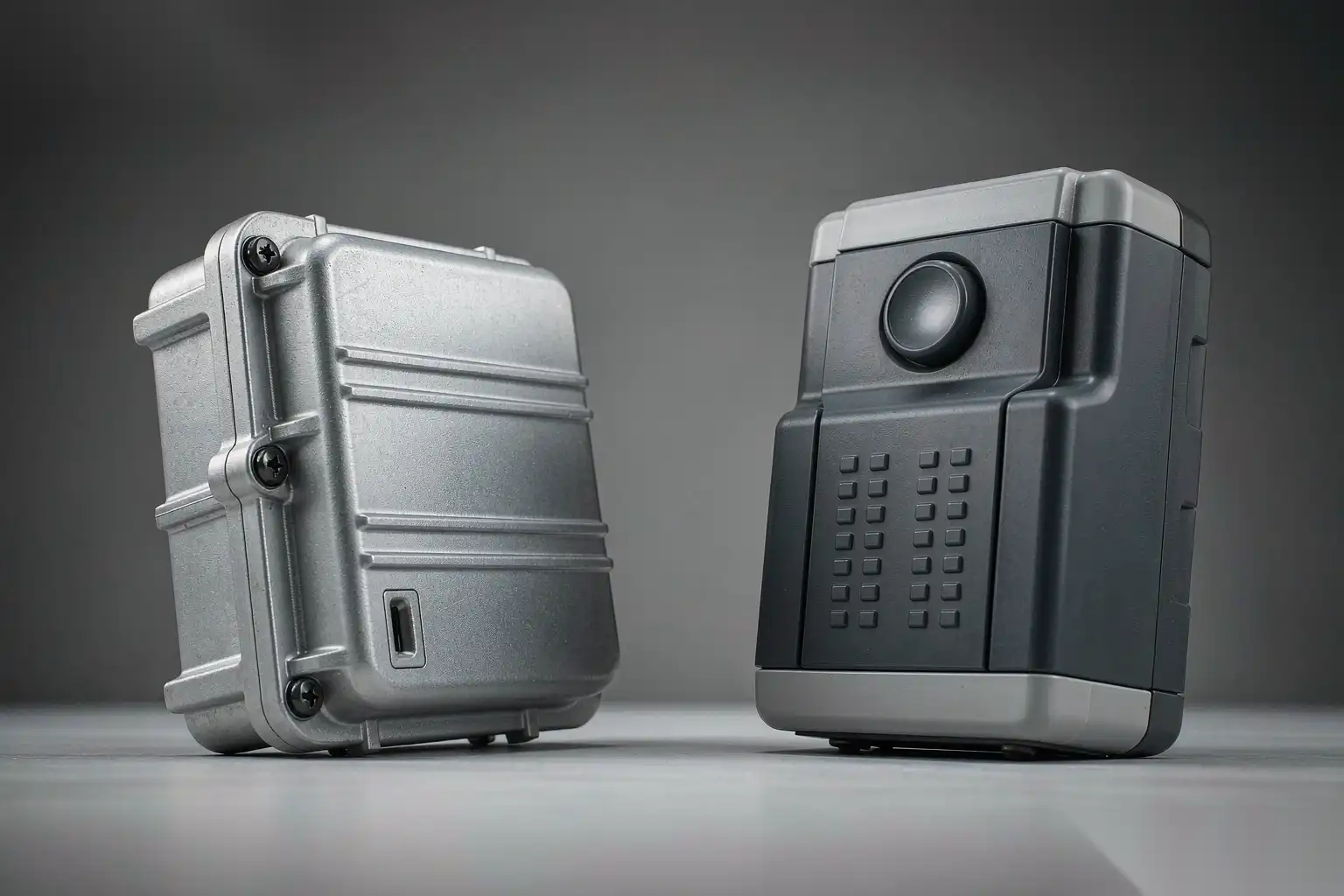
For some applications, the best answer is a hybrid — die cast metal for the structural parts and injection molded plastic for the cosmetic or insulating parts.
Examples:
- Power tool housing: die cast aluminum internal frame + injection molded plastic outer shell
- Automotive dashboard: die cast metal substructure + plastic trim and vents
- Electronics enclosure: die cast aluminum main body + plastic bezels and covers
- Medical device housing: die cast metal for EMI shielding + plastic for cosmetic exterior
A hybrid design captures the benefits of both materials while minimizing the weaknesses of each.
Cost Comparison
For a hypothetical enclosure weighing 500 g:
Die Cast Aluminum
- Tooling: $30,000-60,000
- Per-part cost: $5-15 (material + casting + finishing)
- Total at 50,000 parts: $30,000 + 50,000 × $10 = $530,000
- Total at 500,000 parts: $30,000 + 500,000 × $8 = $4,030,000
- Per-part average: $10.60 (at 50K), $8.06 (at 500K)
Injection Molded Plastic (Glass-Filled Nylon)
- Tooling: $20,000-50,000
- Per-part cost: $0.50-3.00 (material + molding)
- Total at 50,000 parts: $30,000 + 50,000 × $1.50 = $105,000
- Total at 500,000 parts: $30,000 + 500,000 × $1.00 = $530,000
- Per-part average: $2.10 (at 50K), $1.06 (at 500K)
The cost crossover favors plastic at almost any volume because the per-part cost is so much lower. The question is whether the application can accept plastic’s performance limitations.
A Decision Framework
Use this framework to choose:
- Does the part need to bear mechanical loads?
– Yes → die casting (likely)
– No → continue
- Does the part need to dissipate heat?
– Yes → die casting
– No → continue
- Does the part need EMI/RFI shielding?
– Yes → die casting
– No → continue
- Does the part need to be lightweight?
– Yes → injection molding (likely)
– No → continue
- Does the part need electrical insulation?
– Yes → injection molding
– No → continue
- What is the production volume?
– Under 5,000/year → consider 3D printing or machined prototype
– 5,000-100,000/year → both viable, choose by other factors
– Over 100,000/year → injection molding (likely, if function allows)
- What is the customer perception?
– Premium / structural → die casting
– Lightweight / cost-sensitive → injection molding
This framework covers most cases. The final decision should involve DFM reviews with both metal and plastic suppliers.
Switching Between Materials
If a part is currently plastic and you are considering switching to die cast metal (or vice versa), the design will need to change. Key changes:
Plastic → Die Casting
- Wall thickness: typically needs to be thicker (2-3 mm minimum for die casting)
- Snap fits: replace with screws, threaded inserts, or mechanical fasteners
- Living hinges: not possible in die casting; redesign as separate parts
- Internal threads: can be cast or tapped; not molded in like plastic
- Tolerances: die casting tolerances are looser than injection molding
Die Casting → Plastic
- Wall thickness: can be thinner in plastic
- Strength: design for the lower modulus; add ribs and gussets
- Heat dissipation: add metal inserts or heat pipes for high-heat areas
- EMI shielding: add conductive coatings or metal inserts
- Surface finish: plastic can be smoother; may not need finishing
The redesign is not trivial. Plan for it during the material selection phase, not as an afterthought.
Total Cost of Ownership: Beyond the Per-Part Price
Per-part price is the number every comparison starts with, and the number that most often misleads. The honest comparison is total cost of ownership across the program: tooling, piece price, finishing, assembly behavior, field failure rate, and end-of-life — each weighted by the program’s actual volumes and lifetime. Run the numbers and the picture shifts. A plastic part that needs a metal heat sink glued in carries two part numbers, an assembly operation, and a thermal interface that ages. A plastic enclosure specified for EMI shielding acquires a conductive coating — and that coating is applied, inspected, and repaired for the life of the program, usually at a cost nobody quoted at the concept stage. Conversely, a metal part that spends its life in a non-structural, room-temperature, non-shielded role is carrying strength nobody uses and weight nobody wants.
The questions that expose the real trade: Does this part touch heat, load, or RF? Does its cost model survive the assembly operations it forces? What does a field failure cost against the price difference? Three honest answers usually settle the material choice more reliably than any generic table.
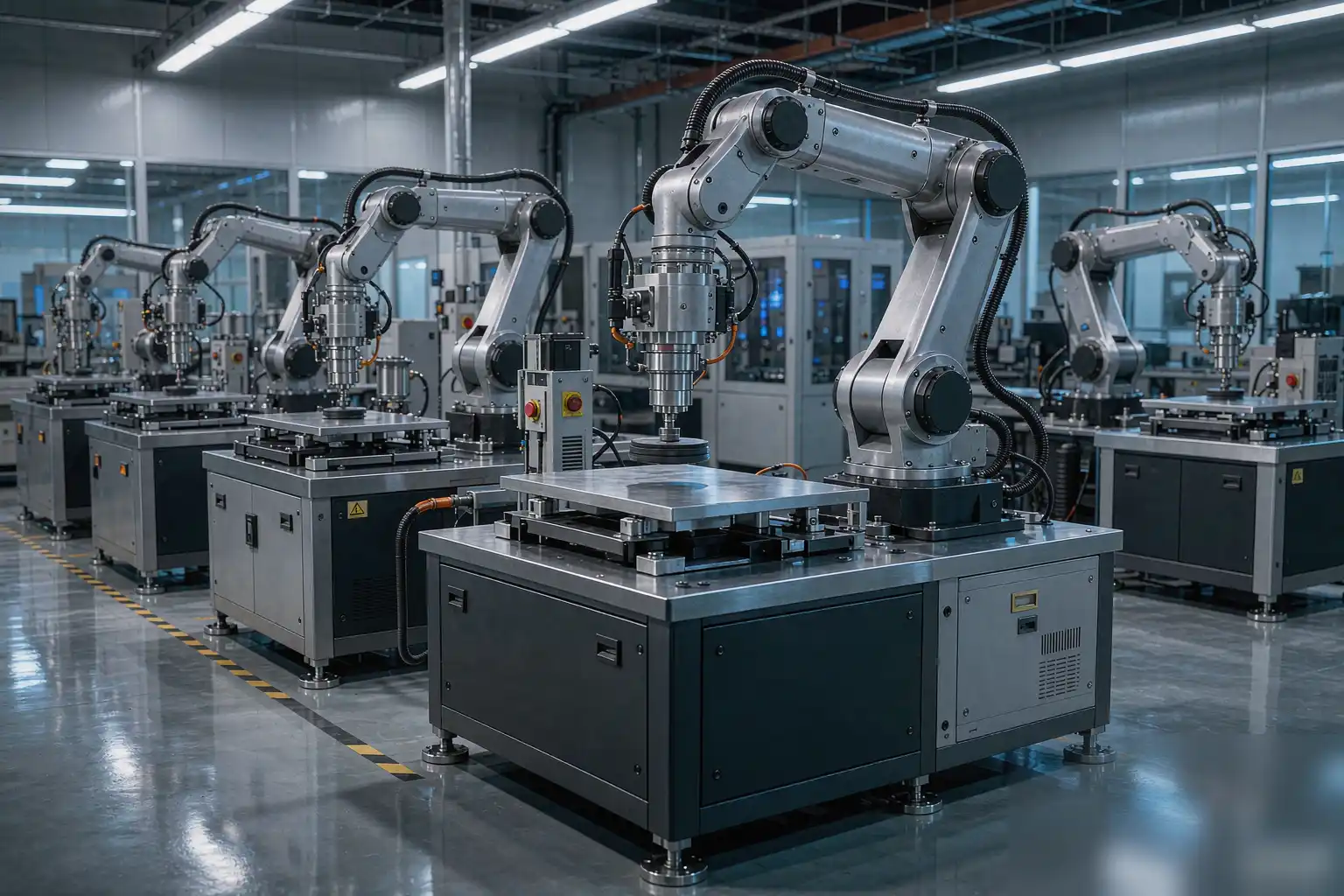
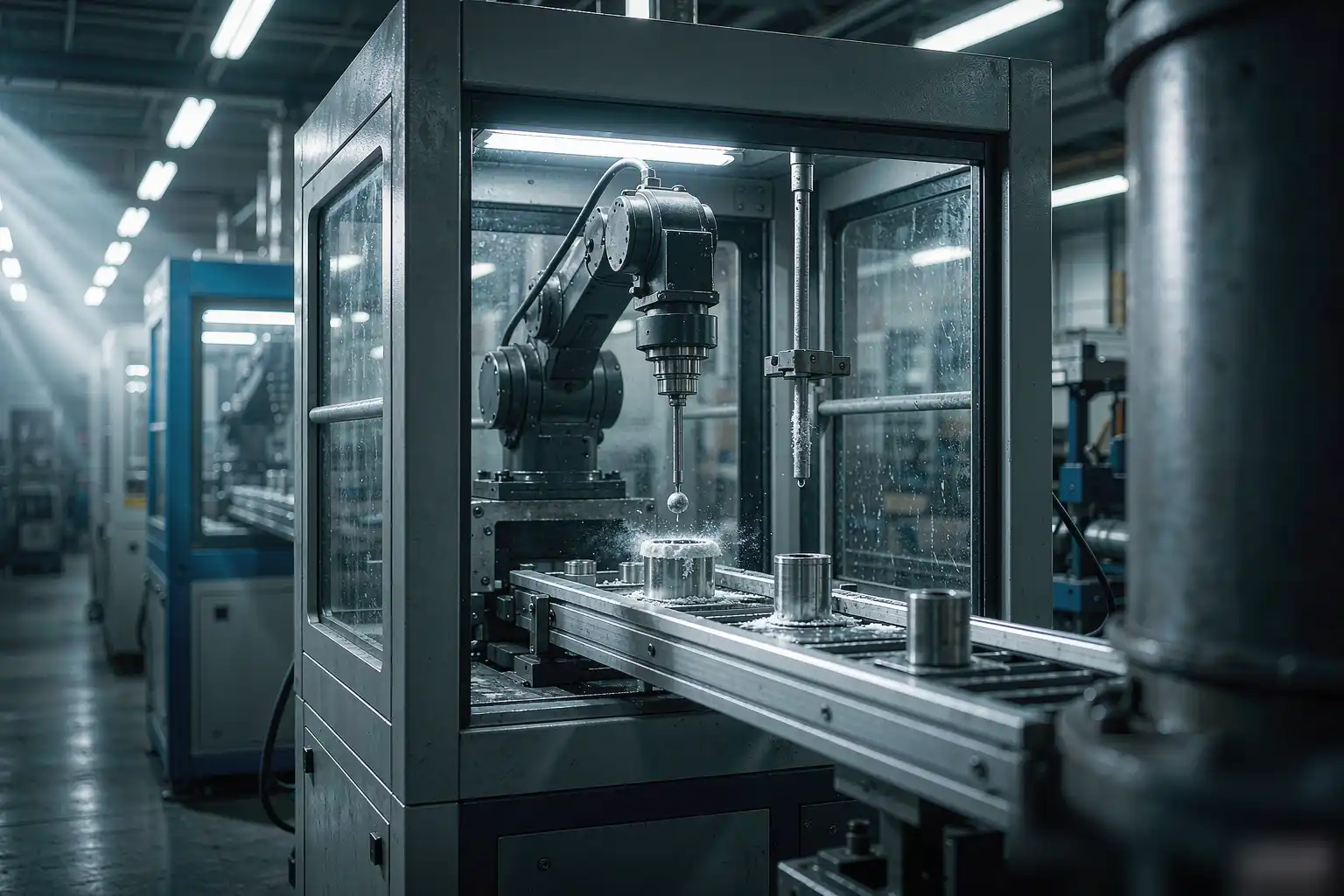
DZ Machinery’s stake in this decision is specific: when the answer is metal, the finishing half of the cost model decides whether the program hits its target price. Our robotic deburring, grinding, and polishing cells turn the metal part’s finishing scope from a labor estimate into a predictable capital line — which is precisely the term plastic advocates treat as metal’s weakness. If your comparison is live right now, model both parts at finished-goods level, not raw-part level; we will price the metal side’s finishing scope for you so the comparison is honest on both sides.
FAQ About Die Casting vs Injection Molding
Which is cheaper for high volume?
Injection molding is almost always cheaper at very high volumes (1M+ parts/year). At lower volumes (5,000-100,000), the cost depends on the specific part and material.
Can die castings replace plastic parts?
Often yes, but with design changes. The wall thickness, tolerances, and features all need to be reconsidered. A drop-in replacement is usually not possible.
Can plastic parts replace die castings?
For low-strength, low-heat, non-shielding applications, yes. For structural, heat-dissipating, or shielding applications, no.
Which is more environmentally friendly?
Both are recyclable, but metal recycling retains more value. Aluminum die castings can be recycled indefinitely with no loss of properties. Plastics are typically downcycled (recycled into lower-grade products) or burned for energy.
Making the Right Choice
The choice between die casting and injection molding is one of the most important design decisions. It affects cost, performance, customer perception, and the manufacturing supply chain.
For most structural, premium, or high-heat applications, die cast metal is the right answer. For most lightweight, high-volume, or insulating applications, plastic is the right answer.
At DZ Smart Manufacturing, our robotic finishing cells handle die cast metal parts across consumer, industrial, and automotive applications. We do not work with plastic, but our team has experience with both processes and can help you evaluate the material choice for your project.